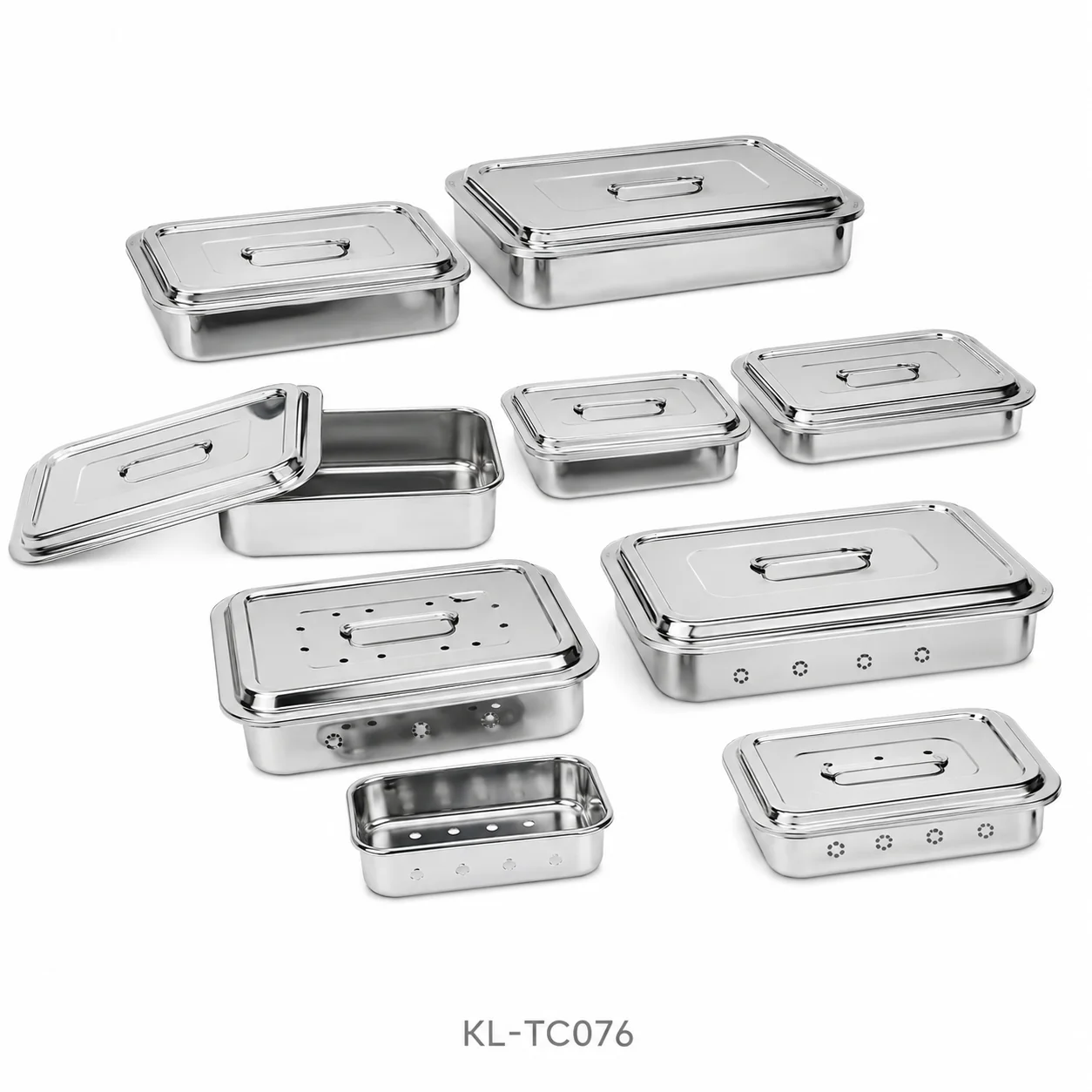
# KL-TC076 Stainless Steel Sterilization Tray — Perforated and Solid Options for Instrument Sterilization
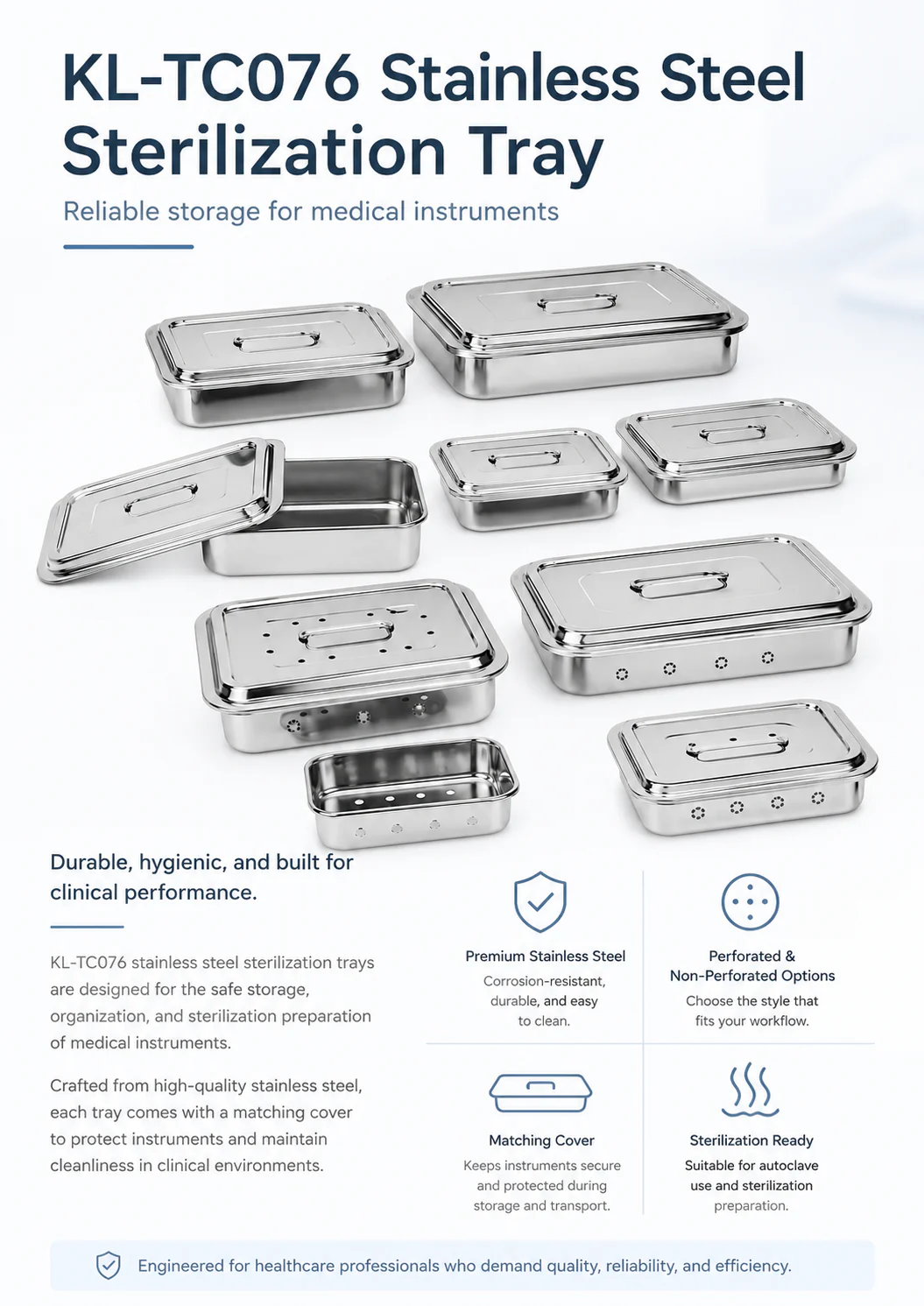
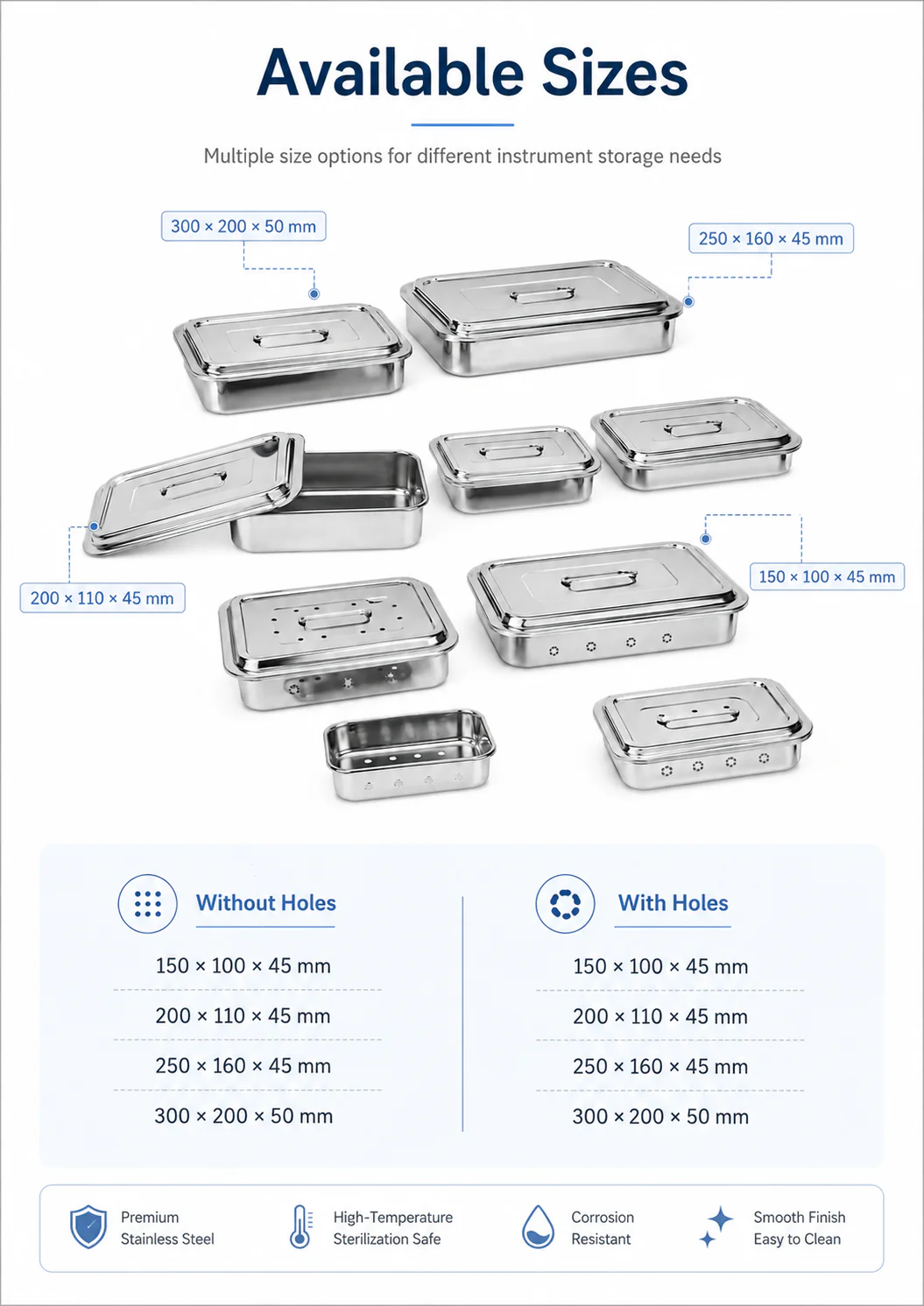
Quick answer: The Keling KL-TC076 is a stainless steel sterilization tray available in four sizes (150×100×45 mm, 200×110×45 mm, 250×160×45 mm and 300×200×50 mm) in both non-perforated and perforated variants, with a matching cover. It is manufactured by Keling Medical (Keling Medical) for the safe storage, organization and sterilization preparation of medical instruments in hospitals and clinics.
Quick Facts
- The Keling KL-TC076 is a stainless steel sterilization tray for the storage, organization and sterilization preparation of medical instruments.
- Available in four sizes: 150×100×45 mm, 200×110×45 mm, 250×160×45 mm and 300×200×50 mm.
- Offered in both non-perforated (solid base) and perforated variants to suit different sterilization workflows.
- Each tray comes with a matching cover that protects instruments and maintains cleanliness during storage and transport.
- Suitable for autoclave sterilization.
- Made from premium corrosion-resistant stainless steel that is durable and easy to clean.
Overview
The KL-TC076 stainless steel sterilization tray provides the foundation of a well-organized sterile processing workflow. Instruments are loaded into the tray, secured under the matching cover and transported from the procedure room to the sterile processing department — or processed in-suite in a benchtop autoclave — without contamination risk during handling. The matching cover keeps instruments protected and clean from the point of completion of the procedure through the entire transport and sterilization cycle.
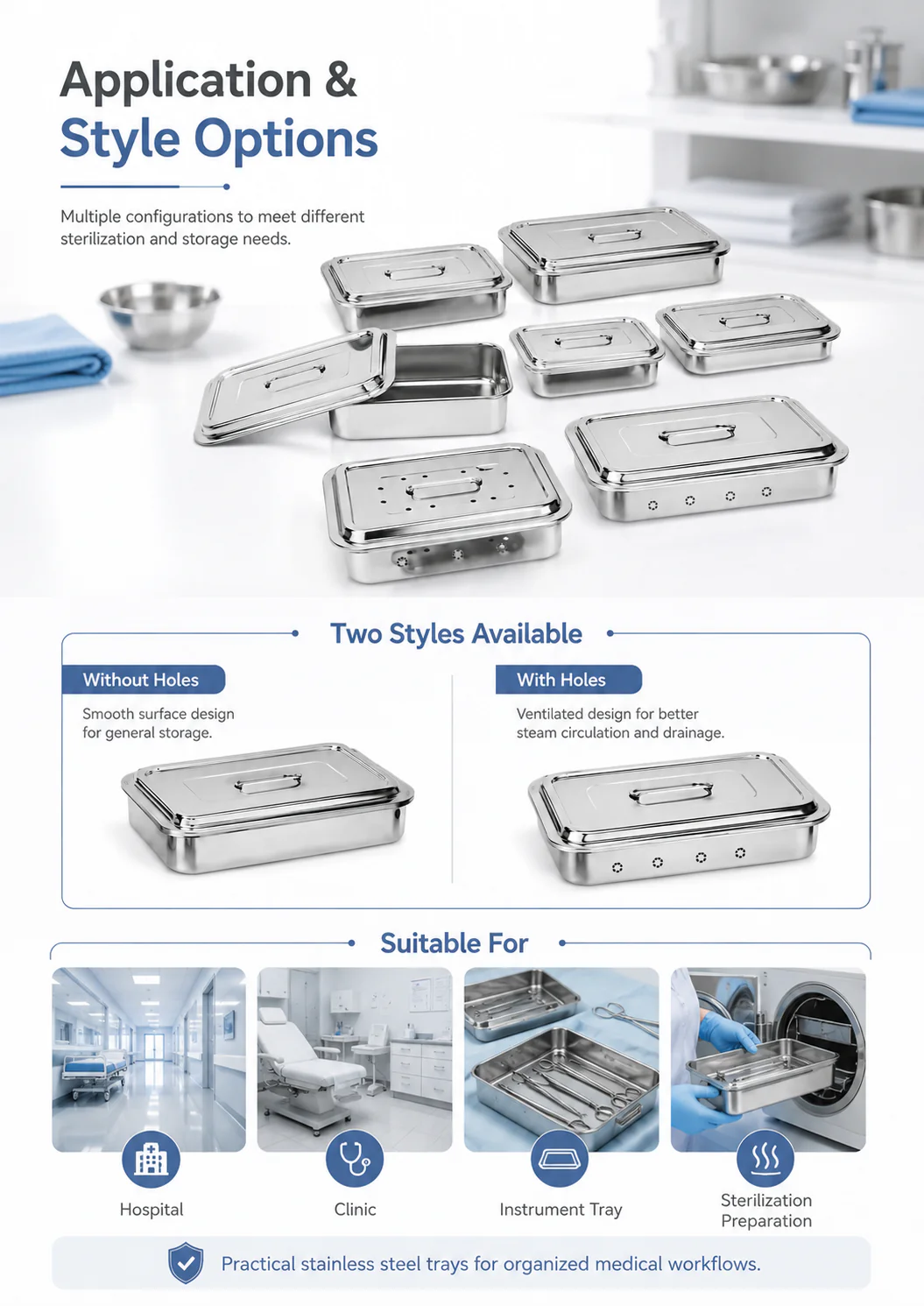
Two construction variants address different sterilization method requirements. The non-perforated (solid base) trays hold small instruments and delicate items that should not contact steam directly during transport, or are intended for chemical sterilization. The perforated trays allow steam penetration through the base and lid during autoclave sterilization, ensuring complete and even sterilant contact with all instruments in the tray — the preferred method in hospital central sterile departments.
Four size options — from the compact 150×100×45 mm tray suited to small instrument sets or wound care accessories, to the large 300×200×50 mm tray for larger surgical instrument sets — allow sterile processing teams to standardize across different procedure volumes. Premium corrosion-resistant stainless steel construction withstands repeated autoclave cycles without deformation, rusting or surface degradation.
Key Features
- Perforated and non-perforated options — choose the style that fits your sterilization workflow; perforated variants enable steam penetration for autoclave processing.
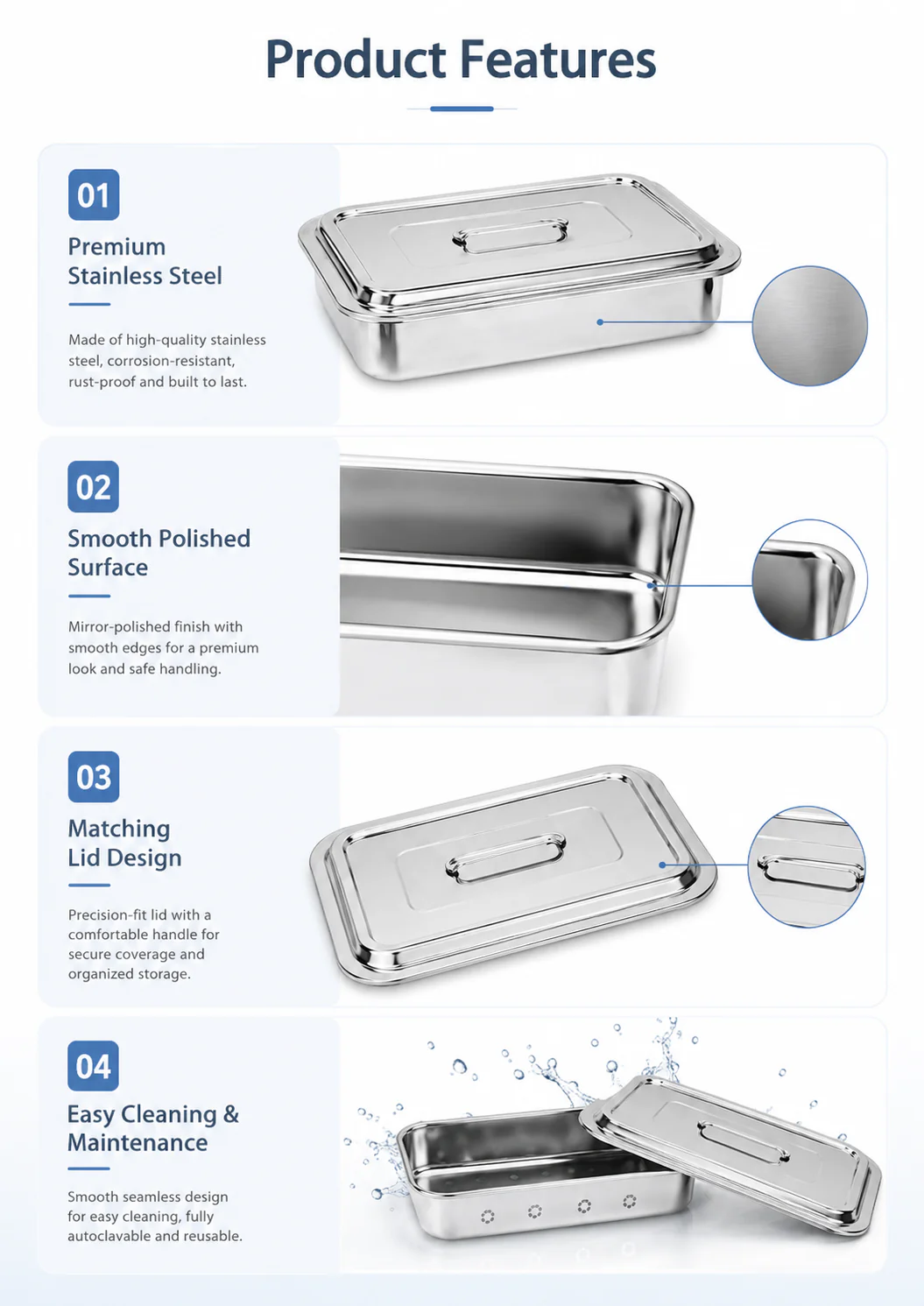
- Matching cover — each tray includes a fitted cover to keep instruments secure and protected during storage and transport.
- Four size options — 150×100×45 mm, 200×110×45 mm, 250×160×45 mm and 300×200×50 mm to accommodate different instrument set sizes.
- Premium stainless steel — corrosion-resistant, durable construction withstands repeated autoclave sterilization cycles.
- Autoclave compatible — suitable for sterilization preparation in central sterile supply departments and clinical areas.
- Easy to clean — smooth stainless surfaces and clear design facilitate rapid visual inspection and cleaning between uses.
Technical Specifications
| Parameter | Value |
|---|---|
| Model | KL-TC076 |
| Product type | Stainless steel sterilization tray |
| Sizes (without holes) | 150×100×45 mm, 200×110×45 mm, 250×160×45 mm, 300×200×50 mm |
| Sizes (with holes) | 150×100×45 mm, 200×110×45 mm, 250×160×45 mm, 300×200×50 mm |
| Material | Stainless steel |
| Cover | Matching cover included |
Specifications are subject to change; dimensional tolerances may apply. Contact Keling Medical for the latest datasheet.
Applications
The KL-TC076 is used in hospital central sterile supply departments (CSSD), operating theatre instrument preparation areas, procedure room instrument sets, dental clinic sterilization rooms, laboratory instrument storage and outpatient clinic sterile processing. Both the non-perforated and perforated variants are in daily use throughout the hospital instrument reprocessing cycle.