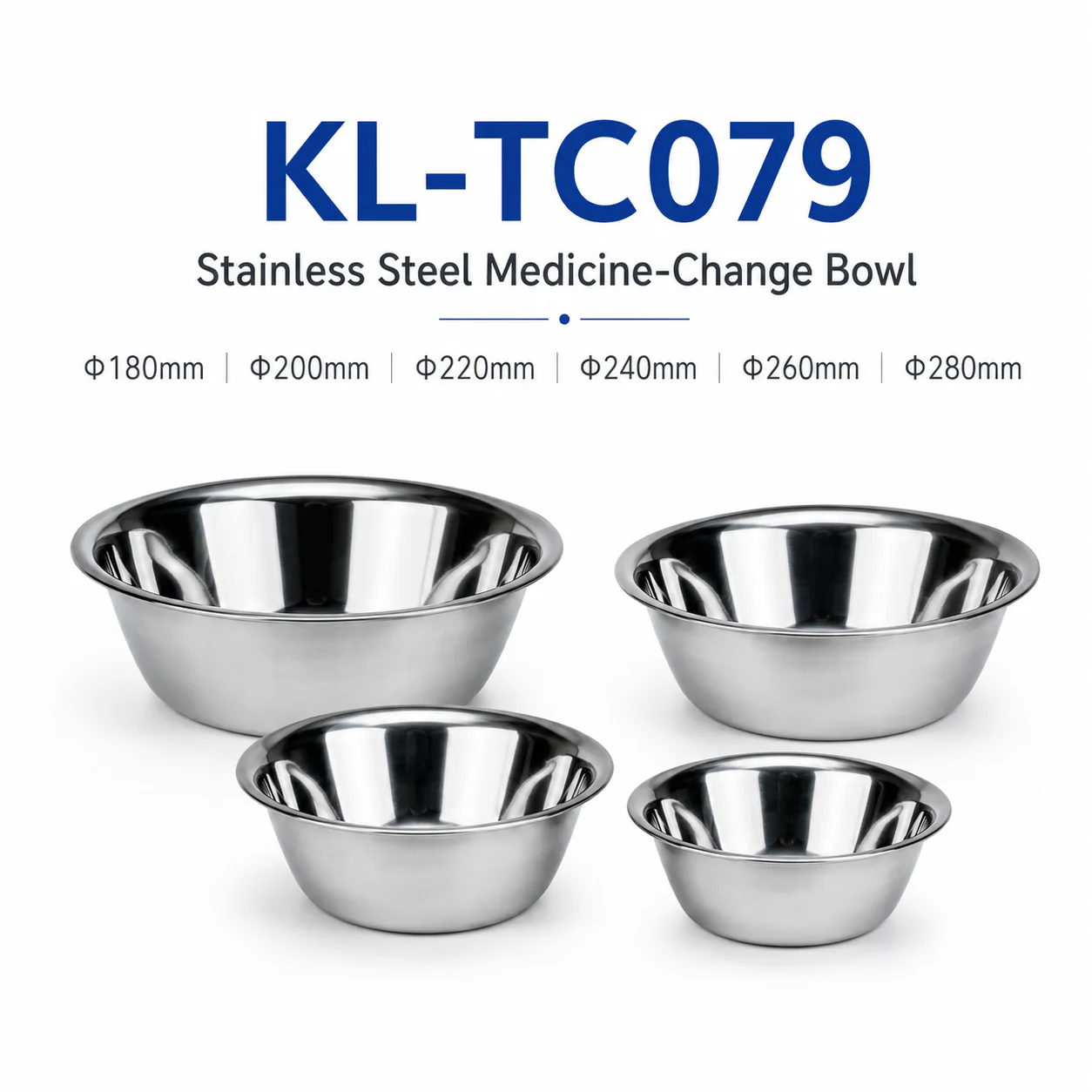
# KL-TC079 Stainless Steel Medicine-Change Bowl — Six Sizes for Clinical Medicine Handling
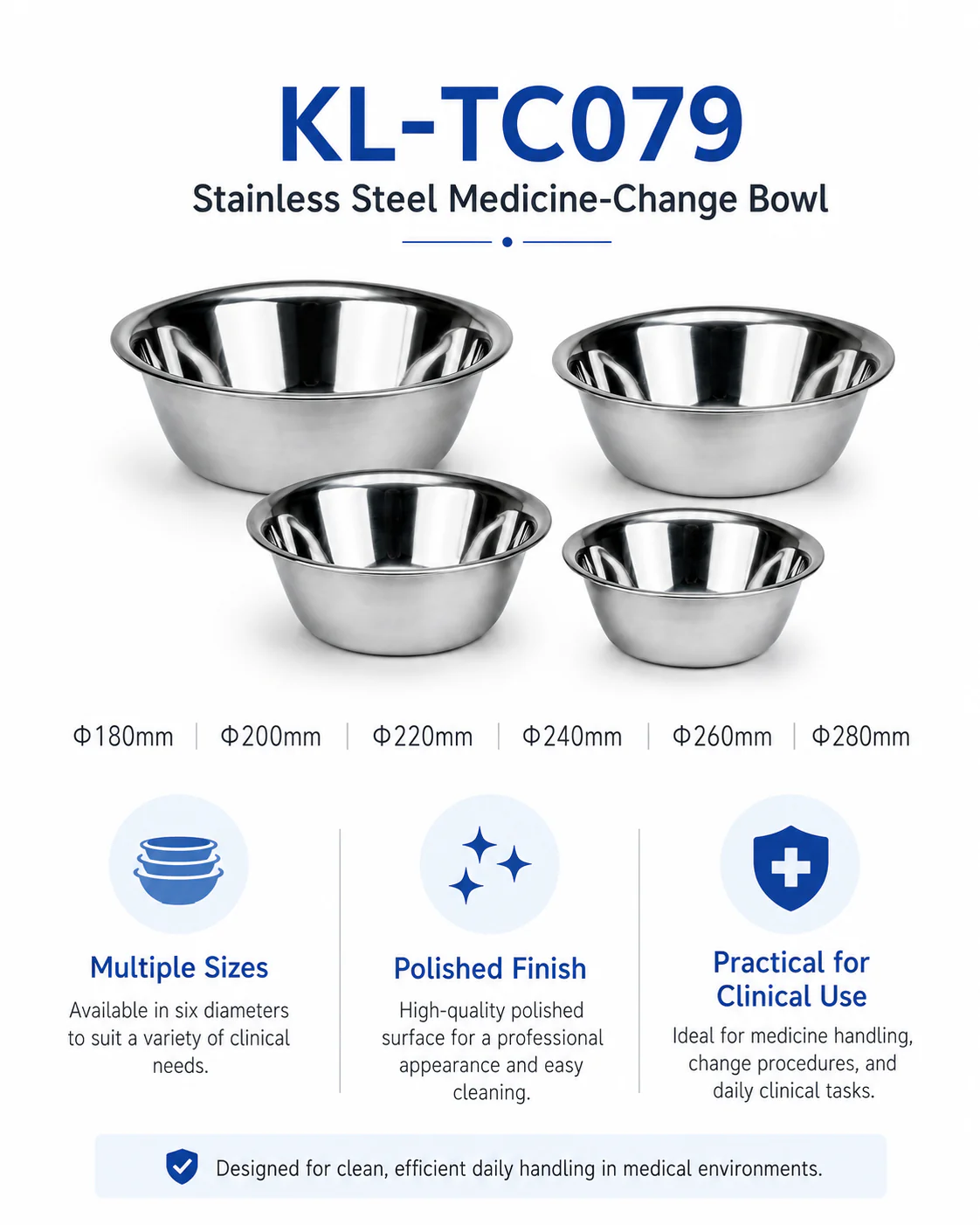
Quick answer: The Keling KL-TC079 is a stainless steel medicine-change bowl available in six diameters — Φ180 mm, Φ200 mm, Φ220 mm, Φ240 mm, Φ260 mm and Φ280 mm — with a polished finish for professional clinical appearance and easy cleaning. It is manufactured by Keling Medical (Keling Medical) for medicine handling, change procedures and daily clinical tasks in hospitals and clinics.
Quick Facts
- The Keling KL-TC079 is a stainless steel medicine-change bowl designed for clean, efficient daily handling in medical environments.
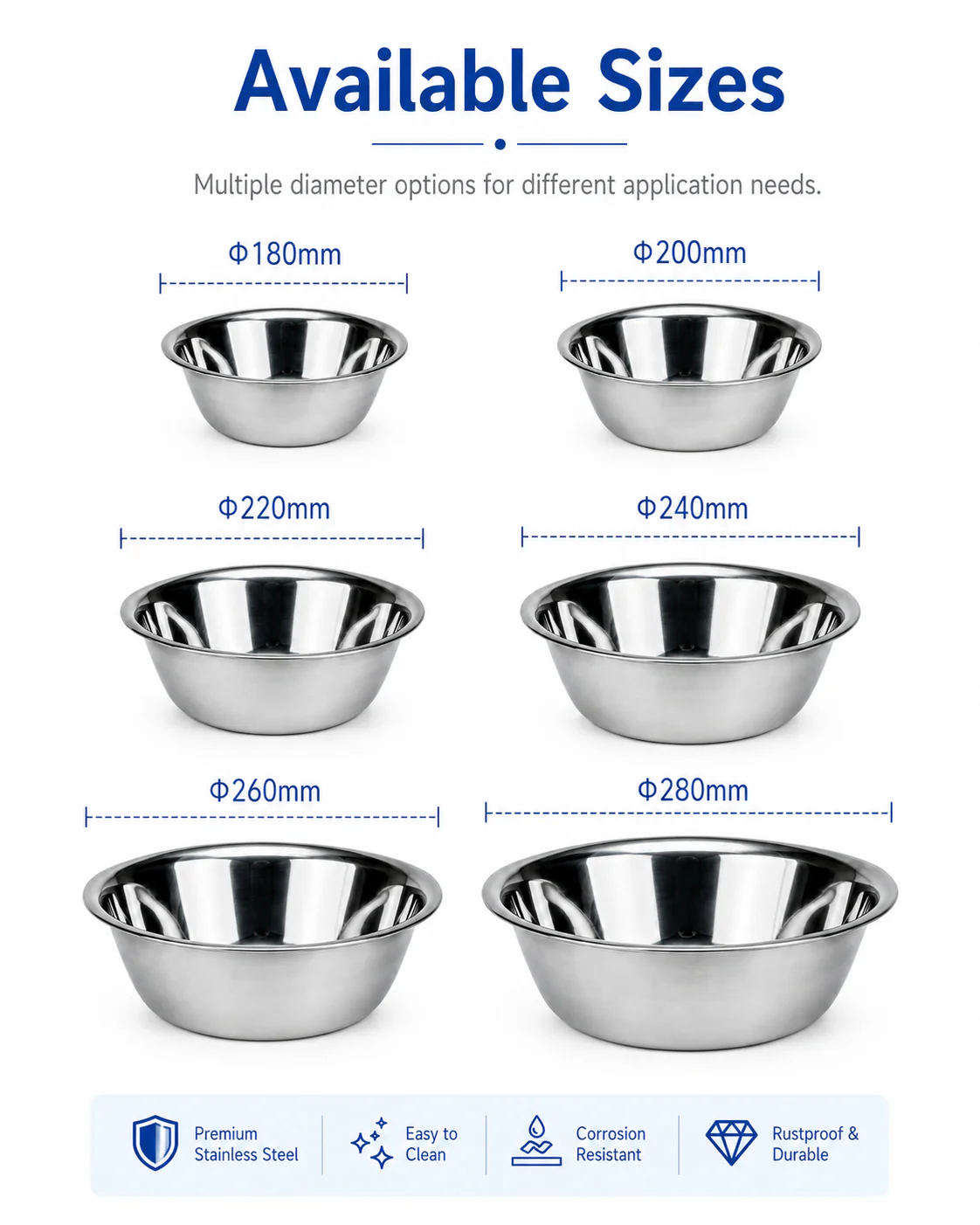
- Available in six diameters: Φ180 mm, Φ200 mm, Φ220 mm, Φ240 mm, Φ260 mm and Φ280 mm.
- High-quality stainless steel construction for excellent durability, corrosion resistance and long-term clinical performance.
- Polished high-quality surface for a professional appearance and easy cleaning after each use.
- Ideal for medicine handling, dressing-change procedures and daily clinical tasks.
- Six size options allow clinical staff to match bowl diameter to the procedure volume and clinical context.
Overview
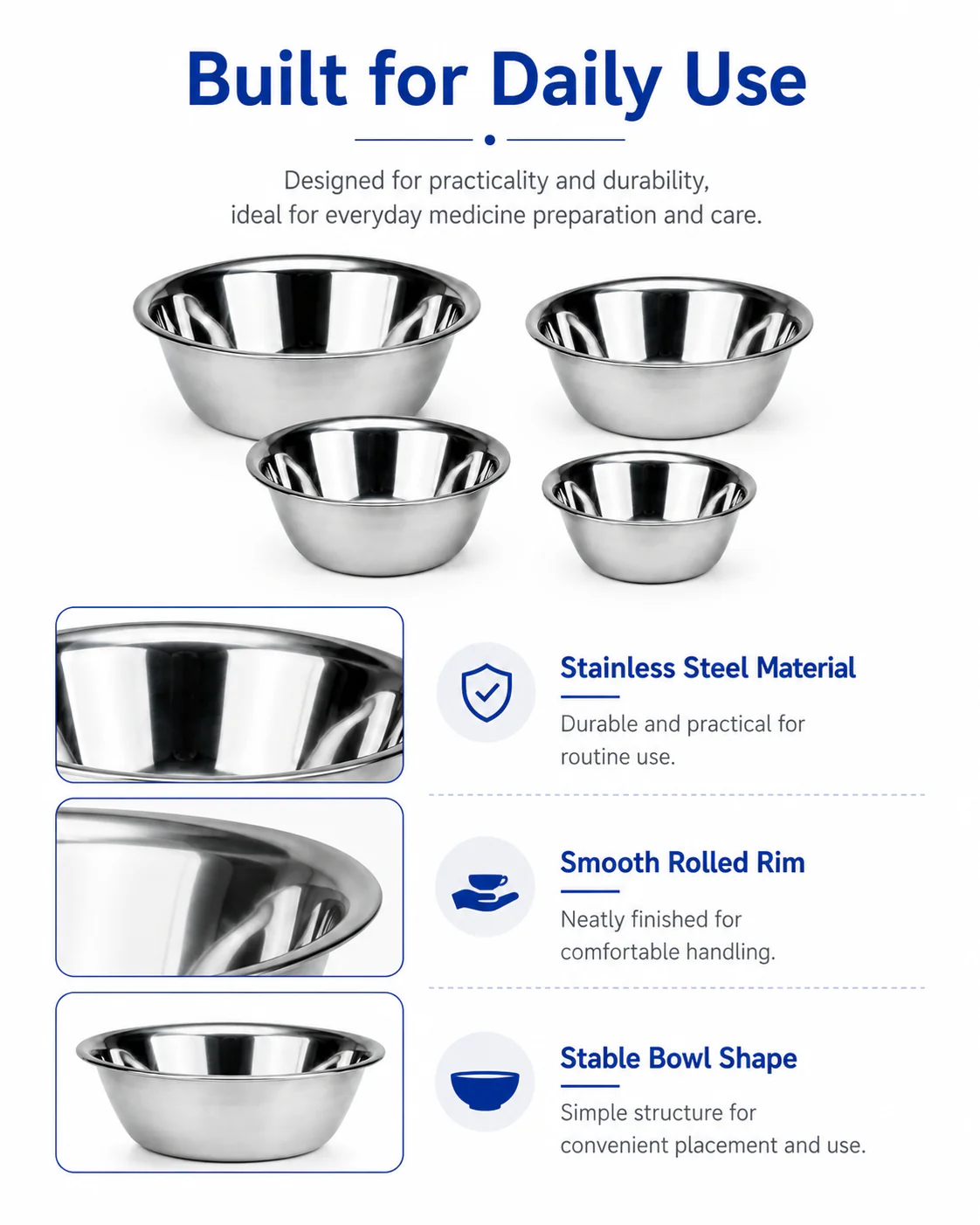
The KL-TC079 stainless steel medicine-change bowl is one of the most frequently used clinical vessels in bedside nursing, wound care and outpatient procedure settings. Its wide, open bowl profile provides a stable, cleanable surface for holding saline, antiseptic solutions, soaking dressings, mixing small volumes of liquid medications or presenting small instruments and swabs during procedures. The bowl's generous rim and rounded interior eliminate corners where solutions or materials could collect, facilitating rapid and thorough cleaning between patients.
Six diameter options — from Φ180 mm for small dressing changes and medication preparation to Φ280 mm for larger procedure volumes — allow nursing and procedure teams to select the appropriate bowl for each clinical task. A consistent polished stainless steel finish across all six sizes maintains a professional appearance on dressing trolley tops and procedure tables, and the non-porous surface does not absorb chemical solutions, dye stains or biological material residues.
The polished finish of the KL-TC079 delivers two practical benefits beyond appearance: the reflective surface makes it easy to visually confirm that the bowl is clean and free of residue before use, and the smooth surface reduces friction when wiping the bowl dry — important for rapid turnaround between uses in busy clinical settings. The stainless steel material is fully compatible with autoclaving, chemical disinfection and standard hospital sterilization protocols.
Key Features
- Six size options — Φ180 mm through Φ280 mm for medicine handling, wound care and clinical procedures of different scales.
- Polished stainless steel — high-quality polished surface for a professional appearance, visual cleanliness inspection and easy cleaning.
- Durable stainless construction — corrosion-resistant stainless steel for long-term performance under daily clinical use.
- Wide open-bowl profile — stable base and rounded interior suit solution holding, dressing preparation and instrument presentation.
- Multiple clinical uses — suitable for medicine handling, change procedures, dressing preparation and daily clinical tasks.
- Sterilization compatible — stainless steel construction is compatible with autoclave and chemical sterilization protocols.
Technical Specifications
| Parameter | Value |
|---|---|
| Model | KL-TC079 |
| Product type | Stainless steel medicine-change bowl |
| Available diameters | Φ180 mm, Φ200 mm, Φ220 mm, Φ240 mm, Φ260 mm, Φ280 mm |
| Material | Stainless steel |
| Finish | Polished |
Specifications are subject to change; dimensional tolerances may apply. Contact Keling Medical for the latest datasheet.
Applications
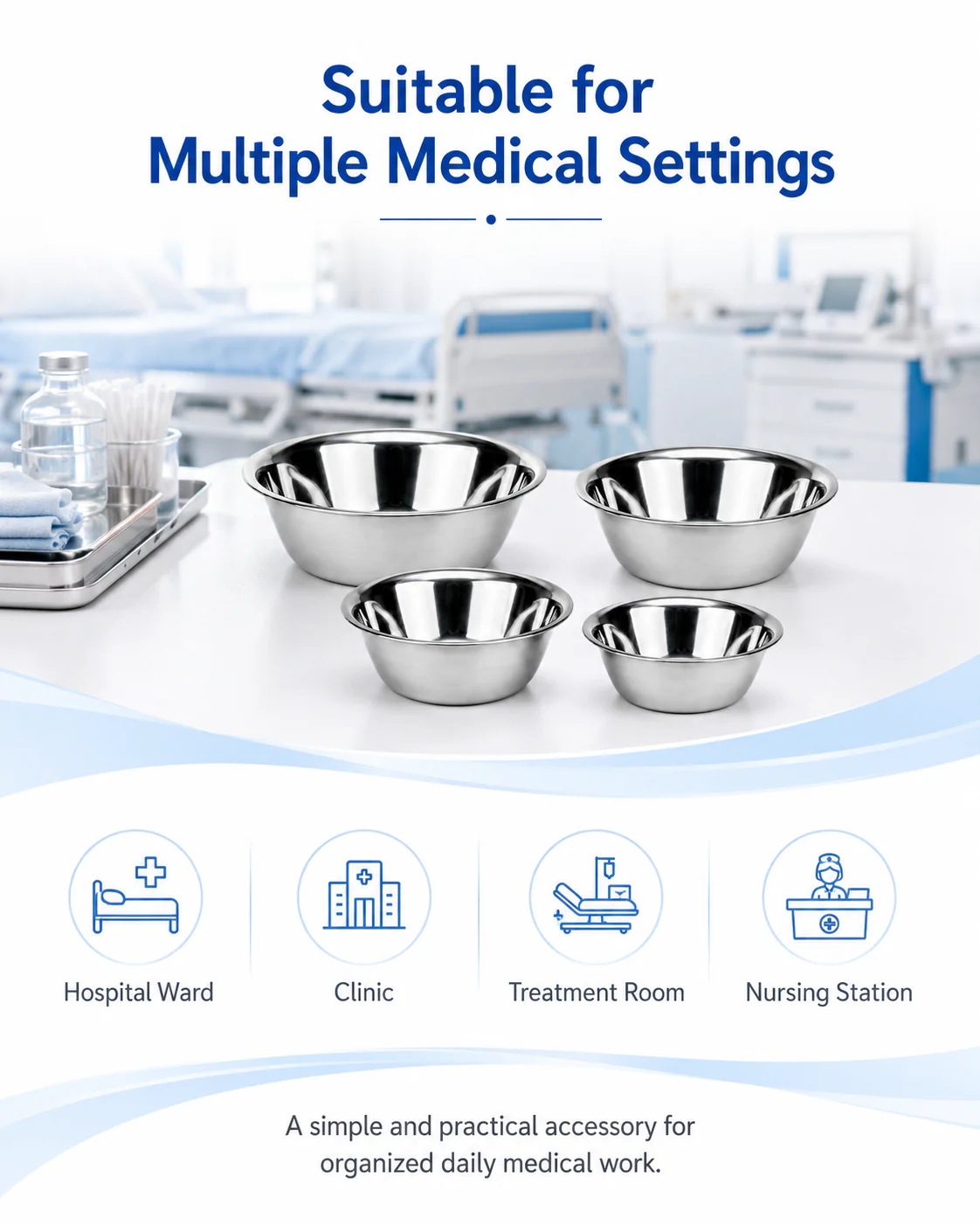
The KL-TC079 is used on dressing trolleys, wound care carts, bedside procedure trays, outpatient treatment room work surfaces, operating theatre instrument tables and ward medicine preparation areas. It is the standard vessel for holding antiseptic solutions during wound dressing changes, presenting gauze during procedures, mixing small drug preparations and collecting clinical waste during minor procedures.