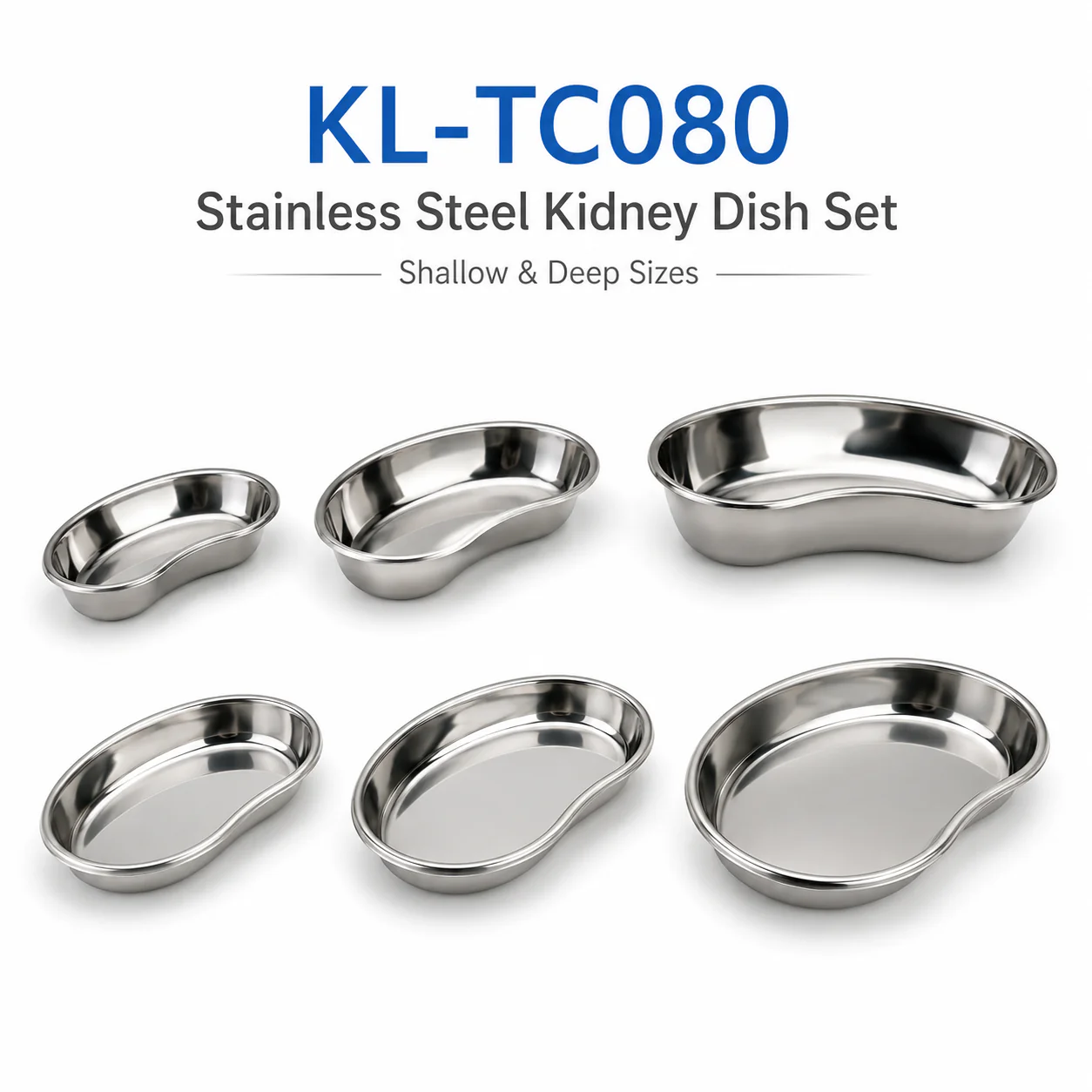
# KL-TC080 Stainless Steel Kidney Dish — Shallow and Deep Variants in Three Sizes
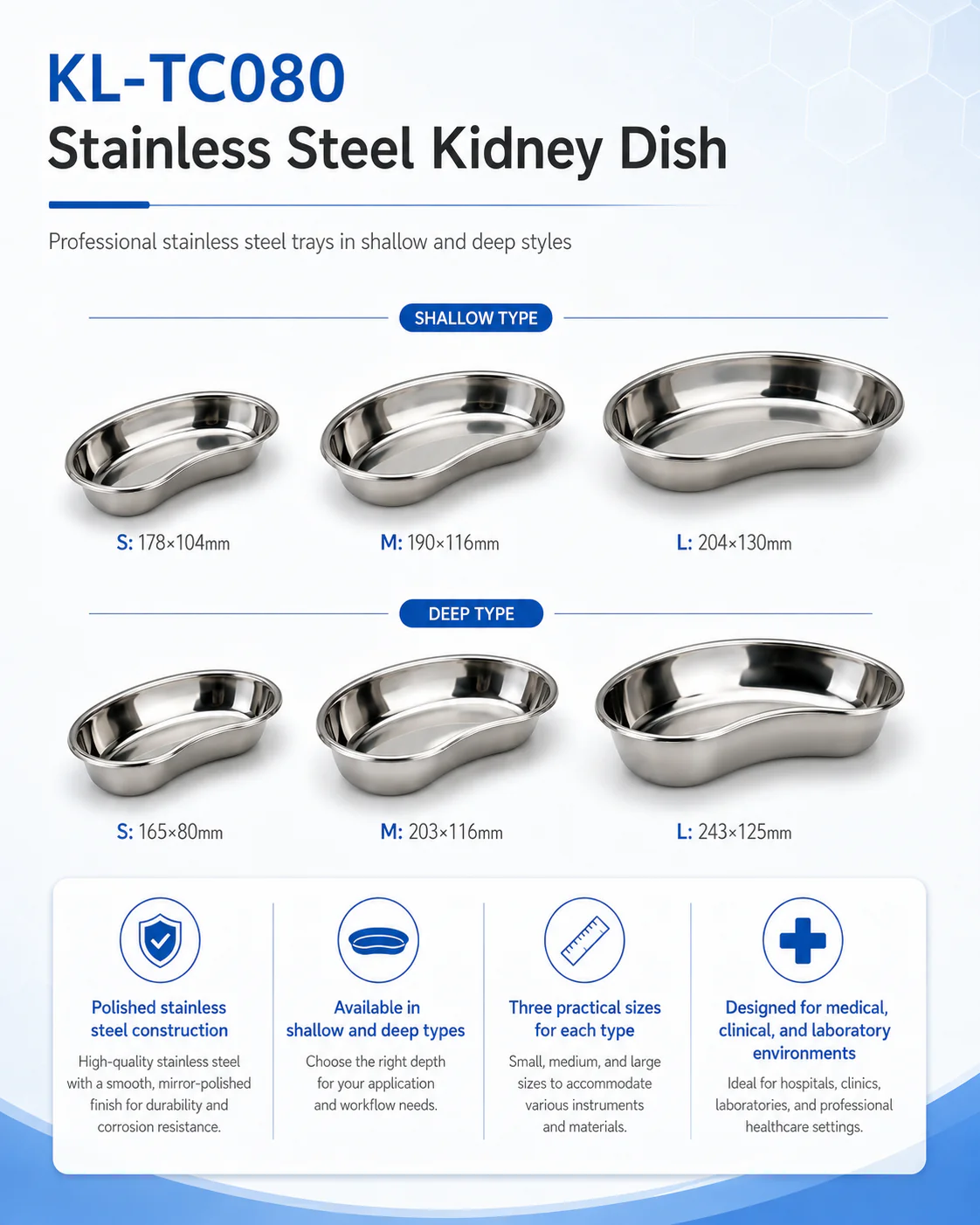
Quick answer: The Keling KL-TC080 is a stainless steel kidney dish (emesis basin) available in two types — shallow and deep — each in three sizes: Shallow S 178×104 mm, M 190×116 mm, L 204×130 mm; Deep S 165×80 mm, M 203×116 mm, L 243×125 mm. It is manufactured by Keling Medical (Keling Medical) for instrument presentation, waste collection and clinical use in hospitals, clinics and laboratories.
Quick Facts
- The Keling KL-TC080 is a stainless steel kidney dish available in shallow and deep styles, each in small, medium and large sizes.
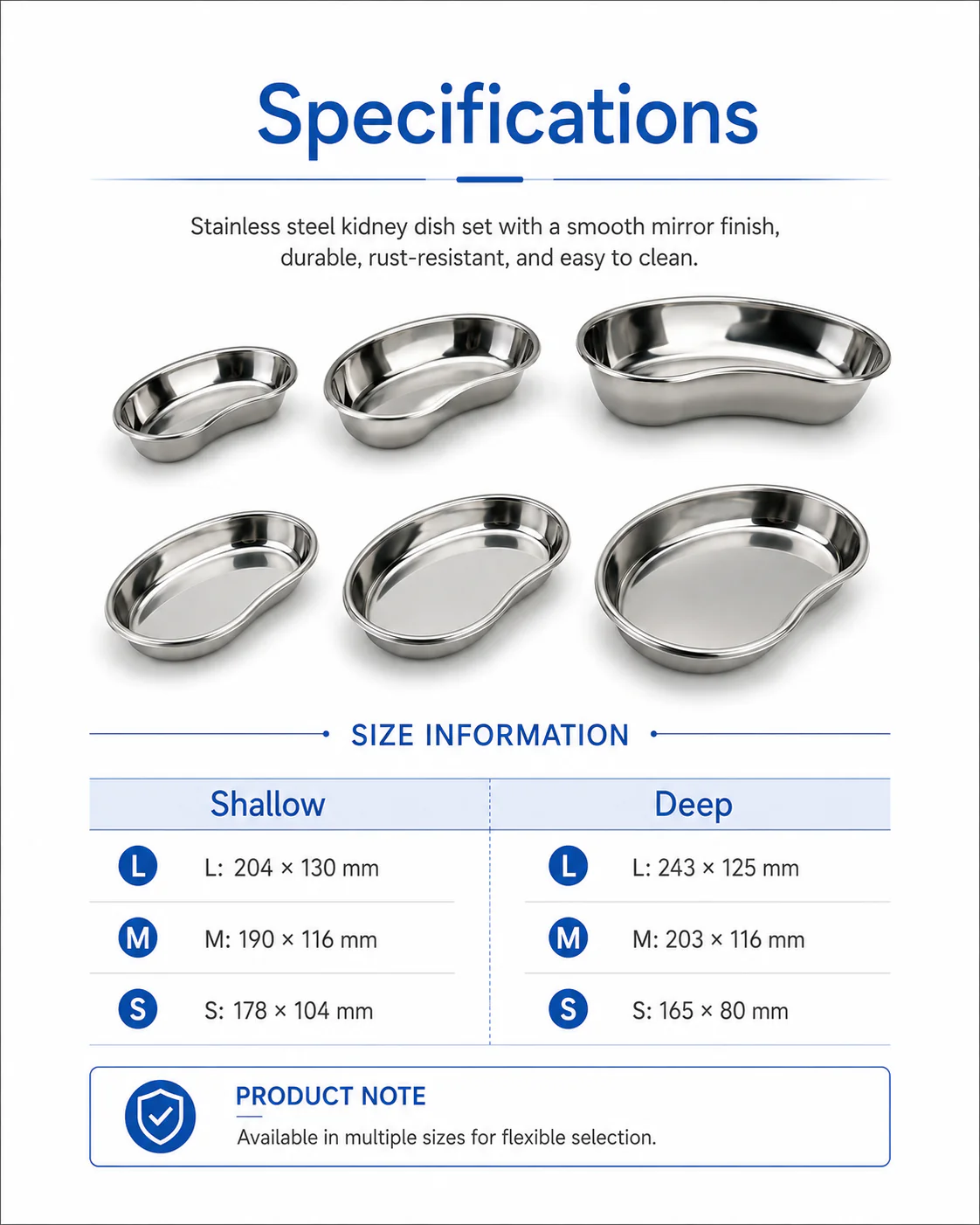
- Shallow type sizes: S 178×104 mm, M 190×116 mm, L 204×130 mm.
- Deep type sizes: S 165×80 mm, M 203×116 mm, L 243×125 mm.
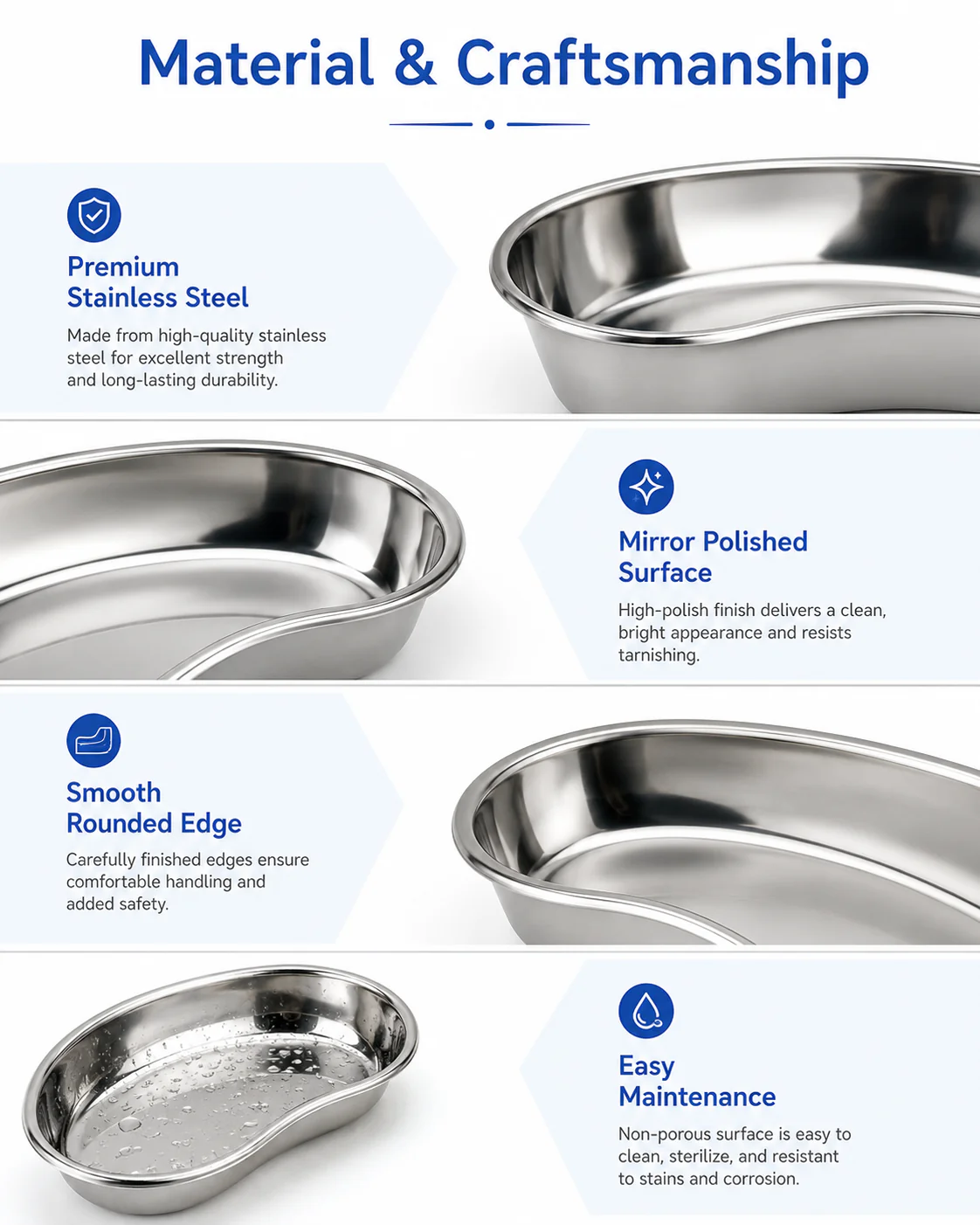
- Mirror-polished stainless steel construction with a smooth finish for durability and corrosion resistance.
- Available in shallow and deep variants to accommodate different instrument volumes and clinical applications.
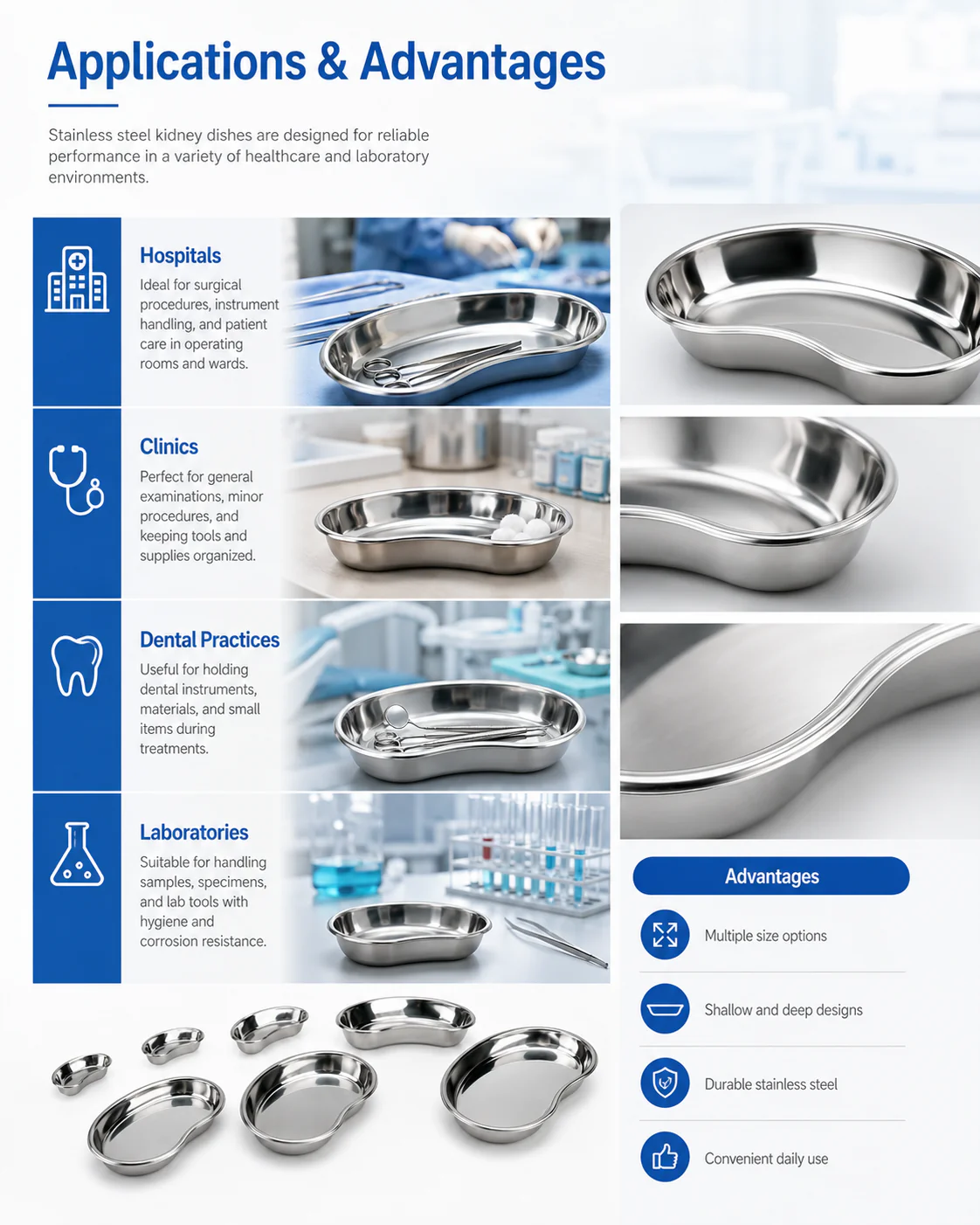
- Designed for medical, clinical and laboratory environments including hospitals, clinics and professional healthcare settings.
Overview
The KL-TC080 stainless steel kidney dish is one of the most widely recognized clinical accessories, identified by its distinctive kidney or crescent shape that is ergonomically designed to rest comfortably against a patient's body during procedures. This curved profile allows the dish to be held against a patient's cheek or chest during vomiting, oral procedures or wound flushing, and makes it a natural fit when presenting instruments along a curved instrument tray configuration.
Two style variants — shallow and deep — address different clinical use cases. The shallow kidney dish presents instruments, swabs, dressings and small supplies in a low-profile format that is easy to access from above, suited to procedure staging, instrument presentation on a scrub trolley and dressing tray use. The deep kidney dish has greater volume capacity, making it more appropriate for collecting vomitus, wound irrigation fluid, soiled dressings and clinical waste during patient care.
Three sizes in each style — small, medium and large — allow clinical teams to match the kidney dish to the procedure scale. The small shallow dish suits compact dressing changes; the large deep dish suits post-operative nausea management or large wound irrigation procedures. All six variants share a mirror-polished stainless steel surface that is non-porous, non-reactive, easy to visually inspect for cleanliness and compatible with autoclave sterilization and chemical disinfection.
Key Features
- Shallow and deep variants — choose the right depth for instrument presentation (shallow) or fluid and waste collection (deep).
- Three sizes per variant — S, M and L sizes in both styles to suit different procedure scales and clinical contexts.
- Polished stainless steel — mirror-polished surface for durability, corrosion resistance, easy cleaning and visual inspection.
- Kidney (crescent) shape — ergonomic curved profile for comfortable patient contact and efficient instrument arrangement.
- Autoclave compatible — stainless steel construction withstands standard sterilization cycles for repeated clinical use.
- Designed for medical environments — suitable for hospitals, clinics, laboratories and professional healthcare settings.
Technical Specifications
| Parameter | Shallow S | Shallow M | Shallow L |
|---|---|---|---|
| Size | 178×104 mm | 190×116 mm | 204×130 mm |
| Type | Shallow | Shallow | Shallow |
| Parameter | Deep S | Deep M | Deep L |
|---|---|---|---|
| Size | 165×80 mm | 203×116 mm | 243×125 mm |
| Type | Deep | Deep | Deep |
| Parameter | Value |
|---|---|
| Model | KL-TC080 |
| Product type | Stainless steel kidney dish |
| Material | Stainless steel |
| Finish | Mirror-polished |
Specifications are subject to change; dimensional tolerances may apply. Contact Keling Medical for the latest datasheet.
Applications
The KL-TC080 is used throughout hospital and clinical settings: operating theatres for instrument presentation on scrub trolleys, ward bedside nursing for emesis and oral care, outpatient procedure rooms for wound irrigation and dressing change waste collection, dental clinics for oral procedure fluid management, emergency departments for rapid waste collection during triage and treatment, and laboratory benches for specimen container staging.