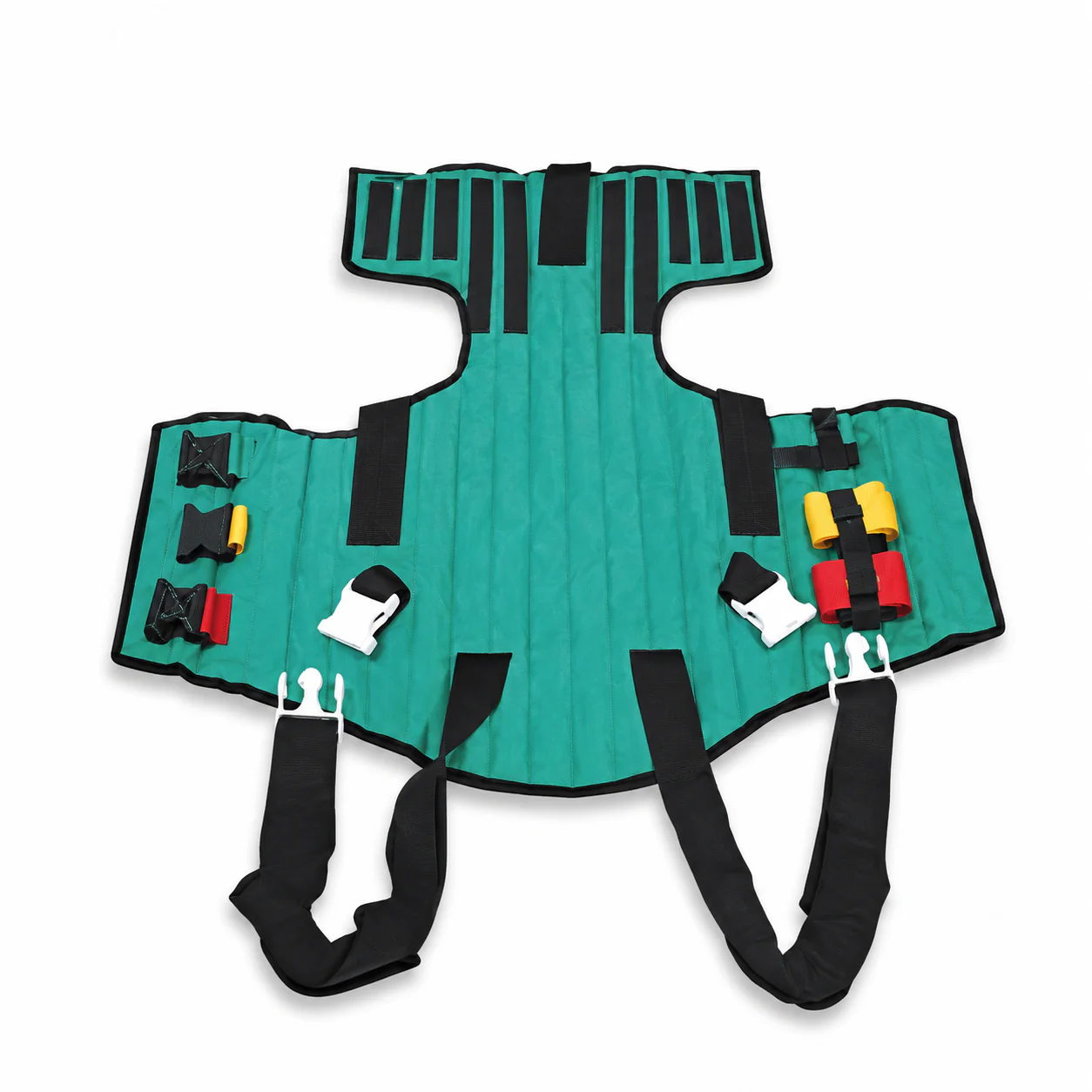
# KL-MS013 Extrication Device — Color-Coded Rescue Vest for Emergency Immobilization and Transport
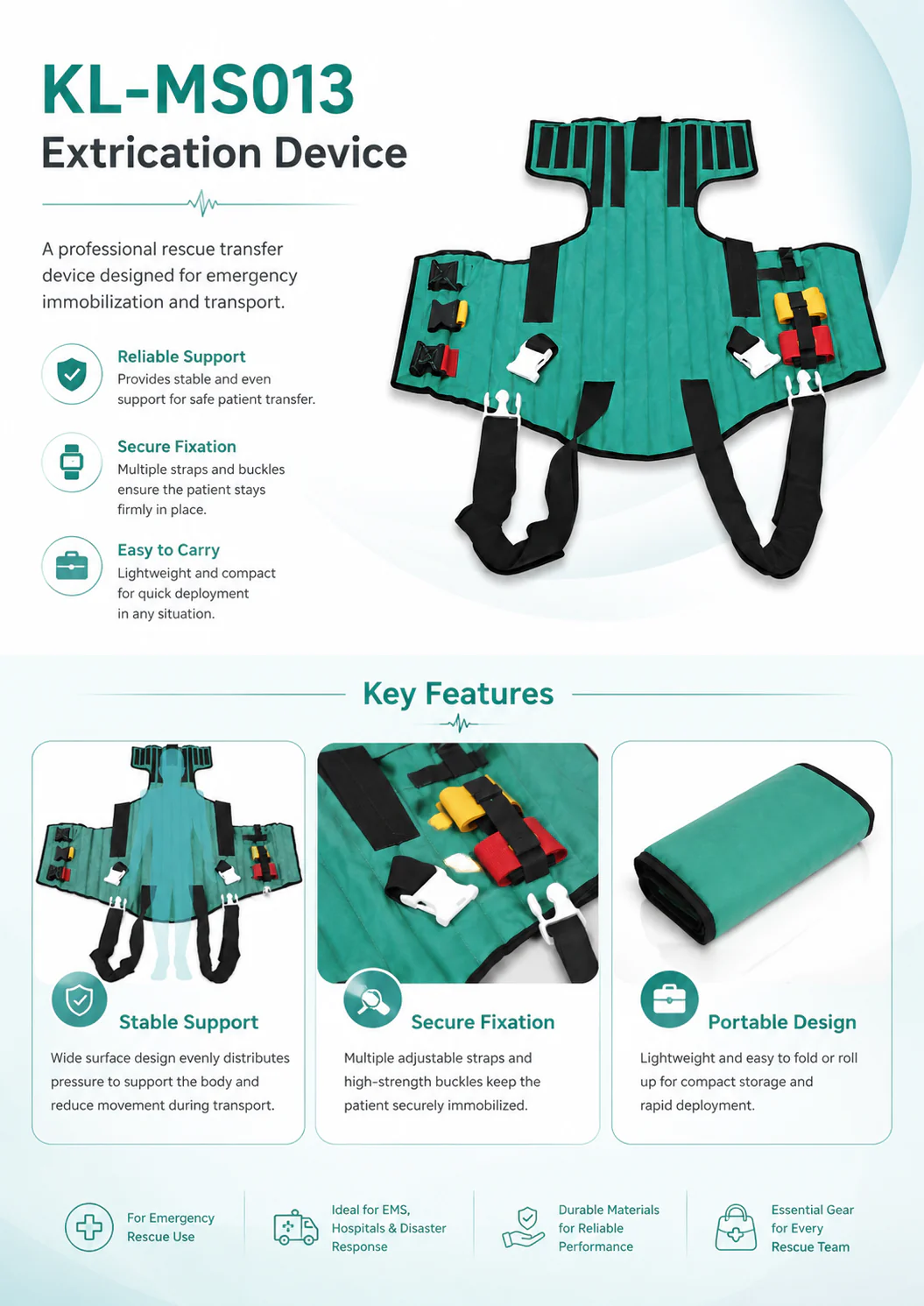
Quick answer: The Keling KL-MS013 is an extrication device (rescue immobilization vest) measuring 860 × 260 × 350 mm, featuring color-coded adjustable straps with high-strength buckles, multiple reinforced carrying handles and a durable, easy-clean fabric surface for emergency vehicle extrication and patient immobilization. It is manufactured by Keling Medical (Keling Medical) for EMS teams, hospitals and disaster response services.
Quick Facts
- The Keling KL-MS013 is an extrication device designed for emergency immobilization and patient transfer in rescue scenarios.
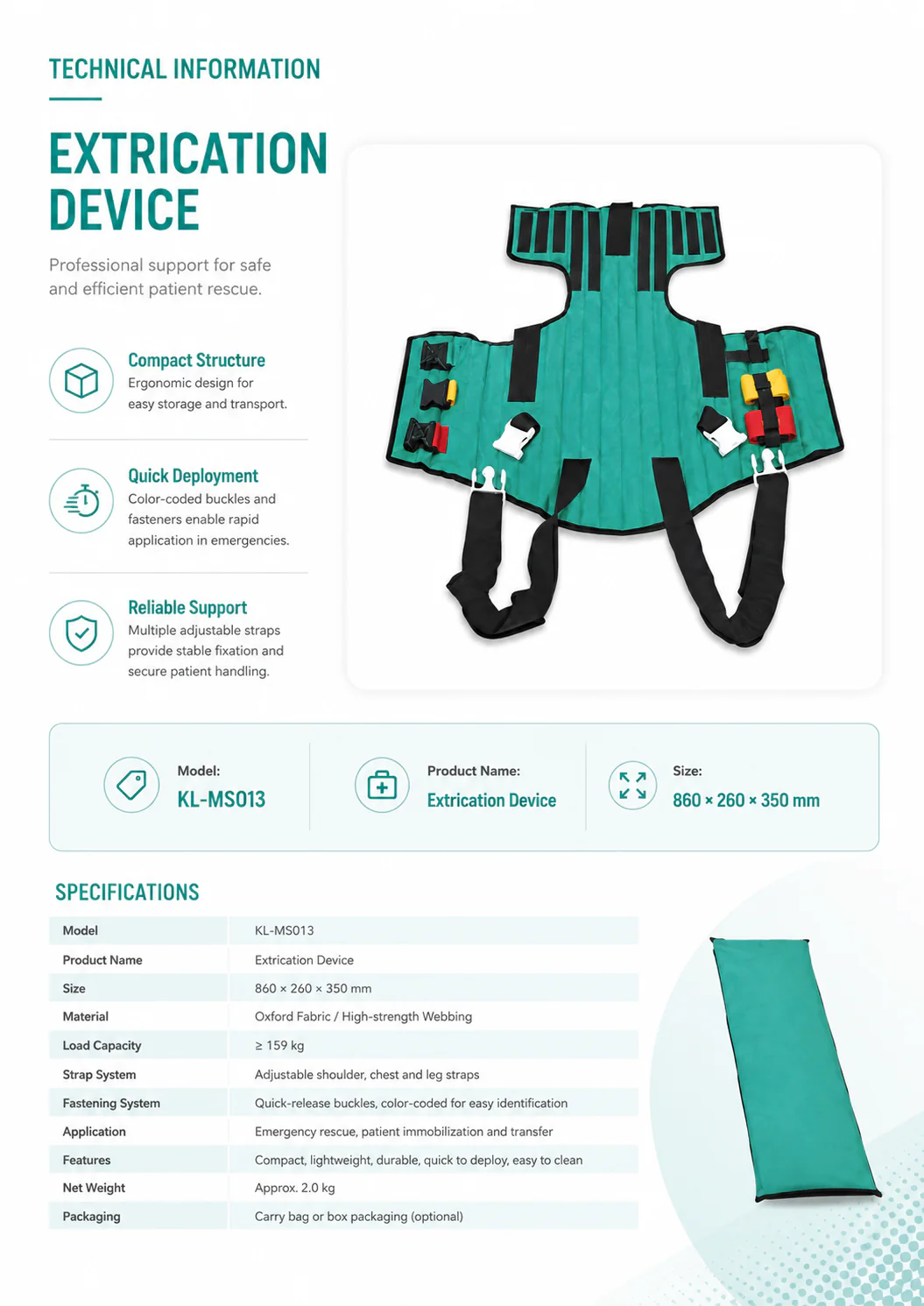
- Dimensions are 860 × 260 × 350 mm — compact enough to fold or roll for kit bag storage.
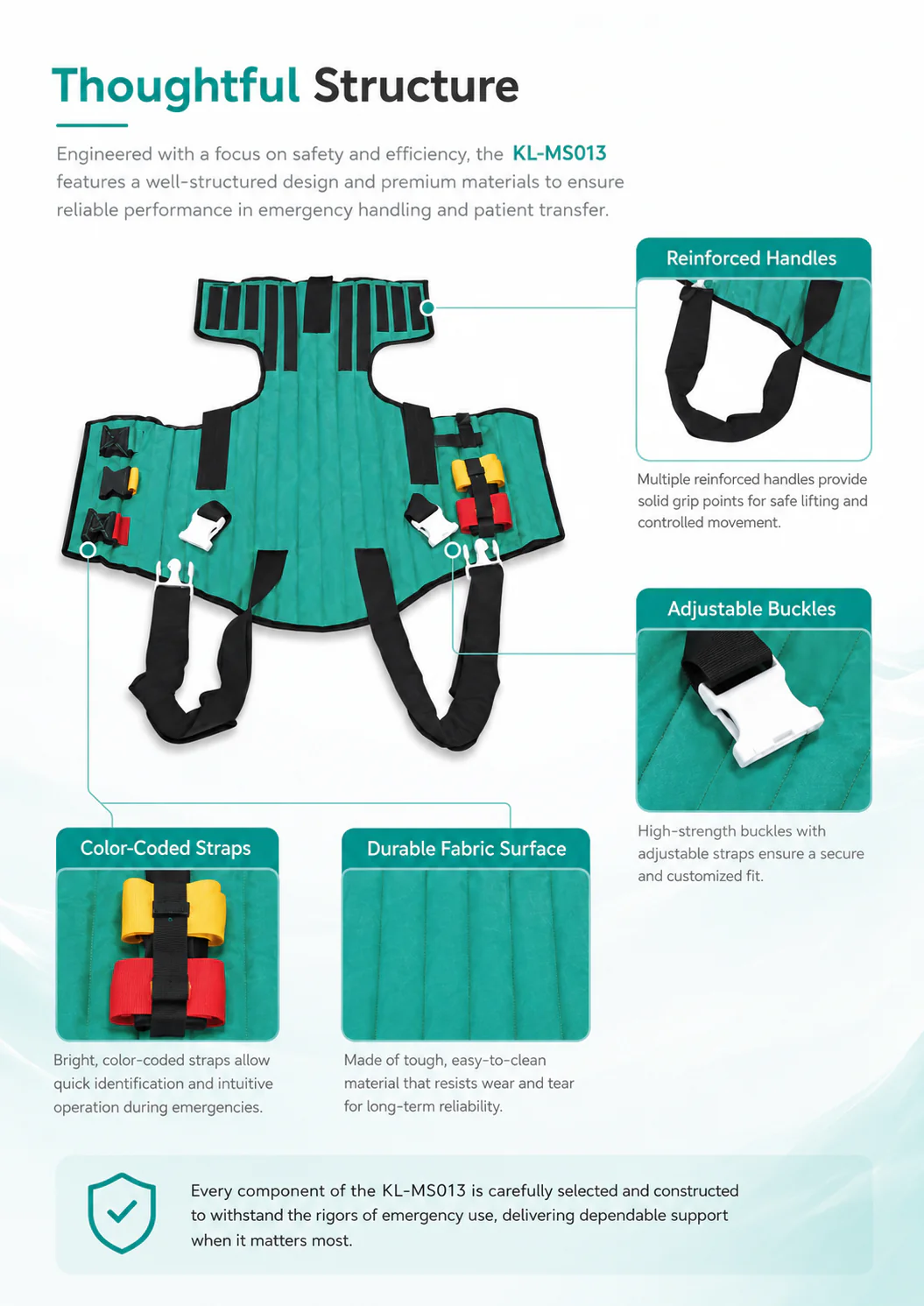
- Color-coded adjustable straps allow fast, intuitive operation in emergency situations.
- High-strength buckles provide a secure, customized fit across different patient builds.
- Multiple reinforced carrying handles offer solid grip points for safe lifting and controlled patient movement.
- The KL-MS013 is produced by Keling Medical, a Chinese medical equipment manufacturer with more than 20 years of industry experience.
Overview
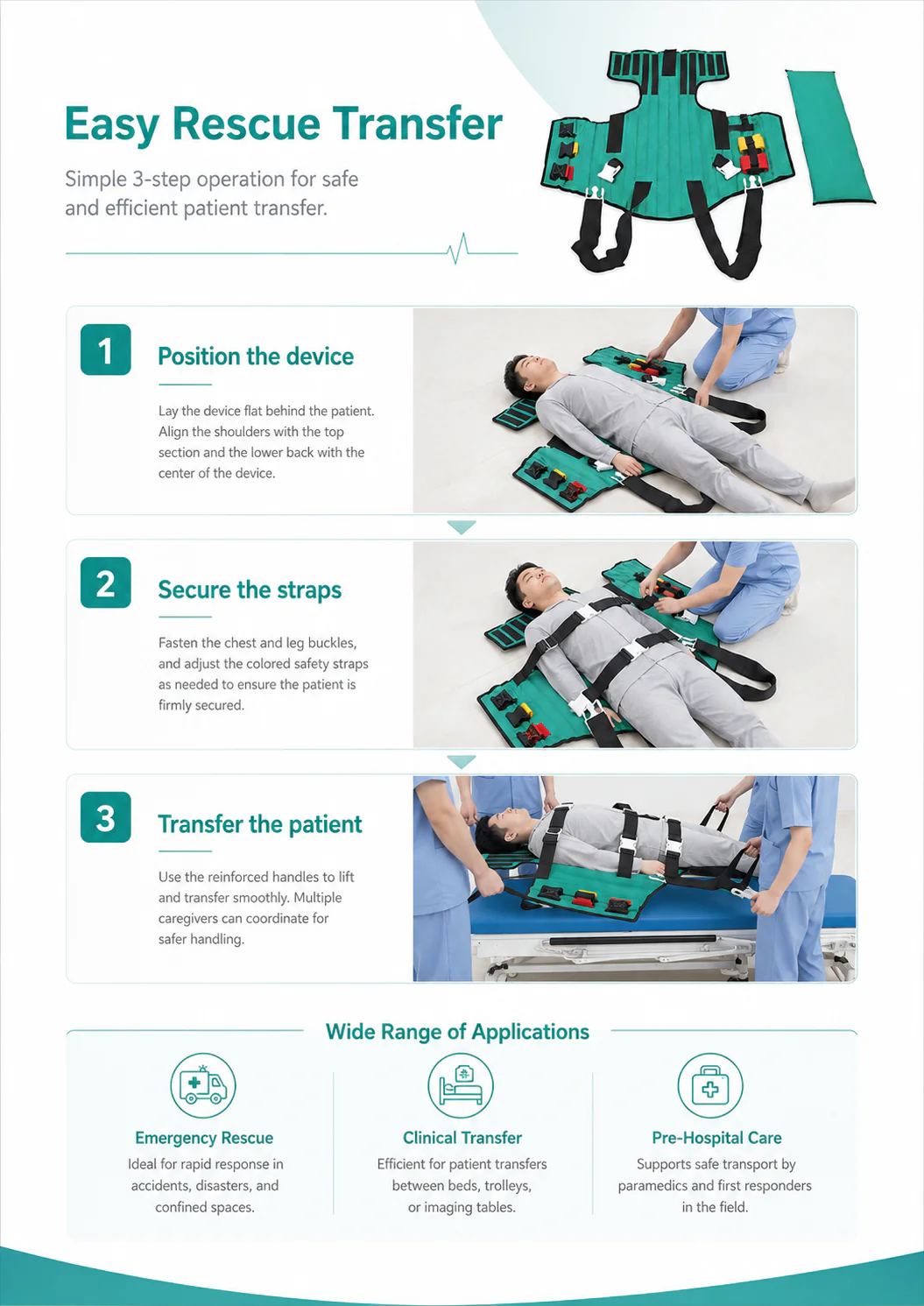
The KL-MS013 extrication device addresses one of the most demanding challenges in pre-hospital emergency care: safely removing a patient from a vehicle or confined space while maintaining spinal alignment. The vest-style design wraps around the patient's torso, head and pelvis, distributing support evenly and preventing the axial movement that can worsen spinal injuries during extraction — making it the go-to tool for road traffic accident response and vehicle extrication teams.
The wide padded body panel provides a stable, even surface that distributes pressure across the patient's back and minimises localised discomfort during the extraction and transfer process. Multiple adjustable straps with high-strength buckles — color-coded for rapid identification in stressful conditions — allow the rescue team to secure chest, abdomen and leg restraints in the correct sequence without confusion. Bright color coding (yellow, red) makes each strap's function immediately clear to team members who may not have used the device recently.
When not in use, the KL-MS013 rolls or folds into a compact package for kit bag storage and rapid deployment. The durable fabric surface is tough and easy to clean, resisting the wear and fluid contamination associated with trauma scene use. Reinforced handles at multiple positions allow the team to carry, reposition and guide the patient throughout the extrication process without losing control.
Key Features
- Color-coded adjustable straps — bright color-coded chest, abdomen and leg straps allow fast, error-resistant strap sequencing during extrication.
- High-strength adjustable buckles — secure and customized fit for different patient builds with strong mechanical retention.
- Reinforced carrying handles — multiple solid grip points for safe lifting, guiding and controlled patient movement throughout extraction.
- Wide padded body panel — evenly distributes pressure across the patient's back for stable spinal support during transfer.
- Durable easy-clean fabric — tough material resists wear, fluid and staining; easy to wipe down between deployments.
- Portable and compact — rolls or folds to a compact package (860 × 260 × 350 mm stored) for kit bag carry and rapid deployment.
Technical Specifications
| Parameter | Value |
|---|---|
| Model | KL-MS013 |
| Product type | Extrication device (rescue immobilization vest) |
| Size (stored) | 860 × 260 × 350 mm |
| Straps | Color-coded adjustable straps with high-strength buckles |
| Handles | Multiple reinforced carrying handles |
| Surface material | Durable easy-clean fabric |
Specifications are subject to change; dimensional tolerances may apply. Contact Keling Medical for the latest datasheet.
Applications
The KL-MS013 is used by ambulance and EMS crews at road traffic accidents and vehicle rollover incidents, fire service and rescue teams conducting vehicle and structural extrication, hospital emergency departments receiving transferred trauma patients, disaster response organizations and civil defense units, and industrial safety teams at sites where confined-space patient extraction may be required.