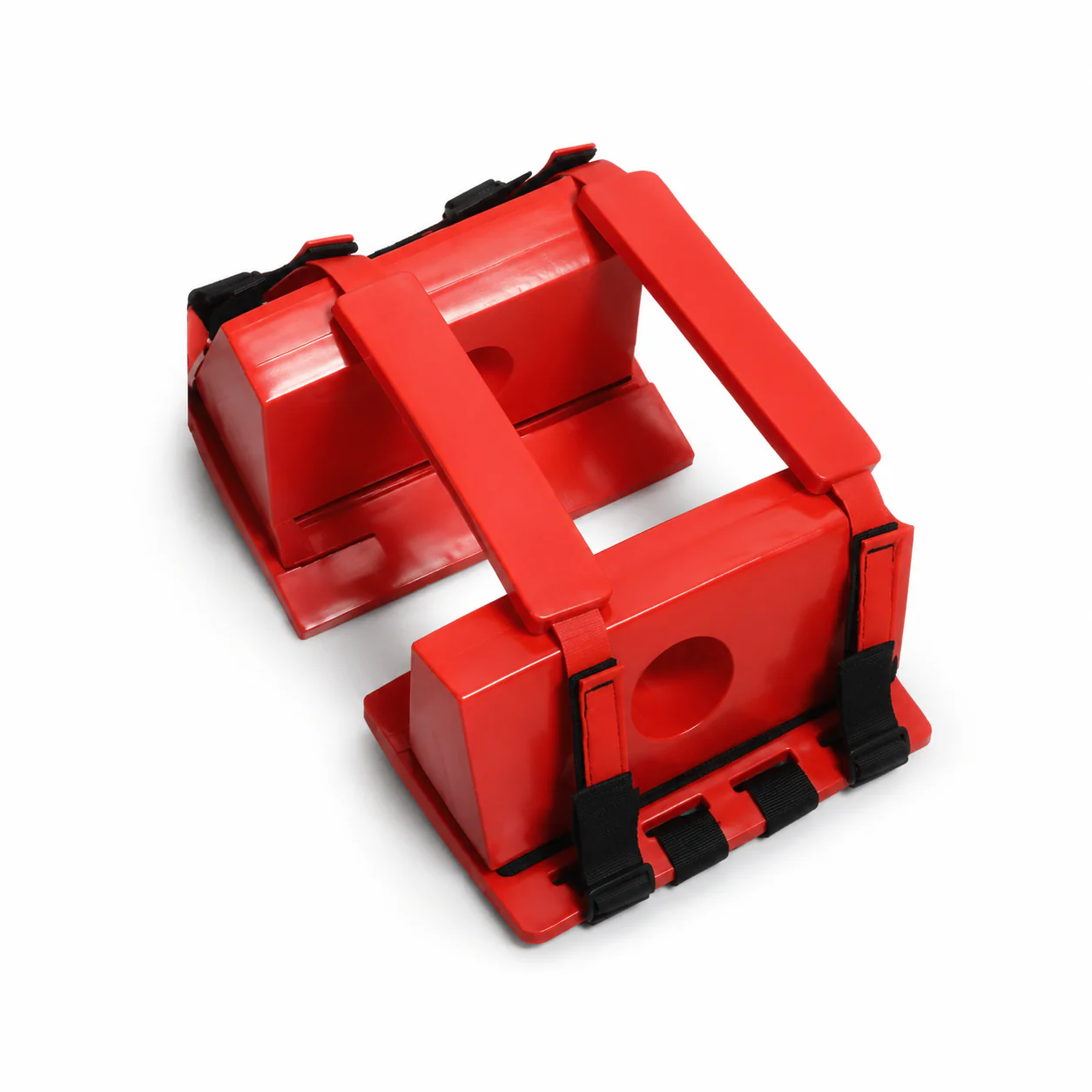
# KL-MS014 Head Immobilizer — High-Density Foam Blocks with Quick-Release Straps for Spine Board Use
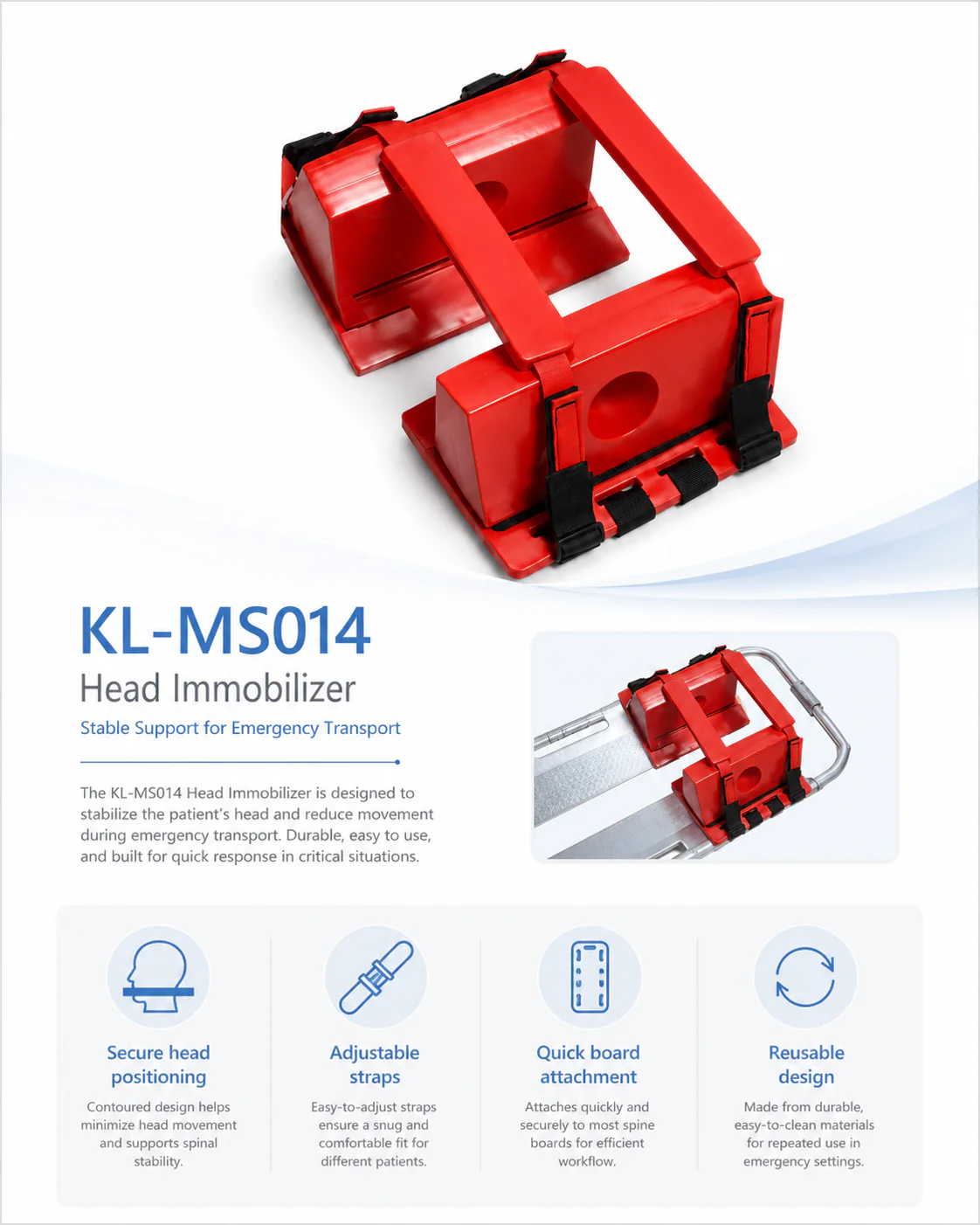
Quick answer: The Keling KL-MS014 is a head immobilizer consisting of high-density foam side blocks, adjustable quick-release straps, a wide base for rapid attachment to most spine boards, and a smooth non-porous surface for easy cleaning — designed to stabilize the head and minimize cervical movement during emergency transport. It is manufactured by Keling Medical (Keling Medical) for EMS teams, hospitals and rescue services.
Quick Facts
- The Keling KL-MS014 is a head immobilizer designed to stabilize a patient's head and reduce movement during emergency transport.
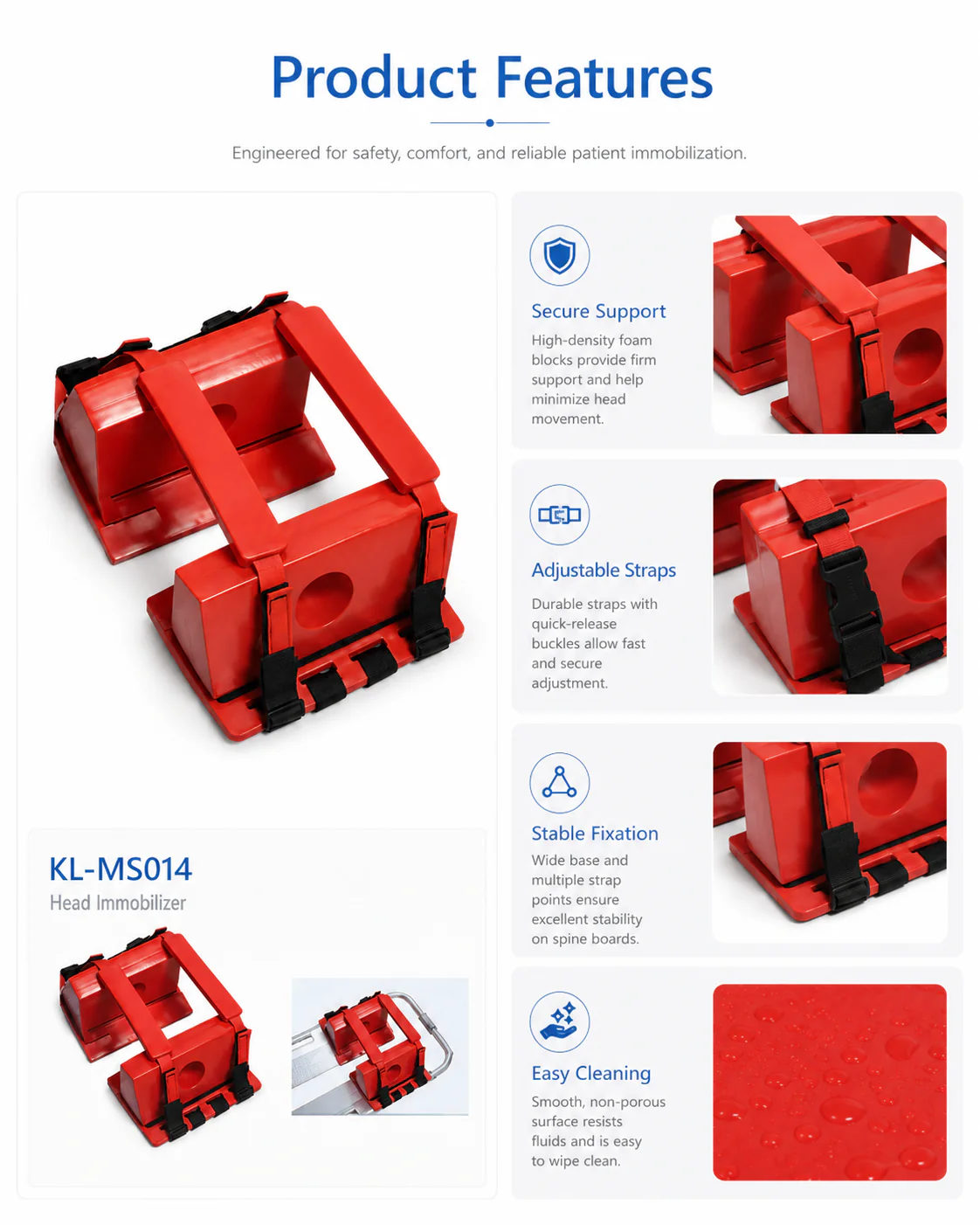
- High-density foam side blocks provide firm, controlled support that minimizes head movement on the spine board.
- Adjustable straps with quick-release buckles allow fast fitting and release across different patient head sizes.
- A wide base attaches quickly and securely to most standard spine boards for efficient workflow.
- The smooth, non-porous surface resists fluids and is easy to wipe clean between patient uses.
- The KL-MS014 is produced by Keling Medical, a Chinese medical equipment manufacturer with more than 20 years of industry experience.
Overview
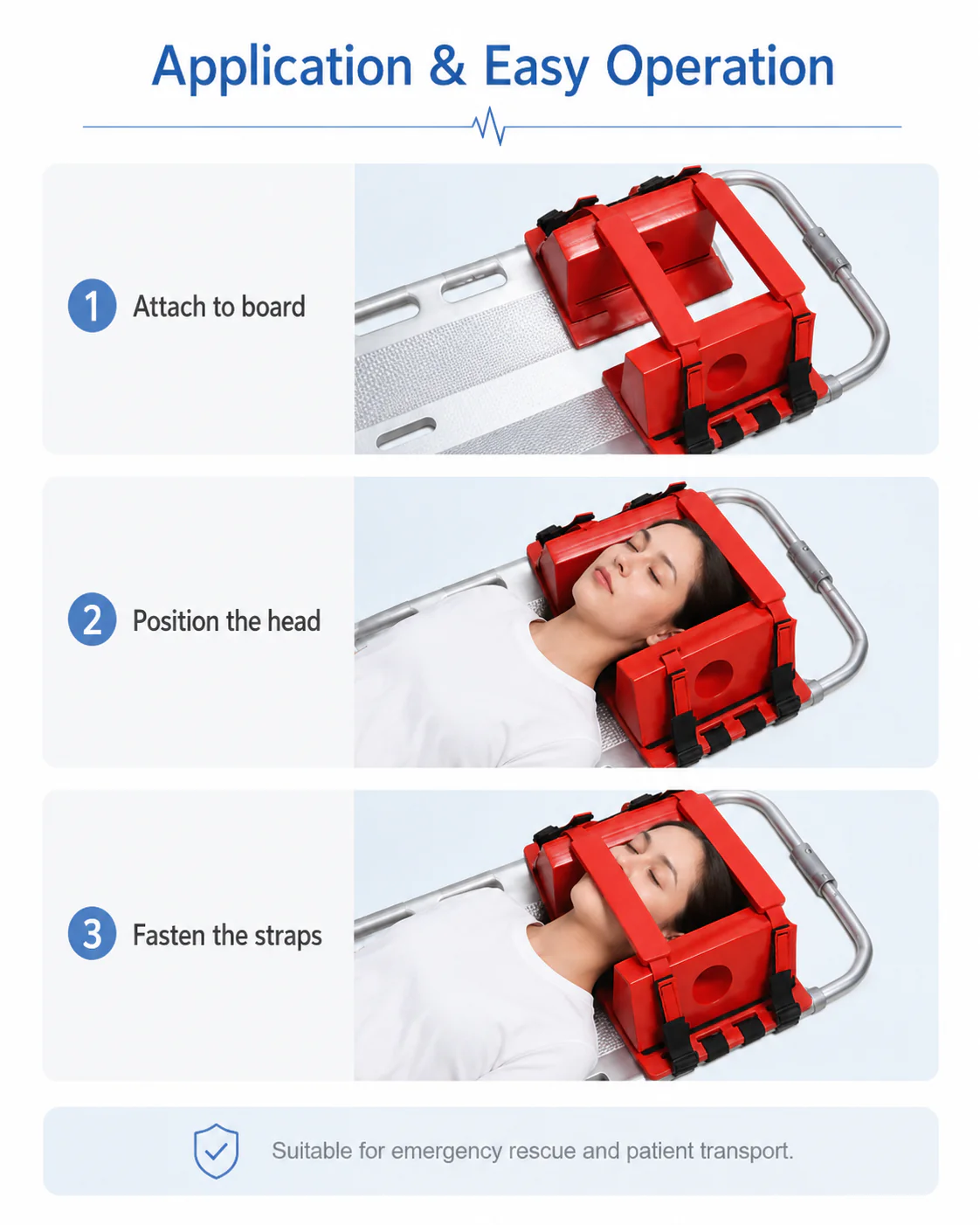
The KL-MS014 head immobilizer is a standard accessory for spine board protocols in pre-hospital EMS and emergency departments. When a patient with suspected cervical injury is placed on a spine board, the head immobilizer completes the immobilization package by preventing lateral and anterior-posterior head movement during vehicle transport, stretcher transfer and in-hospital repositioning. Without it, even a well-strapped patient on a rigid spine board retains significant freedom of head movement.
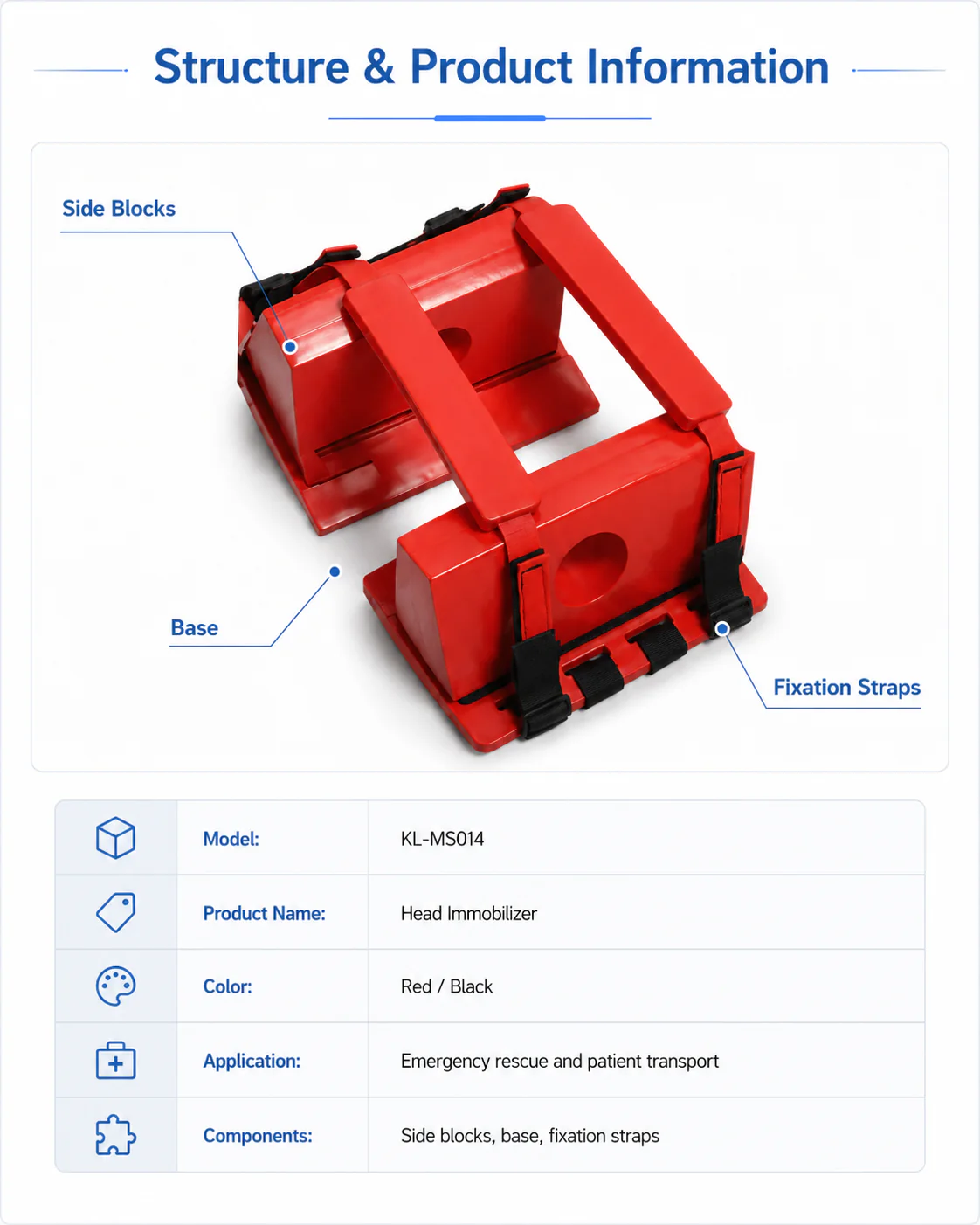
The two high-density foam blocks sit on either side of the patient's head and are held in place by the wide base plate, which attaches to the standard recessed rail of most commercially available spine boards. The blocks are firm enough to provide genuine restraint without creating pressure-point discomfort over the short to medium durations typical of pre-hospital transfers. Adjustable straps cross the forehead and chin, applying gentle but effective restraint.
Both straps use quick-release buckles that can be opened rapidly with one hand — an important feature when the patient needs urgent airway access or changes condition. The smooth, non-porous outer surface of the blocks repels fluids and cleans quickly with a standard surface disinfectant, meeting the hygienic expectations of shared emergency equipment in busy EMS and hospital settings.
Key Features
- High-density foam side blocks — firm support that minimizes lateral and anterior-posterior head movement on the spine board.
- Adjustable quick-release strap system — forehead and chin straps with one-hand quick-release buckles for fast application and emergency release.
- Wide base for spine board attachment — attaches quickly and securely to the recessed rail of most standard spine boards.
- Stable fixation — wide base and multiple strap points ensure excellent stability throughout patient transport.
- Easy-clean non-porous surface — smooth surface resists fluid absorption and wipes clean with standard disinfectants.
- Reusable design — durable construction supports repeated use in busy emergency and clinical environments.
Technical Specifications
| Parameter | Value |
|---|---|
| Model | KL-MS014 |
| Product type | Head immobilizer |
| Blocks | High-density foam side blocks |
| Patient restraint | Adjustable straps with quick-release buckles (forehead and chin) |
| Attachment | Wide base for standard spine board rail |
| Surface | Smooth, non-porous, easy-clean |
Specifications are subject to change; dimensional tolerances may apply. Contact Keling Medical for the latest datasheet.
Applications
The KL-MS014 is used as standard spine board head immobilization equipment in ambulance and pre-hospital EMS, hospital emergency departments and trauma bays, air ambulance and transport services, military medical corps managing spinal injury casualties, and any clinical or rescue setting requiring reliable cervical immobilization during patient transport on a rigid spine board.