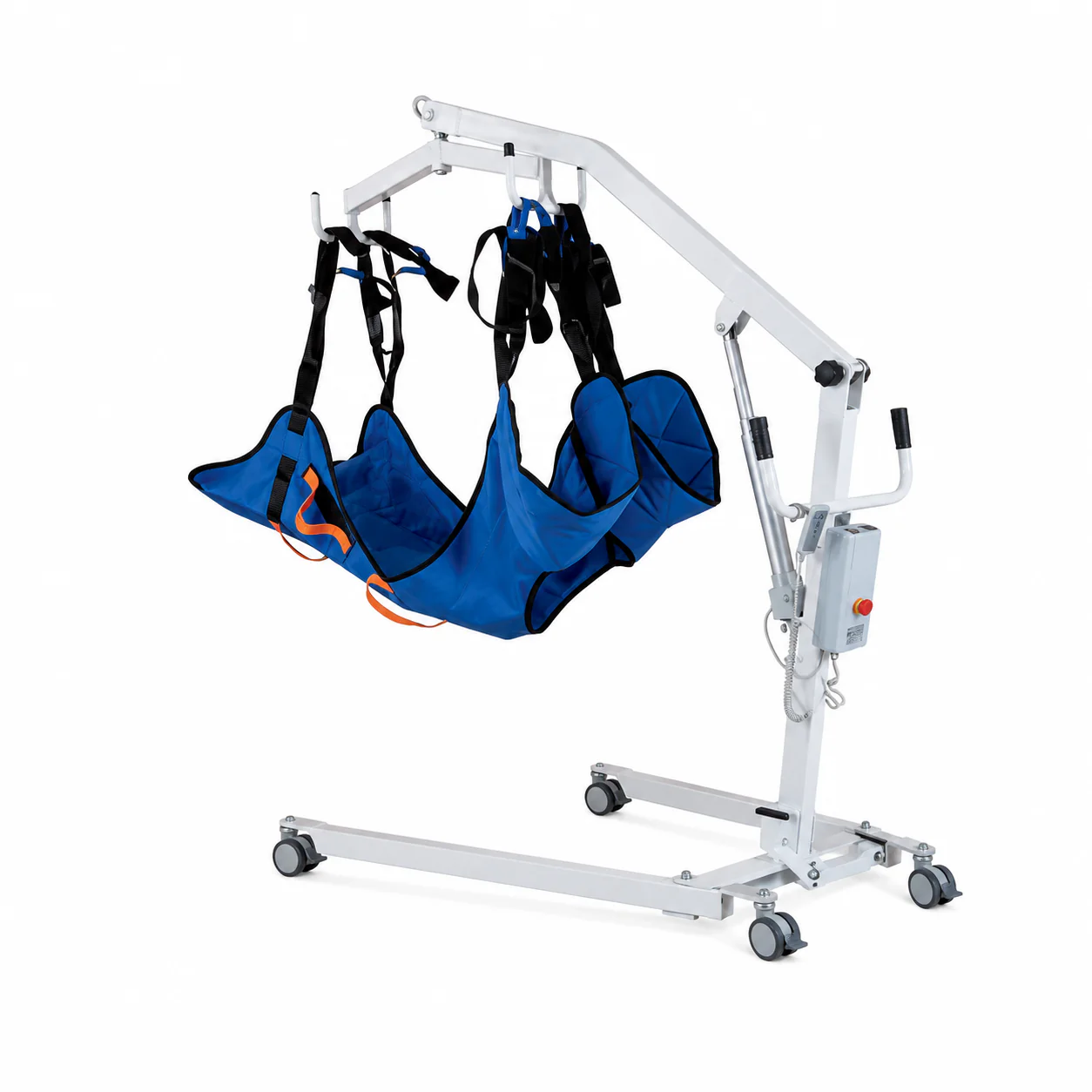
# KL-FS909 Electric Patient Transfer Lift — Motorised Hoist with Comfort Sling, 120 kg Capacity
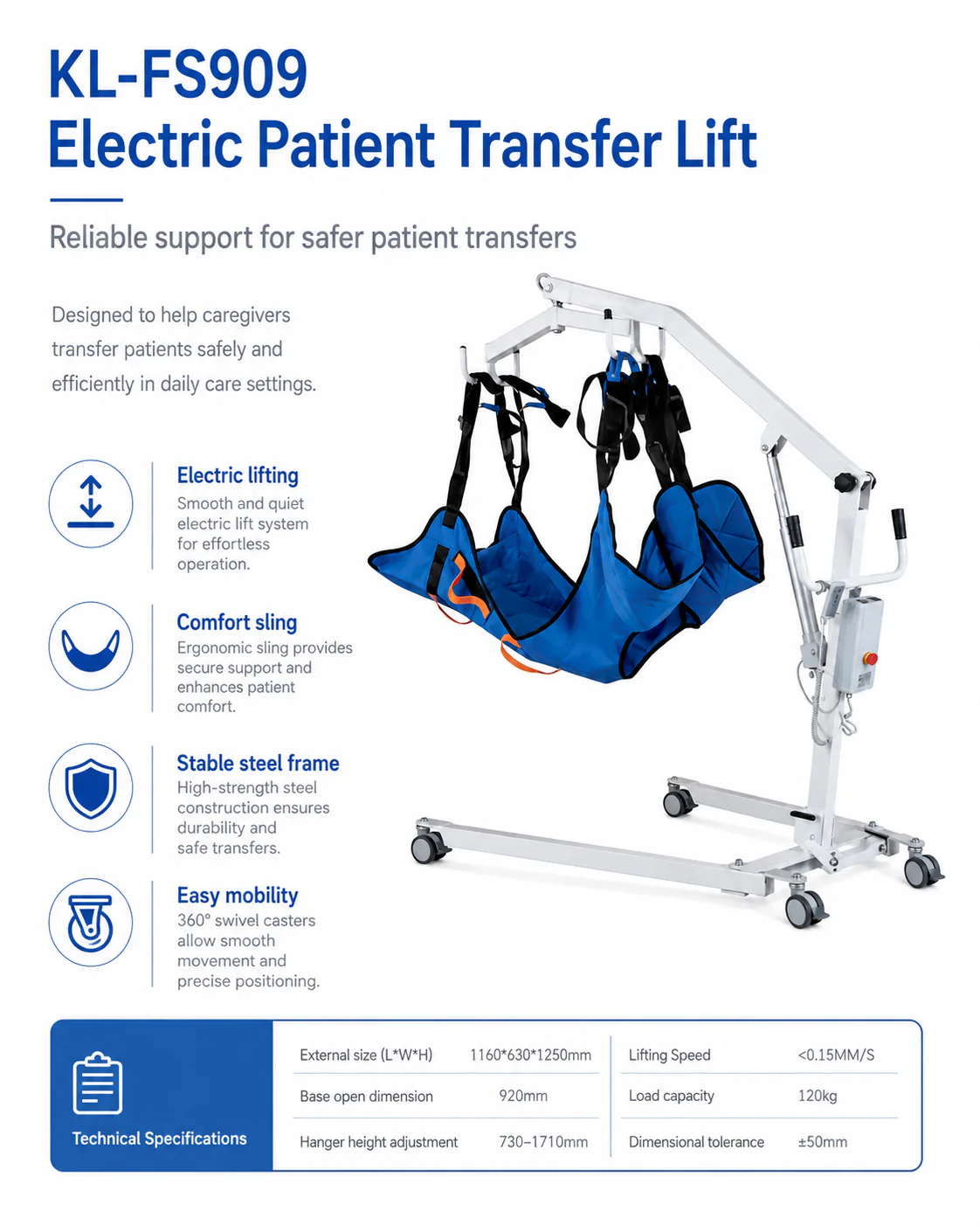
Quick answer: The Keling KL-FS909 is an electric patient transfer lift measuring 1160 × 630 × 1250 mm, with a hanger height adjustment of 730–1710 mm, a lifting speed below 0.15 mm/s, a 920 mm base opening dimension, a 120 kg load capacity and a dimensional tolerance of ±50 mm. It includes a comfort sling and is manufactured by Keling Medical (Keling Medical) for hospital, nursing home and home care patient transfer.
Quick Facts
- The Keling KL-FS909 is an electric patient transfer lift that enables caregivers to hoist and transfer patients with minimal physical effort.
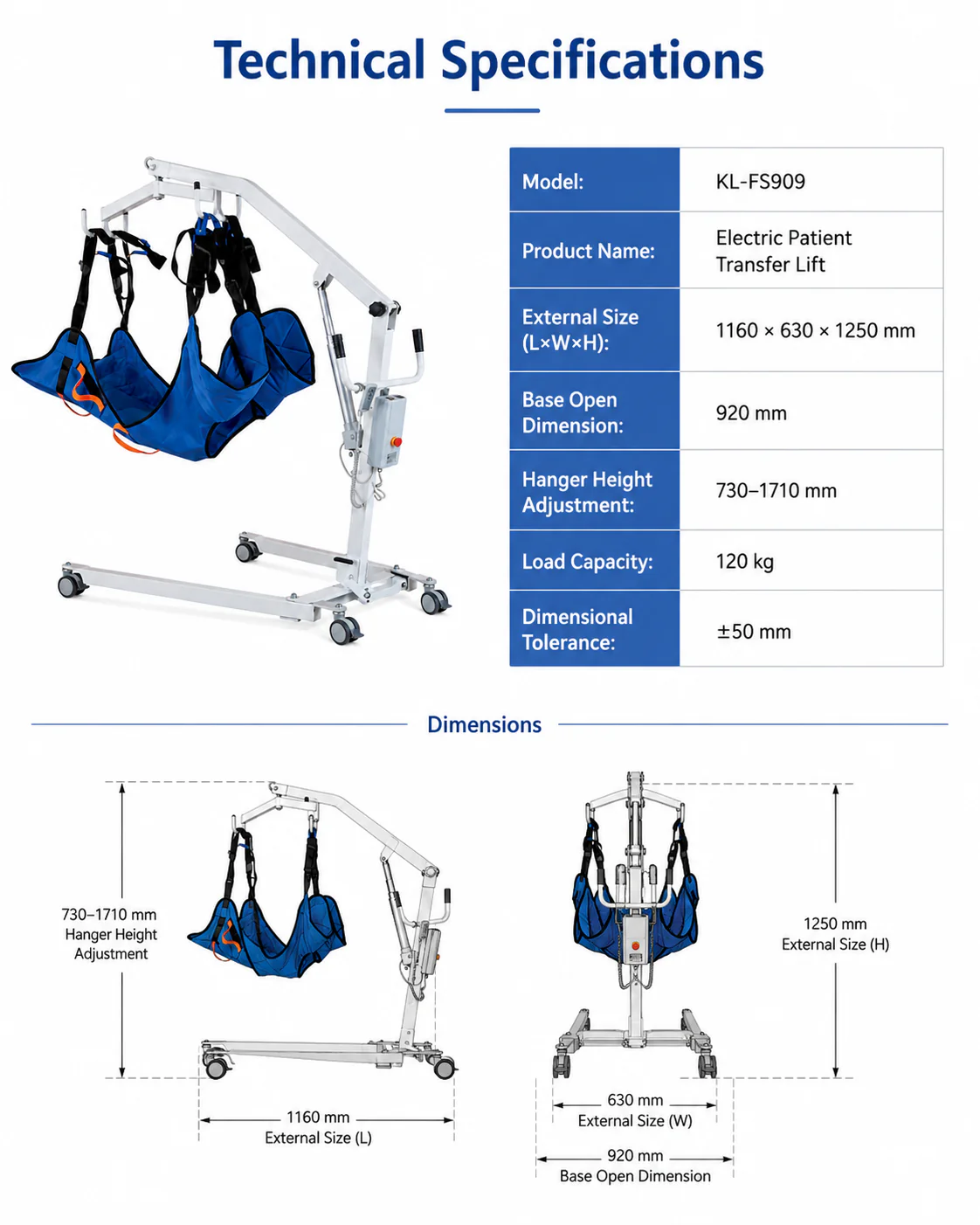
- Overall size is 1160 × 630 × 1250 mm; base open dimension is 920 mm.
- Hanger height adjusts from 730 to 1710 mm to cover bed-to-chair, floor-to-chair and other common transfer scenarios.
- Electric lifting speed is less than 0.15 mm/s for smooth, controlled, quiet operation.
- Maximum load capacity is 120 kg; dimensional tolerance is ±50 mm.
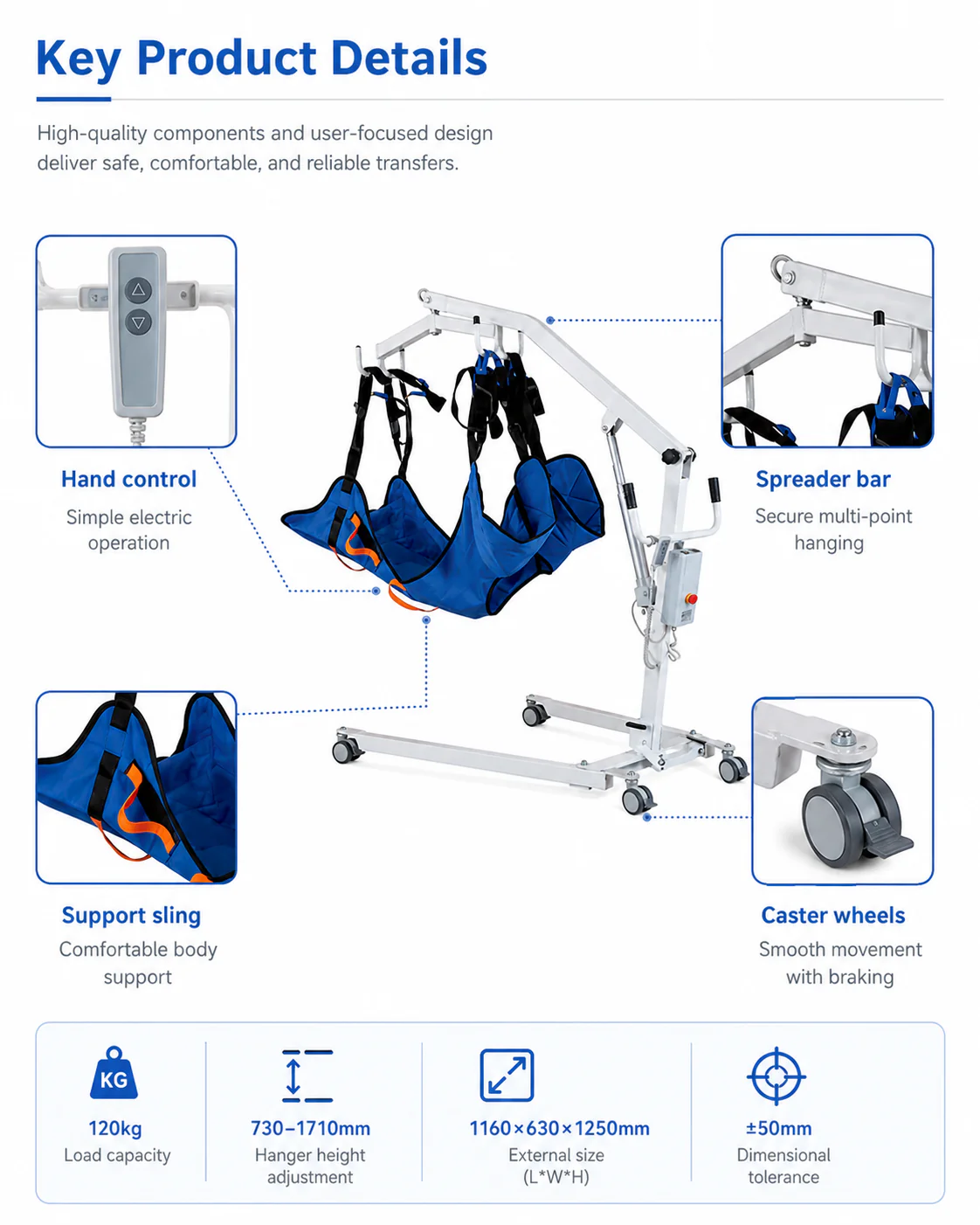
- An ergonomic comfort sling is included for secure, supportive patient positioning during transfers.
- 360° swivel casters allow smooth repositioning of the lift around beds, chairs and bathroom equipment.
Overview
The KL-FS909 electric patient transfer lift removes the physical burden of manual patient handling from nursing and care staff, reducing the risk of back injury while improving transfer safety for dependent patients. The motorised lift mechanism raises and lowers a patient suspended in a sling at a controlled speed below 0.15 mm/s — slow and smooth enough to prevent patient anxiety while still completing a transfer efficiently. A wide hanger height range of 730 to 1710 mm means the KL-FS909 can be used for floor rescues, bed transfers, chair-to-toilet transfers and repositioning in a bath without reconfiguring the unit.
The high-strength steel frame provides the structural rigidity necessary for repeated full-load lifting in a clinical environment, while 360° swivel casters enable the lift to be wheeled into position around beds, bathrooms and seating equipment even in confined spaces. The base opening of 920 mm allows the legs to straddle a standard wheelchair or toilet chair, positioning the patient precisely over the target seat.
The included comfort sling is ergonomically shaped to distribute the patient's weight evenly across the hips and back, reducing pressure points during the transfer and maintaining dignified positioning throughout. Multiple sling attachment points allow the lift angle to be adjusted for each patient's specific transfer type.
Key Features
- Electric lifting mechanism — smooth, quiet motorised lift with speed below 0.15 mm/s for controlled, safe patient transfers.
- 730–1710 mm hanger height range — wide vertical coverage accommodates floor-to-chair, bed-to-chair and bath transfers without reconfiguration.
- 120 kg load capacity — robust high-strength steel frame safely supports up to 120 kg patient weight.
- 920 mm base opening — adjustable leg spread of 920 mm allows the base to straddle wheelchairs, commode chairs and toilet equipment.
- Comfort sling included — ergonomic sling distributes patient weight evenly and maintains dignified positioning during all transfer types.
- 360° swivel casters — smooth-rolling casters with locking brakes allow precise positioning in confined clinical spaces.
- Stable steel frame — high-strength construction ensures durability through repeated daily transfers in demanding care environments.
Technical Specifications
| Parameter | Value |
|---|---|
| Model | KL-FS909 |
| Product type | Electric patient transfer lift |
| External size (L × W × H) | 1160 × 630 × 1250 mm |
| Base open dimension | 920 mm |
| Hanger height adjustment | 730–1710 mm |
| Lifting speed | <0.15 mm/s |
| Load capacity | 120 kg |
| Dimensional tolerance | ±50 mm |
Specifications are subject to change; dimensional tolerances may apply. Contact Keling Medical for the latest datasheet.
Applications
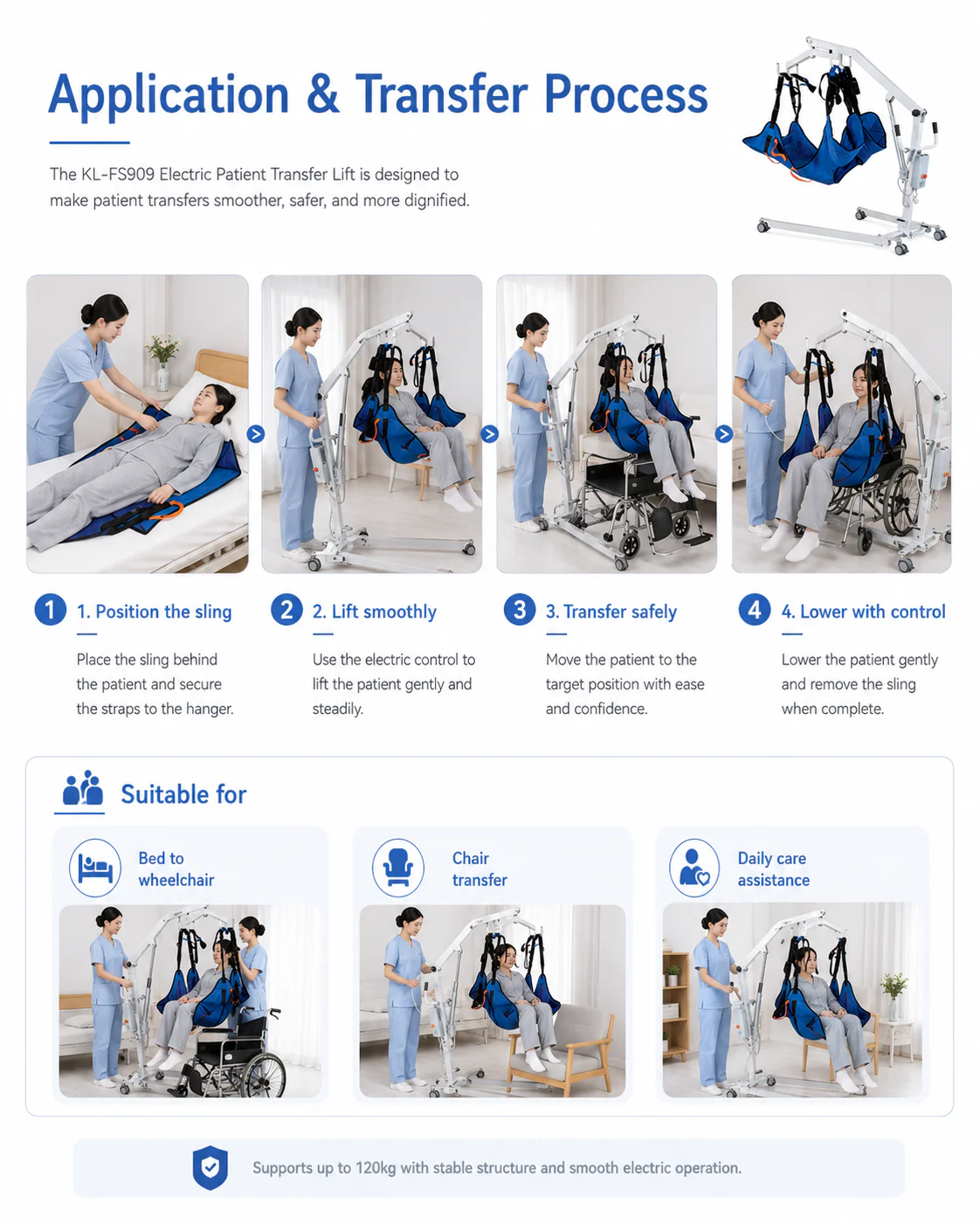
The KL-FS909 electric patient transfer lift is used in hospital nursing wards, intensive care units, geriatric and long-term care facilities, rehabilitation departments, home care settings and specialist community nursing. It is particularly valuable for transfers involving bariatric patients, spinal cord injury patients, post-surgical patients with no weight-bearing capacity, and any patient who cannot assist with their own transfer.