# KL-LY006 Reclining Wheelchair — High-Back Commode Chair with 90°–180° Backrest Adjustment
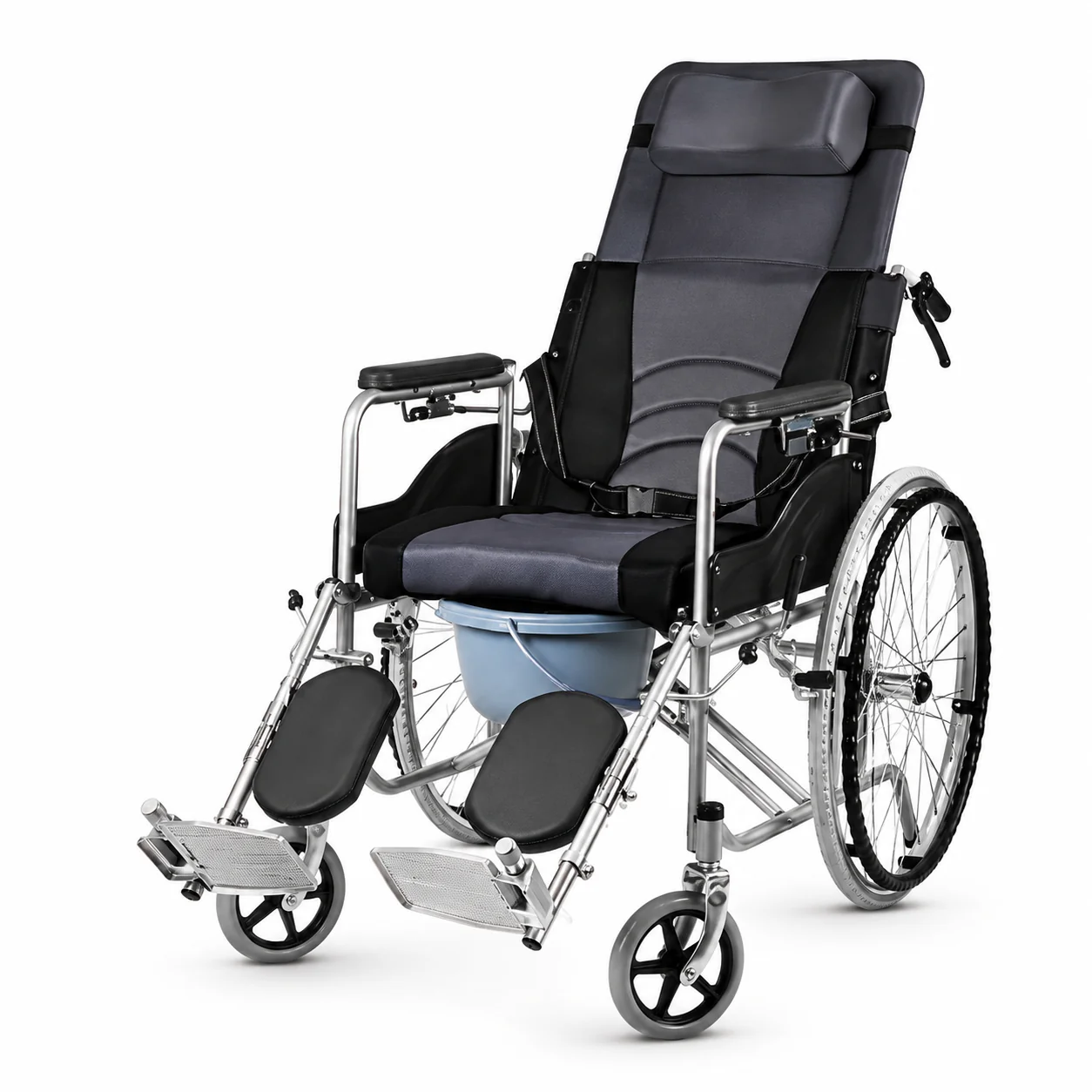
Quick answer: The Keling KL-LY006 is a reclining wheelchair with a high-back cushioned seat, backrest adjustable from 90° to 180°, a 420 × 460 mm cushion, 7/24-inch front/rear wheels, a 100 kg load capacity and an integrated commode opening. Overall size is 1030 × 290–680 × 890 mm. It is manufactured by Keling Medical (Keling Medical) for patients needing extended comfort and postural management.
Quick Facts
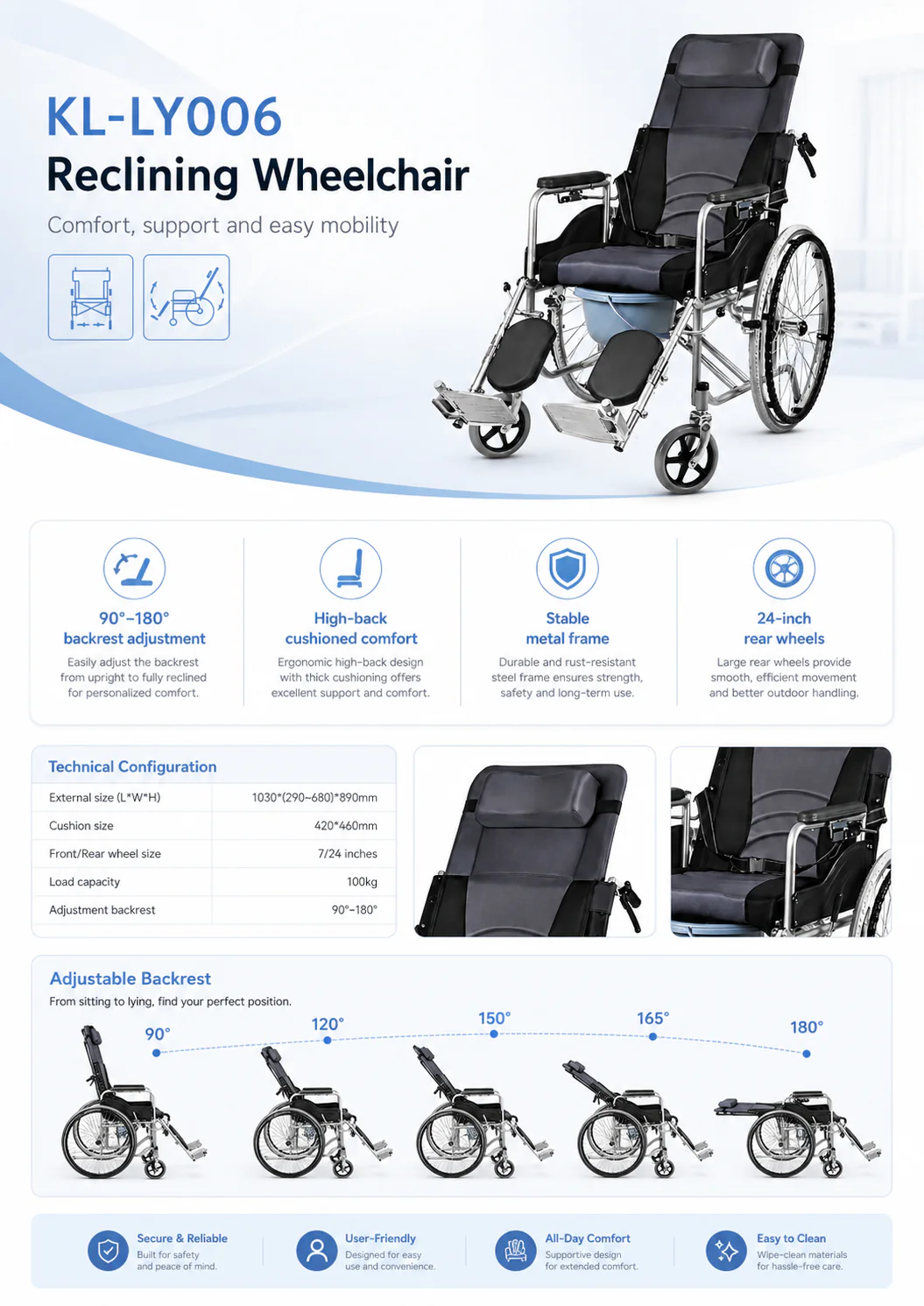
- The Keling KL-LY006 is a reclining wheelchair with a high-back cushioned headrest, adjustable from fully upright (90°) to fully reclined (180°).
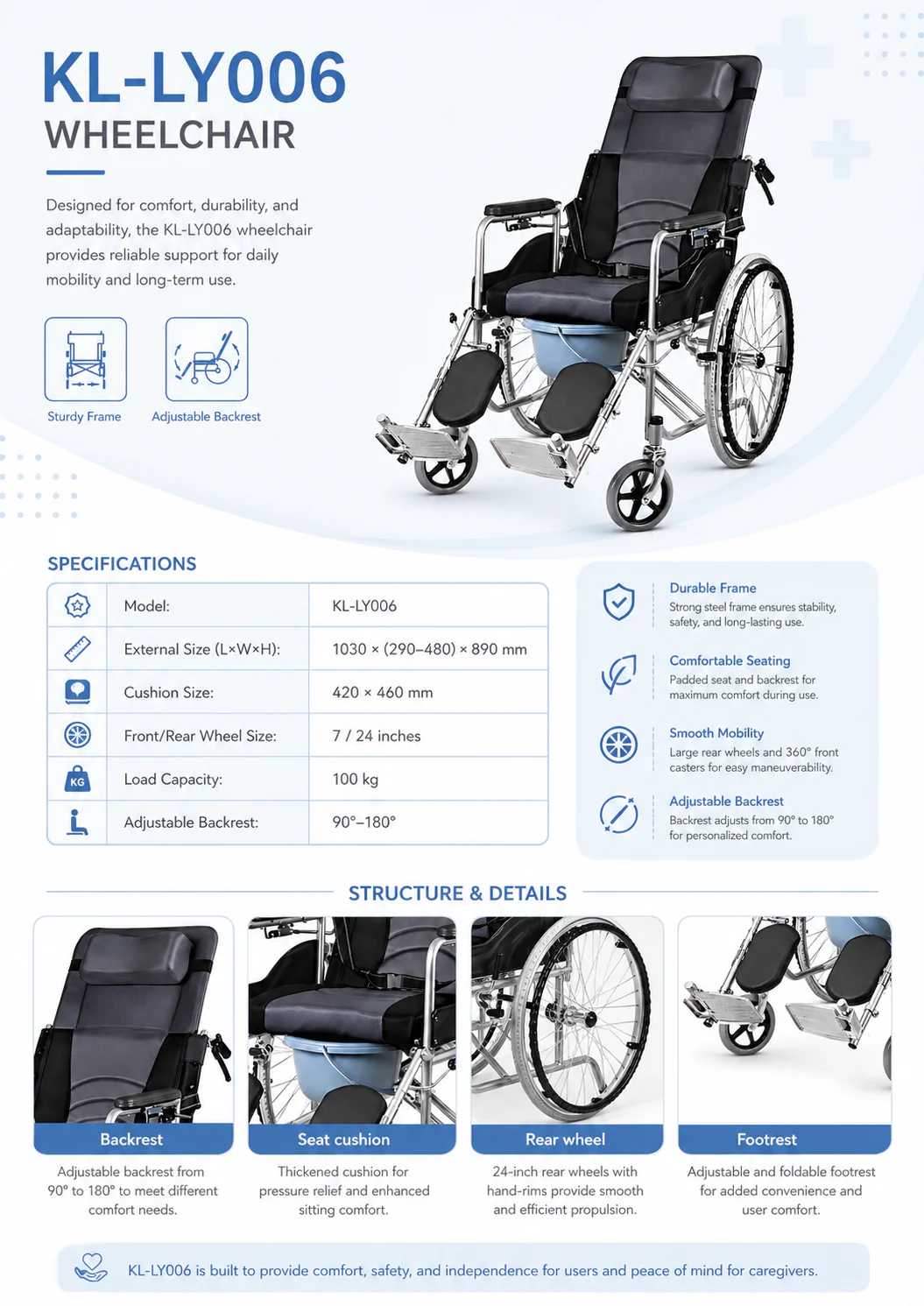
- External dimensions are 1030 × (290–680) × 890 mm; cushion size is 420 × 460 mm.
- Front/rear wheel sizes are 7 and 24 inches; load capacity is 100 kg.
- The backrest adjusts through five positions — 90°, 120°, 150°, 165° and 180° — for personalised comfort and postural management.
- An integrated commode opening allows toileting without transferring the user to a separate chair.
- Durable and rust-resistant steel frame with wipe-clean materials for long-term clinical and home use.
Overview
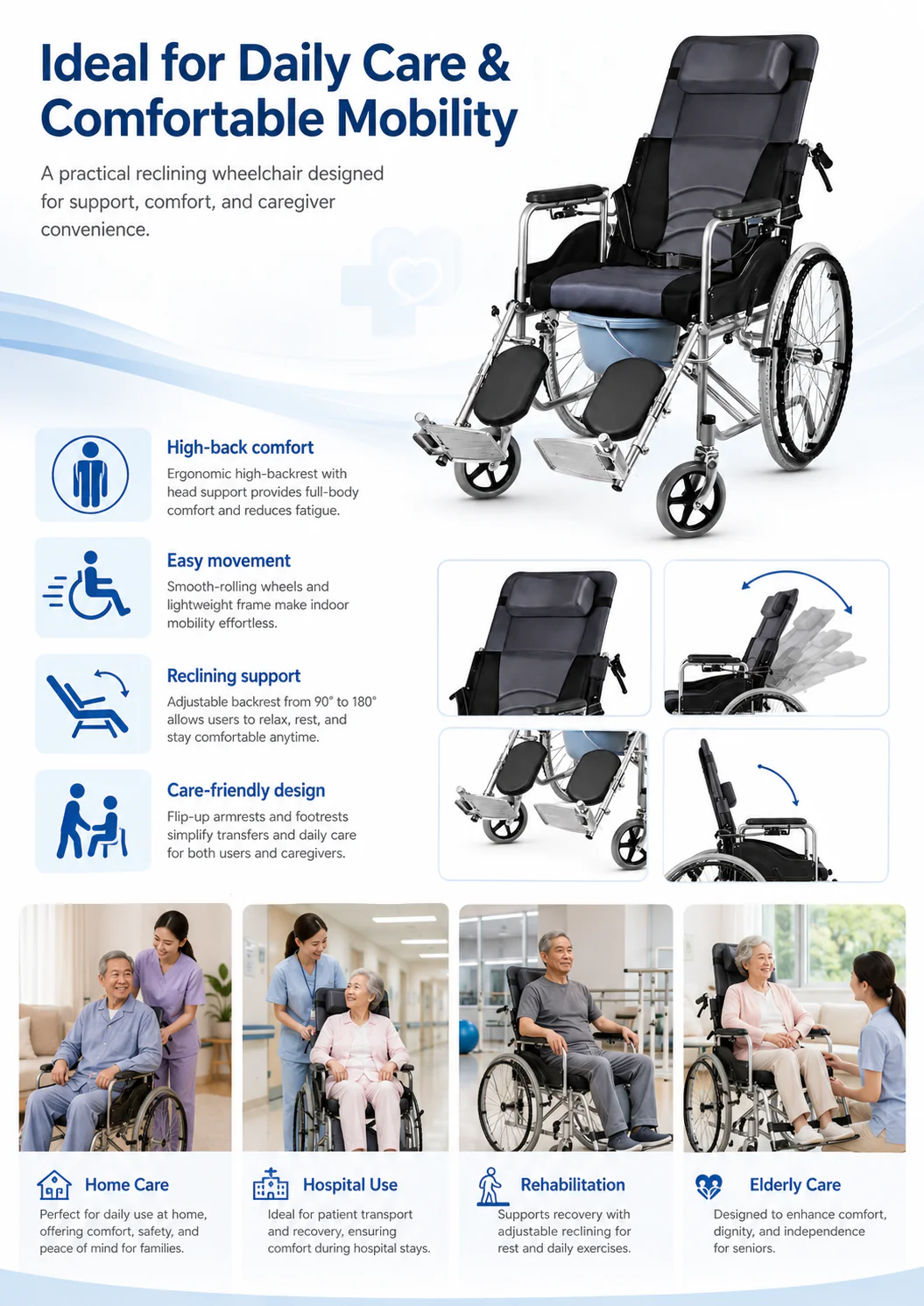
The KL-LY006 reclining wheelchair is designed for users who spend extended periods in the chair and require more than a standard upright position throughout the day. The backrest adjusts smoothly from 90° (standard sitting) to 180° (fully flat/lying), passing through five clinically useful intermediate positions at 120°, 150° and 165°. This range supports pressure relief routines, postural management for users who cannot reposition independently, rest periods without bed transfer, and clinical procedures that benefit from a reclined or semi-reclined position.
The high-back design includes a headrest with thick cushioning that provides cervical and occipital support at any recline angle, reducing the risk of head dropping or neck fatigue during extended sitting. The 420 × 460 mm seat cushion is generously proportioned and the overall 24-inch rear wheel provides the outdoor performance expected of a larger, more capable wheelchair.
An integrated commode opening beneath the seat means that toileting assistance can be provided without the effort and risk of a transfer to a separate commode chair — particularly important for users at high transfer-risk due to frailty, spasticity or pressure injury. The rust-resistant steel frame and wipe-clean upholstery support the hygiene standards required in clinical environments.
Key Features
- 90°–180° adjustable backrest — five positions (90°, 120°, 150°, 165°, 180°) for personalised postural management, rest and clinical care.
- High-back cushioned headrest — ergonomic high back with thick cushion provides cervical support at all recline angles.
- 420 × 460 mm seat cushion — generously sized cushion supports extended seated use and pressure management.
- Integrated commode opening — built-in opening enables toileting in situ without patient transfer.
- 24-inch rear wheels — large rear wheels for smooth, efficient outdoor movement and better obstacle clearance.
- 100 kg load capacity — rust-resistant steel frame supports up to 100 kg in all configurations.
- Wipe-clean materials — easy-to-clean seat and back surfaces for clinical hygiene maintenance.
Technical Specifications
| Parameter | Value |
|---|---|
| Model | KL-LY006 |
| Product type | Reclining wheelchair |
| External size (L × W × H) | 1030 × (290–680) × 890 mm |
| Cushion size | 420 × 460 mm |
| Front/Rear wheel size | 7 / 24 inches |
| Load capacity | 100 kg |
| Backrest adjustment | 90°–180° |
Specifications are subject to change; dimensional tolerances may apply. Contact Keling Medical for the latest datasheet.
Applications
The KL-LY006 reclining wheelchair is suited to nursing home and hospital patients with conditions requiring frequent position changes (pressure injury prevention), users with severe neurological conditions (spinal cord injury, stroke, motor neuron disease), post-surgical patients with limited mobility, palliative care settings, and home care for elderly users who spend most of their waking hours in the wheelchair and require toileting and resting support without transfers.