Buying guides
Massage tables: electric vs hydraulic vs portable, and how to choose
How to choose a massage table for a clinic, spa or home: electric vs hydraulic lift, portable folding tables, width, height range, padding and what to specify.

A massage table is a padded, usually 28–32 in (71–81 cm) wide treatment surface with a face cradle, built in three main forms: portable folding tables, hydraulic lift tables and electric lift tables. Portable tables suit mobile therapists and home use; electric massage tables suit busy clinics where the height changes many times a day; hydraulic tables lift without mains power.
This guide compares the three types, explains the dimensions and features that matter, and lists what to put in a specification if you are buying for a spa, physiotherapy clinic, wellness center or distribution business.
What are the main types of massage table?
There are three types, defined by how (or whether) the height changes. Everything else, from upholstery to accessories, comes after that choice.
- Portable (folding) massage table. A lightweight table that folds in half along its length, usually with a carry case. Height is set with telescoping legs and locking knobs before the session.
- Stationary massage table. A fixed or manually adjustable table that stays in one room. Stationary massage tables are heavier, more stable and often have storage shelves or cabinets underneath.
- Lift tables (hydraulic or electric). Stationary tables that change height during use. These are what most people mean by an adjustable massage bed in a professional setting.
| Type | Height change | Typical use | Strengths | Trade-offs |
|---|---|---|---|---|
| Portable folding | Manual, before session | Mobile therapists, events, home | Light, cheap, stores flat | Lower working load, height fixed per session |
| Stationary fixed | Manual or none | Single-therapist rooms | Very stable, simple, durable | One height suits only one therapist and technique |
| Hydraulic lift | Foot pump, during session | Rooms without reliable power | No electricity needed | Heavy, slower lift, seals need maintenance |
| Electric lift | Foot switch or hand control | Busy clinics, multi-therapist rooms | Fast, quiet, precise | Needs mains power, costs more |
Electric or hydraulic massage table: which is better?
For most clinics, an electric massage table is the better choice because the therapist can change height in seconds with a foot switch, without breaking contact with the client. A hydraulic massage table is the right answer where mains power is not available at the treatment position, or where buyers want a mechanism with no electrical components.
How an electric massage table works
An electric lift massage table uses one or more electric linear actuators to raise and lower the frame. Control is by a foot switch, a hand pendant or, on higher-end models, a perimeter bar around the base that can be pressed from any side. Some electric massage beds also power the backrest and leg rest, which is useful for facial and beauty treatments that move a client from lying to semi-seated.
Points to check:
- Duty cycle. Linear actuators are designed for intermittent use, often around 10% (for example, 2 minutes running followed by 18 minutes of rest). This is ample for massage, but ask for the figure.
- Voltage and plug. Confirm 110–120 V or 220–240 V and the plug type for the destination country.
- Electrical safety. If the table is sold as a medical device, ask which electrical safety standard it was tested to; IEC 60601-1 is the general standard for medical electrical equipment.
- Lowest height. A low starting height makes it easier for clients to sit and swing their legs on.
How a hydraulic massage table works
A hydraulic massage bed is raised by repeatedly pressing a foot pedal that pumps oil into a cylinder; a release pedal or lever lowers it. Hydraulic bases are usually heavy and very stable. The trade-offs are slower adjustment, more effort for the therapist and the need to inspect seals over the table's life. Some tables described as hydraulic are actually electro-hydraulic, with an electric pump, so read the specification rather than the product name.
Portable and folding massage tables
A portable massage table is the right tool when the table has to travel: home visits, sports events, corporate wellness days or small rooms that double as offices. A travel massage table typically folds to a case about the size of a large suitcase.
What separates a good folding massage table from a poor one:
- Frame material. Aluminum frames are lighter to carry; hardwood frames are often quieter and feel more solid.
- Leg bracing. Cable or strut supports between the legs stop the table racking from side to side under load.
- Working load. Manufacturers often publish a high static load and a lower working (dynamic) load. The working load is the figure that matters during massage, when the therapist leans on the client.
- Height adjustment. Telescoping legs with locking knobs or pins; check that all four legs share the same markings so the table sits level.
- Weight. Many portable tables weigh roughly 11–16 kg (24–35 lb) without accessories; heavier tables are sturdier but harder to carry up stairs.
For home use, a portable table is usually the most practical home massage table because it can be folded away after each session.
Massage table dimensions: width, length and height
Most professional massage tables are 72–76 in (183–193 cm) long, 28–30 in (71–76 cm) wide, and adjust between roughly 22 and 34 in (56 and 86 cm) high. Choose width first, because it decides both client comfort and therapist ergonomics.
| Dimension | Common range | Notes |
|---|---|---|
| Length | 72–76 in (183–193 cm) | Add a face cradle for tall clients; it extends the effective length by 8–12 in (20–30 cm) |
| Standard width | 28–30 in (71–76 cm) | Good balance of client comfort and therapist reach |
| Extra wide massage table | 32–35 in (81–89 cm) | More comfortable for larger clients; harder reach across the table |
| Height range | about 22–34 in (56–86 cm) | Wider ranges suit teams of therapists of different heights |
| Padding | 2–4 in (5–10 cm) foam | Thicker is softer but can reduce stability on firm techniques |
A 35 inch wide massage table is a specialist choice. It improves stability and comfort for larger clients and for side-lying positions, but it can push the therapist into overreaching, which is a common cause of shoulder and back strain. Many clinics keep one wide massage table and standard tables in the other rooms.
Height adjustment and therapist ergonomics
The single biggest ergonomic factor for the therapist is table height. Deep tissue and sports massage need a lower table so the therapist can use body weight; lighter techniques and facial work need a higher one.
On a fixed table, the height is a compromise between techniques and between therapists. An adjustable height massage table removes that compromise. This is why multi-therapist clinics increasingly specify electric lift tables: each therapist can set their own height in seconds, and a low position makes it easier for older clients to get on.
Keling's KL-BC126 Massage Table is a massage table with a lightweight aluminum frame, a 1800 × 600 mm (70.9 × 23.6 in) surface, height adjustment from 550 to 720 mm (21.7–28.3 in) and a backrest that adjusts to 60°.
Electric beauty and facial massage beds
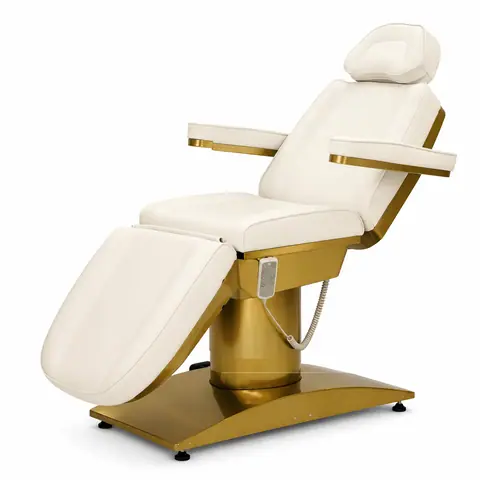
A fully electric facial massage bed powers the height, backrest and leg rest, so the client can be moved from flat to semi-reclined without getting up. This suits facial, cosmetic, eyelash and some spa treatments, and is increasingly used in aesthetic clinics.
Two examples from Keling's examination and treatment table range:
- The KL-BC124 Electric Beauty Table electric beauty table has electric height lifting from 650 to 860 mm (25.6–33.9 in), a backrest and a leg rest each adjustable 0–70°, a thickened steel plate construction and optional foot control.
- The KL-BC128 Electric Beauty Table electric beauty table measures 1920 × 600 mm (75.6 × 23.6 in), lifts from 640 to 760 mm (25.2–29.9 in), rotates 360°, and has an electric backrest with foot pedal control and PU leather upholstery over high-rebound sponge.
Upholstery, padding and the massage bed mattress
Upholstery has to survive oils, lotions and daily disinfection. PU (polyurethane) leather and PVC-based vinyl are the common choices; ask whether the cover is resistant to massage oils and to the disinfectants your facility uses, because some cleaners crack cheaper coverings within months.
For padding, look for multi-layer foam: a firmer base layer for support and a softer top layer for comfort. A removable massage bed mattress or topper adds comfort without changing the table, and is easier to replace than the whole top. Stitching should be on the sides, not across the lying surface, so fluids do not soak into the seams.
Accessories worth specifying
- Face cradle with adjustable angle and a breathable cushion
- Face hole with plug, as an alternative or addition to a cradle
- Arm shelf or side arm extenders for prone positioning
- Bolsters for knees and ankles
- Storage shelf or cabinet under stationary tables
- Paper roll holder for single-use covers
- Castors with locks if the table needs to move for cleaning
What to put in a massage table specification
If you are buying massage tables for sale in your market, or equipping a chain of clinics, a written specification makes quotes comparable. Include:
- Type: portable, stationary, hydraulic or electric
- Surface length and width in mm and in, and overall length with face cradle
- Height range (lowest and highest)
- Number of sections and the angle range of backrest and leg rest
- Working load (not only static load)
- Frame material and finish
- Upholstery material, color and cleaning compatibility
- For electric tables: voltage, plug type, control type, actuator duty cycle and electrical safety test reports
- Accessories included
- Packing size and weight per unit, for freight planning
Ask the manufacturer for its quality management certificate (Keling Medical holds ISO 13485:2016, certified by SGS) and for the test reports and declarations that apply to the specific model and destination country. If you plan to sell under your own brand, ask about OEM options at the same time. Our guide to choosing a medical equipment supplier covers the wider supplier checks.
Massage table, treatment table or exam table?
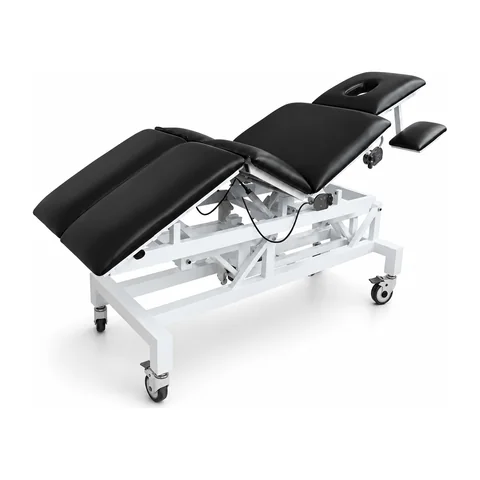
If the table will also be used for clinical assessment or rehabilitation, a massage table may not be the right tool. A physical therapy treatment table has a wider height range and articulating sections for positioning, while a medical exam table is built for quick, hygienic patient turnover. Keling's KL-BC127 Physiotherapy Table, for example, is an electric physiotherapy table with a 490–890 mm (19.3–35.0 in) height range.
Next steps
Decide first how often the table moves and how often its height changes; that settles portable, hydraulic or electric. Then fix width, height range, working load and upholstery in a short specification. Browse the examination and treatment tables range, and send your specification and quantities for a quotation with lead time.
Frequently asked questions
Is an electric or hydraulic massage table better?
An electric massage table is better for most busy practices because height changes are fast, quiet and possible mid-session with a foot switch. A hydraulic massage table is a good choice where mains power is unreliable or unavailable at the treatment position, but its foot pump is slower and the seals need periodic checking.
How much is a massage table?
Massage table price depends mostly on the lift mechanism. Portable folding tables are the least expensive, fixed-height stationary tables sit in the middle, and hydraulic and electric lift tables cost the most. Upholstery grade, frame material, number of articulating sections and order quantity also move the price, so compare quotes on the same specification.
What size massage table should I buy?
Most professional massage tables are about 72–76 in (183–193 cm) long and 28–30 in (71–76 cm) wide. Choose an extra wide massage table of 32 in (81 cm) or more if you treat many larger clients, but remember that every extra inch makes it harder for the therapist to reach across without straining.
What height should a massage table be?
A common rule of thumb is to set the table so the surface is roughly at the therapist's knuckle or wrist height with arms hanging, then lower it for deep tissue work and raise it for lighter techniques. An adjustable height massage table lets each therapist set this precisely instead of working at a compromise height.
Is a portable massage table good enough for a home massage table?
Yes. A folding massage table is usually the best home massage table because it can be stored when not in use and moved to any room. Check the working load rating, cable or strut supports, and padding thickness, and make sure the face cradle adjusts easily.
What is the difference between a massage table and a physiotherapy table?
A massage table is optimized for client comfort, with a face cradle and thick padding. A physiotherapy table is built for clinical treatment, with a wider height range, articulating sections for positioning and a frame designed for patients who may need help getting on and off.
Can a massage table be used as a clinic treatment bed?
It can for simple treatments, but a dedicated examination or treatment table is usually more appropriate in a medical setting. Clinical tables tend to have higher working loads, easier-to-disinfect upholstery and lower entry heights, which help with frail or less mobile patients.