Buying guides
Gynecologist chair and gynecological table: a buyer's guide for OB/GYN
How to choose a gynecologist chair or gynecology table: manual vs electric, heights, stirrups and leg rests, upholstery, accessories and what to ask suppliers.

A gynecologist chair is a specialized examination table that supports the patient in a semi-reclined lithotomy position, with adjustable leg rests or stirrups and an open or removable seat end that gives the clinician access for pelvic examinations and minor procedures. Clinics choose between manual fixed-height gynecology tables and electric chairs that adjust height, backrest and seat tilt.
This buyer's guide is for OB/GYN practices, hospital outpatient departments, family planning clinics and distributors. It explains the types, the dimensions that matter, leg-support styles, accessories, hygiene and what to put in a specification.
What is a gynecology chair used for?
A gynecology chair is used for pelvic and speculum examinations, cervical screening, colposcopy, IUD insertion and removal, and minor gynecological procedures. The chair holds the patient comfortably in the lithotomy position so the clinician, usually seated, can work at the right height with good light.
The same table often serves several uses in one day, so choose for the most demanding one. A family planning clinic that performs procedures needs a more adjustable, stable gynecological table than a screening room that only performs short examinations.
Types of gynecologist tables and chairs
There are four main types of gynecologist table, from simple fixed couches to electric operating tables. The right one depends on procedure mix, patient volume and budget.
| Type | Adjustment | Best for | Trade-offs |
|---|---|---|---|
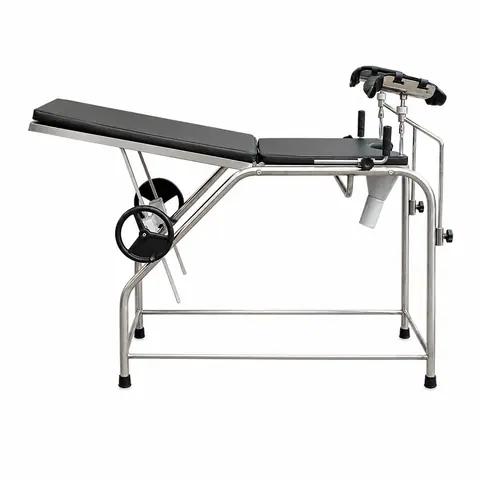
| Fixed-height gynecology table | Manual backrest; leg rests | Low-volume clinics, screening rooms | No height change for transfer or working height |
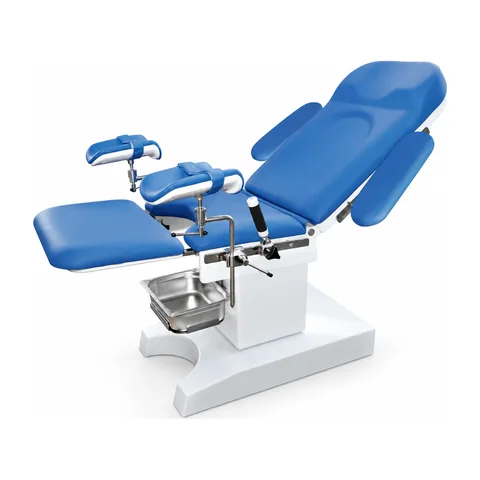
| Manual table with drawers and basin | Manual backrest and leg rests; storage built in | General OB/GYN rooms | Fixed height; clinician adapts with stool |
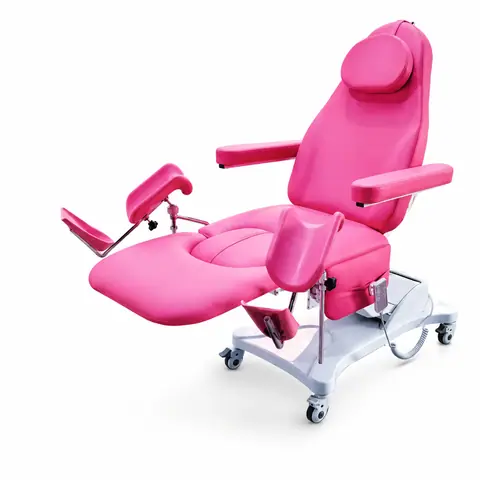
| Electric gynecologist chair | Motorized height, backrest and seat tilt, foot control | Busy practices, colposcopy, accessible care | Higher cost, needs power and service |
| Electric gynecological operating table | Height, Trendelenburg, back and leg sections | Minor gynecological surgery, procedures | Larger, more expensive, more training |
Keling's KL-BC122 Gynecological Examination Table is a gynecological examination table with built-in drawers, a sliding stool, a stainless steel basin and a 250 kg (551 lb) safe working load. The KL-FA-IV Electric Gynecological Table is an electric gynecological chair with a 560–970 mm (22–38 in) height range and electric foot control.
Manual vs electric gynecologist chair
An electric gynecologist chair is worth the extra cost when the room sees many patients a day or when patients with limited mobility need a low transfer height. A manual gynecology table is the practical choice where power is unreliable, budgets are tight or the table is used only a few times a day.
Electric chairs move from a low sitting height for transfer to a raised, reclined examination position at the touch of a foot pedal. That removes the climb onto a high couch, keeps the clinician's hands free and lets the working height suit each clinician. Look for quiet motors, a battery or manual release, and a foot switch that cannot be pressed by accident.
Manual tables use a fixed height and a gas spring or ratchet backrest. They have almost nothing to break, need no electricity and are easy to move. A step stool helps patients get on safely.
Key dimensions: height, width and length
Height range is the most important dimension on any ob gyn table. A low minimum height helps patients sit down and stand up safely; a higher examination height spares the clinician's back.
- Transfer height: the US Access Board's Standards for Medical Diagnostic Equipment specify an adjustable transfer surface height of 17–19 in (432–483 mm) for accessible examination tables and chairs. Few fixed-height gynecological tables reach this; check the minimum height of electric models.
- Working height: with the clinician seated, the patient's pelvis should sit about at the clinician's elbow height. Compare the maximum height with your stools.
- Width: 550–700 mm (21.7–27.6 in) is common. Wider tops feel more secure for larger patients; narrower tops let the clinician get closer.
- Length: chair-style tables are compact, around 1,400 mm (55 in) with the leg section folded; couch-style tables run 1,800–1,900 mm (71–75 in).
- Safe working load: check the rated load and whether it applies at all heights and angles.
For comparison, the KL-FA-V Electric Gynecological Table electric gynecological table adjusts from 680 to 920 mm (26.8–36.2 in) with an electric back lift to 80±5°.
Gynecology table stirrups and leg rests
Leg support design decides patient comfort more than any other feature. There are three common styles, and many practices order two so the clinician can choose per patient.
- Heel or foot stirrups. The patient's heels rest in cups; quick to adjust and easy to clean, but less supportive for longer procedures.
- Knee crutch leg rests. Padded supports under the back of the knees take the weight of the legs; the traditional choice on many gynecological tables.
- Calf or boot-style supports. The whole lower leg rests in a padded shell; most supportive and stable, used for longer procedures.
Check that the leg supports adjust in height, angle and spread without tools, lock firmly, and fold away or detach when the table is used for a general examination. A gynecologist chair with stirrups should also offer covers or pads that can be wiped or replaced.
Positioning: backrest, seat tilt and Trendelenburg
The backrest should raise to a near-sitting position so the patient can see and talk to the clinician, and lower toward flat for examination. Electric chairs that tilt the seat backward lift the pelvis to the working position without the patient sliding down.
Gynecological operating tables add Trendelenburg tilt for procedures. Keling's KL-FS-I Electric Gynecological Table is an electric gynecological table designed for gynecological surgery, operative abortion and examination, with foot controller operation, a hidden sewage basin and 700–900 mm height adjustment. For larger procedures in theatre, a full operating table with gynecology leg holders may be more appropriate; see the operating table buying guide.
Upholstery, hygiene and infection control
Gynecology tables are wiped down many times a day, so upholstery and joints must tolerate disinfectants. Choose seamless or welded upholstery in the seat area, with no stitching where fluids collect.
- PU or medical-grade vinyl upholstery rated for the disinfectants you use.
- A removable stainless or plastic basin under the seat cut-out.
- A paper roll holder at the head end, so each patient gets a fresh cover.
- Smooth, closed frames and covers over motors and actuators, without exposed screws.
- Castors with brakes if the chair will be moved for cleaning.
Ask the manufacturer for a list of compatible disinfectants. Using an unapproved chemical is a common reason for cracked upholstery within a year.
Accessories for the OB/GYN chair
Order accessories with the gynecological table so they fit and are covered by the same documentation. Common accessories include:
- examination light on a mobile stand or wall arm (see the examination lights guide)
- colposcope or monitor arm mounting
- instrument drawers and a sliding clinician stool
- side rails or hand grips for the patient
- extra leg-support styles and pads
- a step stool for fixed-height tables
- privacy curtains or screens in the room
Planning the OB/GYN examination room
The best gynecology bed can still give a poor examination if the room around it is wrong. Plan the chair position, light, privacy and clinician workspace together before ordering.
- Orientation: place the foot end of the chair away from the door, so an opening door never exposes the patient. A curtain or screen inside the door adds a second layer of privacy.
- Clearance: leave space at the foot end for the clinician's stool, an instrument trolley and, where used, a colposcope; measure this with the leg supports fully extended, not folded.
- Light: position an examination light so it can reach the perineal area from beside the seated clinician without glare in the patient's eyes.
- Changing area: a curtained space with a chair and hook lets the patient undress in privacy before the examination.
- Hand hygiene and waste: a sink, glove dispenser, sharps container and clinical waste bin within reach of the stool.
- Power: an outlet near the foot or head end for an electric chair, positioned so the cable does not cross the clinician's path.
These choices cost little at the planning stage and are hard to change later.
What to put in a gynecologist chair specification
A clear specification lets you compare gynecologist chairs for sale from different manufacturers on equal terms. Include:
- Type: fixed manual, manual with storage, electric chair or electric operating table.
- Height range in mm, minimum and maximum, and safe working load.
- Back angle, seat tilt and any Trendelenburg range.
- Leg-support style(s), adjustment range and quick-release.
- Top width and length, and overall footprint.
- Upholstery material and color; compatible disinfectants.
- Basin, drawers, paper roll holder, stool and other accessories included.
- For electric models: power supply, foot control type, battery or manual emergency lowering.
- Documents: the manufacturer's ISO 13485 certificate, electrical safety test reports to IEC 60601-1 for electric models, instructions for use in the required language, and registration for your country.
Choosing between models
Most clinics end up with two answers: an electric chair in the main OB/GYN room where most patients are seen, and a robust fixed-height gynecology table, such as the stainless-framed KL-4A Gynecological Examination Bed, in screening, outreach or backup rooms. Keling Medical makes both, along with obstetric delivery tables and general examination tables, so a women's health unit can be equipped from one supplier.
Next steps
Decide the procedure mix and patient volume for each room, then choose the chair type and leg supports to match. Browse Keling's examination tables and operating tables, or request a quotation with your room list, quantities and preferred upholstery color.
Frequently asked questions
What is a gynecologist chair called?
It is called a gynecological examination chair or table, gynecology chair, OB/GYN table or gynecological couch. When used for minor procedures it may be called a gynecology operating table, and some regions say gynaecology bed. All describe a table that supports the lithotomy position with leg supports for pelvic examination.
Why do gynecology tables have stirrups?
Stirrups or leg rests hold the legs flexed and apart in the lithotomy position, giving the clinician access for a speculum examination, cervical screening, IUD insertion or colposcopy while the patient's legs are supported rather than held. Padded leg rests that support the knee or calf are often more comfortable than heel stirrups for longer procedures.
What is the difference between a manual and an electric gynecologist chair?
A manual gynecologist table has a fixed height or a foot-pump lift and a gas-spring or ratchet backrest. An electric chair moves height, backrest and seat tilt with motors, usually from a foot control, so the clinician can raise the patient to working height and lower it again for safe transfer. Electric chairs cost more and need power.
What height should a gynecological table be?
For transfer, the lower the better: accessible designs reach about 17–19 in (432–483 mm). For examination, the clinician usually sits on a stool with the patient's pelvis at about elbow height, which is typically higher. Electric chairs cover both; fixed tables are a compromise, commonly around 650–820 mm (26–32 in).
What is the difference between a gynecology table and a delivery bed?
A gynecology table is used for short examinations and minor procedures in clinics. A delivery bed or obstetric table is used during labor and birth, with a removable or retracting foot section, a fluid collection basin, handgrips and stronger leg supports, and is designed for patients to remain on it for hours.
How do you clean a gynecological examination chair?
Change the disposable paper or cover between patients, then wipe the upholstery, leg rests and handles with a disinfectant approved by the manufacturer and the facility's infection-control policy. Empty and clean the basin after each use. Seamless upholstery without stitched seams in the seat area is easier to disinfect.