Buying guides
Choosing a medical suction machine: flow, vacuum and bottle size
How to choose an electric medical suction machine for surgery, wards or emergency care. Free air flow, vacuum range, collection jars, overflow protection, portability and noise.

Suction machines clear blood, fluids and secretions in operating rooms, wards and ambulances. They look simple, but the wrong flow, jar size or safety features make them frustrating to use. Here is what to compare.
Flow and vacuum
Two figures describe performance:
- Free air flow (litres per minute): how quickly the unit moves air with nothing blocking it. Higher flow clears fluids faster.
- Vacuum range (kPa, MPa or mmHg): how strongly it pulls. It must be adjustable so staff can use a gentle setting for airways and a strong one for surgery.
ISO 10079-1, the standard for electrically powered suction equipment, classifies units by flow and vacuum. A high-vacuum, high-flow unit (at least 60 kPa and 20 L/min) suits surgery. The Keling DFX-23C-I Electric Suction Machine gives free air flow of 40 L/min or more and a negative pressure range of 0.013–0.09 MPa.
Collection jars
Larger jars mean fewer changes during a case. Mobile surgical units typically use two 2,500 ml jars so one can be swapped while the other runs. Glass jars can be autoclaved; plastic jars are lighter.
Overflow and filter protection
An overflow valve stops fluid entering the pump when the jar is full, and a bacterial filter protects the pump and the room air. Check both are included and that spares are easy to buy.
Portable or mobile
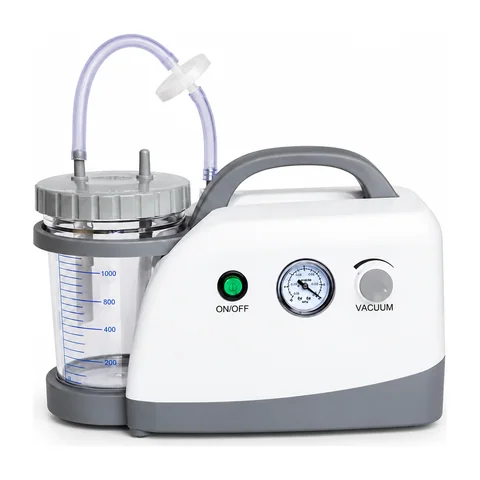
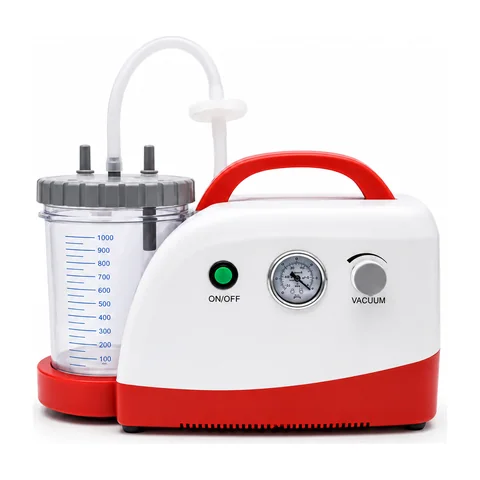
Portable sputum aspirators such as the DFX-23A-I Electric Sputum Suction Machine and the DFX-23B-II Portable Electric Suction Machine are light enough to carry between wards or into an ambulance.
Mobile surgical units on castors, such as the DFX-23C series, carry larger jars and a foot switch for the surgeon.
Noise and power
Check the noise level (the DFX-23C-I is rated at 65 dB or less) and that the power supply matches your country. Units used in ambulances may need a battery or 12 V supply.
Checklist
- Free air flow and adjustable vacuum range
- Jar size, number and material
- Overflow valve and bacterial filter
- Foot switch for surgical use
- Portable or mobile
- Noise level and power supply
- ISO 10079-1 compliance and the maker's ISO 13485 certificate
See all suction machines or ask for a quotation.
Frequently asked questions
What flow rate should a surgical suction machine have?
Surgical suction is usually classed as high flow. ISO 10079-1 defines high flow as a free air flow of 20 litres per minute or more. Keling's DFX-23C-I gives 40 litres per minute or more.
What is the difference between a sputum aspirator and a surgical suction unit?
A sputum (airway) aspirator is a smaller, often portable unit used to clear the airway on wards, in homes and in ambulances. A surgical suction unit has higher flow and larger collection jars for operating room use.