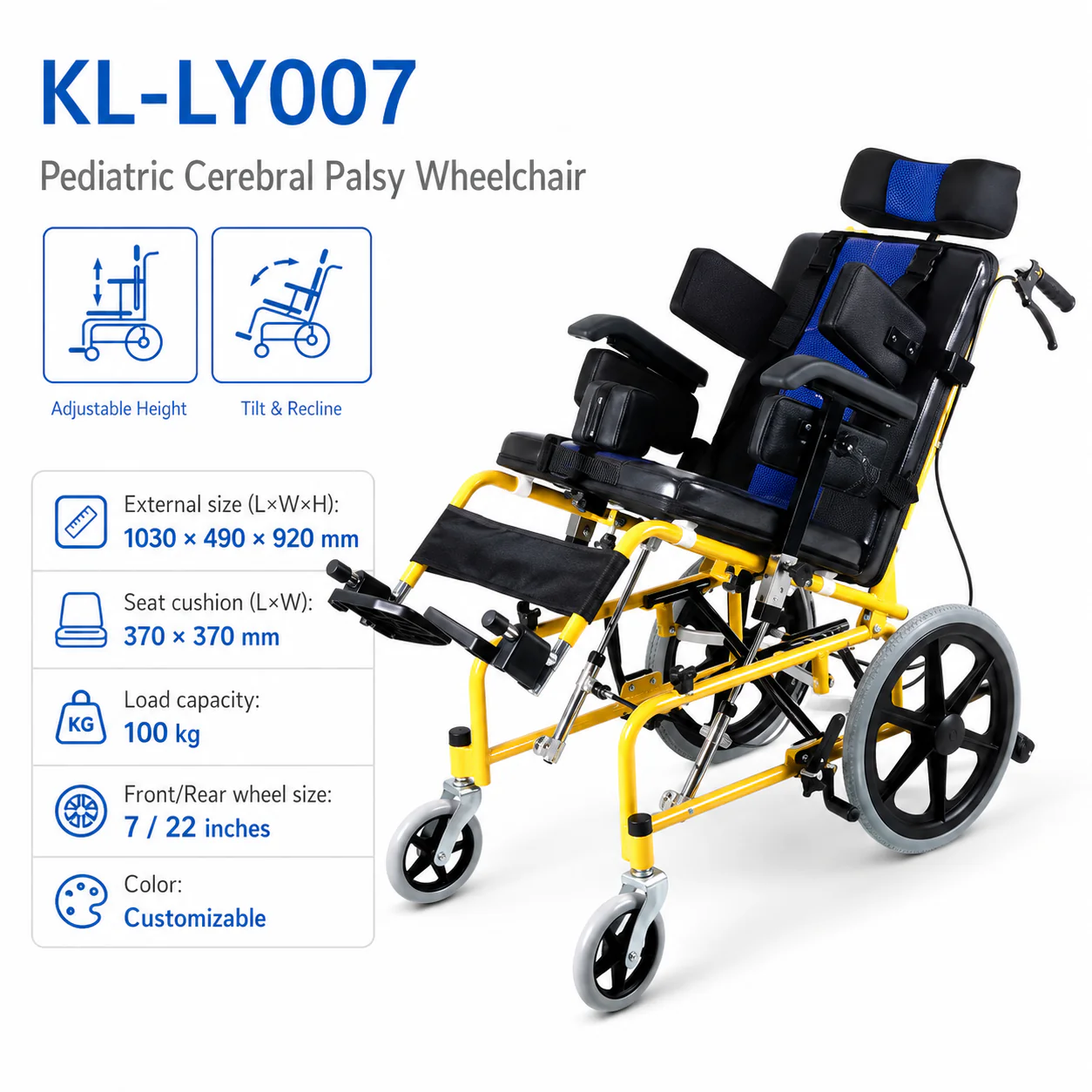
# KL-LY007 Pediatric Cerebral Palsy Wheelchair — Tilt-and-Recline Positioning Chair for CP Children
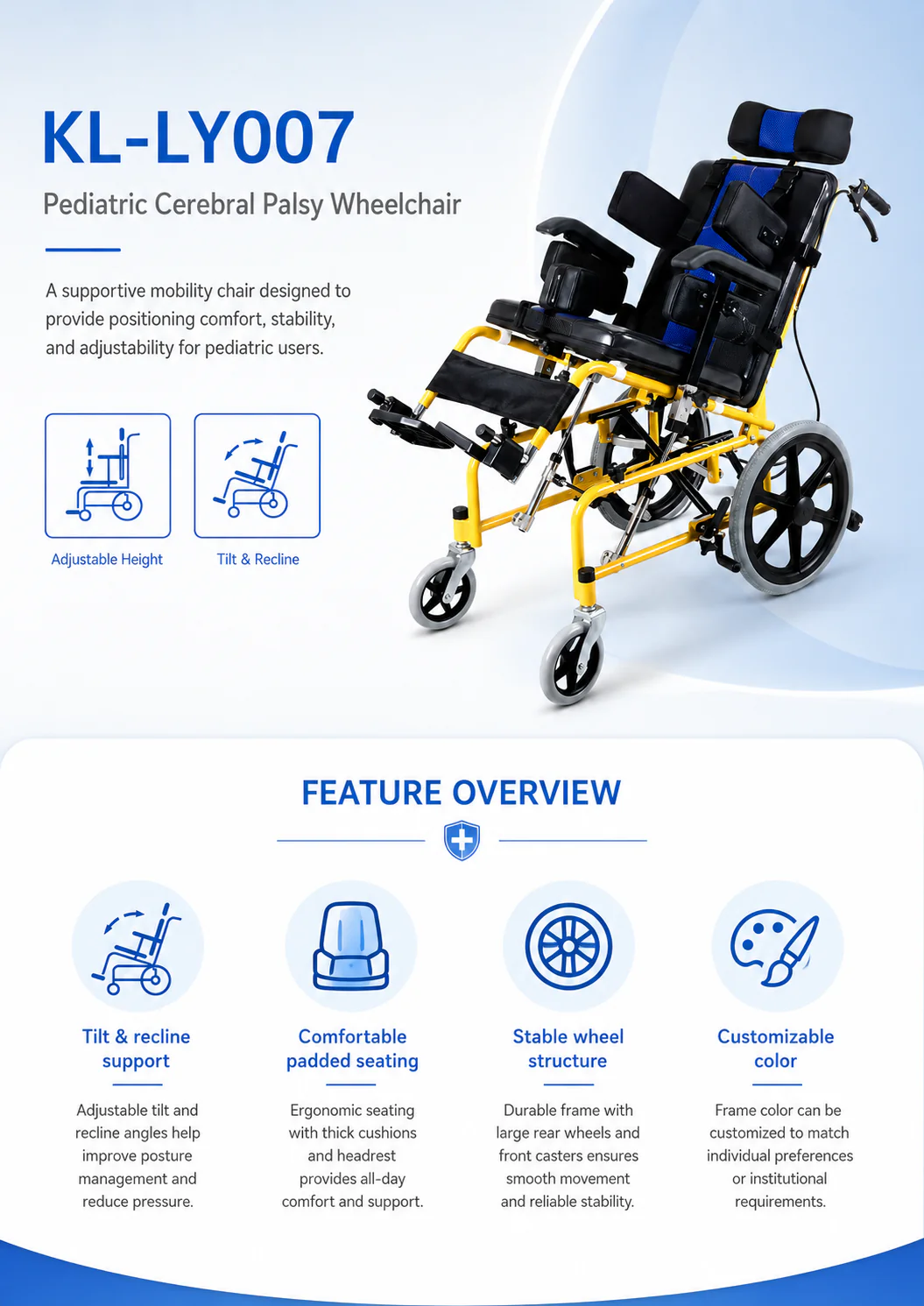
Quick answer: The Keling KL-LY007 is a pediatric cerebral palsy wheelchair with tilt and recline positioning functions, adjustable height, a 370 × 370 mm seat cushion, 7/22-inch front/rear wheels and a customisable frame colour. Overall dimensions are 1030 × 490 × 920 mm with a 100 kg load capacity. It is manufactured by Keling Medical (Keling Medical) for children and young adults with cerebral palsy and complex seating needs.
Quick Facts
- The Keling KL-LY007 is a specialised wheelchair designed for children and young adults with cerebral palsy, providing tilt, recline and postural positioning support.
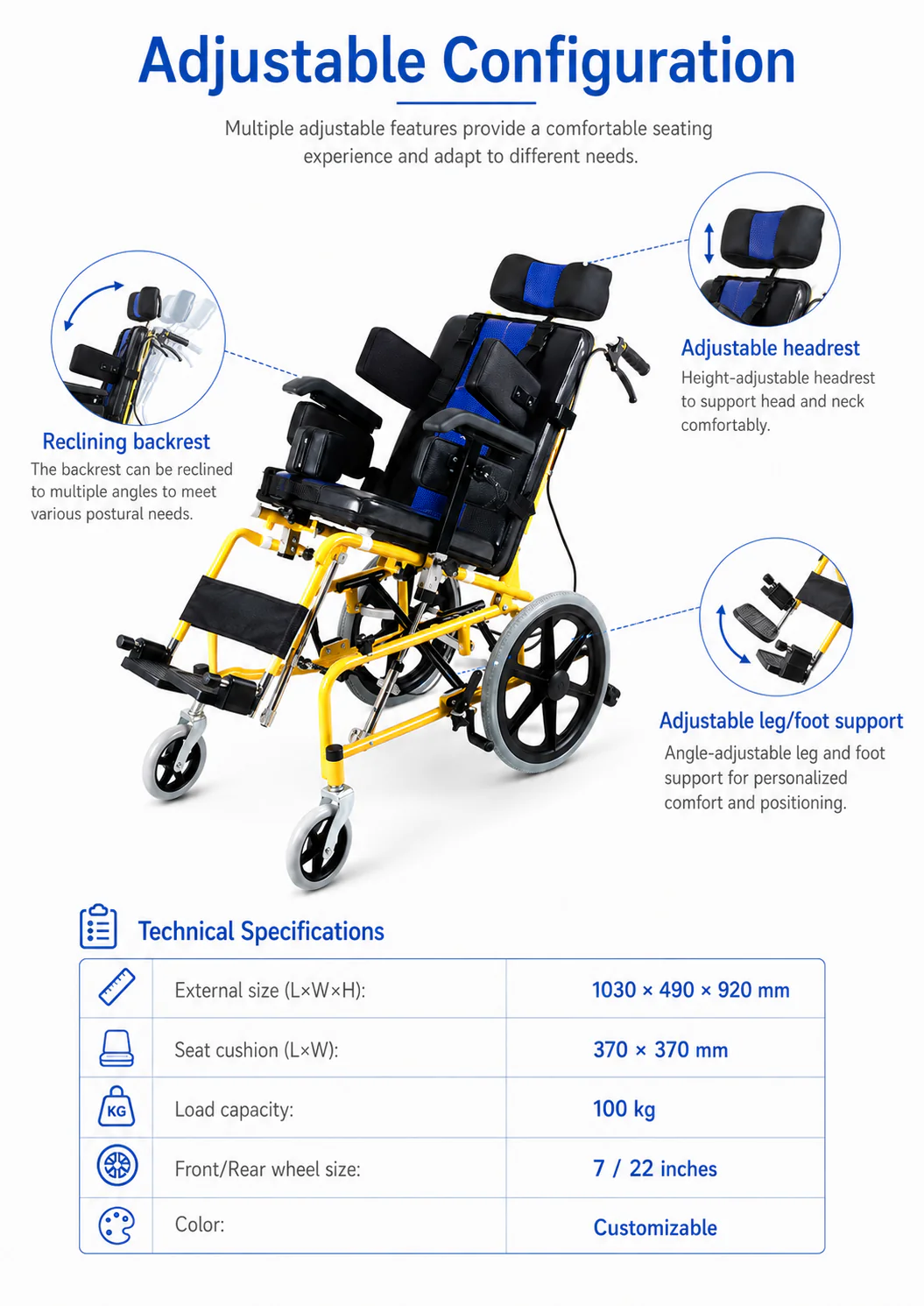
- External dimensions are 1030 × 490 × 920 mm; seat cushion size is 370 × 370 mm.
- Front/rear wheel sizes are 7 and 22 inches respectively; load capacity is 100 kg.
- Adjustable height settings accommodate growing users and carer ergonomics during assistance.
- Tilt and recline adjustments help improve posture management and reduce pressure for non-ambulatory users.
- Frame colour is customisable; ergonomic seating with thick cushions and headrest support all-day comfort.
Overview
The KL-LY007 pediatric cerebral palsy wheelchair is a purpose-built positioning device for children and young adults with CP and other complex neurodevelopmental conditions who require more than a standard wheelchair can provide. Its tilt-in-space and recline functions allow caregivers and therapists to adjust the user's body angle without changing the relative seat-to-back position, redistributing weight bearing and pressure across the seating surface — a clinically important feature for users who cannot shift their own weight to prevent pressure injuries.
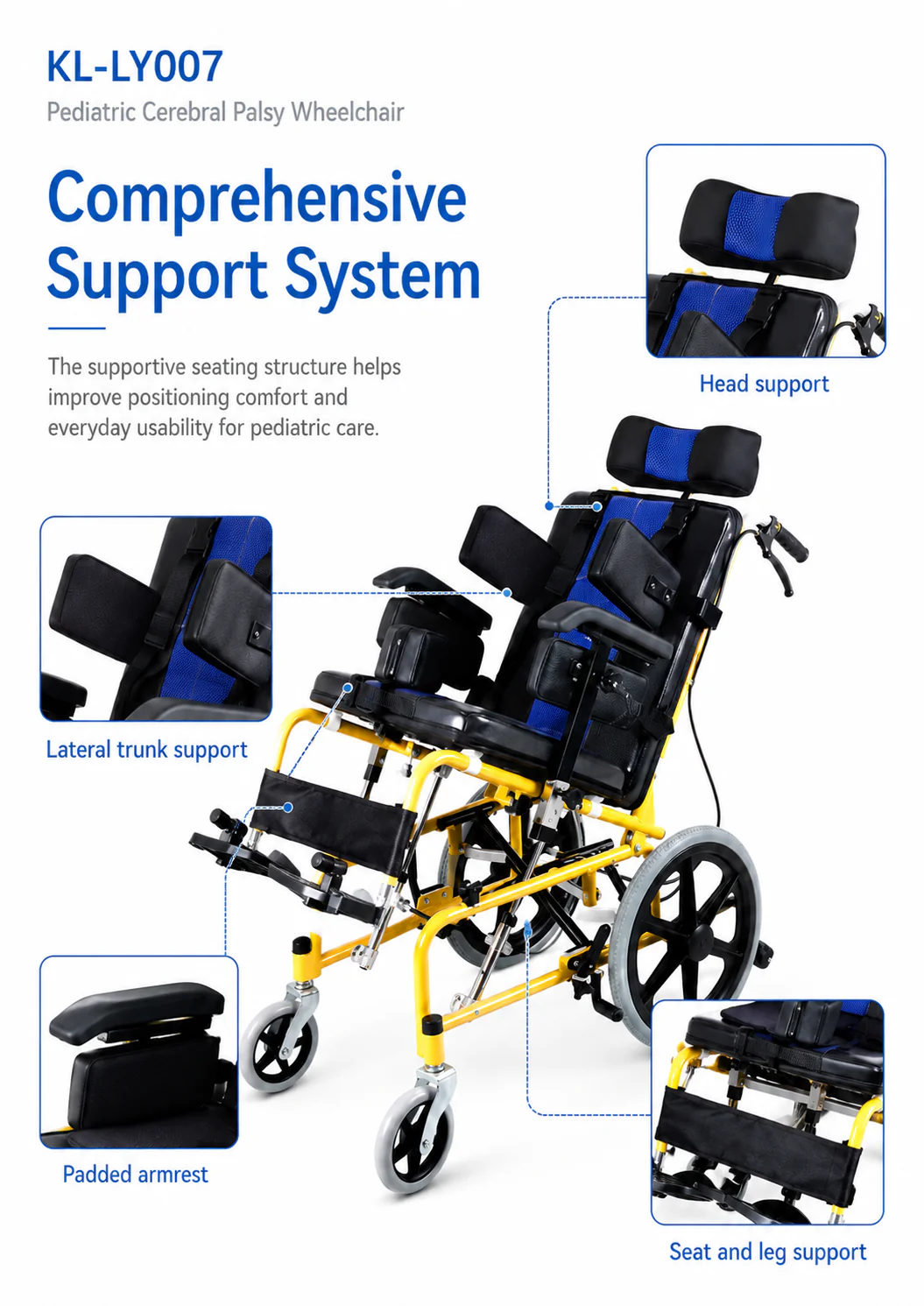
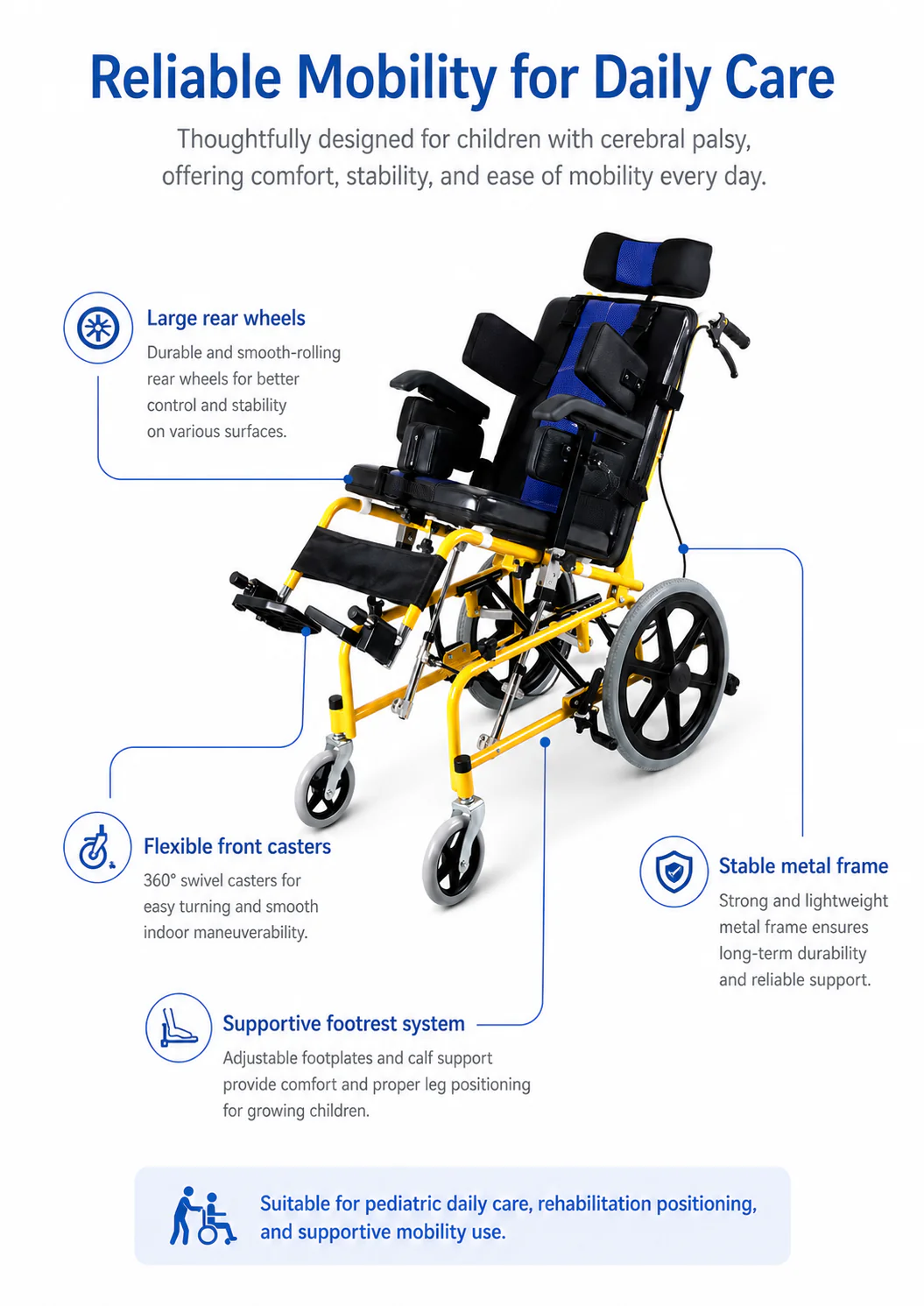
The adjustable height function allows the seat height to be set appropriately for the user's age and growth stage, and for optimal positioning relative to feeding tables, activity surfaces and school furniture. A headrest with thick cushioning provides cervical and occipital support during tilt and recline manoeuvres, where an unsupported head would otherwise drop. The 22-inch rear wheels are sized for adult-height carers to push comfortably, while the 7-inch front casters provide indoor turning radius.
The ergonomic padded seat (370 × 370 mm) and backrest are designed to provide pressure-distributing comfort for extended daily seating. Frame colour is fully customisable — an important feature for paediatric users who may engage better with bright, personalised equipment, and for facilities that colour-code specialised seating by user.
Key Features
- Tilt and recline positioning — tilt-in-space and recline adjustments support postural management and pressure relief for non-ambulatory CP users.
- Adjustable height — seat height adjustable to accommodate growing children and correct positioning relative to activity surfaces.
- Headrest with thick cushioning — provides cervical and occipital support during tilt and recline to prevent head drop.
- 370 × 370 mm padded seat cushion — comfortable, pressure-distributing cushion for extended daily seated use.
- 7/22-inch wheel configuration — 22-inch rear wheels for adult-height carer propulsion; 7-inch front casters for indoor maneuverability.
- 100 kg load capacity — substantial load rating covers the weight of growing children and young adults.
- Customisable colour — frame colour specified to user preference or institutional scheme, supporting engagement for paediatric users.
Technical Specifications
| Parameter | Value |
|---|---|
| Model | KL-LY007 |
| Product type | Pediatric cerebral palsy wheelchair |
| External size (L × W × H) | 1030 × 490 × 920 mm |
| Seat cushion (L × W) | 370 × 370 mm |
| Load capacity | 100 kg |
| Front/Rear wheel size | 7 / 22 inches |
| Colour | Customisable |
| Functions | Adjustable height, tilt and recline |
Specifications are subject to change; dimensional tolerances may apply. Contact Keling Medical for the latest datasheet.
Applications
The KL-LY007 is used in paediatric rehabilitation departments, special education schools and resource rooms, specialist disability and CP therapy centres, home care for children and young adults with cerebral palsy or acquired brain injury, and any setting where a child requires a positioning wheelchair with tilt, recline and height adjustment to support therapy goals, feeding, learning and comfort throughout the day.