Nursing positioning: what hospital bed buyers should evaluate
Nursing positioning is not simply a matter of raising or lowering a backrest. It describes how a hospital bed is configured to support nursing tasks, patient access, transfers, examinations and changes in posture. The correct bed should provide the positions required by the department without adding functions that staff will not use.
For procurement teams, start with the workflow rather than the product name. Ask which positions are needed, who controls them, how often the bed is repositioned, and whether the bed must support emergency procedures. Then compare the number of functions, operating method, load capacity and accessory compatibility. The catalogue includes electric and manual hospital beds, so the choice also depends on the ward’s infrastructure and operating preferences.
A useful reference for the wider subject is Bed Positions Nursing: A Procurement Guide, while this page focuses specifically on nursing positioning and the bed functions that enable it.
Different types of positions in nursing and their bed requirements
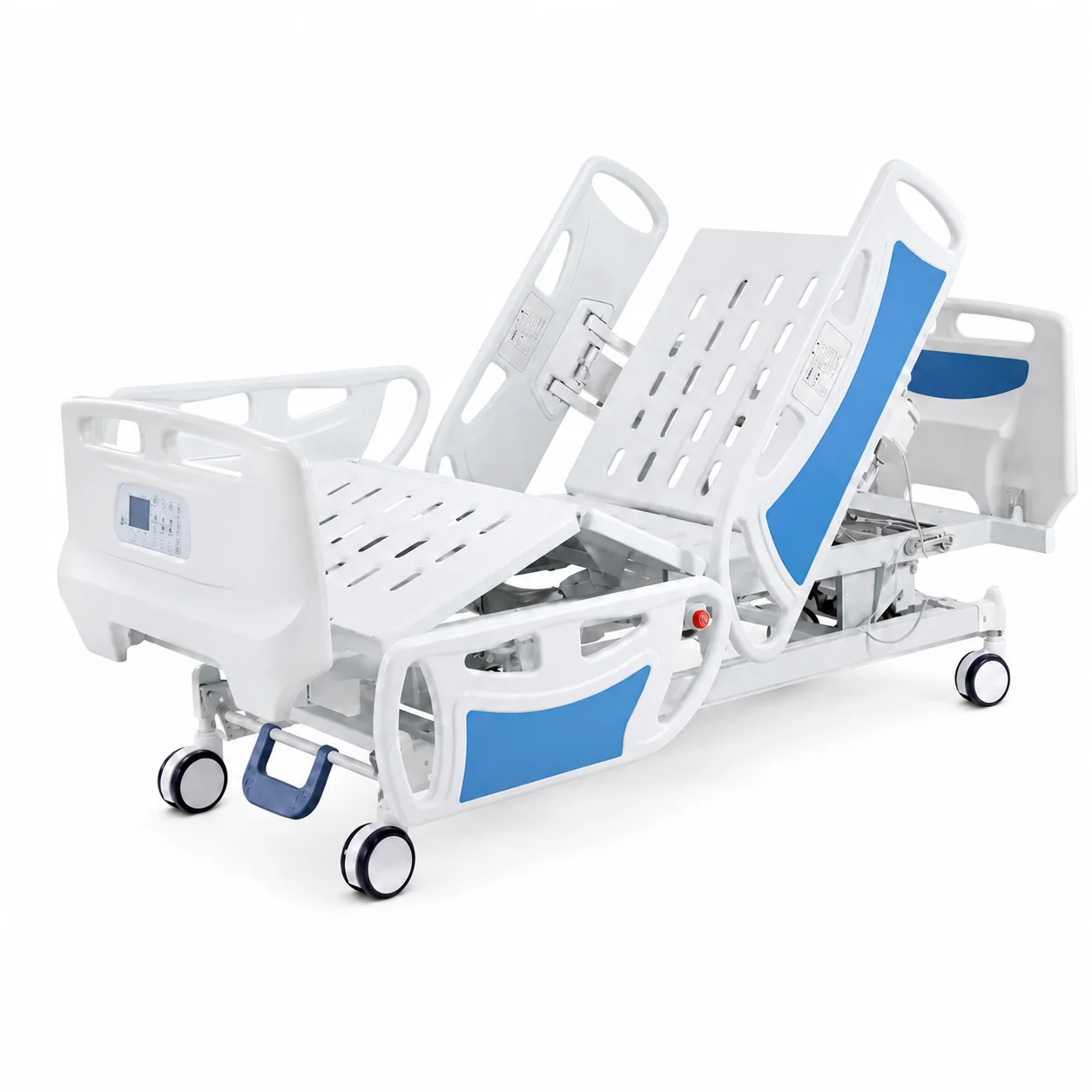
The phrase “different types of positions in nursing” can refer to patient positions used during care, or to the mechanical positions available on a bed. Procurement documents should distinguish these two meanings. A nursing position may require a backrest adjustment, knee-rest adjustment, overall height change or a combined configuration.
Common requirements include:
- Backrest positioning: supports an elevated upper-body posture for care activities and patient access. A bed with a backrest function may be sufficient when no leg or height adjustment is required.
- Knee or leg positioning: changes the lower section of the deck and can be relevant when the ward routinely uses a combined backrest-and-knee configuration.
- Height positioning: raises or lowers the working surface for nursing access, transfers and bed-side procedures. The required range should be confirmed in the written quotation because it is not stated for every model in the supplied catalogue.
- Trendelenburg positioning: changes the bed angle for workflows that specifically require it. KL-BC109 is identified in the catalogue as a 5-Function Manual Bed with Trendelenburg; buyers should confirm the exact operating method and included functions before ordering.
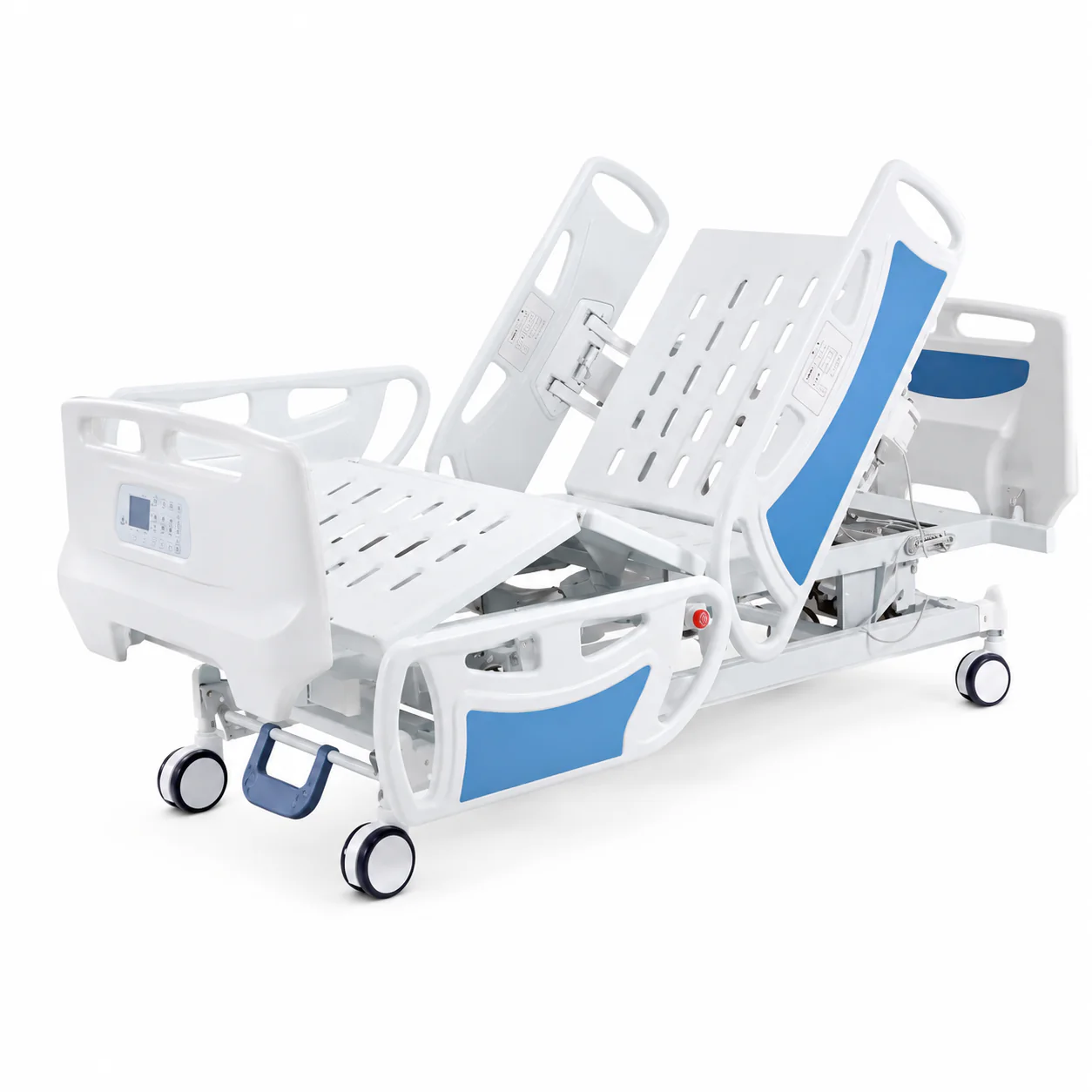
- Emergency positioning: may require rapid access to a flat configuration or a CPR-related feature. KL-BC101 is identified as a 5-Function ICU Bed with CPR, making it a model to review for critical-care requirements.
These functions should not be treated as interchangeable. A bed with more functions may provide greater flexibility, but it can also require more training, maintenance and budget. A simpler bed may be more appropriate for a general ward if the required workflow only involves backrest or knee-rest adjustment.
Positions in nursing foundation: turning terminology into a specification
When reviewing “positions in nursing foundation” materials, buyers often encounter clinical terminology before they encounter equipment specifications. Convert each required position into a measurable purchasing question: which deck section moves, whether movement is electric or manual, whether the position is independently adjustable, and whether the function is available from a handset, side control or manual mechanism.
Do not assume that a model’s function count defines every possible position. The number of functions is a useful comparison point, but the tender should list the actual movements required. Confirm dimensions, load capacity, mattress platform details, side-rail arrangement, castors, power requirements and warranty terms in the supplier’s quotation.
Bed positions CNA teams use during routine care
Searches for “bed positions cna” generally reflect the practical needs of nursing assistants and ward staff: access to the patient, support during repositioning, bed-making, transfers and daily care. From a procurement perspective, the important question is not which role uses the bed, but whether the design allows staff to perform those workflows consistently and safely under local procedures.
A practical evaluation can include:
- Access to controls: determine whether the intended user can operate the required adjustment without leaving the work area. Confirm control locations and whether a handset or integrated control is included.
- Working height: assess whether the bed offers the height adjustment required by the ward. Do not infer a height range from the model name; request the catalogue specification for the selected model.
- Movement sequence: test whether the backrest, knee-rest and height functions can be adjusted independently or only through defined combinations.
- Emergency workflow: if the bed is intended for ICU or emergency use, confirm CPR-related details, emergency release method and the time or procedure required to reach the required configuration.
- Cleaning and access: review the bed structure, mattress platform and side rails for the cleaning process used by the hospital. The choice of rail should be evaluated together with patient access and fall-prevention procedures.
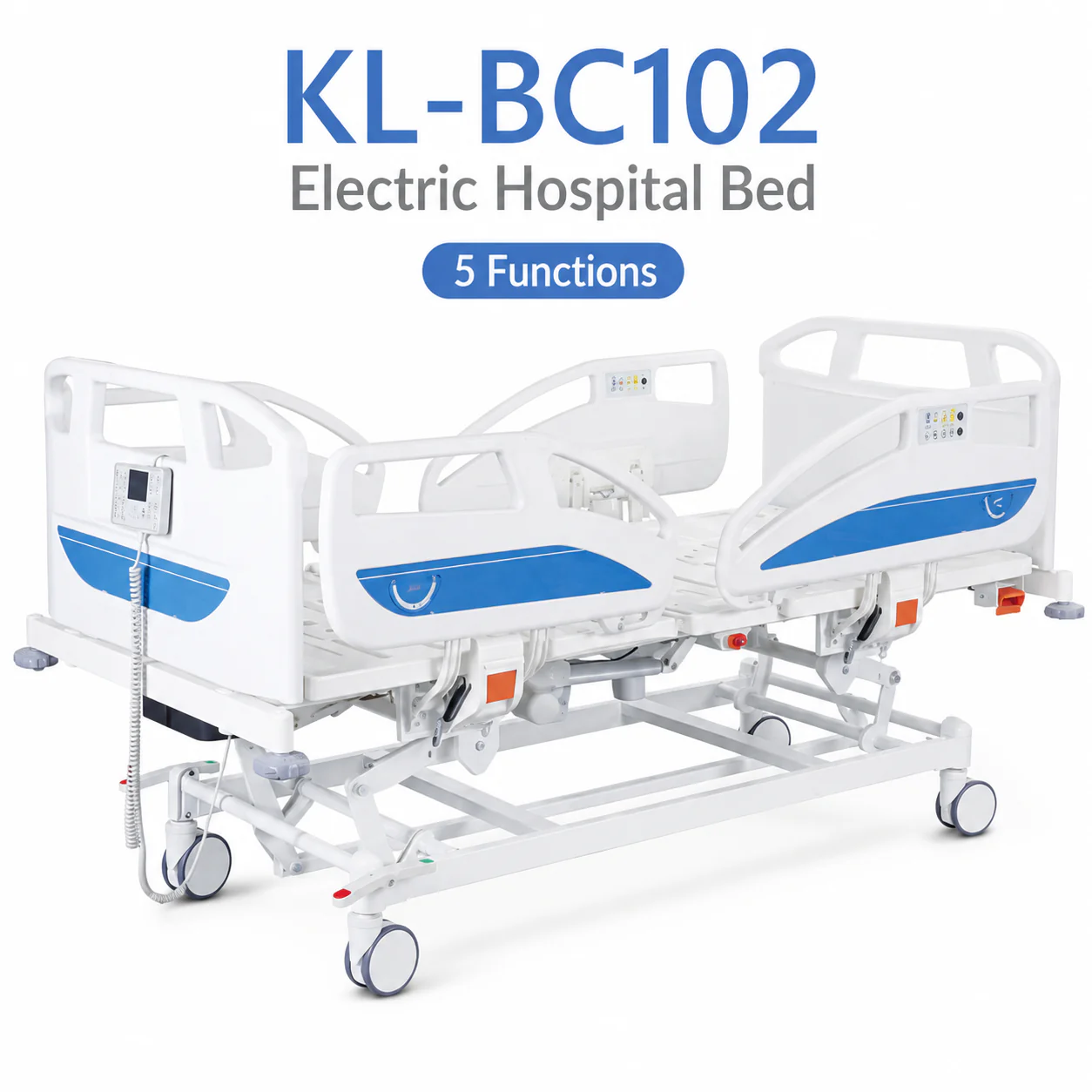
For example, KL-BC101 Electric Hospital Bed is listed as a 5-Function ICU Bed with CPR. KL-BC102 Electric Hospital Bed is listed as a 5-Function Bed with Dual Return. These catalogue descriptions identify different purchasing directions, but the final selection should be based on the required specification and written quotation rather than the function count alone.
Erect position in nursing: clarify the requirement before tendering
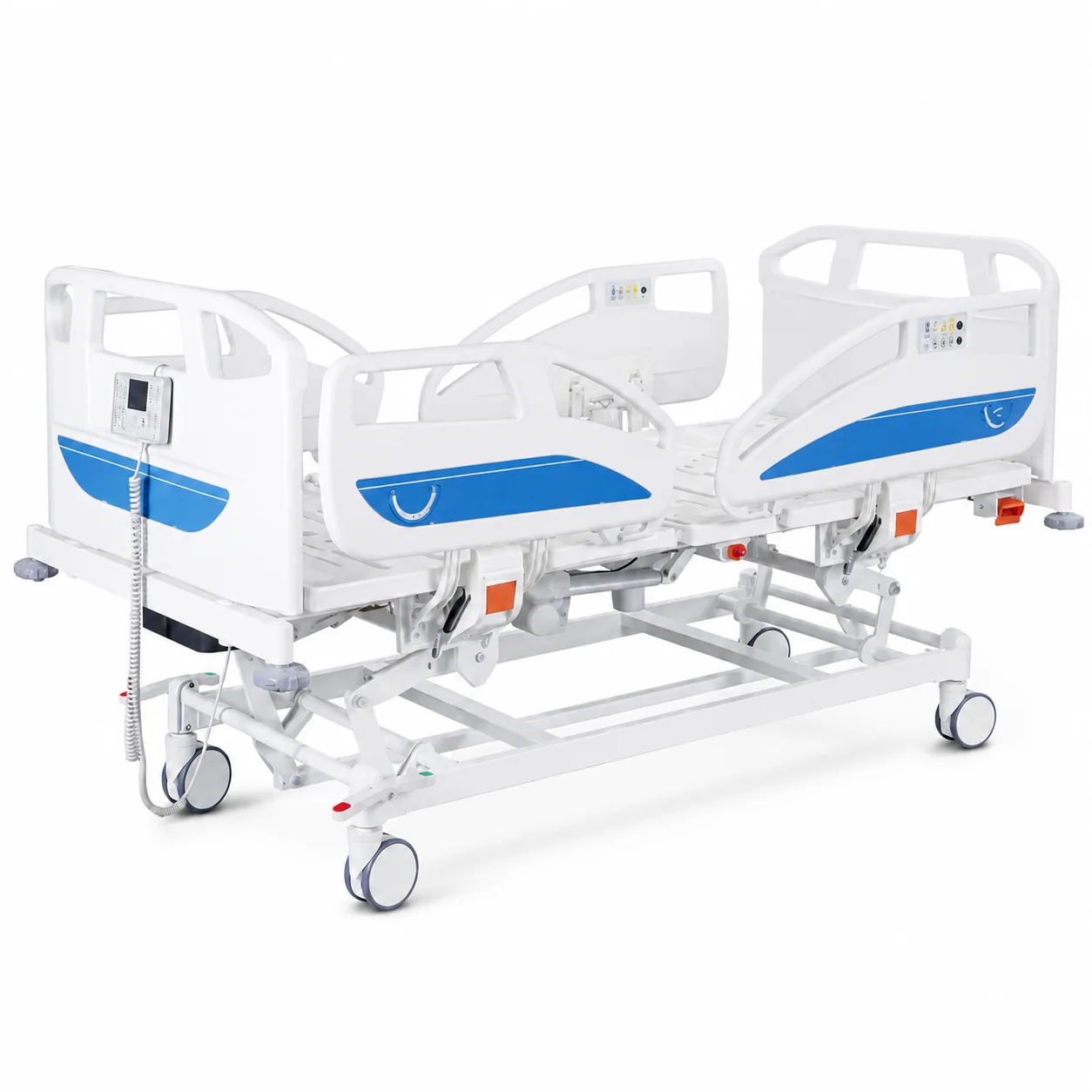
“Erect position in nursing” is an ambiguous procurement phrase. It may be used to describe an upright or raised patient posture, but it does not by itself specify the required bed movement. Before comparing offers, define whether the requirement means backrest elevation, an overall bed angle, height adjustment, or another named position in the hospital’s technical specification.
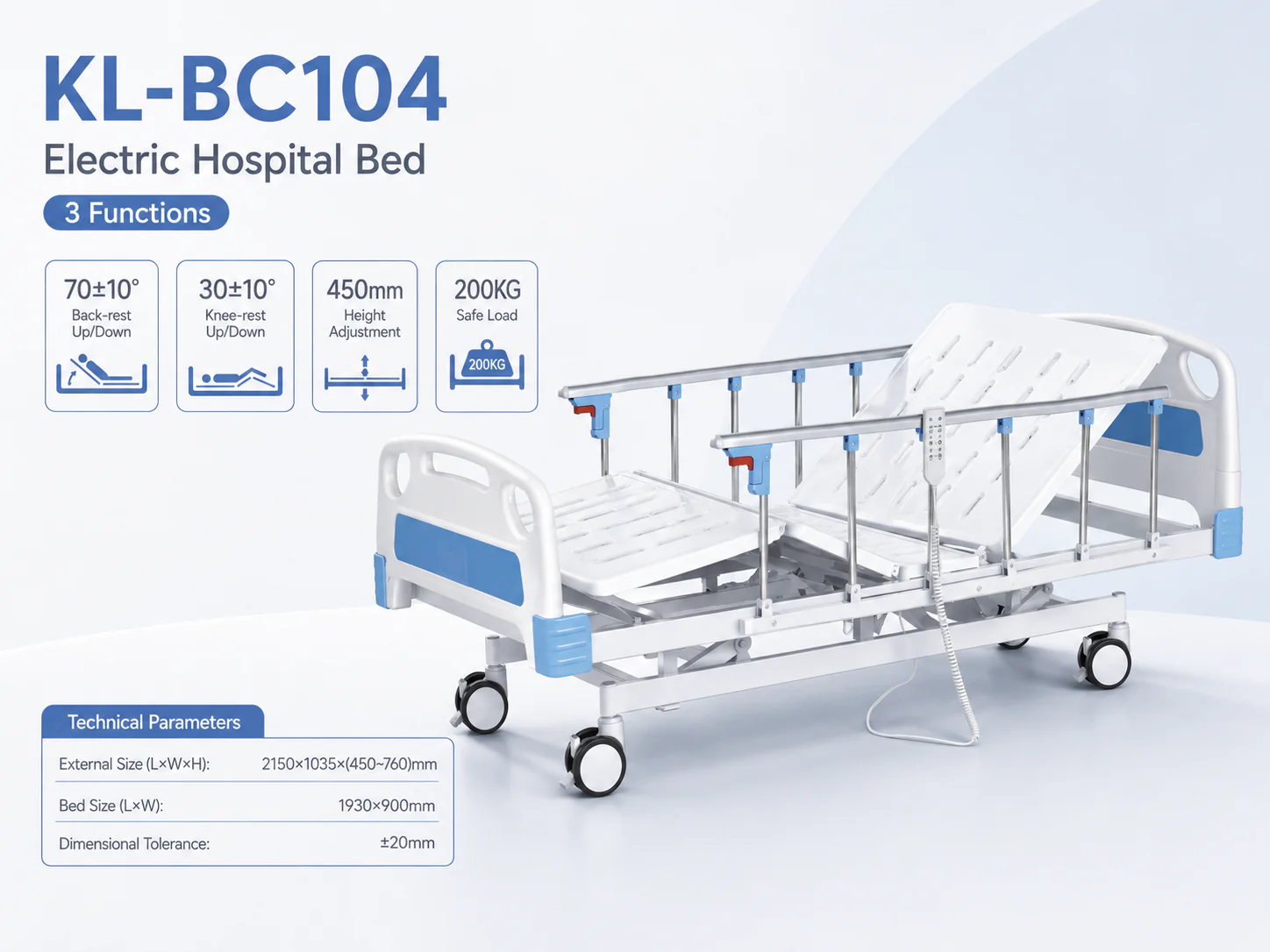
This distinction matters because two beds can both support an elevated posture while offering different control methods and additional movements. A five-function model may be suitable where the project requires several independent adjustments. A three-function model may be adequate when the requirement is narrower. The catalogue identifies KL-BC104 as a 3-Function Electric Bed 200 kg and KL-BC104-A as a 3-Function Bed Alternative Style; confirm the exact functions and configuration for the selected version.
If the requirement concerns a surgical, obstetric or orthopaedic workflow, do not substitute a general ward bed without review. The catalogue separately identifies KL-BC110 as a 5-Function Electric Gynecological Birth Bed and KL-BC111 as a 5-Function Manual Orthopedics Traction Bed. Department-specific requirements, accessories and positioning terminology should be checked with the project’s clinical and engineering stakeholders.
Comparing hospital bed functions for procurement
The following framework helps buyers compare models without over-specifying:
| Procurement factor | Questions to confirm |
|---|---|
| Required positions | Which backrest, knee-rest, height or angle movements are mandatory? |
| Function count | Does the stated number of functions cover the tender requirement, or are named movements needed? |
| Operating method | Is electric or manual adjustment preferred for the department? |
| Load capacity | What load capacity is required, and what value is stated for the selected model? |
| Emergency use | Are CPR or rapid-positioning features required and documented? |
| User controls | Who operates the bed, and where are the controls located? |
| Side rails and accessories | Are rails, mattress, IV stand or other accessories included or quoted separately? |
| Service and supply | Can spare parts, training and after-sales support be defined for the destination market? |
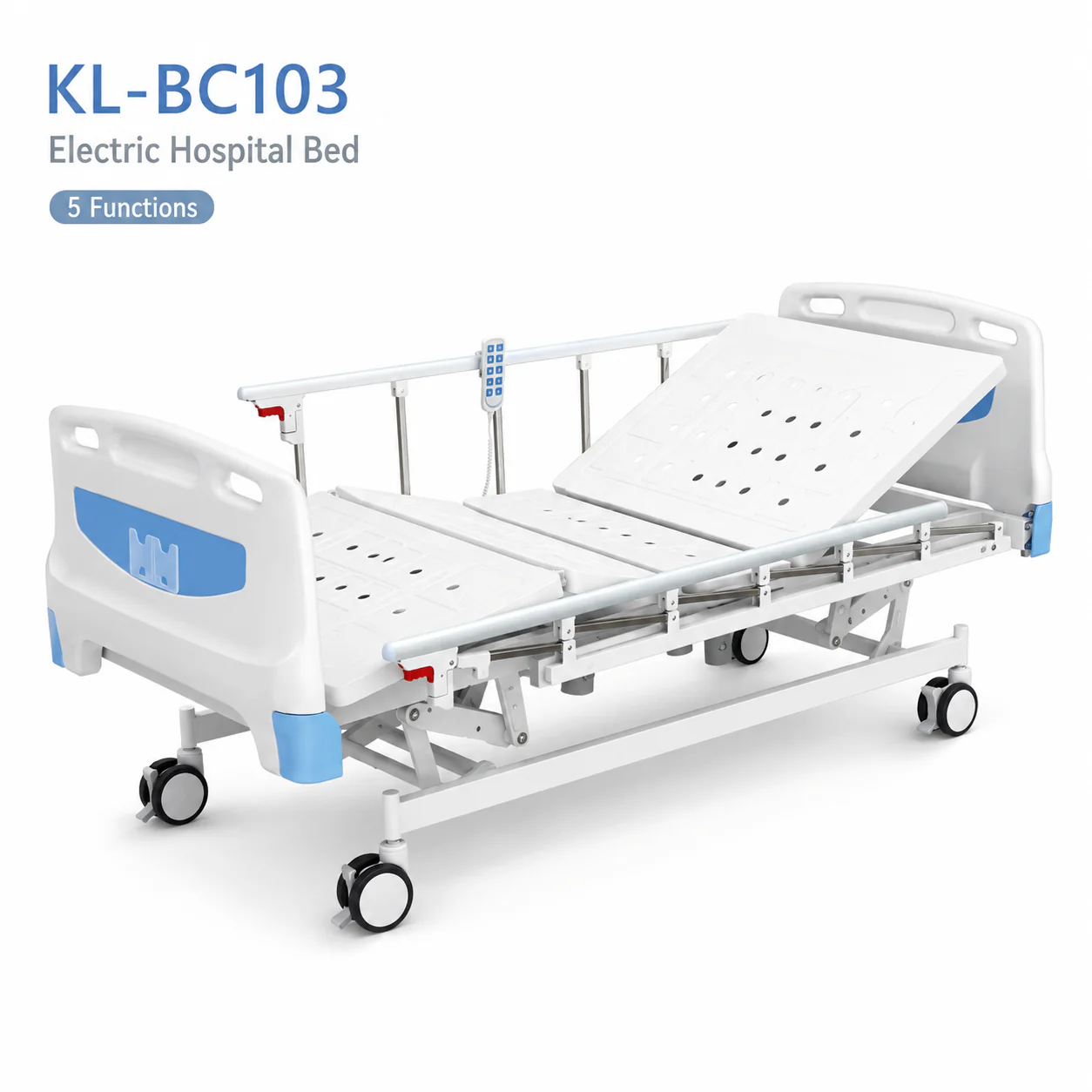
The catalogue offers a range of positioning levels. KL-BC104 Electric Hospital Bed is identified as a 3-Function Electric Bed 200 kg, while KL-BC103 Electric Hospital Bed is identified as a 5-Function Ward Bed 240 kg. These descriptions can help create an initial shortlist, but they do not replace confirmation of the full technical data.
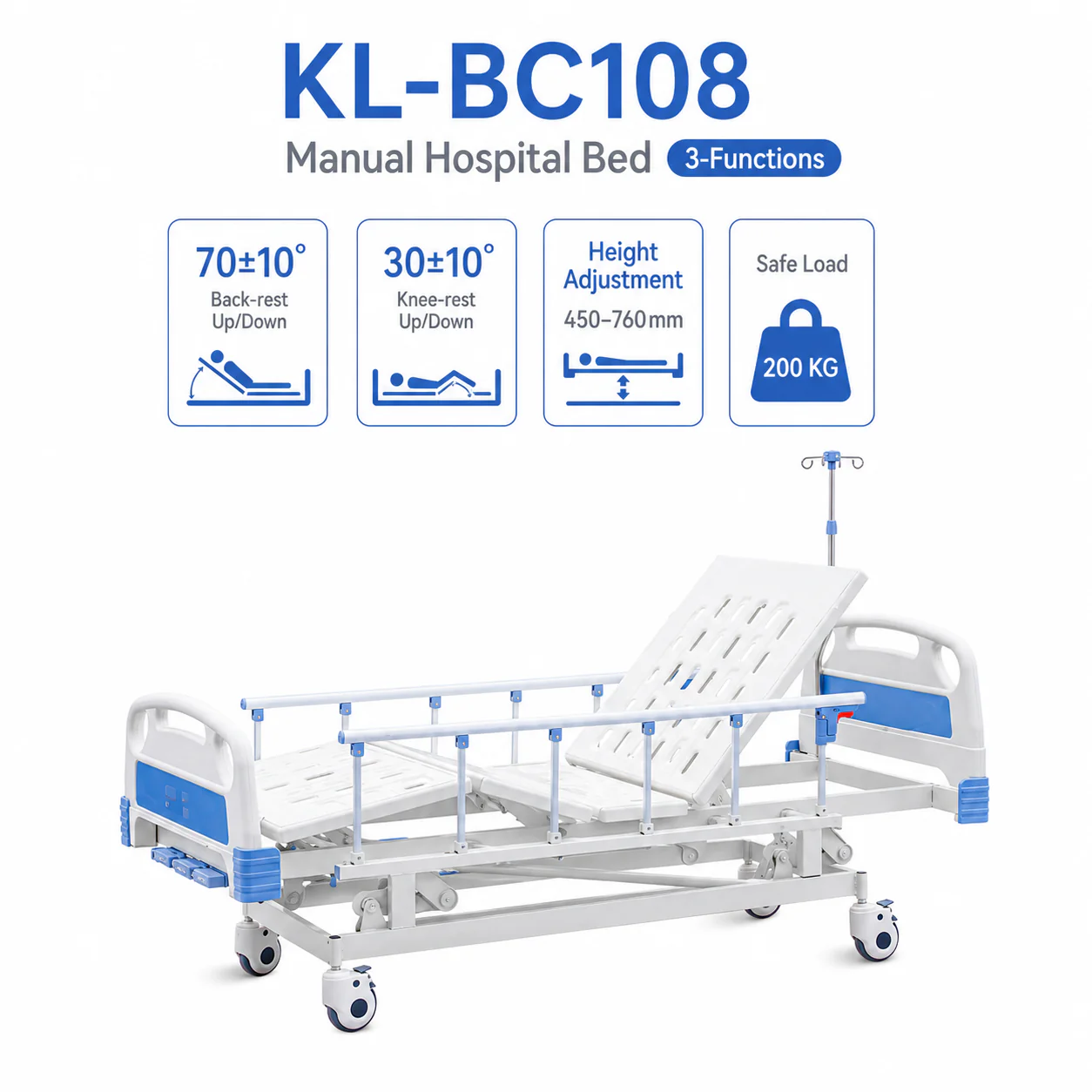
Manual options should also be considered where electrical infrastructure, maintenance policy or budget is decisive. KL-BC108 is identified as a 3-Function Manual Bed with Height Adjustment, and KL-BC109 as a 5-Function Manual Bed with Trendelenburg. Buyers should request a function-by-function comparison rather than assuming that manual and electric versions have identical movement ranges.
What to confirm before ordering a nursing-positioning bed
Prepare a written requirement that names the department, intended use, required positions, operating method and quantity. Include whether the bed is for an ICU, inpatient ward, emergency area, orthopaedic service or another department. Also specify destination country, voltage requirements where applicable, preferred mattress and side-rail configuration, delivery location and tender documentation needs.
Ask the supplier to confirm the exact model, all included functions, dimensions, load capacity, control method, accessories, packaging, lead time, spare-parts policy and warranty. Regulatory scope and validity should be confirmed per model and destination market in the written quotation.
Keling Medical is a Shanghai-based manufacturer and export and sales centre founded in 1996. The company manufactures 310 models across 12 categories and operates an ISO 13485 quality system; company materials also state ISO 9001 and CE. Keling Medical supplies B2B buyers, including distributors, hospital projects and tenders. To request a model comparison, contact Keling Medical through the quotation page or email inquiry@shkeling.com.