What electric bed repairs actually cover
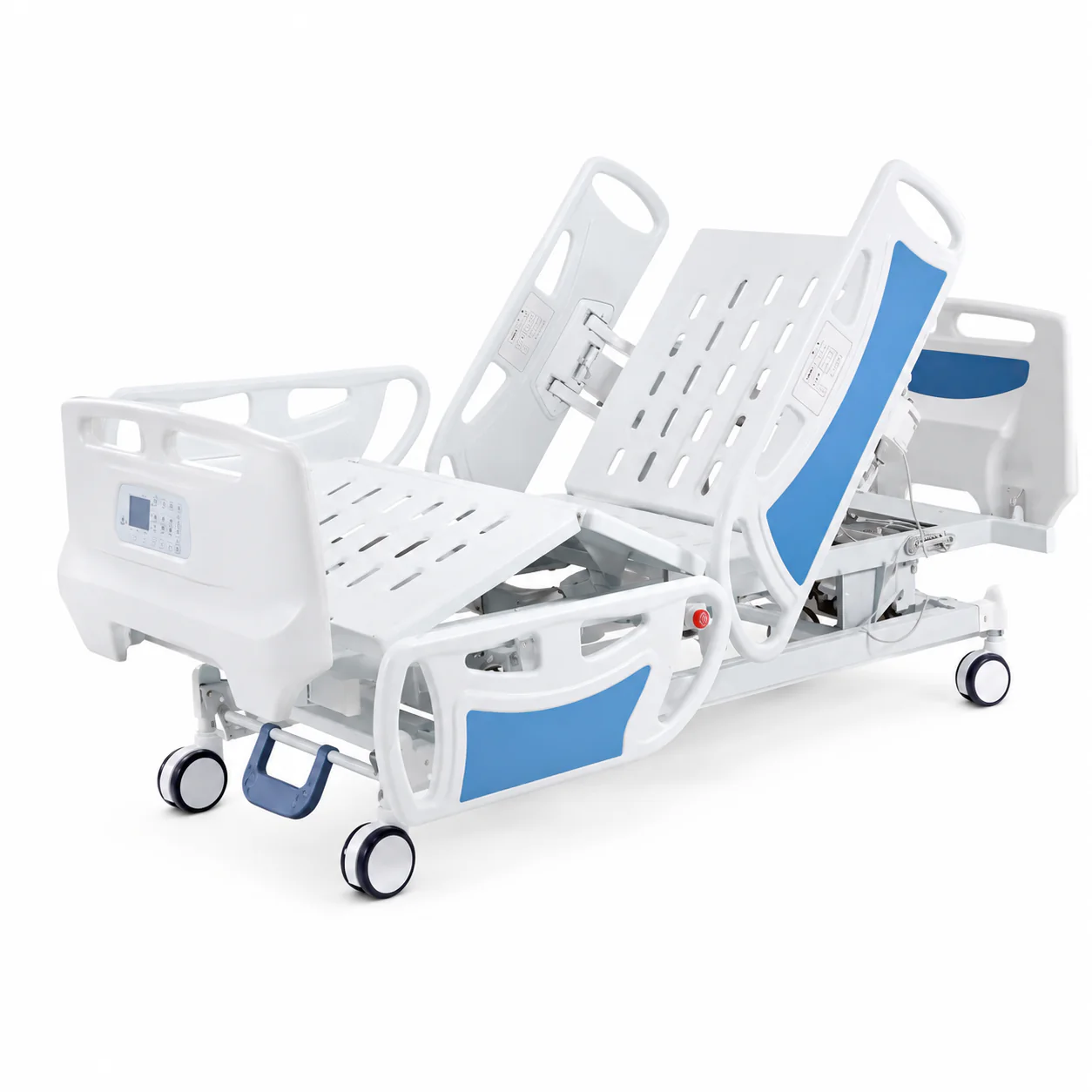
Electric bed repairs are rarely a single motor replacement. On a hospital ward, one non-functioning bed usually involves several separate components: the hand control, the control box, one or more linear actuators, the lifting columns, the side rails, the castors, and sometimes the head and foot boards. A repair quotation that only prices "the motor" is incomplete, and it is the most common reason a repair budget is exceeded halfway through the work.
For procurement teams, the practical approach is to scope a repair request the same way as a purchase request. Define the scope, confirm the model, list the parts, then compare offers on identical terms. Keling Medical manufactures the beds and the wear parts, so both directions — keeping an existing fleet in service and replacing beds that are past economic repair — start from the same hospital bed catalogue.
Buyers search for this work under several names — hospital bed repair, hospital bed service, electric hospital bed repair — and suppliers use the terms loosely. What matters commercially is not the label but whether the offer covers parts only, labour only, or parts and labour together, and whether it is priced per bed or per fault.
How to classify the fault before requesting a quotation
Faults fall into three groups, and each group is priced and shipped very differently. Sorting them before you contact a supplier saves at least one round of correspondence.
Electrical and control faults
The bed powers on but one function does not move, the hand control responds intermittently, or the bed drifts down under load. These point to the hand control, the control box, an individual actuator, or the wiring loom. Electrical parts are model-specific and voltage-specific: a control set built for one bed platform will not necessarily fit another, and the destination market voltage must be confirmed before anything is shipped.
Note the CPR release separately. On beds such as the KL-BC101 5-function electric ICU bed, the CPR instant release is a mechanical safety function, not an electrical one. If it is not operating correctly, it should be reported as a distinct line item rather than grouped with a motor fault.
Structural, side rail and castor faults
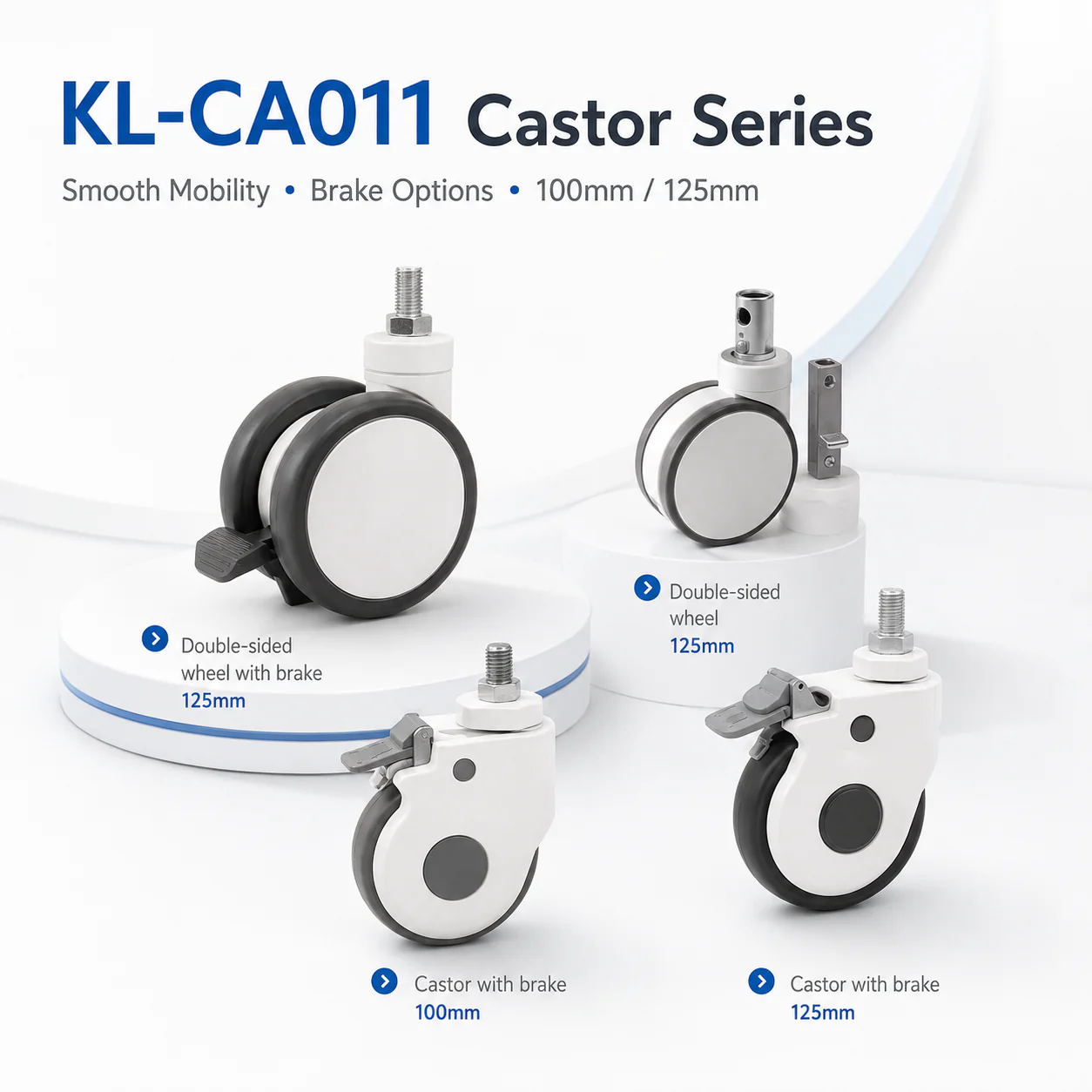
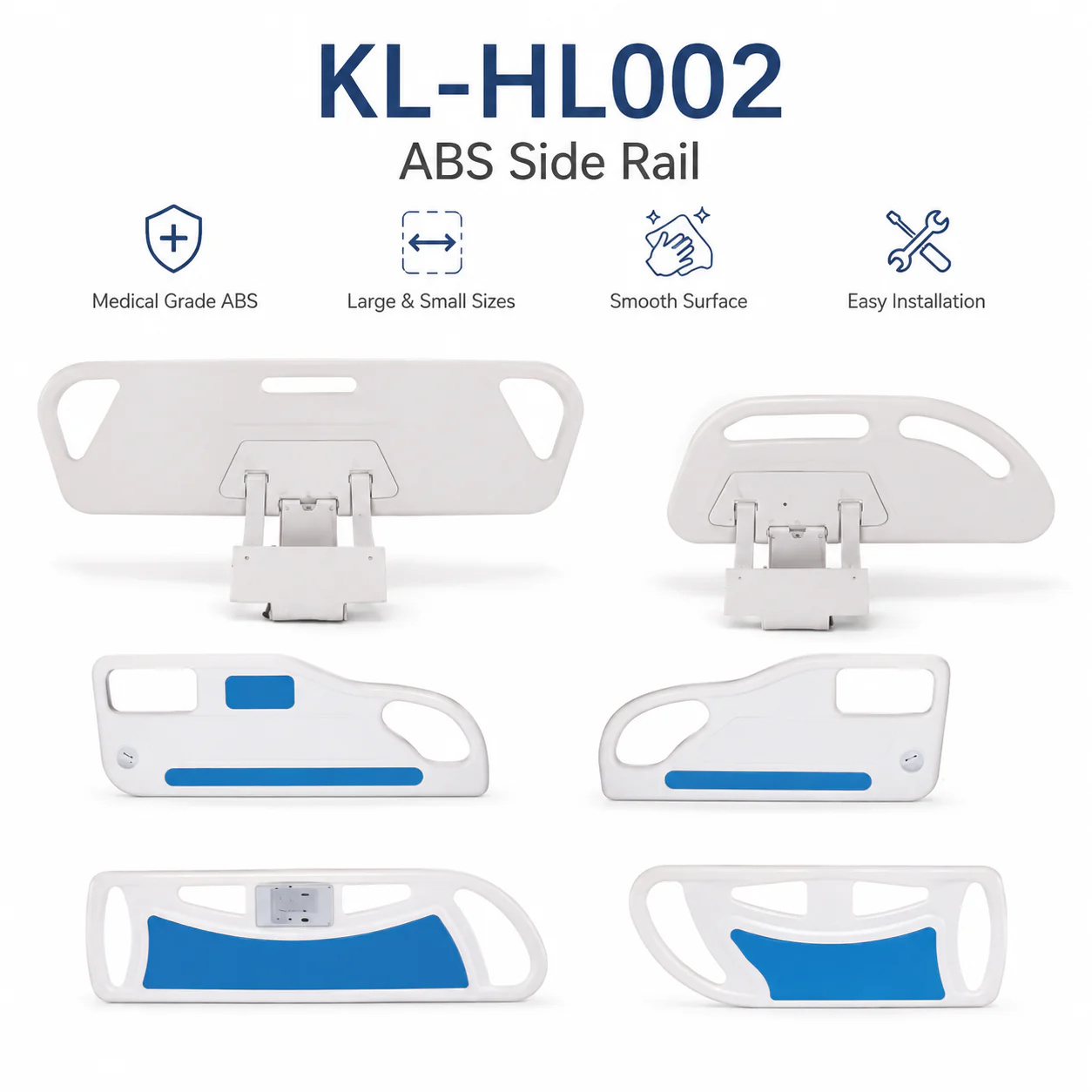
Bent or cracked side rails, a rail that no longer latches, a bed that rolls when braked, or a castor that will not swivel. These are the highest-volume repairs in most fleets because they take the daily physical impact. They are also the easiest to resolve, because rails and castors are supplied as standalone parts: KL-HL002 ABS side rails are available in big and small sizes with matching ABS panel designs, and KL-CA011 hospital bed castors are supplied as double-sided wheels with brake at 125 mm, double-sided wheels at 125 mm, and castors with brake at 100 mm and 125 mm.
Because castor and rail dimensions vary between bed platforms, send the measurement and a photograph of the existing mounting rather than only the bed model. For rails, the mounting interface matters as much as the length.
Mattress and accessory faults
Mattresses, IV poles, overbed tables and traction frames are usually replaced rather than repaired. Keep them on a separate line of the quotation: they ship differently from spare parts and are frequently the fastest items to resolve, so there is no reason to let them wait behind an actuator lead time.
Who can fix hospital beds, and with which parts
A common question is whether one supplier can fix hospital beds from several manufacturers in the same fleet. For electrical and control assemblies the answer is usually no: control boxes, hand controls and actuators are built around a specific bed platform, and substituting them across platforms is not a safe assumption to build a budget on.
For mechanical wear parts the answer is often yes, because compatibility is decided by dimensions and the mounting interface rather than by the brand on the nameplate. Rail brackets, castor stem diameters and plate patterns are measurable. That is why a photograph of the existing mounting, plus two or three measurements, is worth more than the manufacturer name when you are trying to establish whether a part fits.
This distinction is what makes mixed-fleet hospital bed repairs and service viable in practice: mechanical parts are consolidated with one supplier, while electrical work stays with the original bed platform or is resolved by replacing the affected beds.
Repair or replace: how buyers decide
There is no universal threshold, but four questions decide most cases.
- Age and remaining service life. A repair that restores a bed for one more year
is a different commercial decision from one that restores it for six.
- Cumulative repair cost. When the parts total for one bed approaches a meaningful
share of a new bed of equivalent specification, replacement is usually the better project decision.
- Specification gap. If the ward has moved to a requirement the old bed cannot
meet — a higher listed capacity, more functions, a different height range — repairing it preserves a bed that no longer fits the department.
- Fleet consistency. Maintaining one bed platform across a ward reduces the number
of distinct spare parts that have to be stocked. Repairing a single odd unit can be more expensive over time than standardising it out.
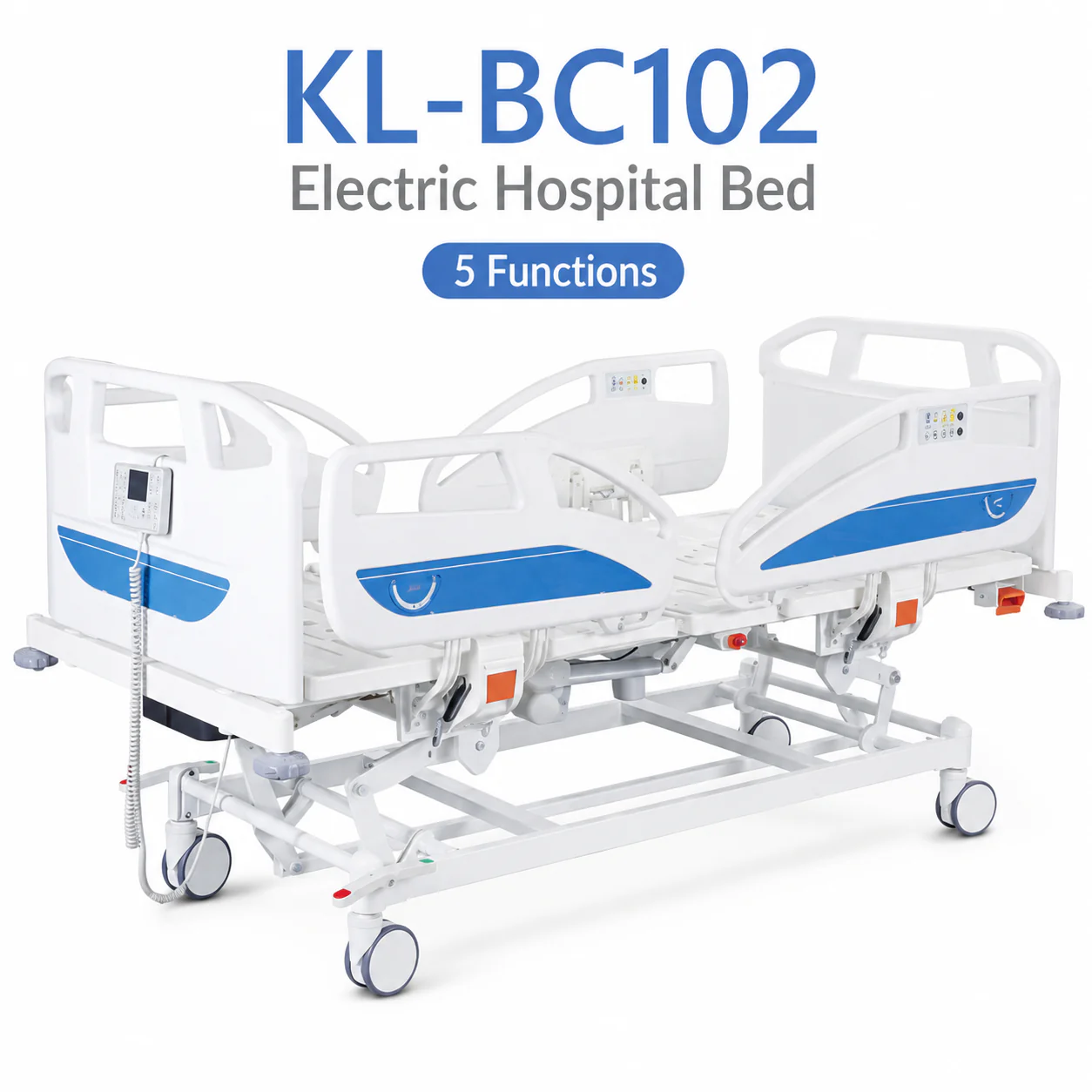
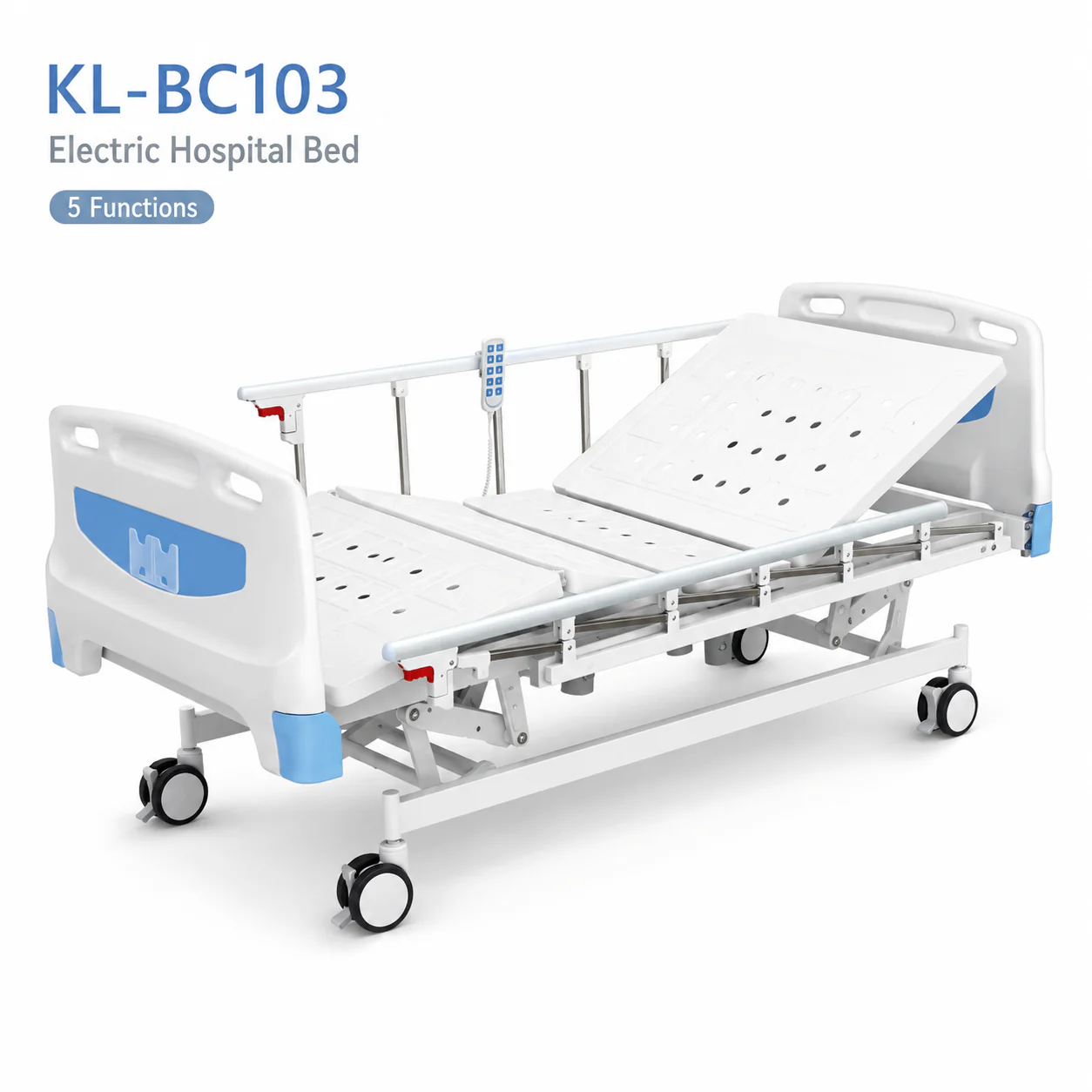
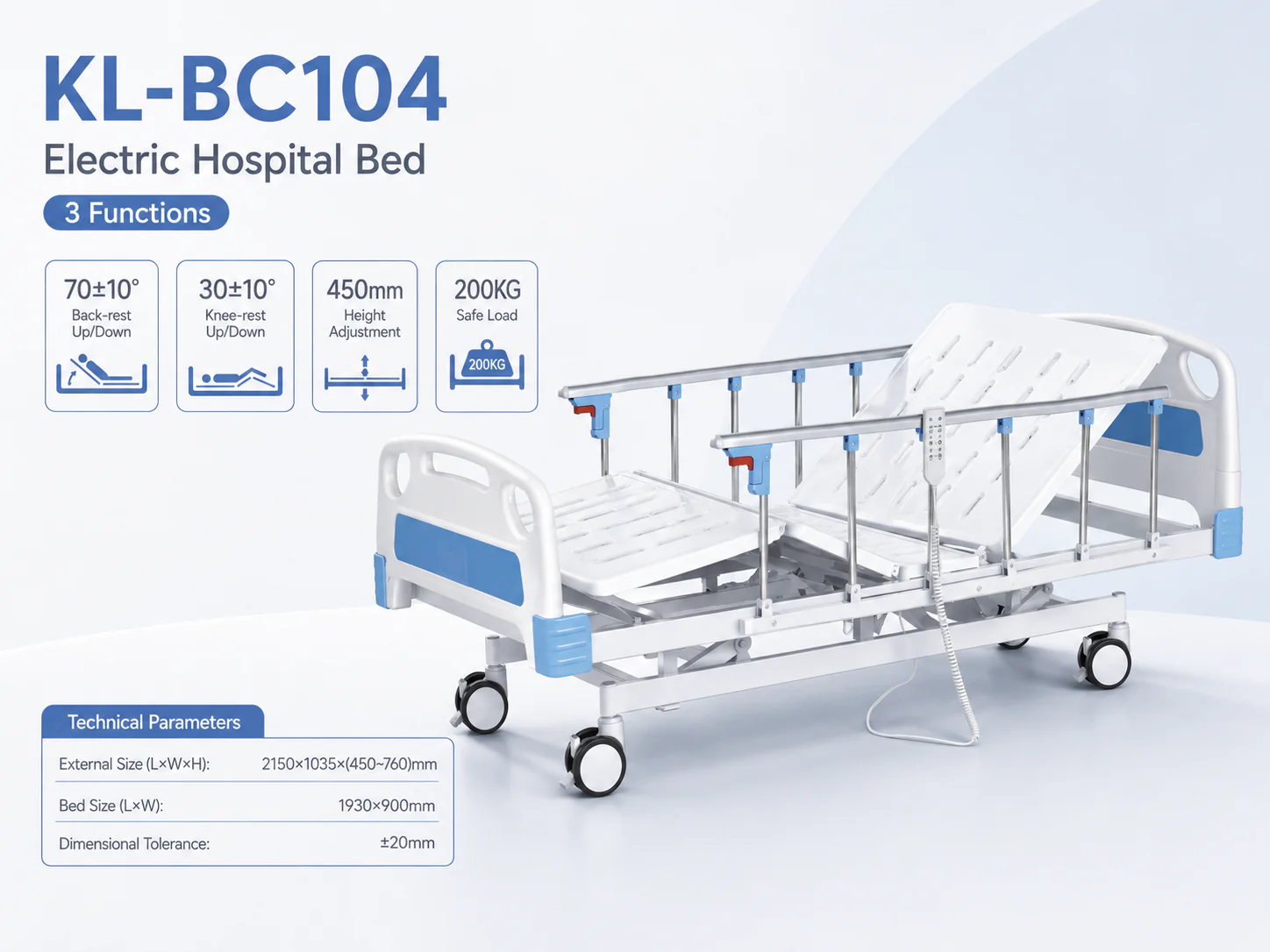
For reference when comparing, the current electric ward and ICU platforms include the KL-BC102 with dual return mechanism และ KL-BC103 compact ward bed, both listed at 240 kg capacity with a 450–760 mm height range, and the KL-BC104 3-function bed at 200 kg. Comparing a repair quotation against a like-for-like new bed of the same capacity and function count is the only comparison that produces a defensible decision.
Comparing a hospital bed repair service
When several offers arrive, normalise them before comparing:
- Is the price per bed, per part, or per site visit?
- Are the parts listed individually with model references, or bundled as "repair kit"?
- Which items are excluded — mattresses, rails, castors, freight, packaging?
- What is the lead time for each part, and are they quoted from stock or production?
- Is a warranty offered on the replaced part, and for how long?
- Who covers freight to the destination, and under which shipping terms?
A quotation that arrives as a single figure cannot be compared to one broken into components. Ask for the line items before you ask for a discount.
Two further points are worth settling in writing at this stage. First, whether the hospital bed service covers a defined response time or is quoted per request — the two produce very different annual costs for the same fleet. Second, whether parts are quoted from stock or from production, because a part in production can add weeks that no discount compensates for when a ward is short of beds.
Why the model number decides everything
The single most useful thing a buyer can send is the bed's nameplate. Model number, production reference and a photograph of the bed and the failing part will usually let a supplier confirm part compatibility in one exchange. Without it, the process becomes a sequence of guesses, and a mismatched actuator or rail bracket costs more in shipping than in parts.
If the nameplate is missing or unreadable, photograph the bed from the side, the underside of the frame, and the control box, and include the overall length, width and the castor diameter. See also the medical equipment repairs overview for hospital beds for what to record before contacting a supplier, and the guide to installing bed rails on a hospital bed if the repair involves rail replacement.
Building a preventive maintenance plan
Most emergency electric hospital bed repair work is predictable. A short quarterly check — brake function on every castor, rail latch engagement, hand control cable condition, visible wear on the actuator housing — converts unplanned downtime into planned part orders, which consolidate into fewer shipments at better freight cost.
For a fleet, keep a small buffer stock of the two parts that fail most often: castors and side rails. Both are inexpensive relative to a bed's downtime, and both are the parts most likely to be needed at short notice.
It is also worth recording, per bed, the model, the year it entered service and every part replaced since. After two or three cycles this record answers the repair-or- replace question on its own: the beds that keep appearing on it are the beds to budget for replacing, and the ones that never appear are the platform worth standardising the ward around.
A maintenance plan also changes how you buy. Ordering four castors and two rails on one shipment alongside a scheduled check costs a fraction of ordering the same parts as three separate emergencies, and it removes the freight premium that single-item shipments always carry.
How to submit an enquiry
Send the following in one message and a quotation can usually be prepared without further correspondence:
- Bed model and quantity affected
- Nameplate photograph and photographs of the failing part
- Fault description and how often it occurs
- Destination country and required voltage
- Whether spare parts only, or replacement beds, are being considered
- Any documentation required for the destination market
- Target date for delivery or installation
Documentation scope and validity are confirmed per model and destination market in the written quotation. Send the details to inquiry@shkeling.com or through the request a quote form, and the export team will confirm part compatibility and lead time by model.