Planning guides
Laboratory equipment list: basic equipment for hospital and clinical labs
A practical laboratory equipment list for hospital and clinical labs: analyzers, centrifuges, sterilizers, cold storage, lab apparatus and choosing suppliers.

Laboratory equipment for a hospital or clinical lab falls into six groups: sample collection and preparation, analyzers, microscopy, temperature-controlled equipment, sterilization and waste handling, and furniture and safety. A small clinic lab can start with a centrifuge, microscope, refrigerator, incubator, autoclave and basic glassware, then add analyzers as its test menu grows. This list explains what each item does and what to check when buying.
Basic laboratory equipment at a glance
The table below is a starting medical lab equipment list. It is grouped by function, so you can tick off each area when planning a new lab or upgrading one.
| Group | Equipment | Main use | Buying notes |
|---|---|---|---|
| Sample preparation | Clinical centrifuge | Separating serum, plasma and urine sediment | Specify by RCF (× g), rotor type and tube sizes |
| Sample preparation | Vortex mixer, tube rocker | Mixing samples and reagents | Tube compatibility |
| Measurement | Micropipettes and tips | Accurate small volumes | Calibration service, volume ranges |
| Measurement | Analytical balance | Weighing reagents | Readability, calibration weights |
| Analysis | Hematology analyzer | Complete blood count | Reagent supply and service locally |
| Analysis | Chemistry and immunoassay analyzers | Biochemistry and hormone tests | Test menu, throughput, reagent contracts |
| Analysis | Coagulation analyzer, urine analyzer | Clotting tests, urinalysis | Sample type, controls |
| Microscopy | Binocular microscope | Blood films, urine, microbiology | Objectives, LED illumination |
| Temperature | Water bath | Incubating tubes at set temperature | Capacity, accuracy |
| Temperature | Incubator | Culturing microorganisms | Temperature uniformity, CO2 if needed |
| Temperature | Drying oven | Drying glassware and samples | Range, chamber size |
| Cold storage | Lab and blood storage refrigerators, freezers | Reagents, samples, blood products | Alarm, temperature recording |
| Sterilization | Steam sterilizer (autoclave) | Media, glassware, waste decontamination | Liquid and waste cycles |
| Safety | Class II biosafety cabinet, fume hood | Handling infectious samples, chemicals | Certification and annual testing |
| Safety | Eyewash, spill kits, sharps and biohazard containers | Staff protection | Placement at each workstation |
| Furniture | Benches, sinks, storage, mobile carts | Workspace and storage | Chemical-resistant surfaces |
Sample collection and preparation equipment
Most errors in medical laboratory testing happen before the sample reaches the analyzer, so preparation equipment matters as much as the analyzers.
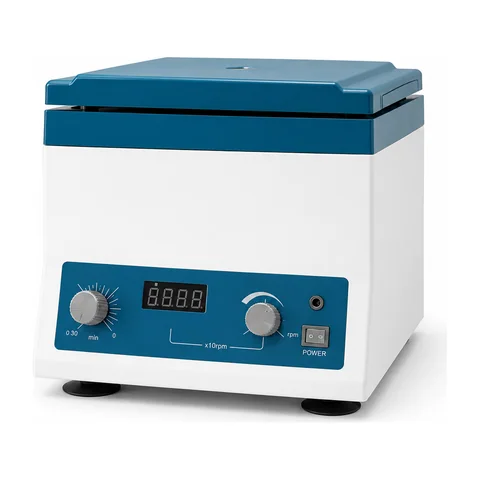
The clinical centrifuge is the core item. It separates blood into serum or plasma and cells, and sediments urine. Keling's KL-CE001 Bench Centrifuge bench centrifuge reaches 4,000 RPM and 2,325 × g with a 12 × 20 ml rotor, which suits routine clinic and small hospital workloads. Our laboratory centrifuge guide explains how to convert RPM to g-force and choose rotors.
Supporting items include tube racks, vortex mixers, tube rockers for anticoagulated samples, timers, and labeling or barcode printers that link each tube to its request.
Analyzers and diagnostic instruments
Analyzers produce the results, and they are usually the largest investment in medical laboratory equipment. A general hospital lab typically has:
- Hematology analyzer for complete blood counts and differentials.
- Clinical chemistry analyzer for glucose, kidney and liver function, lipids and electrolytes.
- Immunoassay analyzer for hormones, cardiac markers and infectious disease serology.
- Coagulation analyzer for clotting times.
- Urine analyzer and a blood gas analyzer, often near critical-care areas.
Analyzers are closed systems in many cases, tied to the manufacturer's reagents, controls and service. When you plan blood lab equipment, budget for reagents, quality controls, calibrators and service, not just the instrument. Laboratories that run under ISO 15189 must document calibration, internal quality control and external quality assessment for each analyzer.
Microscopes and basic laboratory apparatus
A binocular light microscope with 10×, 40× and 100× (oil immersion) objectives is still essential for blood films, urine sediment, Gram stains and parasitology. LED illumination saves power and runs cool.
Common laboratory apparatus and their uses, which also form the core of chemistry laboratory equipment and science lab equipment in teaching labs:
- Beakers and Erlenmeyer flasks: mixing, heating and swirling liquids.
- Graduated cylinders and volumetric flasks: measuring and preparing exact volumes.
- Pipettes and burettes: transferring or dispensing precise volumes; titration.
- Test tubes and racks: small reactions and sample holding.
- Petri dishes: culturing microorganisms on agar.
- Funnels, filter paper and wash bottles: filtering and rinsing.
- Bunsen burner or hot plate, tripod and wire gauze: heating.
- Crucibles, tongs and watch glasses: heating solids and handling hot items.
- Thermometers and pH meters: monitoring temperature and acidity.
Borosilicate glass and laboratory equipment made from it tolerates heat and autoclaving; polypropylene plasticware is lighter and less breakable.
Temperature-controlled equipment
Many tests depend on a fixed temperature, and many reagents spoil outside their range.
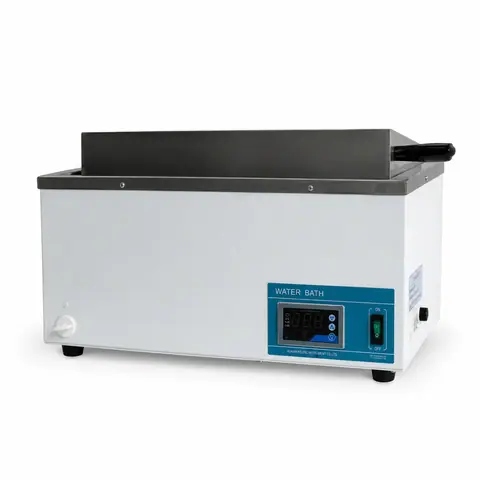
- Water baths incubate tubes and thaw samples evenly. The KL-CE002 Thermostatic Water Bath thermostatic water bath has a 9 L stainless steel tank, a range of room temperature +5°C to 99°C and ±1°C accuracy.
- Incubators grow microbiological cultures, usually at 35–37°C.
- Drying ovens dry washed glassware and samples. The KL-DT001 Electrothermal Constant-Temperature Drying Oven comes in 40, 70 and 136 L chambers with a range up to 250°C. Note that a drying oven is not a validated dry heat sterilizer unless its process has been qualified for your loads.
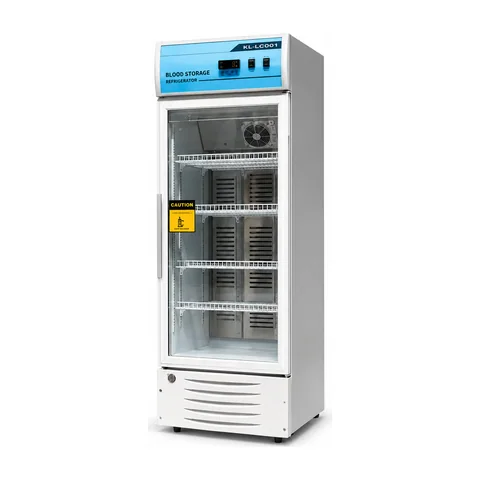
- Refrigerators and freezers store reagents, controls and samples. Blood products need dedicated blood storage refrigerators at 2–6°C with alarms and temperature recording; the KL-LC001 Blood Storage Refrigerator holds 198 L at 4 ± 1°C in an upright glass-door cabinet.
Keep reagents and blood products in separate units, and never store food in laboratory refrigerators.
Laboratory sterilizers and waste decontamination
Laboratory sterilizers prepare culture media, glassware and instruments, and decontaminate biohazardous waste before it leaves the lab. A lab autoclave needs cycles that a typical instrument sterilizer may not have:
- Liquid cycles with slow exhaust, so media and liquids do not boil over.
- Waste cycles with longer exposure for dense bags of cultures and plates.
- Instrument cycles for metal items and glassware.
Vertical top-loading autoclaves suit most laboratories, because media bottles and waste bags load easily from above. Keling's KL-ST002 Vertical Pressure Steam Sterilizer vertical pressure steam sterilizer is available in 35, 50, 75 and 100 L, with a maximum working temperature of 138°C. Clinics that also reprocess dental or medical instruments may need a separate vacuum benchtop unit; see our autoclave and steam sterilizer guide for how the classes differ.
Waste handling also needs sharps containers, color-coded biohazard bags, and a documented route to final treatment and disposal under local regulations.
Safety equipment and lab furniture
Safety equipment protects staff and samples:
- Class II biosafety cabinet for handling infectious specimens and opening tubes that may create aerosols. Cabinets are tested to standards such as EN 12469 or NSF/ANSI 49 and need recertification, typically yearly.
- Chemical fume hood where volatile reagents are used.
- Eyewash stations, emergency shower, spill kits and fire extinguishers.
- PPE: lab coats, gloves, eye protection.
Furniture should include chemical-resistant benches at the right height, sinks with separate hand-wash basins, closed storage for reagents, and mobile carts for moving samples and supplies, such as the KL-TC204 Table Cart table cart. Laboratory electrical equipment should meet IEC 61010-1 safety requirements.
How to choose lab equipment suppliers and manufacturers
Buying from lab equipment manufacturers directly can lower cost on bulk and project orders, while distributors add local stock and service. Either way, evaluate:
- Quality system: ISO 13485 for medical device manufacturers, with documented production and testing.
- Product documents: declaration of conformity or registration for your destination country, IFU, test and calibration reports.
- Electrical safety: IEC 61010-1 for laboratory equipment, voltage and plug type for your site.
- Service and spare parts: who installs, trains, calibrates and repairs, and how quickly.
- Consumables: availability and cost of rotors, adapters, filters, gaskets and reagents.
- Packaging and logistics for export: export cartons, documents and lead time.
Our guide on how to choose a medical equipment supplier covers audits and document checks in more detail, and the hospital equipment list puts the lab in the context of a whole facility.
Keling Medical has manufactured hospital equipment in Yangzhou since 1996 under an ISO 13485:2016 quality system certified by SGS, and exports more than 40% of its output. Ask for the documents that apply to each model and your destination country.
Next steps
Start from your test menu, group the equipment by function using the table above, and size centrifuge, cold storage and sterilizer capacity for your peak workload. Browse Keling's laboratory and sterilization equipment and send your equipment list through the quote form for a consolidated offer.
Frequently asked questions
What equipment is needed in a medical laboratory?
A basic medical laboratory needs a clinical centrifuge, a binocular microscope, hematology and chemistry analyzers, a refrigerator and freezer for reagents and samples, an incubator and water bath, a steam sterilizer, a biosafety cabinet, pipettes and glassware, and lab benches with sinks and waste systems. The exact list depends on the tests on the lab's menu.
What are common lab equipments and their uses?
Common lab equipment includes beakers and flasks for mixing and heating liquids, graduated cylinders and pipettes for measuring volume, test tubes and racks for small reactions, a balance for weighing, a centrifuge for separating samples, a microscope for viewing cells, a water bath or incubator for controlled temperature, and an autoclave for sterilizing.
What is the difference between science lab equipment and medical lab equipment?
Science lab equipment for teaching and chemistry focuses on glassware, heating and measurement. Medical laboratory equipment adds devices for diagnosing patients, such as blood analyzers and clinical centrifuges, many of which are regulated medical or in vitro diagnostic devices and must run under a quality system such as ISO 15189 with documented calibration and controls.
What laboratory equipment is used for blood tests?
Blood tests use collection tubes and needles, a clinical centrifuge to separate serum or plasma, hematology analyzers for blood counts, chemistry and immunoassay analyzers, coagulation analyzers, a microscope for blood films, and refrigeration to store samples and reagents. Blood banks add blood storage refrigerators at 2–6°C, plasma freezers and platelet agitators.
Where can I buy lab equipment for a hospital?
Hospitals buy lab equipment directly from manufacturers, through authorized national distributors, or via tenders run by health ministries and agencies. Direct factory sourcing suits bulk and project orders of general equipment, while analyzers are often tied to local reagent and service contracts. Compare total cost, documentation, training and local service availability.
Do laboratory sterilizers differ from hospital sterilizers?
The steam sterilization principle is the same, but laboratory sterilizers often need cycles for liquids, culture media and biohazardous waste, which require slow exhaust to prevent boil-over. Hospital sterilizers prioritize wrapped instruments and textiles with vacuum air removal and drying. Many labs use vertical top-loading autoclaves, while hospital CSSDs use horizontal front-loading chambers.