Buying guides
Bedside commode guide: 3-in-1, drop-arm and commode chair types
Bedside commode buying guide: 3-in-1, drop-arm, bariatric and shower commode chairs, seat size and height, parts, cleaning and what to put in a tender spec.

A bedside commode is a free-standing toilet chair with a seat opening, a removable bucket and usually armrests, placed beside the bed for patients who cannot safely reach a bathroom. Hospitals, rehabilitation wards, nursing homes and home-care providers use them to reduce night-time falls and to support patients after surgery, stroke or during frailty. The main choices are standard, 3-in-1, drop-arm, bariatric and wheeled commode chairs.
What is a bedside commode used for?
A bedside commode gives a patient a safe, stable place to toilet within one or two steps of the bed. It is used when walking to the bathroom is unsafe, too slow or too tiring, for example after hip or knee surgery, during acute illness, or for elderly patients with night-time urgency.
In facilities, commodes also support infection control: a patient on enteric precautions can use a dedicated commode instead of a shared toilet. In home care, a portable commode for elderly users often bridges the gap until bathroom adaptations are in place.
Types of commode chairs
Commode chairs differ mainly in how the patient gets on and off and where the chair will be used. The table summarizes the common types.
| Type | How it works | Best for | Watch-outs |
|---|---|---|---|
| Standard bedside commode | Fixed frame, fixed arms, bucket under seat | Users who can stand and pivot | Not suitable for lateral transfers |
| 3-in-1 commode | Bedside commode, raised toilet seat and toilet safety frame in one | Home care, hospital discharge, general wards | Must fit the toilet bowl and room footprint |
| Drop-arm commode | One or both arms lower or swing away | Slide-board transfers, stroke, spinal injury | Check arm locks and frame stiffness |
| Bariatric commode | Wider, reinforced frame and seat | Larger users, typically over 300 lb (136 kg) | Footprint and weight; verify load rating |
| Folding commode | Frame folds flat for storage or transport | Home use, travel, short-term loan pools | Folding joints need regular checks |
| Commode wheelchair / shower commode chair | Castors, push handles, open seat, often water-resistant | Wheeling patients to toilet or roll-in shower | Brakes, castor corrosion, attendant training |
The 3-in-1 commode
The 3 in 1 commode is the most widely bought type because one product covers three needs. With the bucket in place it is a bedside commode. With the bucket removed and a splash guard fitted, it sits over a household or hospital toilet as an elevated commode seat. With the seat in place over the toilet, its armrests act as a toilet safety frame.
For buyers, this means fewer SKUs and simpler discharge kits. The trade-off is fit: the frame must clear the toilet bowl and cistern, and the legs must adjust high enough to sit above the toilet rim.
Drop-arm commodes
A drop arm commode lets a patient transfer sideways from a bed or wheelchair, often with a transfer board. It suits people who cannot bear weight to stand. A bariatric drop arm commode combines a wide frame with drop arms and is common in bariatric programs, where lateral transfers are safer than stand-pivot transfers.
Rolling shower commode chairs
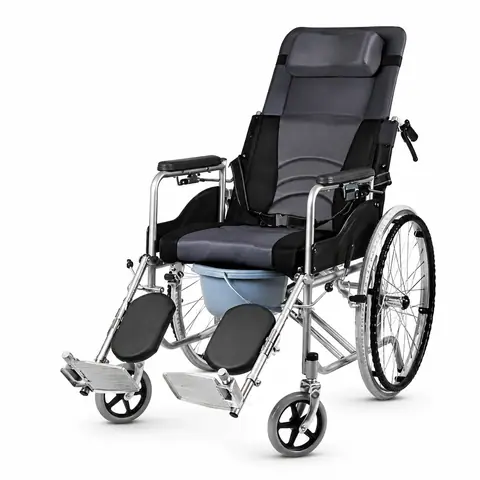
A rolling shower commode chair (or commode wheelchair) is pushed by a caregiver over a toilet and into a roll-in shower. It reduces the number of transfers per hygiene routine. Choose corrosion-resistant frames, sealed or plastic castors with brakes, and a seat that drains. Keling's KL-LY006 Reclining Wheelchair reclining wheelchair includes an integrated commode opening for patients who need recline and toileting in one chair.
Commode seat size and height
Seat height is the most important fit check, followed by width between the arms and load rating. A commode that is too low makes standing hard; one that is too high leaves the feet dangling and the user unstable.
| Dimension | Typical range | Why it matters |
|---|---|---|
| Seat height (adjustable) | About 16–22 in (400–560 mm) | Feet flat, knees near 90°, easier sit-to-stand |
| Width between armrests, standard | About 18–20 in (460–510 mm) | Hip clearance and lateral support |
| Width between armrests, bariatric | About 22–30 in (560–760 mm) | Comfort and safety for larger users |
| Load rating, standard | Commonly 250–350 lb (113–159 kg) | Must exceed user weight with margin |
| Load rating, bariatric | Commonly 400–650 lb (181–295 kg) | Verify by test report, not label alone |
These are market ranges, not a standard. Always check the model's own data sheet. As a reference, the ADA Standards set accessible toilet seat heights at 17–19 in (430–485 mm), which is a useful target when a commode is used over a toilet.
Tall commodes and high-rise commodes extend the leg range for tall users or people with hip precautions. When a user needs height but not a full chair, a commode seat riser (raised toilet seat) may be enough.
Raised toilet seats, risers and extenders
A raised toilet seat, also called a commode seat riser, commode extension seat or toilet seat extender, sits on the existing toilet and adds height, usually by 2 to 6 in (50 to 150 mm). It is cheaper and smaller than a commode, but only works where the patient can reach the bathroom.
Options include:
- Plain risers that clip or lock onto the bowl
- Raised commode seat with arms, which adds push-up support
- Commode riser with handles that clamp to the toilet frame
- Lift commode seats, powered seats that tilt or raise the user, for people with weak leg strength
The fit to the bowl shape (round or elongated) is the usual failure point. Specify bowl type and require a locking mechanism that prevents the riser from shifting.
Bathroom commode, shower commode or bath chair?
In US English "commode" can also mean a toilet, so searches like "bathroom commode" or "dual flush commode" often refer to household toilets with two flush volumes. This guide covers portable medical commodes; dual flush toilets are plumbing fixtures and not assistive devices.
For the shower, use equipment designed for water. A bath chair or shower stool is not a commode, and a standard bedside commode is not a shower chair. Keling's KL-FS790 Bath Chair bath chair, with seat height adjustable from 370 to 520 mm and a 150 kg load capacity, is an example of a separate shower seat. For more on this category, see our guide to shower chairs and tub transfer benches.
Commode parts, cleaning and infection control
Commodes are high-touch, high-soil items, so the design should make cleaning fast and complete. Ask for smooth surfaces, few crevices, sealed seams and materials that tolerate the facility's disinfectants.
Key commode parts to check:
- Bucket and lid: a well-fitting lid, a carry handle and a shape that empties without splashing
- Splash guard: needed for over-toilet use on 3-in-1 commodes
- Seat and lid: one-piece moldings are easier to clean than seats with gaps
- Armrest pads: replaceable, non-porous covers
- Leg tips: non-slip rubber feet that do not crack or mark floors
- Adjustment pins: spring buttons that lock positively at each height
- Castors and brakes on wheeled models
Clean and disinfect between patients according to the facility's infection-prevention policy and the manufacturer's instructions for use. Many hospitals dedicate a commode to each isolation patient. Keep replacement parts for commode buckets and leg tips in stock, since these wear first.
Standards and documents to request
The international standard for toilet and shower assistive products is ISO 17966, which sets requirements and test methods for products such as commode chairs and shower chairs, including stability, strength and durability. Ask suppliers which standard their test report follows and for which load.
Also request, for the specific model and destination country:
- The quality-management certificate of the factory (for example ISO 13485)
- The relevant regulatory registration or declaration of conformity
- A test report covering static load, stability and durability
- Material and surface-finish specifications
- Instructions for use, cleaning instructions and a spare-parts list
How to specify a commode chair in a tender
A clear specification avoids receiving a cheaper commode that looks the same but fails in use. Write the requirement around the patient group and the transfer method, then add measurable criteria.
| Spec item | Example requirement |
|---|---|
| Type | 3-in-1 / drop-arm / bariatric / wheeled shower commode |
| Seat height | Adjustable, at least 16–21 in (400–530 mm), in steps of 1 in (25 mm) or less |
| Load rating | Not less than X kg, confirmed by test report |
| Frame | Powder-coated steel or aluminum; stated corrosion protection |
| Bucket | Removable, with lid and carry handle; spare buckets quoted separately |
| Armrests | Padded, non-porous; drop-arm if lateral transfers required |
| Feet / castors | Non-slip tips, or castors with at least two brakes |
| Cleaning | Compatible with listed hospital disinfectants |
| Folding | Yes / no, folded dimensions stated |
| Packaging | Units per carton, carton dimensions, units per container |
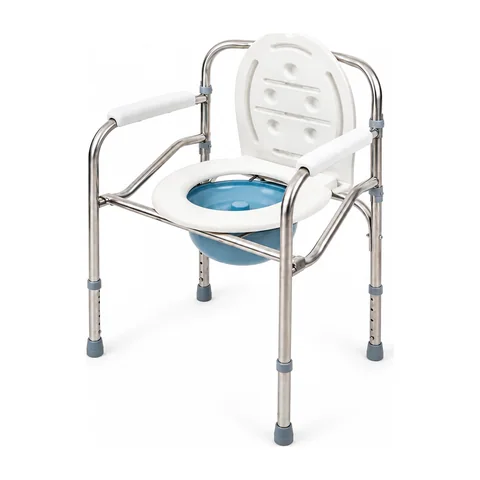
Keling's KL-FS792 Commode Chair commode chair is an example of a standard model: it has a seat height adjustable from 400 to 500 mm, a detachable bucket with lid, padded armrests, an ergonomic backrest and non-slip rubber feet, with a 100 kg load capacity. For patients who need help with the transfer itself, the KL-FS910 Hydraulic Patient Transfer Lift hydraulic patient transfer lift combines a split seat with a detachable commode bucket.
Commodes are usually bought alongside walkers, wheelchairs and lifts. Our mobility aids buyer's guide covers how to plan a full rehabilitation order, and the patient lifts guide explains when a lift is safer than a manual transfer.
What is the best commode to buy?
The best commode is the one that matches the user's transfer method, weight and room, not the one with the most features. A simple decision path:
- Can stand and pivot, needs a bedside option and a toilet frame later: 3-in-1 commode
- Cannot stand, transfers sideways: drop-arm commode
- Over about 300 lb (136 kg) or wide hips: bariatric commode, drop-arm if needed
- Needs toileting and showering with a caregiver: rolling shower commode chair
- Small home, short-term need: folding bedside commode
- Can reach the bathroom but cannot sit low: raised toilet seat with arms
Patients and caregivers should ask their clinician or occupational therapist to confirm the right type and height before buying.
Next steps
Start from the patient group and transfer method, set a seat-height range and load rating, and ask for test reports and spare-parts lists for the exact model. You can browse Keling's rehabilitation products or request a quote with your quantities, destination and required documents.
Frequently asked questions
What is a bedside commode?
A bedside commode is a portable toilet chair with a seat opening and a removable bucket, placed next to the bed so a patient with limited mobility can toilet without walking to the bathroom. Most have armrests and adjustable legs, and many can also be placed over a toilet when the bucket is removed.
What does 3-in-1 commode mean?
A 3-in-1 commode can be used three ways: as a stand-alone bedside commode with its bucket, as a raised toilet seat placed over an existing toilet, and as a toilet safety frame that gives the user armrests to push up from. The splash guard directs waste into the toilet bowl when it is used over a toilet.
What size commode seat do I need?
Most standard commodes suit users up to about 250 to 300 lb (113 to 136 kg) with roughly 18 to 20 in (460 to 510 mm) between the armrests. Larger users need a bariatric commode with a wider frame and a higher load rating; always check the manufacturer's stated capacity rather than relying on seat width alone.
What is the difference between a drop-arm commode and a regular commode?
A drop-arm commode has armrests that swing down or lift away, so the patient can slide sideways from a bed, wheelchair or transfer board. A regular commode has fixed arms and assumes the user can stand and pivot. Drop-arm models are common in rehabilitation, stroke units and bariatric care.
How high should a commode be?
The seat should let the user sit with feet flat on the floor and knees at roughly a right angle, and stand up without pulling on furniture. For most adults this means a seat height between about 17 and 21 in (430 to 530 mm); taller users and people with hip or knee restrictions often need the upper end of the range.
Can a commode chair be used in the shower?
Only if it is designed as a shower commode chair, with corrosion-resistant materials, drainage and a waterproof seat. Standard bedside commodes with padded arms or steel parts are not meant for repeated wetting. Rolling shower commode chairs combine both roles and let staff wheel the patient over a toilet and into a roll-in shower.
Which commode parts wear out first?
Buckets, lids, seat covers, rubber leg tips and armrest pads are the usual replacement items, followed by height-adjustment pins and, on wheeled models, castors and brakes. Buyers should confirm that these commode parts are available as spares and order a stock of buckets and leg tips with the first shipment.