How steam sterilization works
A pressure steam sterilizer heats water in a sealed chamber so that steam reaches temperatures above boiling point. Sterilization depends on steam contacting every surface of the load at the required temperature for the required time. Common cycles use 121 °C or 134 °C, with holding times set by the validated cycle for the load type.
The key design difference between sterilizers is how they remove air from the chamber. Air pockets block steam contact, which matters for porous loads, wrapped packs and hollow instruments. Gravity-displacement sterilizers let steam push air out; pre-vacuum sterilizers pump air out before sterilizing. In Europe, small sterilizers are classified under EN 13060 (Class B, N and S), and large sterilizers are covered by EN 285. Ask the supplier which cycle type the model uses and which load types it is validated for.
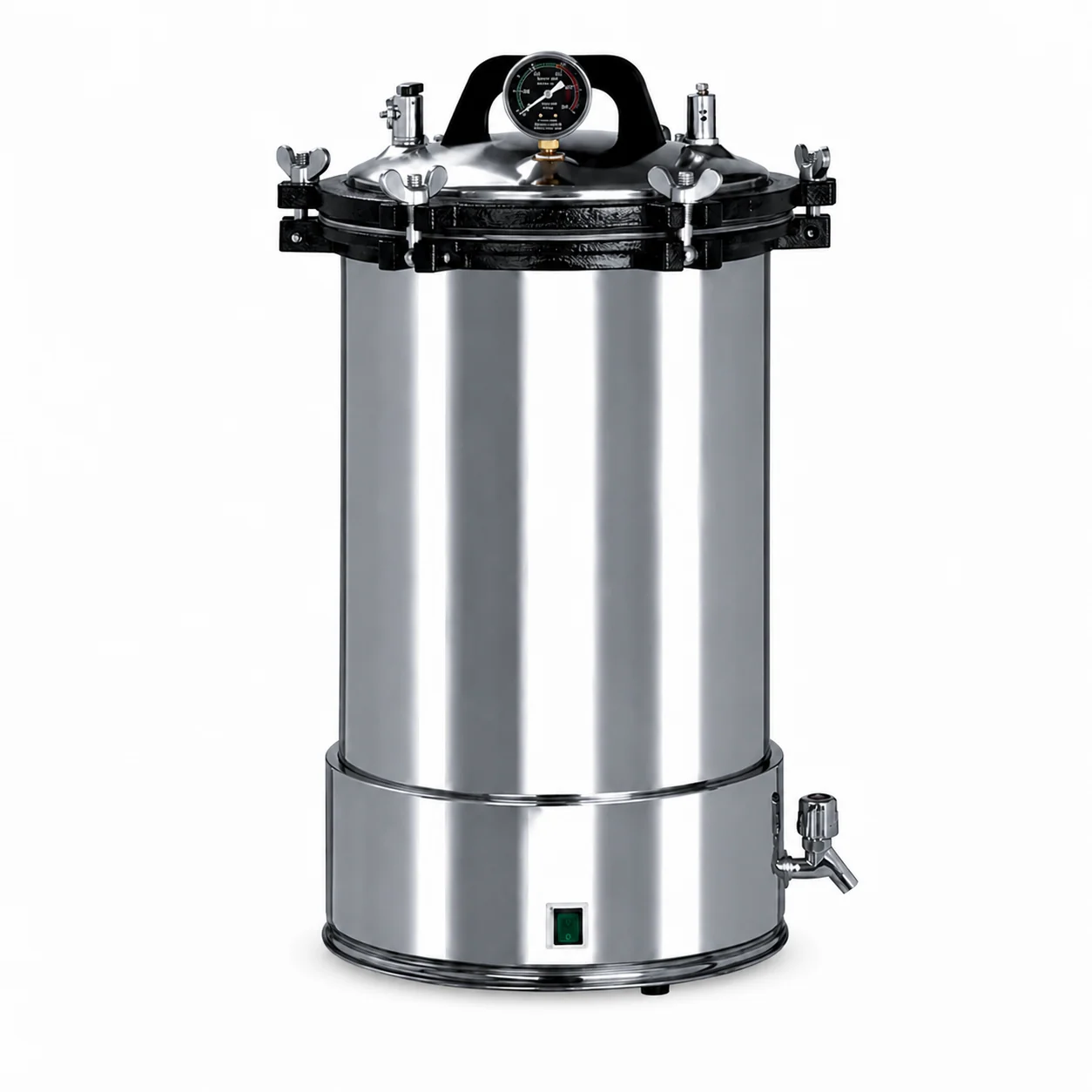
Benchtop and portable sterilizers
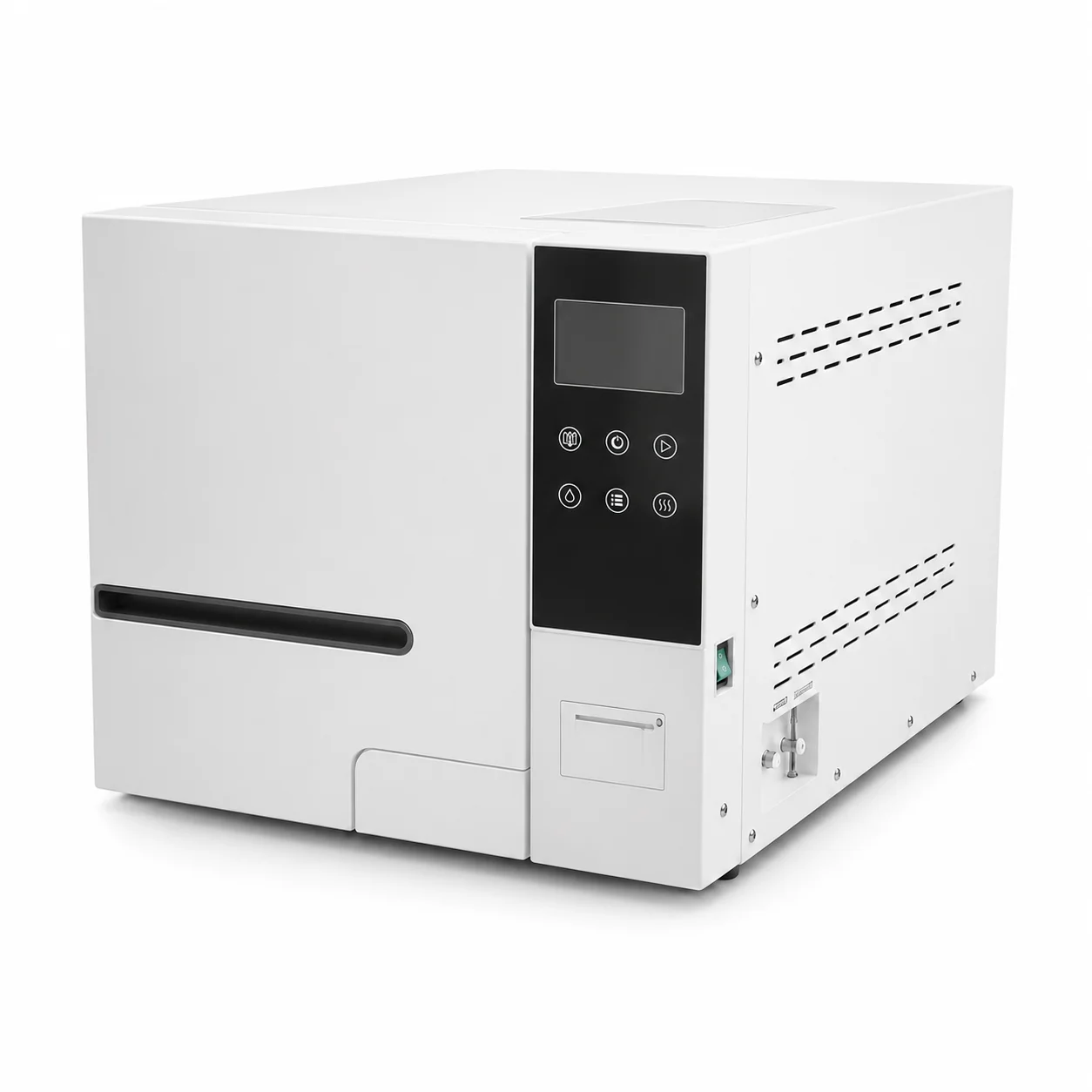
Benchtop units suit clinics, dental practices, laboratories and small departments with modest instrument volumes.
| Model | Chamber | Listed data |
|---|---|---|
| KL-ST001 | 18 L (Φ250 × 360 mm) or 23 L (Φ250 × 450 mm) | 2.2 kW; 110 V or 220 V, 50/60 Hz; external 590 × 505 × 450 mm (18 L) |
| KL-ST003 | 18 L (Φ280 × 260 mm) or 24 L (Φ280 × 390 mm) | Stainless steel; maximum working pressure 0.16 MPa; maximum temperature 126 °C; heat uniformity ≤±1 °C |
The KL-ST001 lists 110 V and 220 V versions, which simplifies supply to markets with different mains voltages. The KL-ST003 lists a 126 °C maximum temperature, so confirm that the cycles you intend to run fall within that limit before selecting it.
Vertical sterilizers for clinics and small hospitals
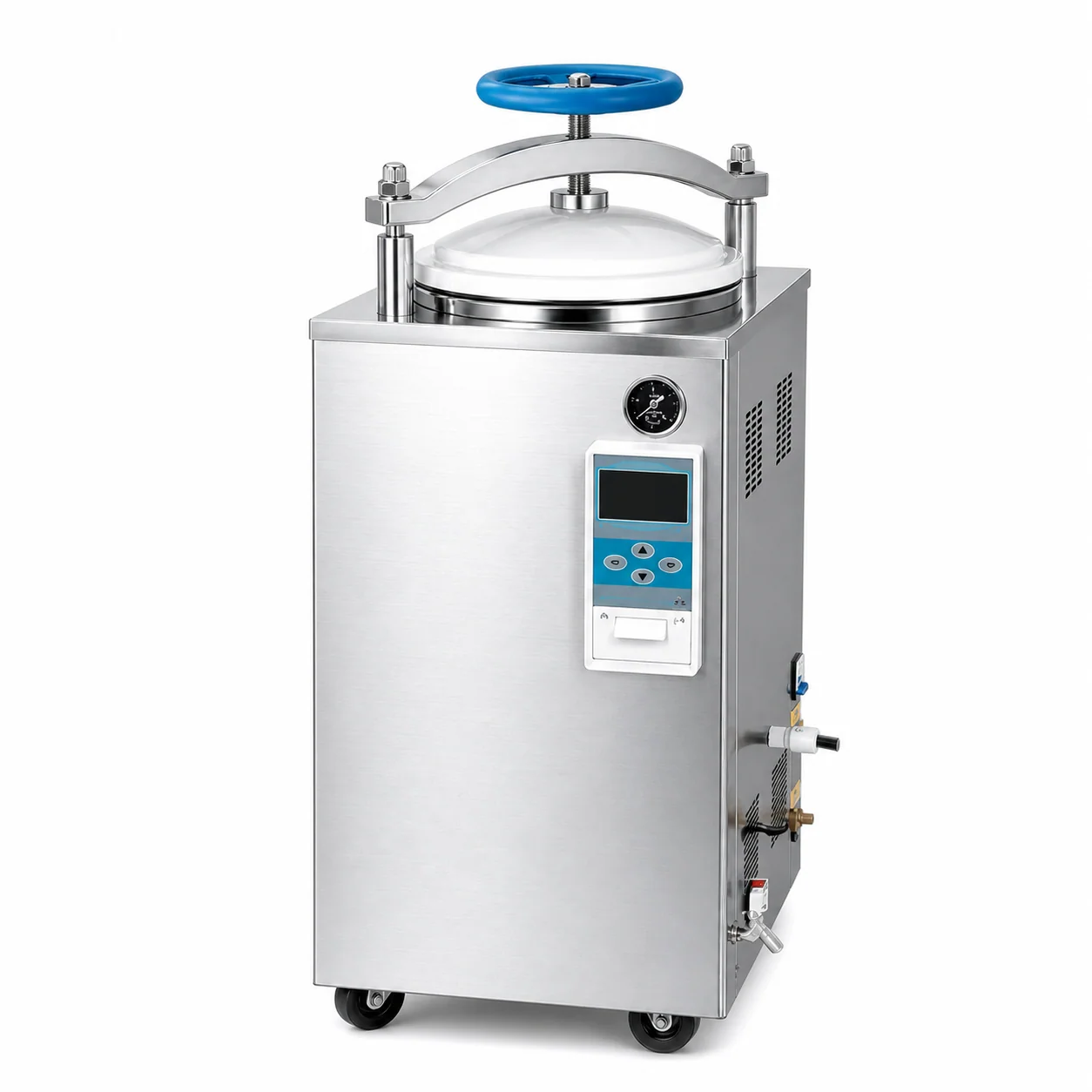
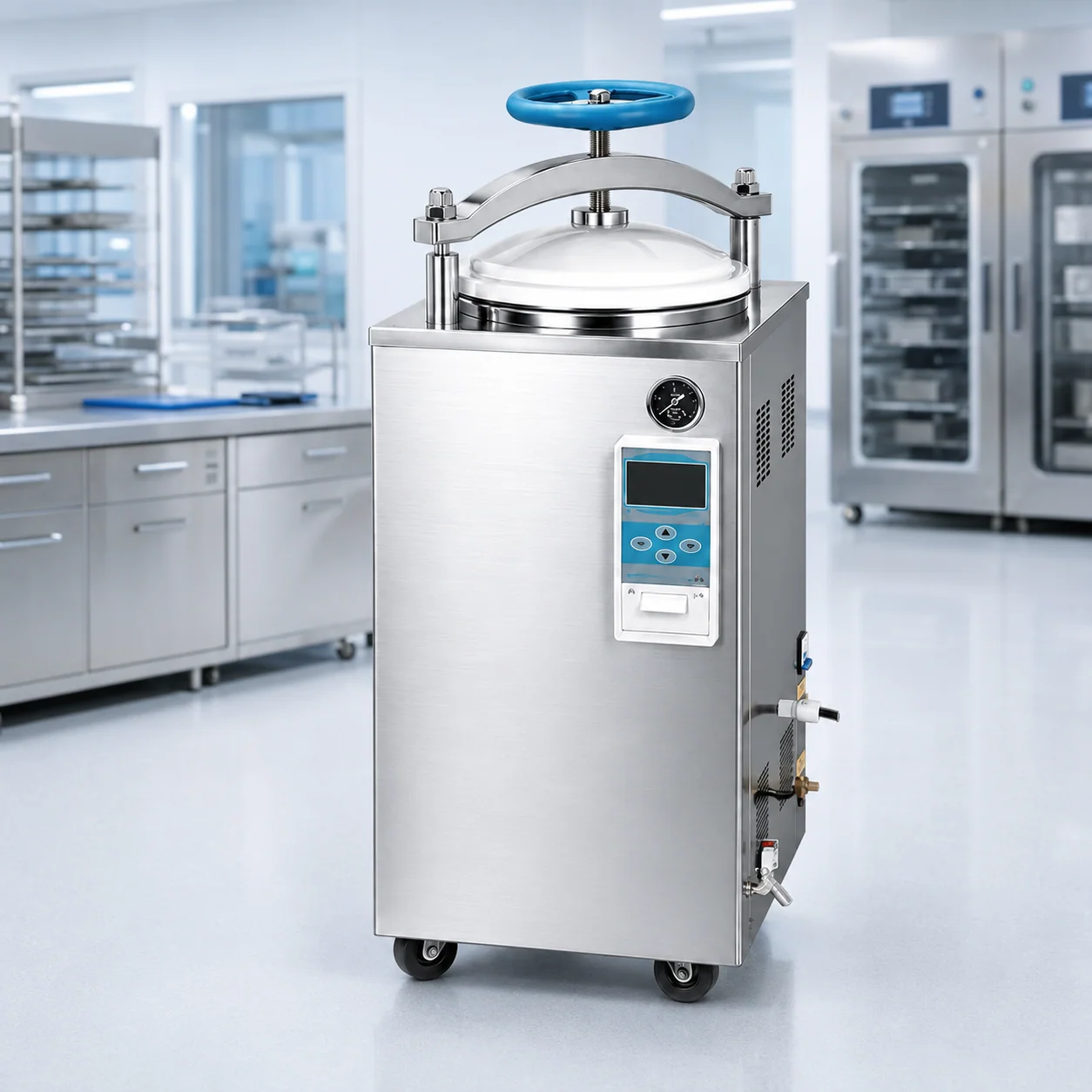
Vertical sterilizers are top-loading and take less floor space than horizontal units for a given volume. The KL-ST002 is listed in four sizes:
| Volume | Chamber | Heating |
|---|---|---|
| 35 L | Φ310 × 450 mm | 1 × 2.5 kW, AC 220 V 50 Hz |
| 50 L | Φ320 × 620 mm | 2 × 1.5 kW, AC 220 V 50 Hz |
| 75 L | Φ400 × 600 mm | 2 × 1.9 kW, AC 220 V 50 Hz |
| 100 L | Φ440 × 750 mm | 2 × 1.5 kW, AC 220 V 50 Hz |
Top loading means baskets are lowered into the chamber. For heavy loads, check that staff can lift the basket safely at the unit’s loading height.
Horizontal sterilizers for hospital CSSD
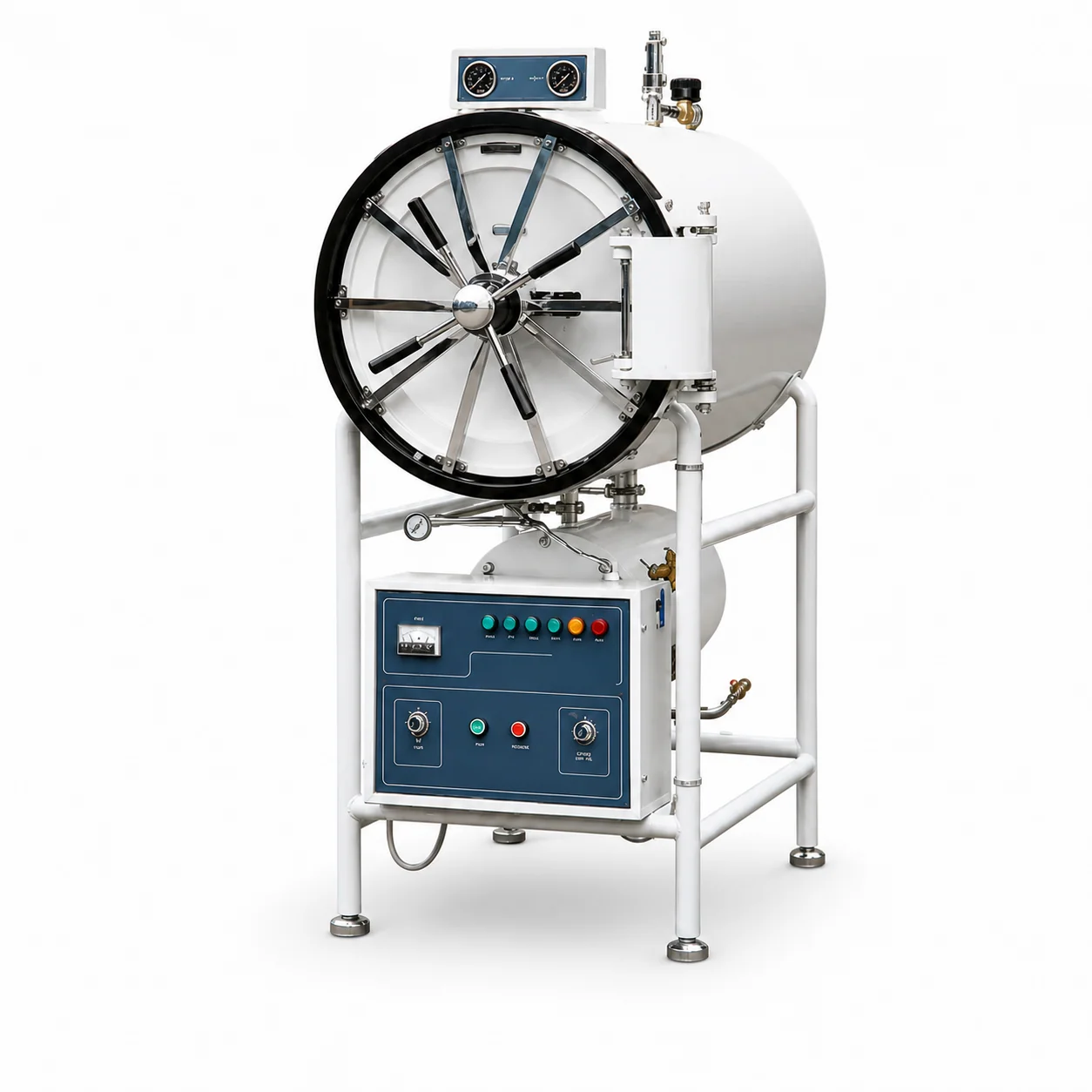
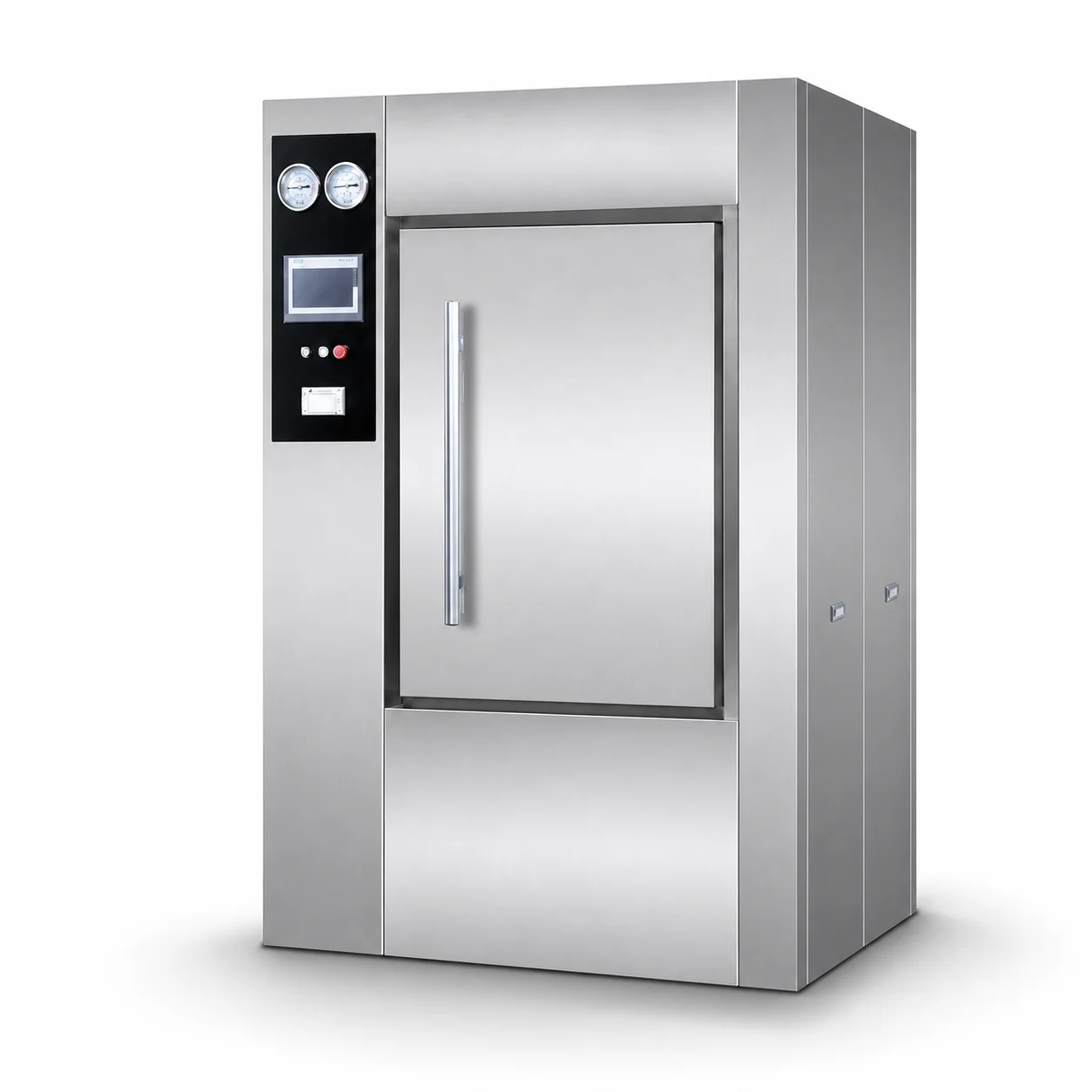
Horizontal (front-loading) sterilizers are used in hospital central sterile services departments, where large volumes and loading trolleys are involved.
| Model | Volumes | Listed power |
|---|---|---|
| KL-ST004 | 150 / 200 / 280 / 400 L | 9 kW (150 L, 200 L), 12 kW (280 L), 13 kW (400 L), all 380 V / 50 Hz |
| KL-ST005 | 150 / 200 / 250 / 360 L | Confirm by model; overall size from 950 × 1120 × 1760 mm (150 L) |
The KL-ST004 lists a 380 V, 50 Hz (three-phase) supply for every size; confirm the supply for the KL-ST005 with the quotation, and make sure it is available where the unit will be installed. They also need water supply, drainage and ventilation. Plan the installation with the hospital’s engineering team before ordering.
How to size a sterilizer
Sizing starts from the load, not the chamber:
- Count the instrument sets, packs and containers processed per day, at peak.
- Estimate how many fit per cycle in each chamber size, using the basket or tray dimensions.
- Divide by the number of cycles per day that the department can realistically run, including loading, drying and cooling time.
- Add capacity for maintenance downtime; many departments install two units rather than one large unit so that one can run while the other is serviced.
A clinic processing a few dozen instruments a day may be served by an KL-ST001 or KL-ST003; a small hospital may use one or two KL-ST002 units; a hospital CSSD usually needs horizontal units such as the KL-ST004 or KL-ST005.
Related laboratory equipment
Laboratories that buy sterilizers often need supporting equipment in the same project. Keling lists a KL-DT001 drying oven in 40 L, 70 L and 136 L sizes, a KL-CE001 bench centrifuge (4000 RPM, 2325 × g, 12 × 20 ml rotor), a KL-CE002 9 L thermostatic water bath (RT+5 to 99 °C, ±1 °C) and a KL-LC001 198 L blood storage refrigerator (4 ± 1 °C).
Sterilizer RFQ checklist
- Setting: clinic, dental, laboratory or hospital CSSD.
- Daily load and peak load.
- Preferred type (benchtop, vertical, horizontal) and chamber volume.
- Required cycles, temperatures and load types (wrapped, porous, hollow).
- Available power supply: voltage, phase and frequency.
- Water quality, drainage and space at the installation site.
- Documents, validation support and spare parts (gaskets, valves, heaters).
Browse the Medical Laboratory Equipment category or send your requirements through the request-a-quote page.