What Is a Hospice Bed?
A hospice bed is a healthcare bed used in hospice facilities, palliative-care areas, residential care settings or home-care programs. In procurement terms, it is usually a hospital-style bed configured for the needs of the care environment rather than a universal technical category with one fixed specification.
The appropriate hospice bed may have an adjustable backrest, knee-rest or height function. It may be electric or manual, depending on the site’s power supply, staff workflow, maintenance capability and budget. Buyers should define the required functions before comparing offers, because two beds described generally as “hospice beds” may have very different configurations.
For B2B projects, the specification should also cover accessories and service scope. Confirm whether the quotation includes side rails, headboards, footboards, castors, an IV stand, mattress, assembly, user documentation and spare parts. Keling Medical manufactures hospital beds and related accessories for distributors, hospital projects and tenders. Model-specific specifications and regulatory scope should be confirmed in the written quotation for the destination market.
For wider purchasing terminology, see the guide to hospital bed names and buyer terminology.
What Does a Hospice Bed Look Like?
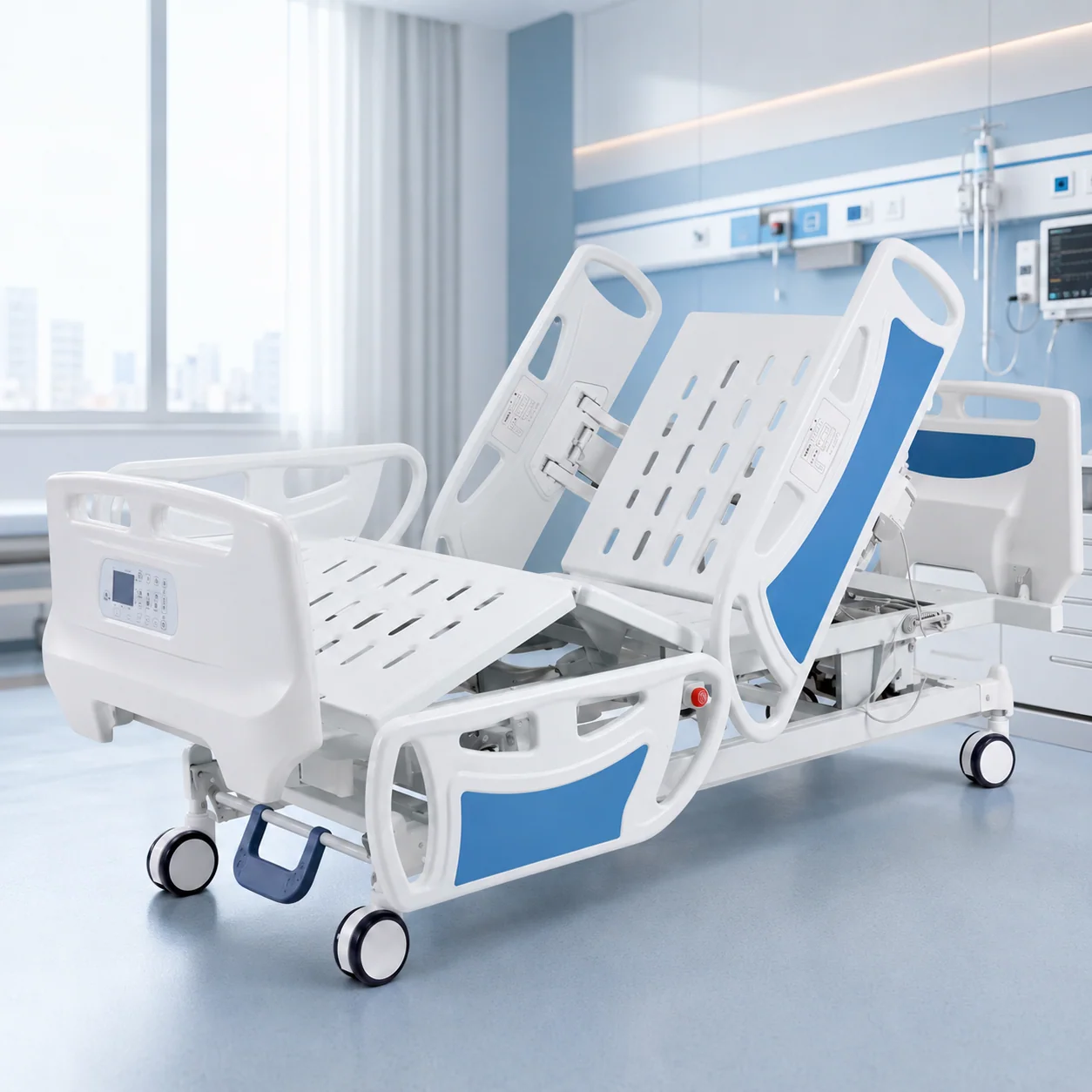
What does a hospice bed look like? It generally resembles a hospital bed, with a rectangular mattress platform, headboard, footboard, side-rail position and a wheeled base. Depending on the model, the platform may include adjustable sections operated by an electric control system or by manual mechanisms.
The appearance alone does not identify the bed’s function count, load rating or supplied accessories. A procurement team should check whether the model is a flat bed, a two-function, three-function or five-function bed; whether it is electric or manual; and whether rails and mattress are included or quoted separately.
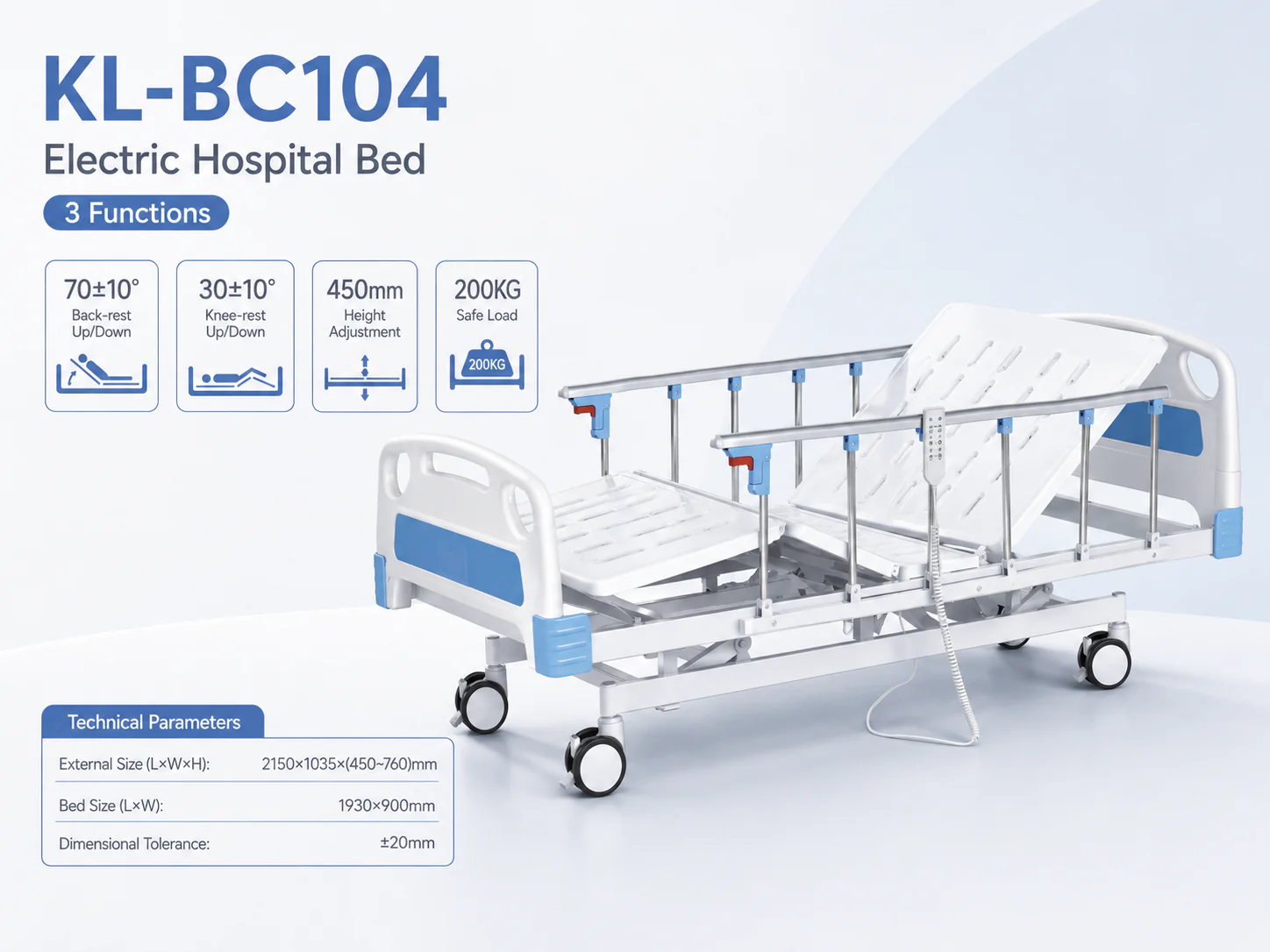
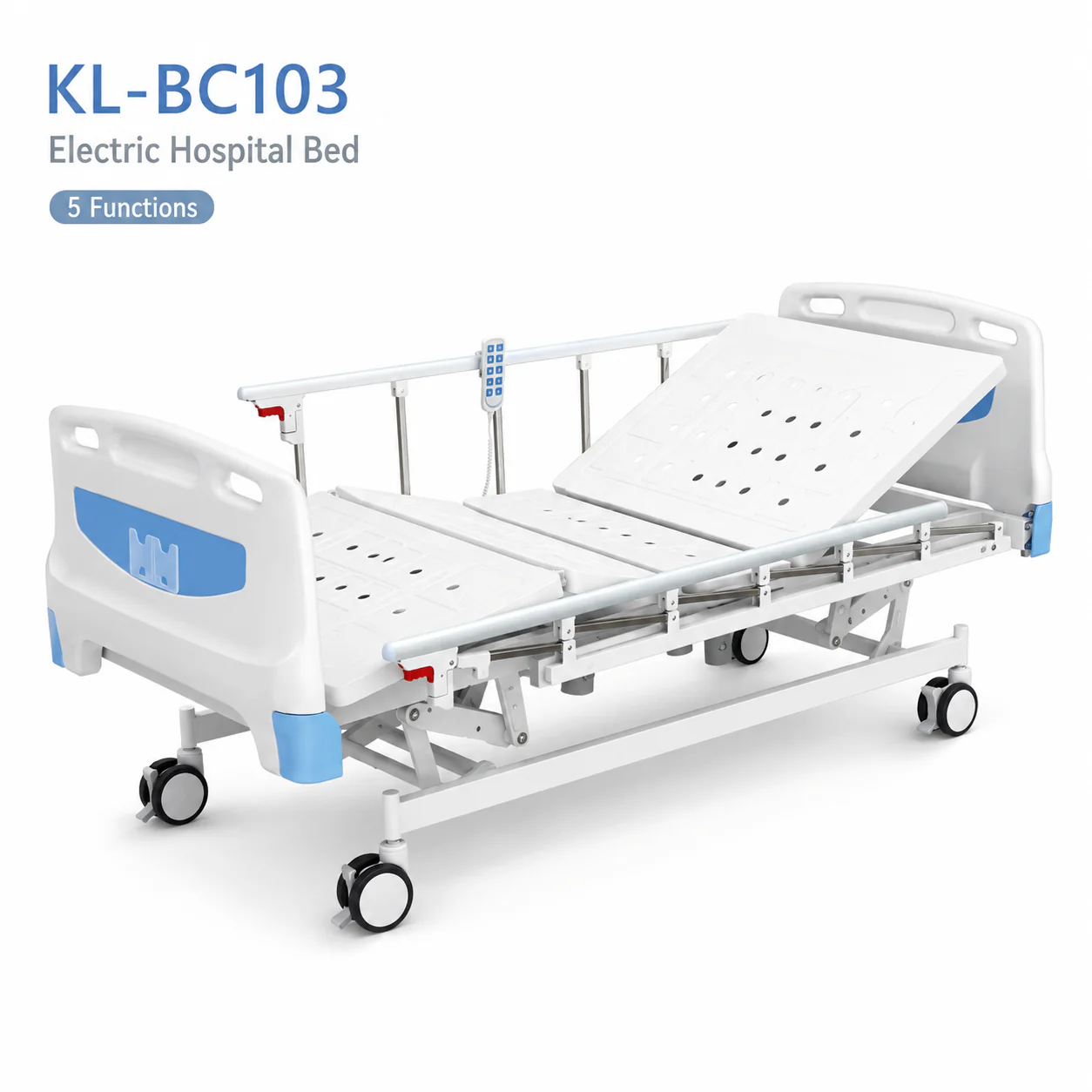
The Keling catalogue includes the KL-BC104 Electric Hospital Bed, described as a 3-Function Electric Bed 200 kg, and the KL-BC103 Electric Hospital Bed, described as a 5-Function Ward Bed 240 kg. These descriptions are useful for initial comparison, but the complete supplied configuration should be stated in the quotation.
A product photograph can help stakeholders review the general layout, but it should not replace the technical schedule. Confirm dimensions, adjustment functions, materials, accessories and packaging requirements in writing.
Hospice Bed vs Hospital Bed: What Is the Difference?
The practical difference in hospice bed vs hospital bed purchasing is usually the intended care setting and selected configuration, not necessarily a completely separate type of bed. A general hospital bed may be specified for ward, acute-care or departmental use, while a hospice project may prioritize positioning, access, ease of operation and compatibility with the room or care model.
A hospital bed can be used for a hospice project when its functions and accessories meet the project specification. However, selecting a model with more functions is not automatically better. Additional functions may increase purchase cost, operating complexity, training requirements and the number of components requiring service. A simpler model may be more suitable when the project requires only basic adjustment.
Conversely, a basic bed may not meet requirements for height adjustment, multiple platform movements, patient transfer workflows or a specified catalogue load rating. The selection should therefore be based on a written comparison rather than the label “hospice bed” alone.
Keling lists the KL-BC101 Electric Hospital Bed as a 5-Function ICU Bed with CPR. That catalogue description may be relevant when a tender calls for those features, but it should not be treated as a universal hospice-bed recommendation. Compare the tender wording, intended location and required functions before selecting a model.
| Procurement point | Questions to confirm |
|---|---|
| Operation | Is electric or manual adjustment required? |
| Function count | Which backrest, knee-rest, height or other functions are specified? |
| Load rating | Which catalogue load rating meets the project requirement? |
| Mobility | Are castors included, and what movement or locking requirements apply? |
| Side rails | Are rails included, optional or supplied separately? |
| Mattress | Which mattress construction, size and compatibility requirements apply? |
| Service | What warranty, spare-parts and technical-support terms are offered? |
Before requesting offers, use the hospital bed dimensions buyer’s guide to check room access, corridor clearance, storage space and installation constraints.
Electric or Manual Hospice Hospital Bed?
An electric hospice hospital bed may be appropriate when the project requires powered positioning and the facility can support electrical installation, operator training and maintenance. Keling’s catalogue lists the KL-BC105 Electric Hospital Bed as a 2-Function Electric Bed 200 kg and the KL-BC104 Electric Hospital Bed as a 3-Function Electric Bed 200 kg.
The advantage of an electric configuration for procurement purposes is controlled adjustment through the specified powered system. The trade-offs to review include power availability, control-system servicing, replacement components, staff training and any destination-market electrical requirements. These points should be written into the project schedule where relevant.
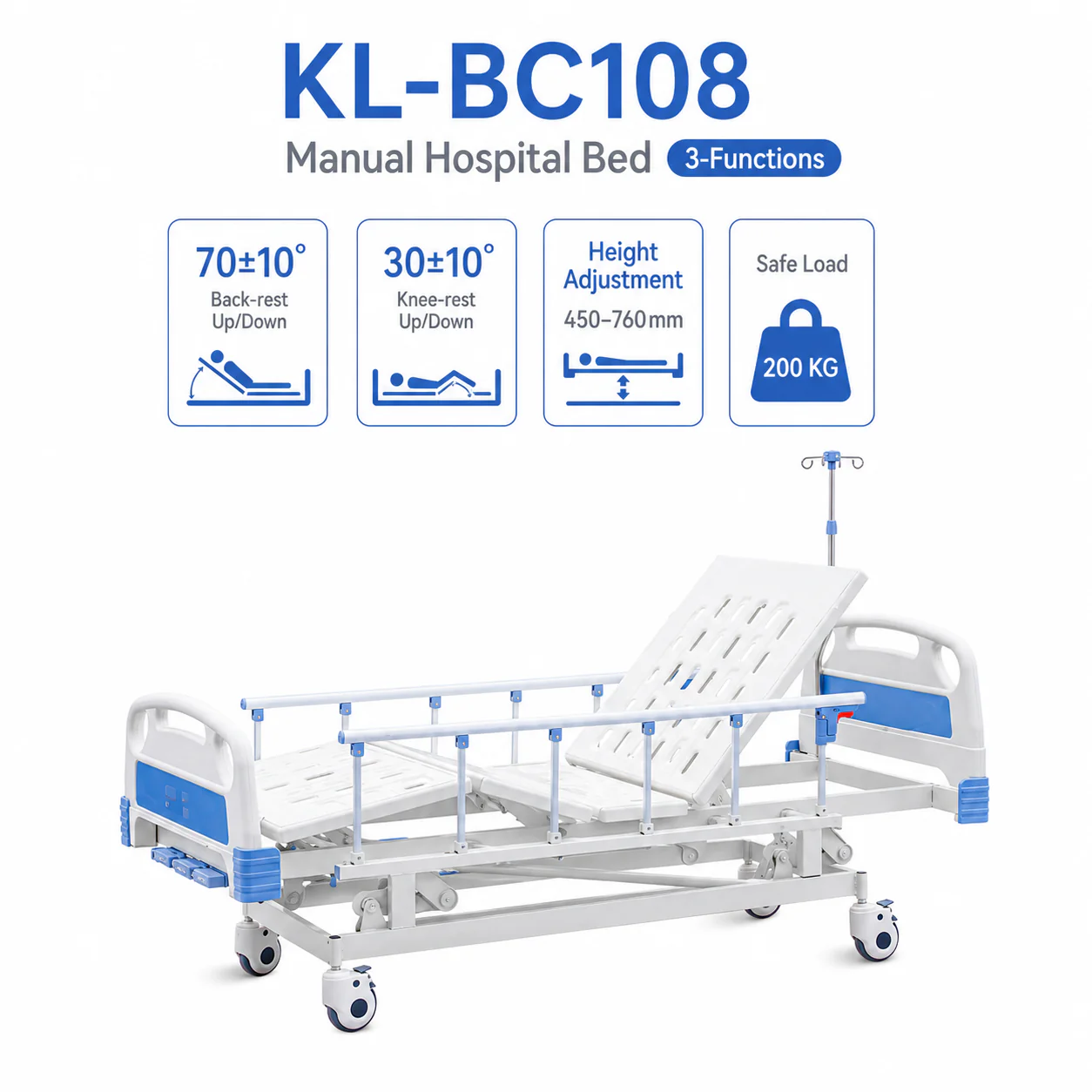
Manual beds can be appropriate when the project requires basic adjustment, has staff available to operate mechanical controls or needs a less electrically dependent configuration. Keling lists the KL-BC108 Manual Hospital Bed as a 3-Function Manual Bed with Height Adjustment and the KL-BC106 Manual Hospital Bed as a 1-Function Backrest Bed 200 kg.
When Is a Higher Function Count Justified?
A five-function bed should be considered when the tender or facility workflow specifically requires its adjustment range or related features. A three-function or two-function bed may be a better fit when the project needs fewer adjustments and a simpler operating model. Function count alone does not establish suitability; confirm the exact functions, controls and included accessories.
Mattress, Rails and Accessories to Specify
A hospice bed quotation should cover more than the frame. Mattress construction and compatibility can affect the usefulness of the complete package, so the tender schedule should identify the required type, size, quantity and material. If the mattress is omitted, suppliers may quote different packages that are difficult to compare.
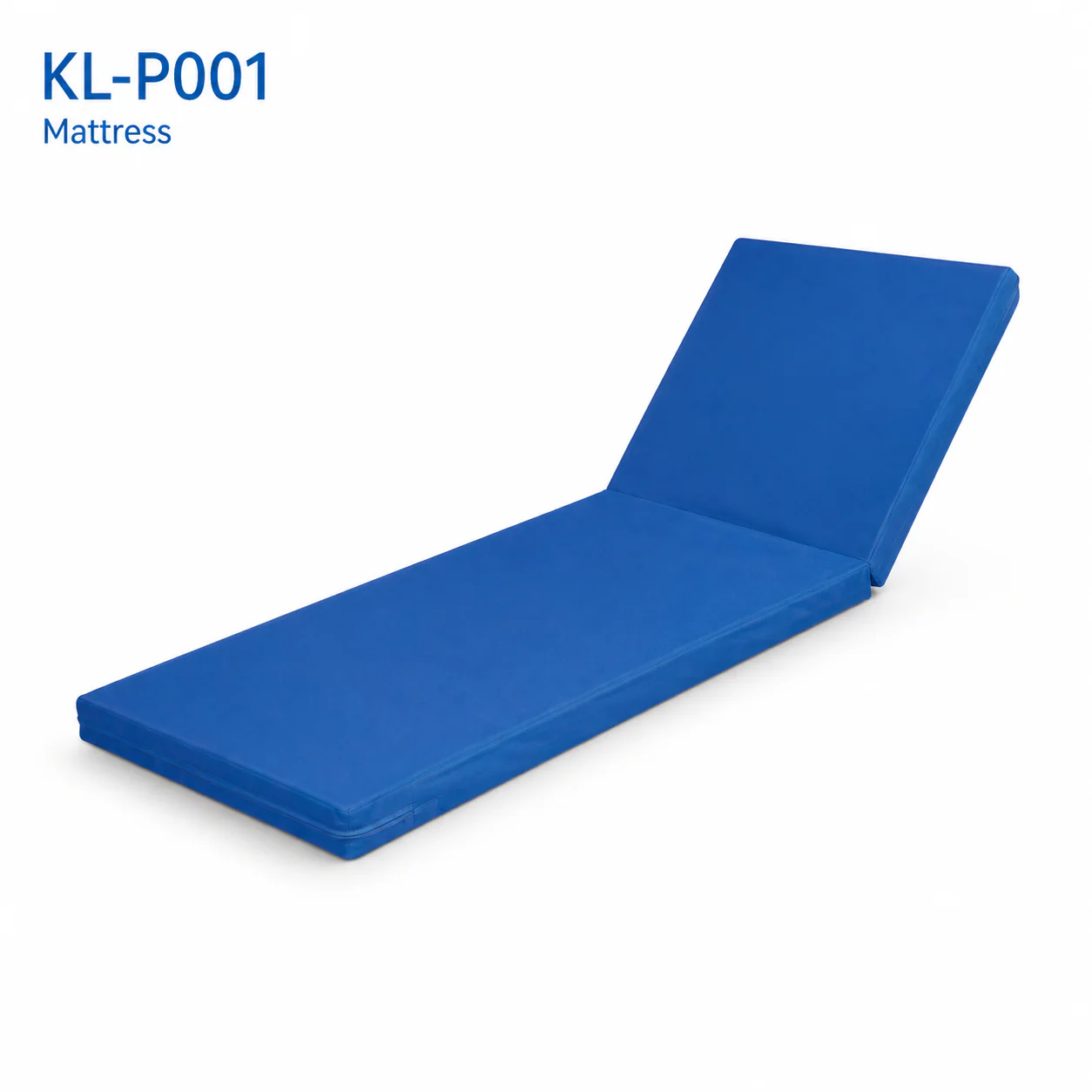
Keling lists the KL-P001 Mattress as a Hospital Bed Mattress with PU/Gore-Tex or Sponge Fill. The catalogue also lists the KL-P002 Mattress as a Segmented Hospital Bed Mattress with Palm-Fibre Fill. Ask the supplier to confirm which option is included and whether its dimensions match the quoted bed platform.
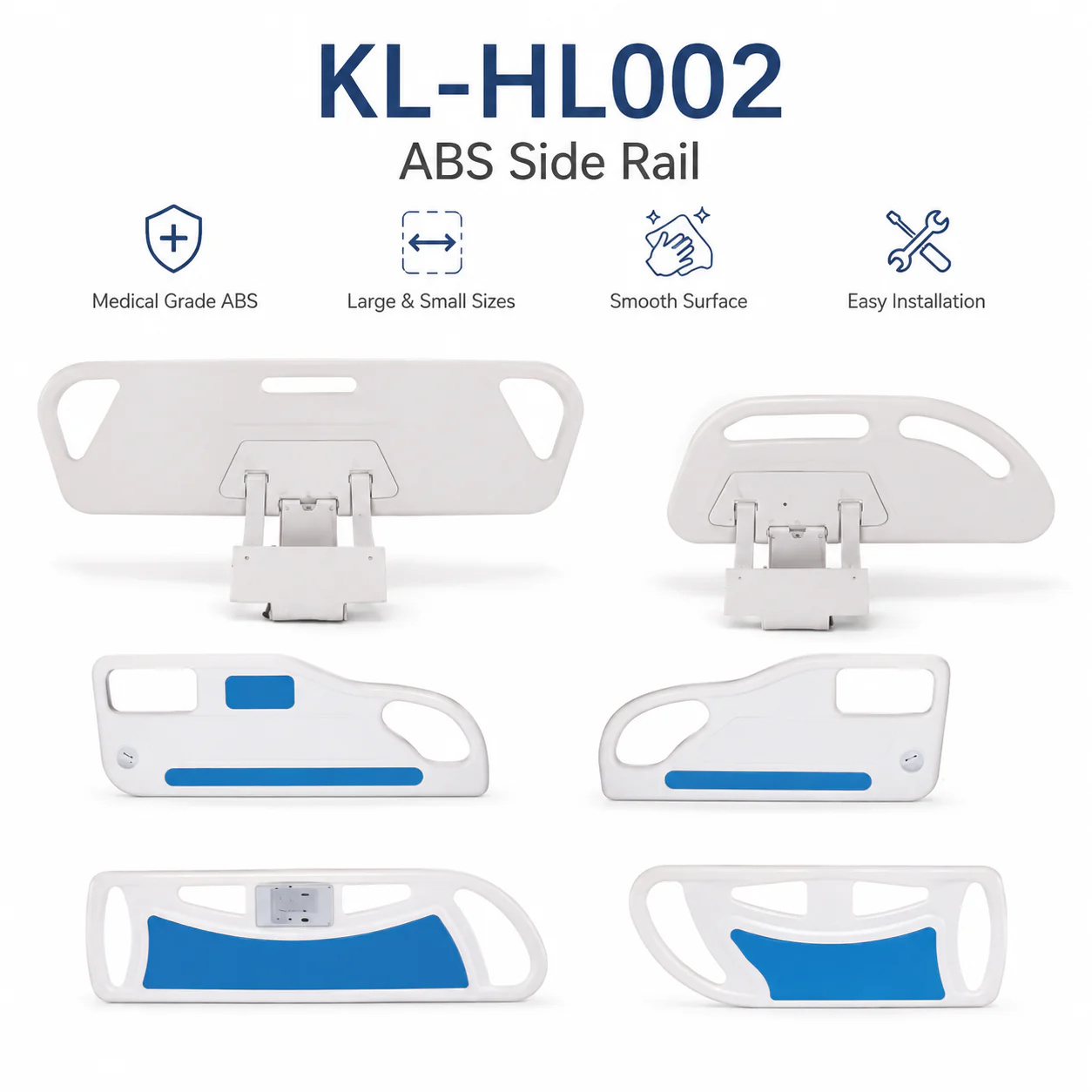
Side rails should also be specified clearly. The KL-HL002 ABS Side Rail is listed as a Hospital Bed ABS Side Rail in Big & Small Size. Confirm quantity, size, mounting arrangement and whether the rails are included with the bed or purchased as separate accessories. The same approach should be used for headboards, footboards, castors and IV stands.
For a separate mattress comparison schedule, refer to the hospital bed mattress buying guide. For commercial planning, the hospital bed cost buyer’s guide explains why configuration, quantity, destination and terms affect the final quotation.
Does Hospice Provide Hospital Beds?
Does hospice provide hospital beds? The answer depends on the hospice provider, payer arrangement, country, referral pathway and care location. Some hospice programs may arrange equipment directly, while others coordinate with a rental company, distributor, hospital or separate equipment provider. A buyer should not assume that a bed is included in every hospice service agreement.
For a facility or distributor, confirm who owns the bed, who delivers and installs it, who provides maintenance and what happens if the patient or resident changes location. For a tender, define whether the supply scope includes delivery, assembly, inspection, user training, documentation, warranty service and replacement parts.
When requesting a commercial quotation from Keling, provide the destination country, quantity, intended facility type, required bed functions, catalogue load requirement, mattress and rail requirements, voltage or electrical expectations where relevant, delivery terms and tender deadline. Contact inquiry@shkeling.com or +86 150 0064 9020, or submit project details through the request-for-quote page.
Hospice Bed Procurement Checklist
Before comparing offers, prepare a written schedule covering:
- Required bed type: electric or manual.
- Required function count and adjustment functions.
- Required catalogue load rating and room-access limits.
- Mattress type, dimensions, quantity and compatibility.
- Side rails, headboards, footboards, castors and IV stands.
- Delivery, assembly, inspection and training scope.
- Warranty, spare-parts availability and after-sales contact.
- Documents required for the destination market and tender.
- Packaging, shipment terms, lead time and quotation validity.
This checklist helps buyers compare complete, equivalent offers rather than prices for different bed configurations. Before purchase, confirm model-specific specifications, supplied accessories, commercial terms and regulatory scope and validity in the written quotation.