What is an over bed table used for in a hospital?
An over bed table is a movable hospital table designed to provide a working or dining surface near a patient bed. Depending on the ward and care process, it may support meals, writing, reading, communication devices or personal belongings. In procurement language, the same product may be described as a hospital patient bed table, patient bed table, overhead bed table or hospital bed tray table.
The term overtable bed is sometimes used in online searches, but it normally refers to a table positioned over a bed rather than a separate bed accessory. Buyers should use the written specification and product drawing—not the search term alone—to confirm the intended configuration.
A hospital table over a bed should be evaluated as part of the bed-space system. Bed width, side-rail movement, mattress height, caster position and room circulation can all affect whether the table can be positioned safely and conveniently. If a project is also replacing bed coverings, Keling’s Hospital Bed Cover: Buyer’s Guide for Hospitals can be reviewed alongside the furniture specification.
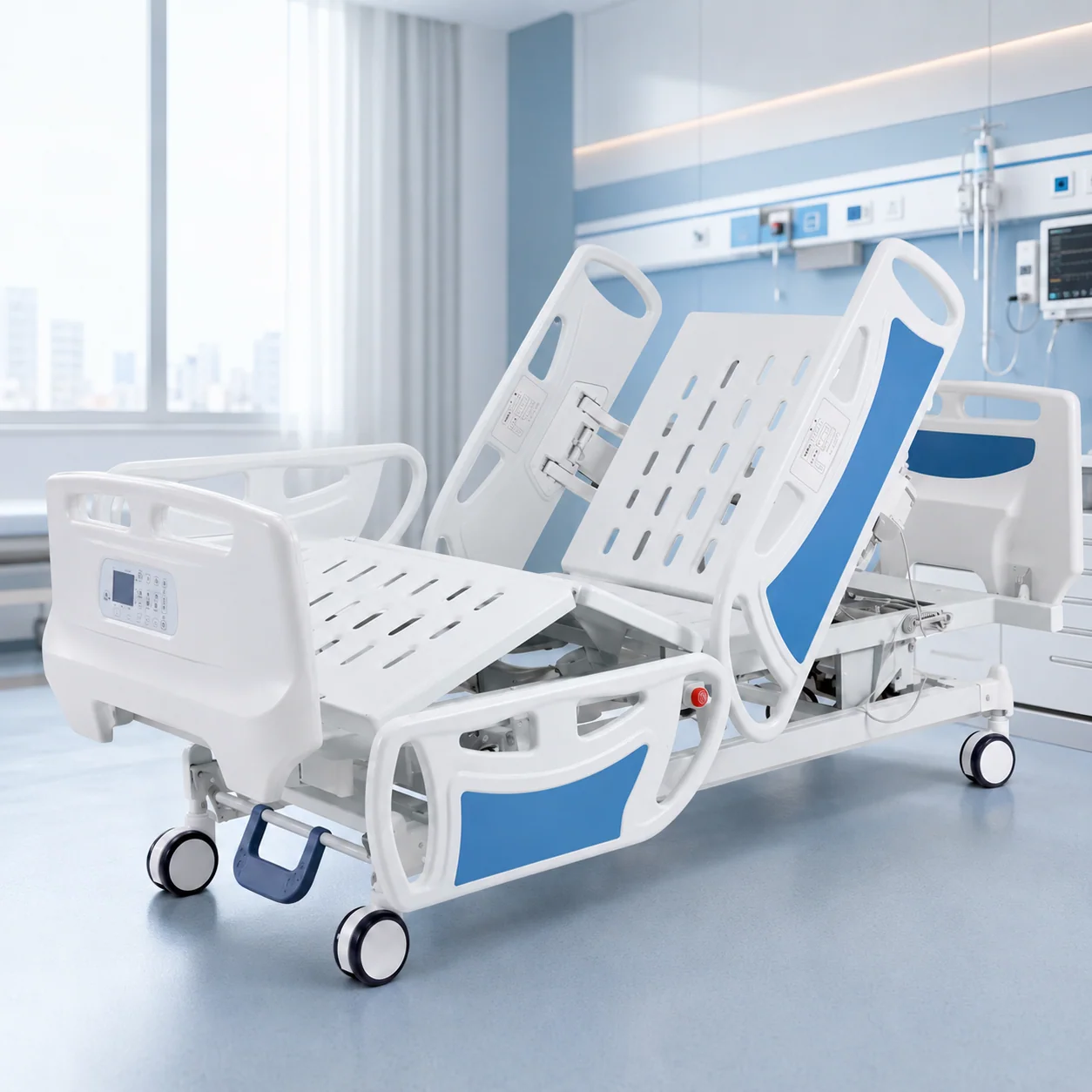
An inpatient ward layout helps buyers assess clearance, circulation and table compatibility across repeated bed spaces.
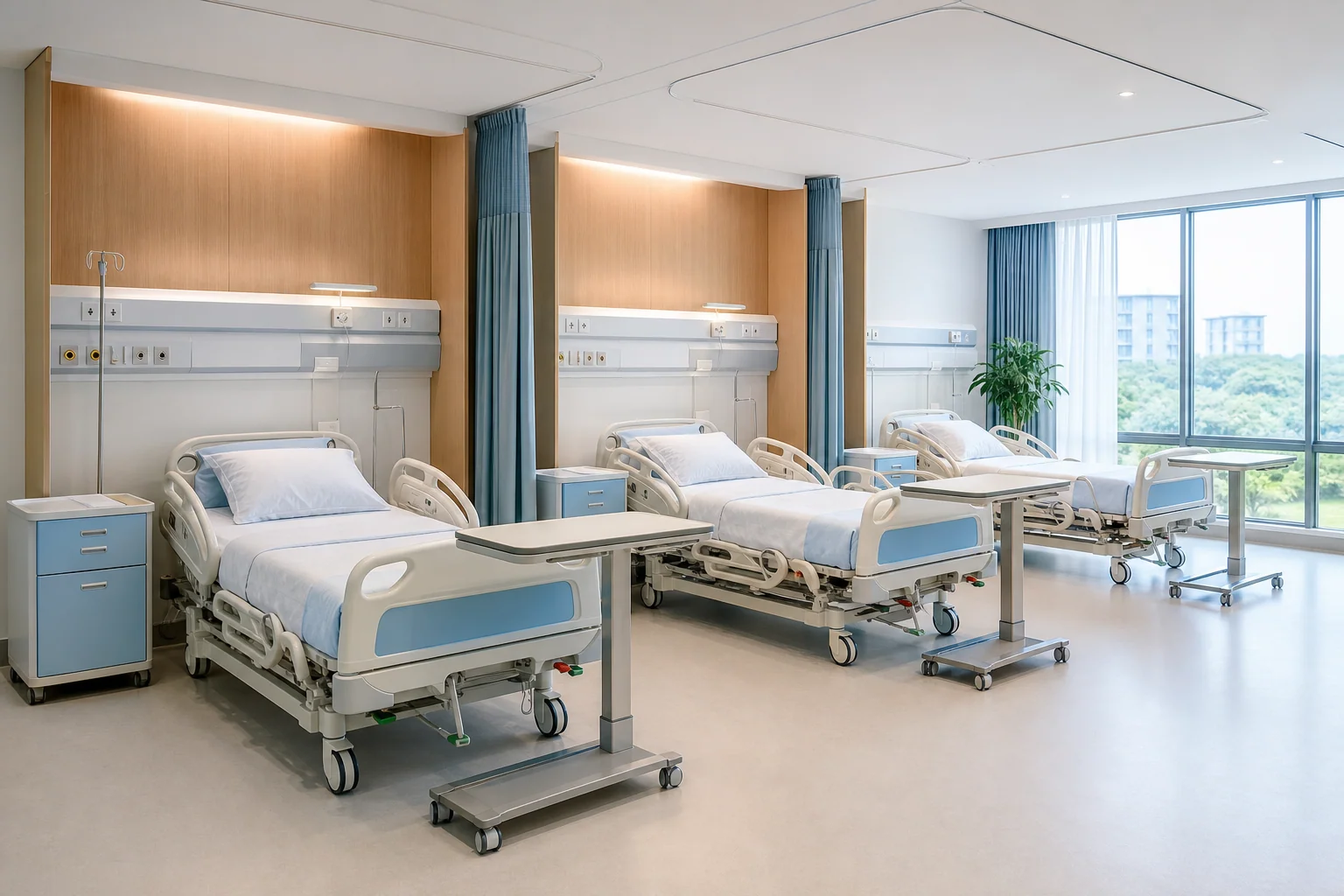
Key specifications to compare in hospital tables over bed
1. Adjustment and clearance
An overbed adjustable table should provide a usable range for the target bed configuration, but the exact range must be confirmed from the manufacturer’s technical sheet. Ask for the minimum and maximum table height, tabletop dimensions, under-bed clearance and adjustment method. These values determine whether the table can be positioned over the mattress, beside the bed or moved away when staff require access.
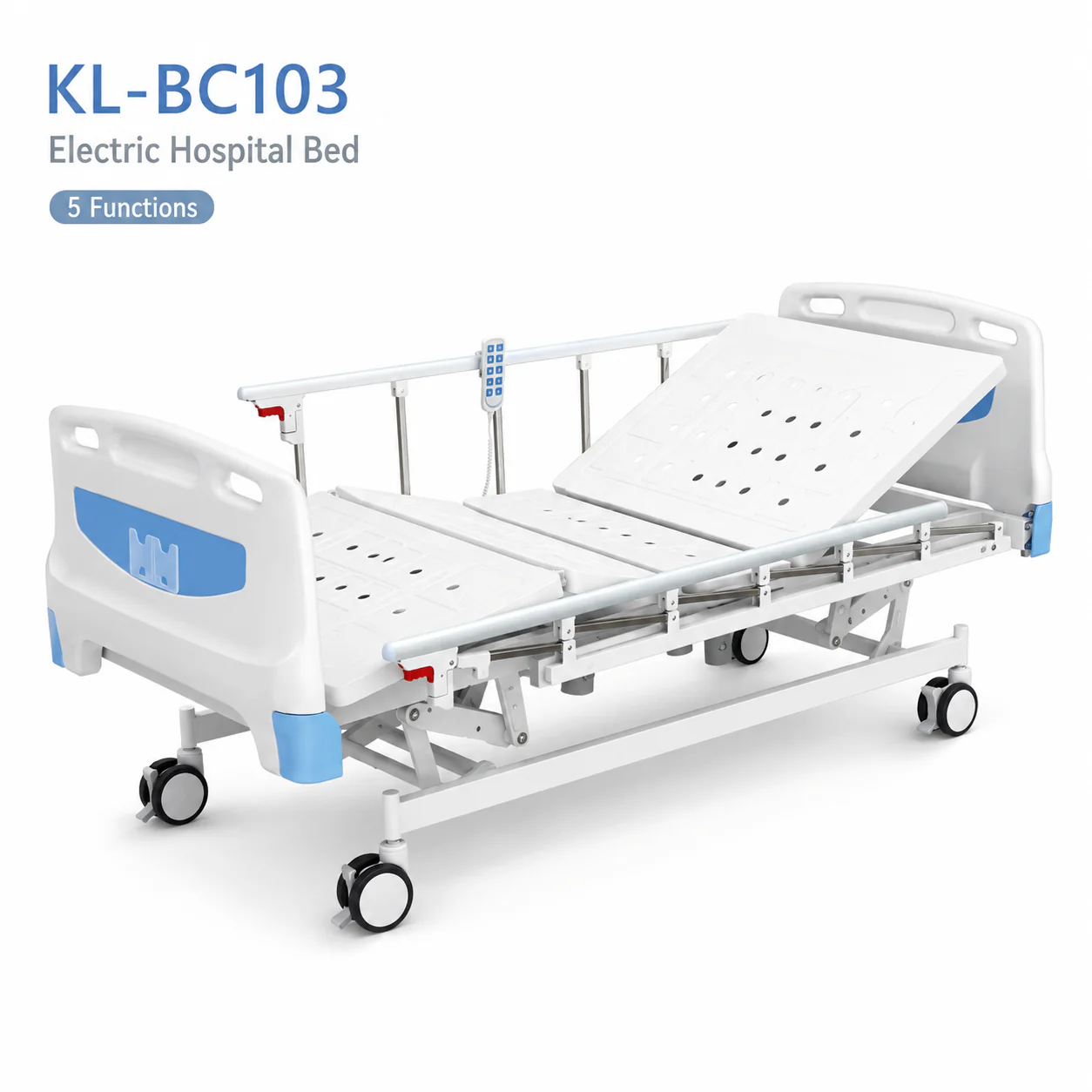
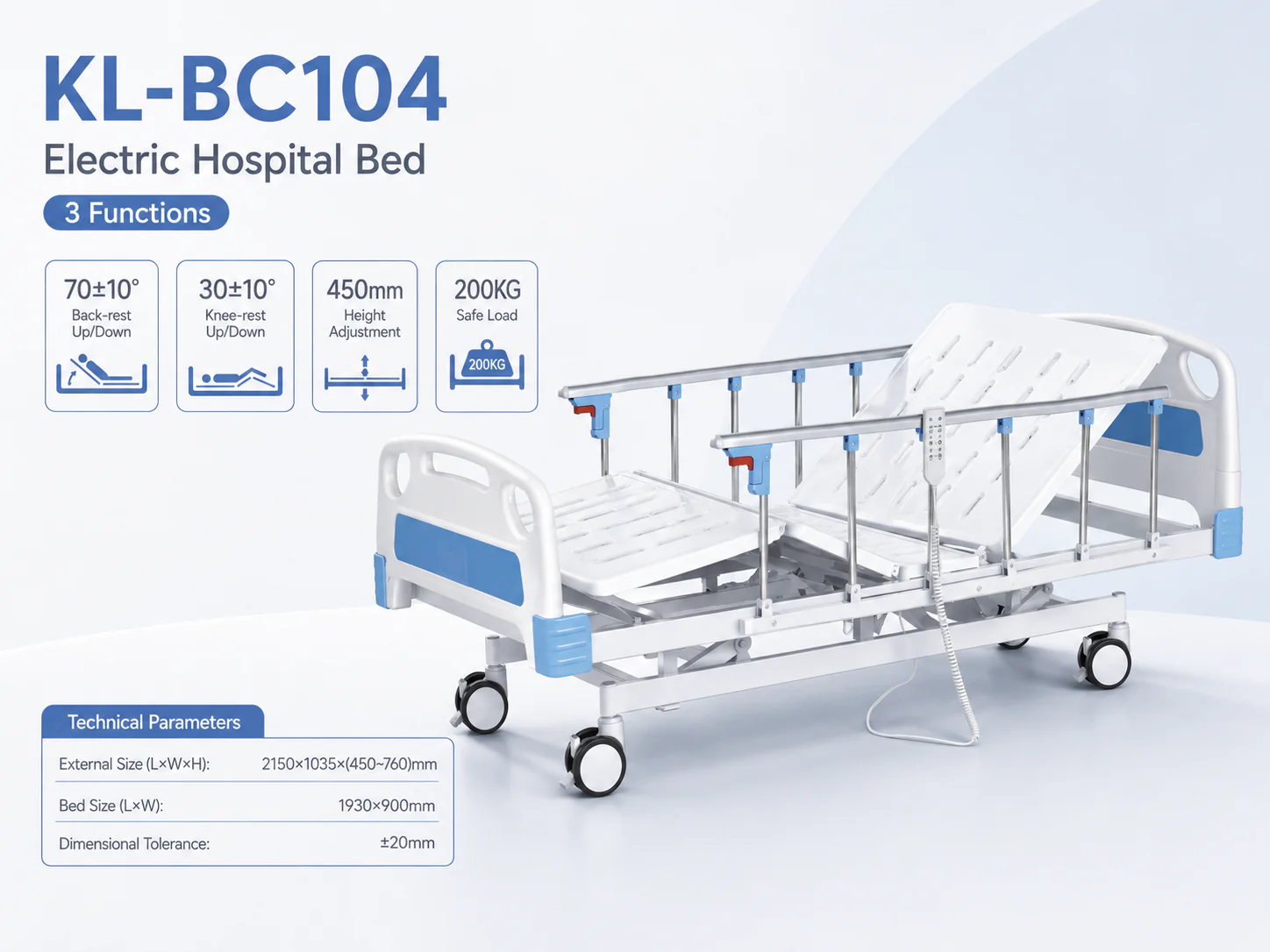
Do not assume that one adjustable hospital table suits every bed. Electric beds, manual beds, flat beds and specialty beds can have different frame geometries. For a bed replacement project, compare the table against the actual bed models being purchased, such as KL-BC103 Electric Hospital Bed or KL-BC104 Electric Hospital Bed, and request compatibility confirmation in writing.
2. Mobility and wheel design
Demand for over bed tables with wheels, a hospital table on wheels or a medical overbed table with wheels usually reflects the need to reposition the surface without lifting it. Ask whether the product has two or four casters, whether the wheels swivel, and whether any casters lock. The quotation should also state the wheel material and the intended floor conditions if those details affect selection.
Mobility is useful only when it remains controllable in a crowded patient area. A table that moves easily may require reliable caster brakes; a heavier construction may improve stability but make repositioning more demanding. Review the turning space beside the bed, corridor width and cleaning workflow before choosing the wheel configuration.
3. Tabletop and frame construction
For a hospital tray table or hospital tray, procurement teams should confirm the tabletop material, edge treatment, resistance to routine cleaning agents, frame material and finish. The buyer should also request the supported load or working load, because this is a product-specific value that should not be inferred from appearance or table size.
Consider how the table will be cleaned between users. Smooth, accessible surfaces can simplify routine wiping, while unnecessary joints, exposed mechanisms or difficult-to-reach recesses may increase maintenance work. Include the required cleaning process, disinfectant compatibility and replacement-part expectations in the technical questionnaire.
4. Storage and accessories
A hospital bed table with drawer or hospital overbed table with storage may be suitable where the care environment requires a place for documents or personal items. Confirm the number and type of storage compartments, internal dimensions, drawer travel, pull-handle design and whether the storage area can be cleaned without removing components.
Storage can increase usefulness, but it can also increase width, weight and cleaning time. In a high-turnover ward, a simple tray surface may be easier to manage. In a long-stay or nursing environment, additional storage may justify the added footprint. Treat this as a workflow decision rather than assuming that more compartments are always preferable.
Choosing between an over bed table and a bedside table
A hospital bedside table, medical bedside table or hospital bed side table normally sits beside the bed and may provide storage, a work surface or space for personal belongings. An over bed table crosses or approaches the bed and is generally selected when the user needs a surface directly in front of them. Some projects use both types, but they serve different space-planning purposes.
When comparing bed tables overbed tables, assess the room layout first. A bedside unit may occupy a permanent position and reduce lateral clearance. An over bed table may offer more flexibility but needs sufficient clearance to be moved, parked and cleaned. For mobile furniture, compare the specification for wheel locks, base shape, height adjustment and dimensions rather than relying on the product name.
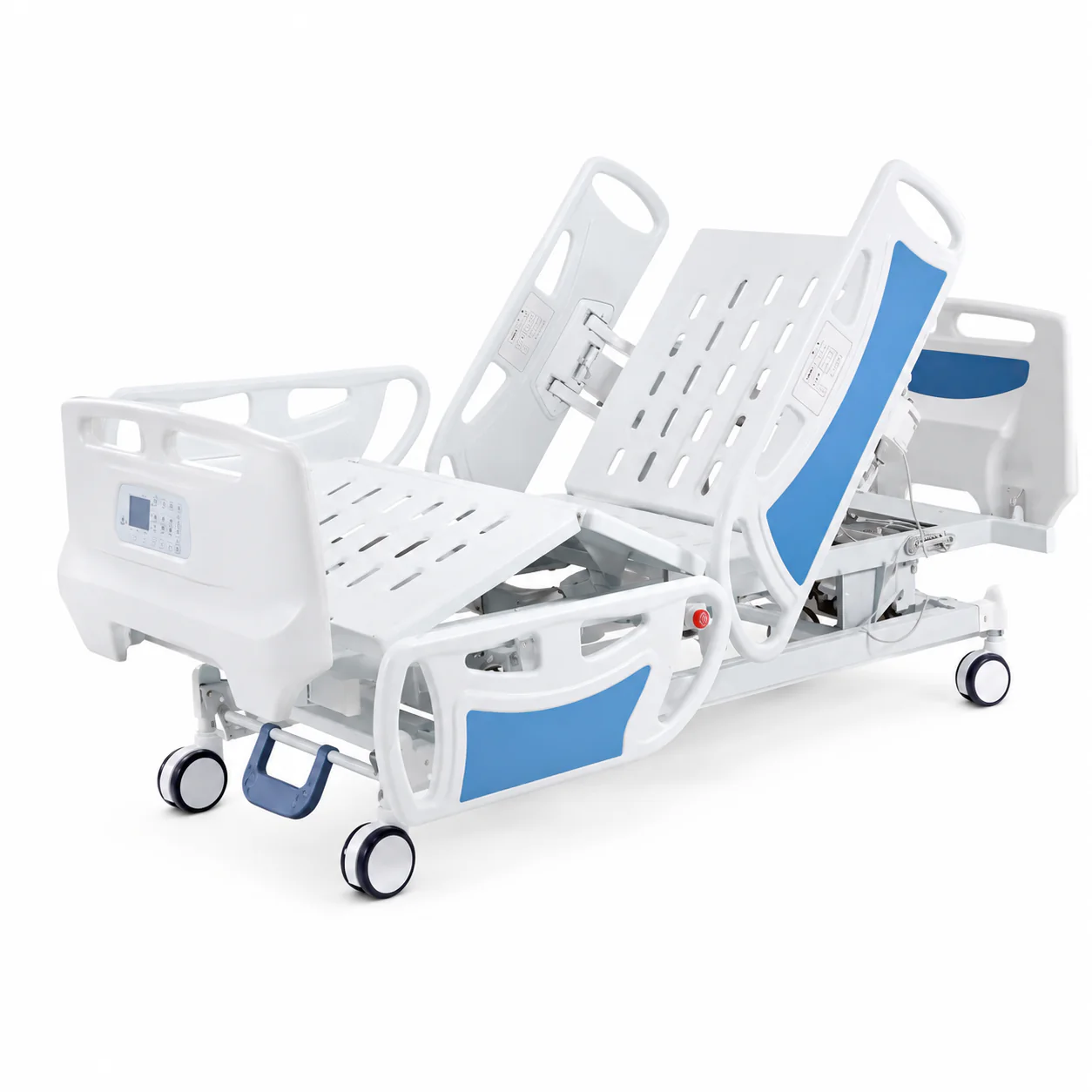
The decision may also vary by department. In an inpatient ward, repeated bed-space dimensions and easy cleaning are important. In an ICU or emergency area, access around the patient and medical equipment may take priority over storage. For a bed project, Keling’s Hospital Beds category provides a starting point for comparing bed configurations before table compatibility is confirmed.
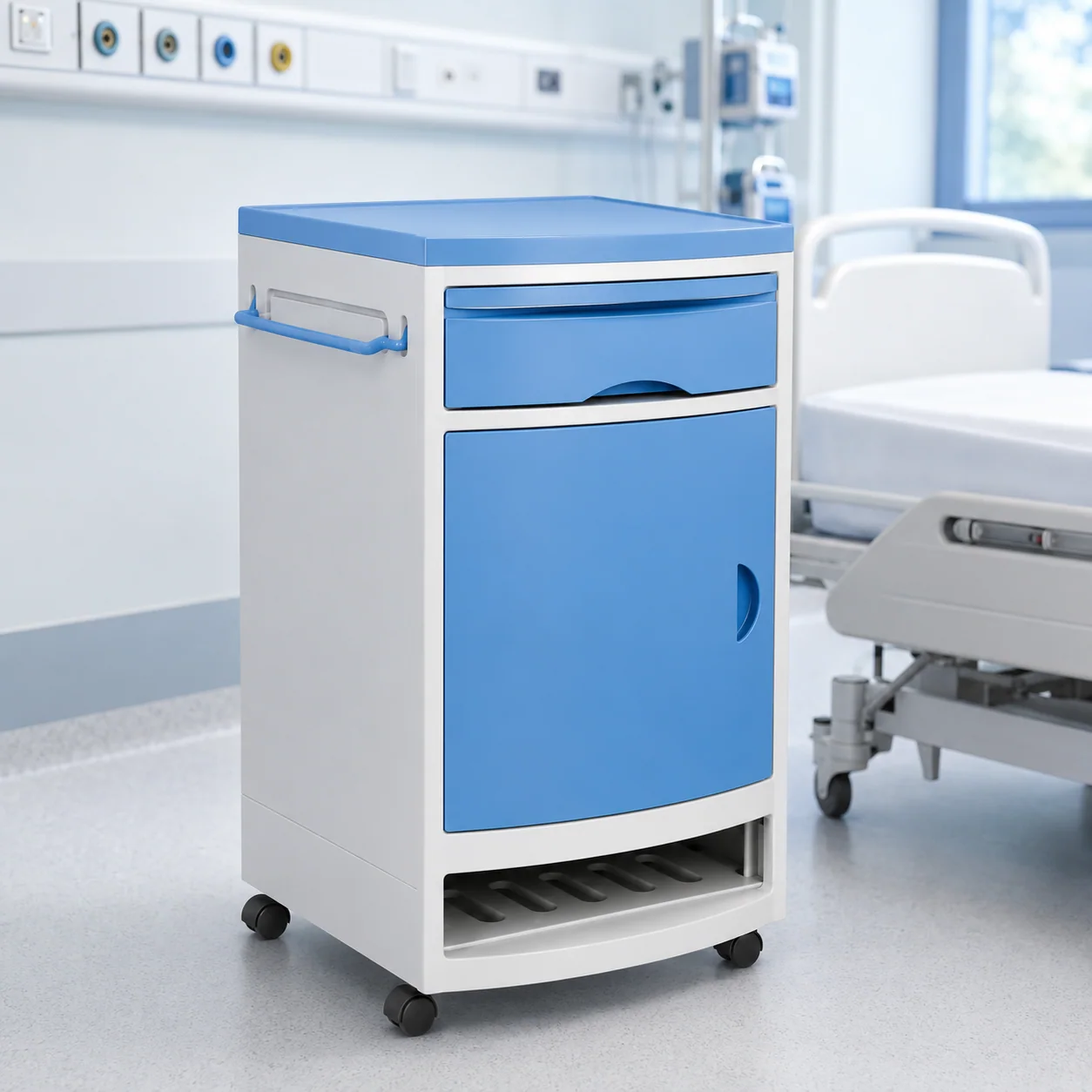
Reviewing the hospital bed range helps procurement teams coordinate an overbed table with the planned bed platform.
Buyer checklist for a medical overbed table
Before requesting a quotation for a medical overbed table, prepare the following information:
- Intended departments, quantities and delivery locations.
- Bed models, mattress dimensions and whether side rails must remain operational.
- Required tabletop dimensions, height range and adjustment method.
- Wheel quantity, caster type, locking requirements and floor conditions.
- Tabletop, frame and edge materials, including cleaning requirements.
- Storage requirements, such as drawer or cabinet configuration.
- Working-load requirement and any relevant safety or stability documentation.
- Packaging, assembly, spare parts, warranty terms and after-sales support.
- Required language for manuals, labels and tender documents.
- Destination market and the regulatory documentation required for the project.
This checklist helps distinguish a genuine hospital overbed table requirement from a generic rolling table. It also reduces the risk of comparing quotations that use different definitions for dimensions, load, adjustment or included accessories.
How to request a quotation from a hospital table supplier
Keling Medical is a Shanghai-based manufacturer and export and sales centre founded in 1996. The company manufactures 310 models across 12 categories and operates an ISO 13485 quality system; company materials also state ISO 9001 and CE. Keling supplies B2B orders for distributors, hospital projects and tenders.
For an over bed table enquiry, send the quantity, destination country, intended department, bed information, required table functions and tender deadline. Ask the supplier to return a model-specific technical sheet, dimensional drawing, packing details, lead time, quotation validity and available documentation. Regulatory scope and validity should be confirmed per model and destination market in the written quotation.
You can submit project details through the Keling Medical request-for-quote page or contact inquiry@shkeling.com and +86 150 0064 9020. If the table is being purchased with beds, request one coordinated quotation so the supplier can review bed-table clearance and the required delivery sequence.