What is a trapeze bar for bed?
A trapeze bar for bed, also called a bed trapeze or medical bed trapeze bar, is an overhead support assembly positioned above or beside a bed. It normally includes a frame or mounting structure, a horizontal bar or handle and an adjustable strap, chain or grip arrangement. In procurement terms, it is a bed accessory rather than a replacement for the bed itself.
Buyers may encounter several search terms for the same purchasing category, including overhead trapeze, overbed trapeze, overhead trapeze bar and hospital bed pull up bar. These terms do not always describe identical designs. The important distinction is how the assembly is supported and whether it is intended to be used with a particular hospital bed.
The supplied Keling catalogue lists hospital beds and bed accessories, but it does not list a dedicated trapeze bar model. Therefore, a quotation should clearly identify whether the requested item is a separate accessory, a project-specified component or an accessory to be sourced and validated against the selected bed.
Main types of hospital bed trapeze
Bed-mounted trapeze
A bed-mounted design attaches to a dedicated socket, frame point or head-end structure. It can be suitable when the bed manufacturer provides a compatible mounting provision. This configuration may reduce the equipment footprint, but compatibility cannot be assumed from the bed’s general dimensions alone. Confirm the connection method, mounting hardware, adjustment range and permitted working load in writing.
Overhead trapeze and free-standing designs
An overhead trapeze may be supported by a ceiling, wall structure or an independent frame. A free standing trapeze bar for bed is usually selected where drilling into the building is undesirable or where the accessory must be moved between beds. These options require particular attention to base dimensions, clearance, stability, floor condition and the relationship between the frame and mattress platform.
A hospital bed with overhead trapeze may be specified as a complete configuration in a hospital project, but a standard electric or manual bed should not be described as including one unless the written quotation confirms it. The same principle applies to bedroom trapeze requests: a domestic-looking installation may not meet a hospital tender’s documentation or maintenance requirements.
Fixed overhead systems
A fixed overhead trapeze bed arrangement can be considered for a defined room layout. It may provide a consistent position above the bed, but the buyer must coordinate structural installation, room clearance, cleaning access and responsibility for installation. For a multi-room project, the tender should state whether structural works, mounting accessories and commissioning are included.
How to choose a trapeze bar for hospital bed use
1. Confirm the intended bed and mounting point
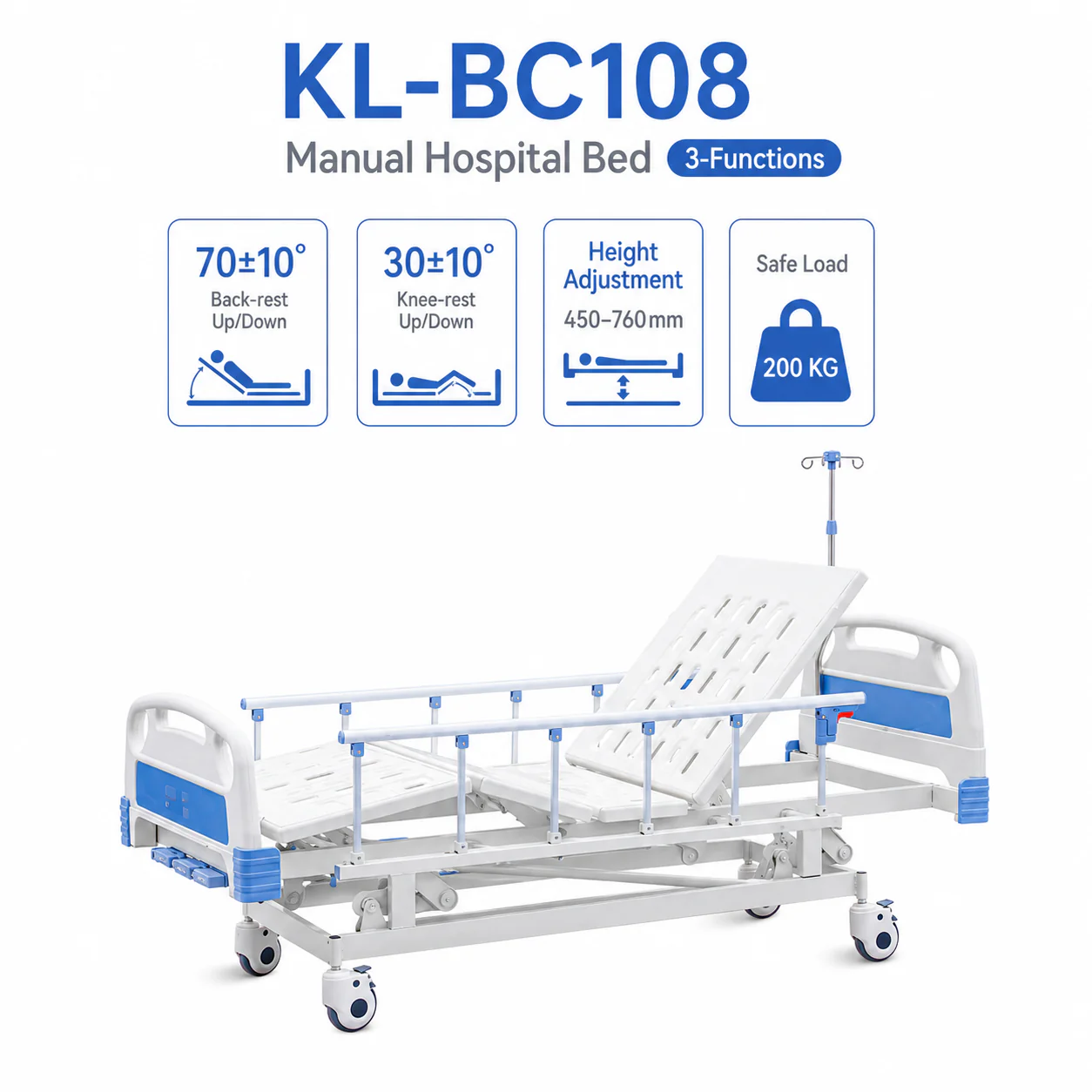
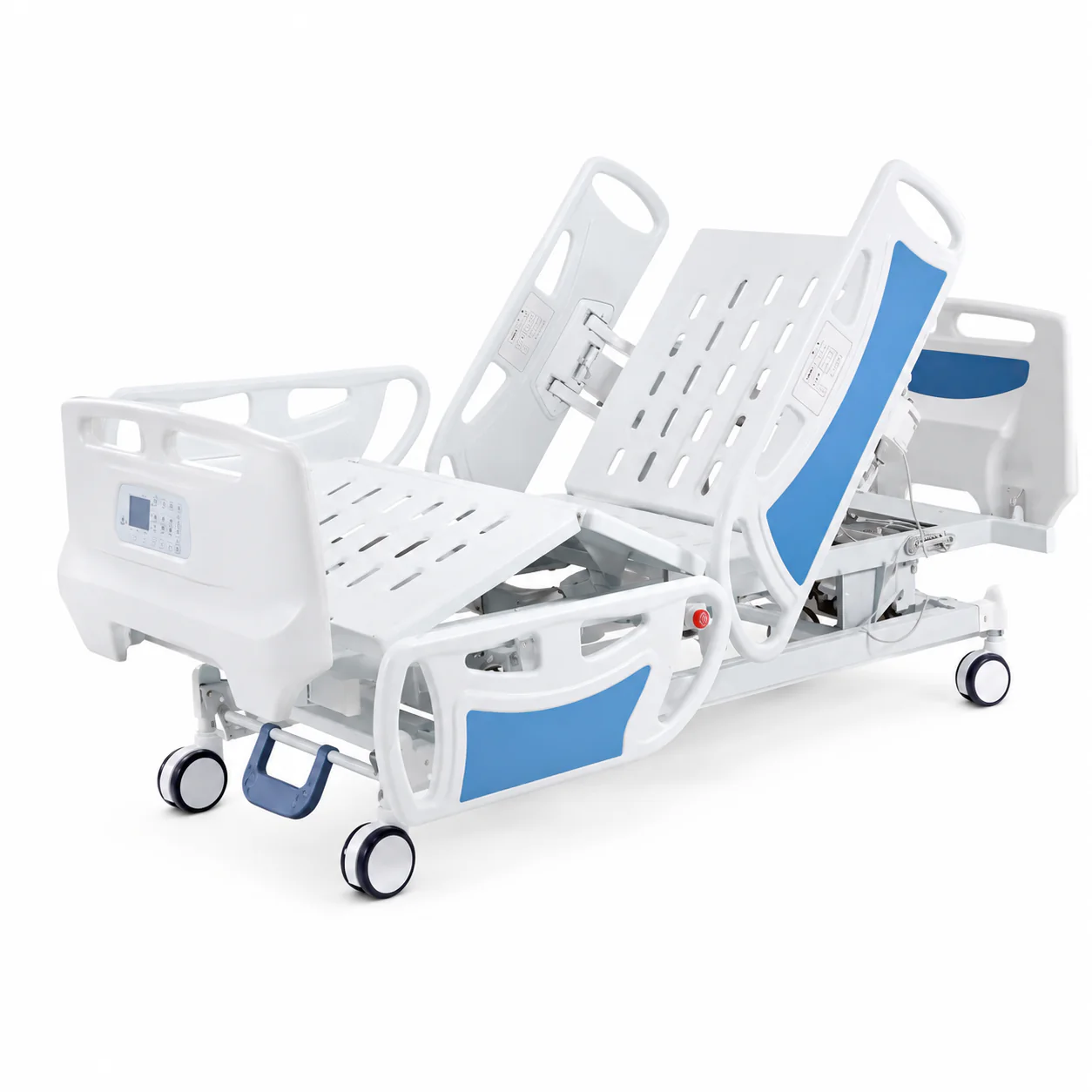
Start with the exact bed model, platform configuration and head-end design. Keling’s catalogue includes different bed types, such as the KL-BC101 Electric Hospital Bed and the KL-BC108 Manual Hospital Bed. Their inclusion in a procurement list does not by itself confirm trapeze compatibility. Request a dimensional drawing or written compatibility statement for the proposed combination.
For a trapeze bar for hospital bed, document whether the accessory mounts to the bed frame, a headboard socket, a separate floor frame or an overhead structure. Also confirm whether the bed can still move, adjust or be cleaned without removing the accessory.
2. Compare load and adjustment requirements
Do not evaluate a medical trapeze bar by appearance alone. The quotation should state the safe working load or other applicable load rating, the adjustment range and the handle or grip dimensions. If a tender specifies a user weight or operational load, ask the supplier to confirm the rating using the same terminology and test basis.
The reach of the overhead bar matters as much as its load rating. A short bar may not align with the required position, while excessive reach can affect clearance or frame stability. Specify the required vertical and horizontal adjustment, where applicable, rather than accepting “adjustable” as a complete description.
3. Check clearance and room workflow
Measure the bed’s overall length and width, head-end clearance, ceiling height, nearby furniture and access routes. An overhead trapeze should not obstruct transfers, staff access, patient monitoring or the movement of other equipment. In shared wards, check the space between adjacent beds and confirm whether the proposed frame can be parked or removed.
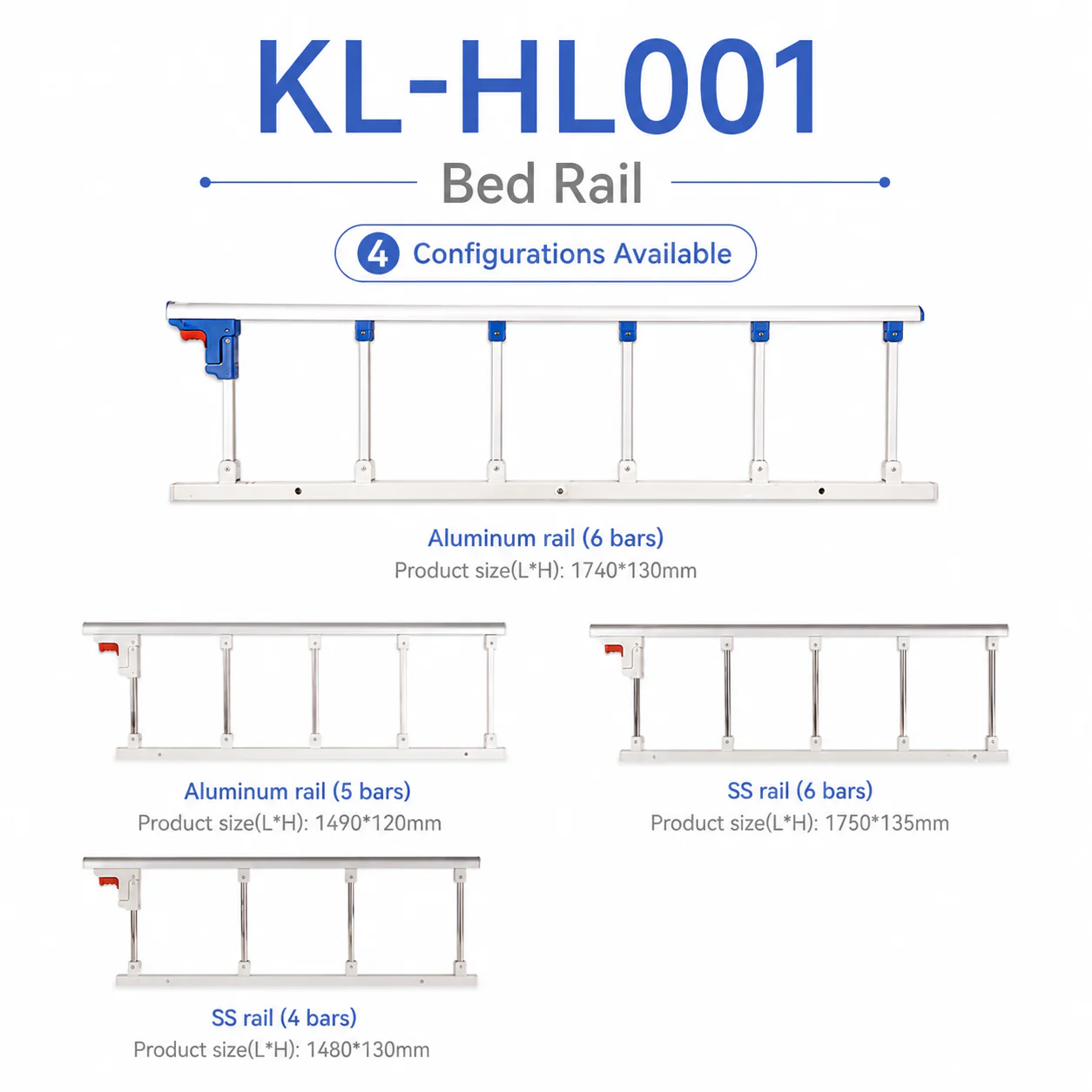
This assessment should be coordinated with other bed accessories. For example, buyers preparing a complete ward package may also need a KL-HL001 Bed Rail, an IV stand or a mattress. A separate over-bed table buying guide can help coordinate table clearance with the bed and overhead equipment.
4. Review materials, cleaning and maintenance
Ask for the frame material, finish, handle material and cleaning instructions. Hospital procurement teams should confirm whether surfaces are smooth and accessible for routine cleaning, whether removable parts are included and how replacement straps, grips or fasteners are ordered.
For hospital use, also request the maintenance schedule, spare-parts availability, packaging method and installation instructions. These details are especially important when a distributor will support multiple hospitals or when the equipment is included in a long-term tender. Avoid accepting generic “hospital grade” wording without a defined specification sheet.
Trapeze bar for bed mobility: what procurement teams should define
The phrase trapeze bar for bed mobility describes a use case, not a complete technical specification. A buyer should define the expected movement of the accessory, the bed position in which it will be used and whether the item is intended for adults. A trapeze bar for adults still requires a stated load rating and mounting configuration; “adult” alone is not a measurable performance requirement.
For requests described as trapeze medical or trapeze medical equipment, include the following in the technical schedule:
- Product name and exact configuration
- Bed model or bed interface required
- Mounting type: bed-mounted, fixed overhead or free-standing
- Safe working load and adjustment range
- Overall dimensions, clearance and packed dimensions
- Handle, strap or grip construction
- Surface finish and cleaning instructions
- Installation requirements and included hardware
- Spare parts, warranty terms and after-sales contact
- Required documents for the destination market
A hospital trapeze may be used in wards, rehabilitation areas or nursing environments, but the procurement file should not imply clinical outcomes. It should describe the equipment’s intended support function and the conditions under which it is supplied.
Compatibility with hospital beds and project packages
Compatibility is the main commercial risk when purchasing a medical bed trapeze bar separately. Bed height adjustment, backrest movement, side rails, headboards and mattress thickness can all affect the available position. Buyers should request interface drawings and confirm whether the bed can be operated through its full specified range with the accessory installed.
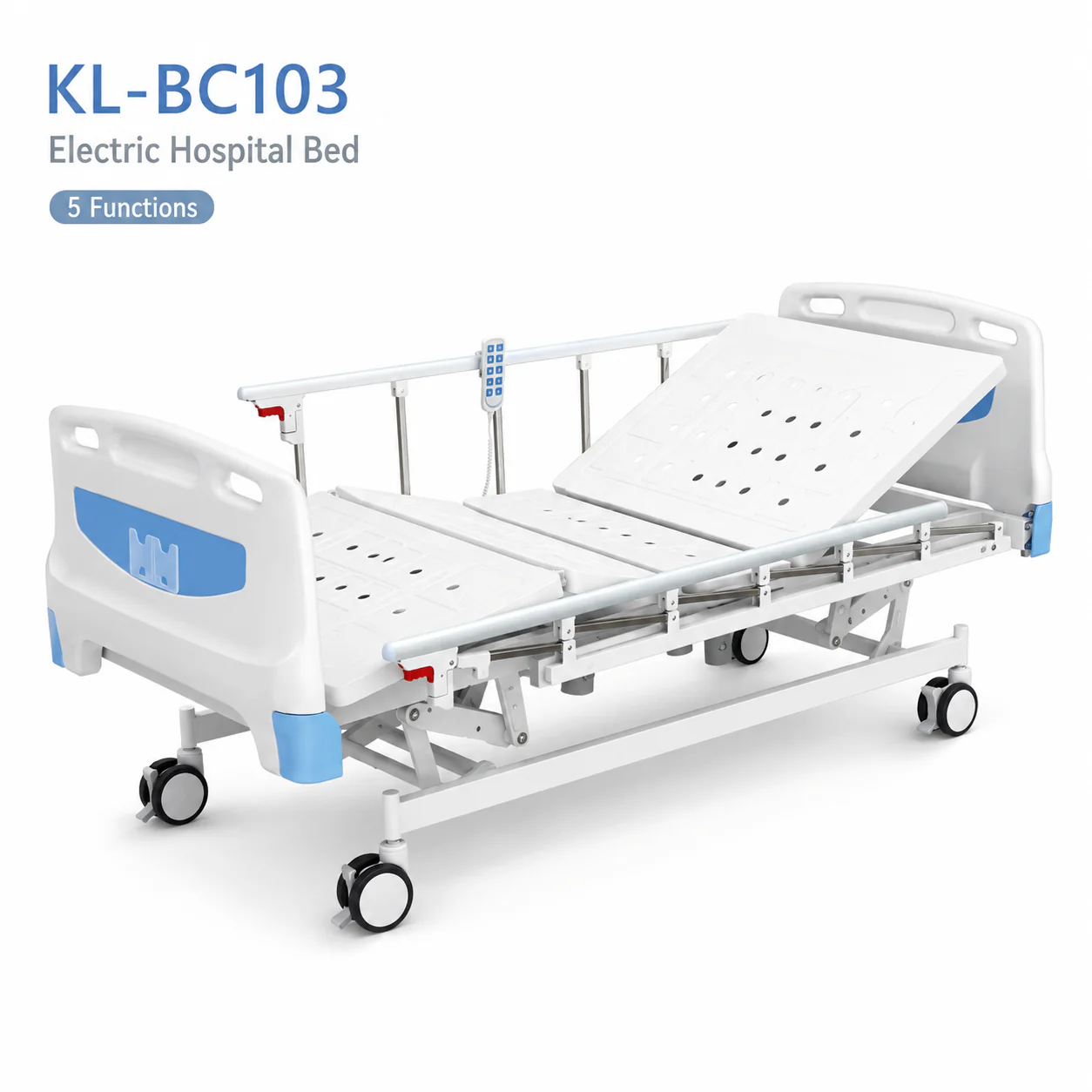
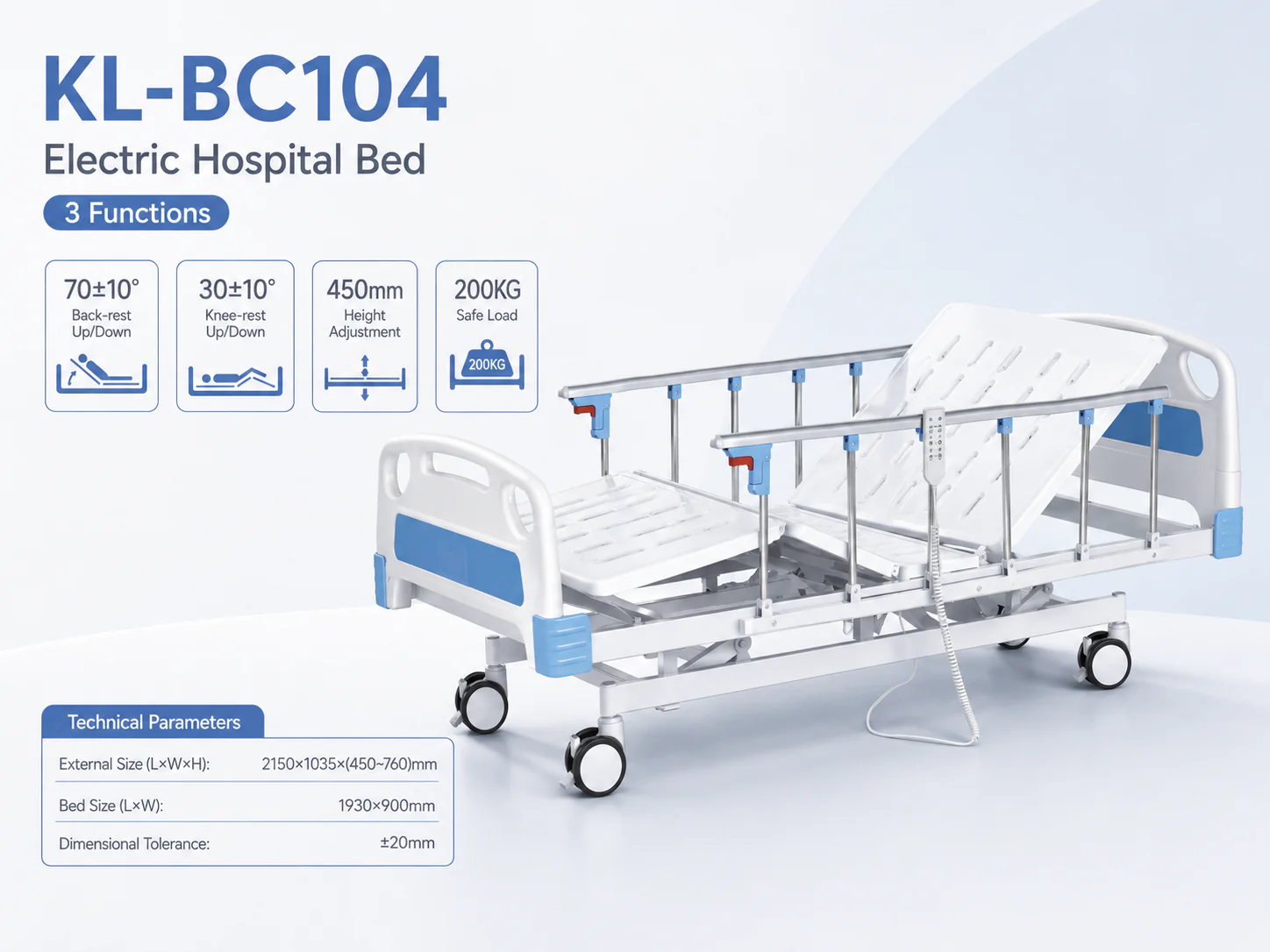
Keling supplies multiple hospital-bed configurations, including the KL-BC103 Electric Hospital Bed and KL-BC104 Electric Hospital Bed. These product pages can support initial bed selection, but the trapeze requirement should remain a separate line in the request for quotation unless the supplier confirms it as part of the offered configuration.
For a broader hospital project, coordinate the bed accessory list with room furniture, operating equipment and protective covers. Keling’s hospital bed cover buyer’s guide and fitted sheets hospital beds buyer’s guide address related purchasing details that can affect mattress dimensions, cleaning workflows and replacement planning.
What to include in a quotation request
When requesting a price for a trapeze bar for bed, provide the destination country, application area, required quantity, selected bed model, mounting preference, room constraints and delivery term. Include drawings or photographs of the bed interface if the accessory is intended to fit existing equipment.
Ask the supplier to separate the price for the trapeze, mounting hardware, installation and any engineering changes. Confirm packaging, lead time, minimum order quantity, spare parts and warranty coverage. Regulatory scope and validity should be confirmed per model and destination market in the written quotation.
Keling Medical is a Shanghai-based export and sales centre founded in 1996. The company states that it manufactures 310 models across 12 categories and operates an ISO 13485 quality system; company materials also state ISO 9001 and CE. Keling serves distributors, hospital projects and tender buyers. For a project quotation, contact inquiry@shkeling.com, call +86 150 0064 9020 or use the request a quote page.