Buying guides
Hospital bed for home: how to choose the best home-care bed
How to choose a hospital bed for home: functions, height, rails, mattress, room size, doors and caregiver needs, plus how to get one and what to stock.

A hospital bed for home is an adjustable medical bed that makes care at home safer and easier for someone who spends long periods in bed or needs help getting in and out. The best hospital beds for home use have electric height adjustment, a low minimum height, suitable rails and the right mattress, and they fit through the doors.
This guide covers who benefits, how to get one, what to look for, how to set up the room and what distributors and home-care suppliers should stock. Families should involve the person's clinician or occupational therapist in the final choice. For an overview of every bed category, see types of hospital beds.
Who needs a hospital bed at home?
A homecare hospital bed helps when a person's own bed has become a barrier to care. Typical situations:
- Long recovery after surgery, a fracture or a hospital stay
- Progressive conditions that reduce mobility or strength
- Breathing problems that improve with the head raised
- Palliative and hospice care at home
- A family caregiver who is struggling to help with transfers, washing or repositioning
A hospital bed for elderly people at home is often less about the patient's comfort and more about protecting the carer's back and keeping care at home sustainable.
Benefits of hospital beds for home care
The benefits come from the bed's adjustments. Each one solves a specific everyday problem.
| Adjustment | Daily benefit |
|---|---|
| Backrest | Sitting up to eat, drink, read and breathe more easily |
| Knee-rest | Stops sliding down the bed; reduces shear on the skin |
| Height | Low for getting in and out; high for washing, dressing and changing sheets |
| Rails or handles | Hand-hold for turning and sitting up |
| Castors with brakes | Move the bed for cleaning, lock it for transfers |
Height is the feature that makes the biggest difference. A bed that drops low lets a person sit with feet flat on the floor before standing; a bed that rises to hip height saves the caregiver from bending for every task.
How do I get a hospital bed at home?
The most reliable route is to start with the care team, then buy from a supplier who can deliver and service the bed.
- Get an assessment. Ask the person's doctor, nurse, physiotherapist or occupational therapist what bed, mattress and rails they recommend.
- Check local funding. Some health systems and insurers provide beds after an assessment; the care team or supplier can explain what applies.
- Measure the home. Doors, hallways, turns and the room itself.
- Choose a supplier that delivers to the room, assembles the bed, explains the controls and handles service.
- Plan the setup with the accessories needed from day one.
What to look for in the best hospital bed for home
The best hospital bed is not the one with the most features. It is the simplest bed that meets the person's needs and the caregiver's workload.
Electric or manual?
A full electric bed adjusts backrest, knee and height from a handset, so the person can reposition without calling for help and the carer never cranks. A semi-electric bed motorizes backrest and knee but not height. Manual beds suit only short-term use or homes without reliable power. Keling's KL-BC104 Electric Hospital Bed is a 3-function electric bed with a 450–760 mm height range; the KL-BC105 Electric Hospital Bed is a 2-function electric bed at a fixed 450 mm height, suitable where height adjustment is not needed. For details on functions, see electric vs manual hospital beds.
Height range
Check the lowest platform height for safe transfers and falls risk, and the highest for caregiving. Remember the mattress adds 100–150 mm on top of the platform.
Safe working load
The safe working load must cover the person, the mattress and accessories. Standard home-care beds suit most adults; heavier users need a bariatric bed.
Rails
Half rails at the head end are often the best compromise at home: a grip for sitting up with an open gap for getting out. Rails must be designed for the bed, and the decision to use them should follow a risk assessment. The hospital bed rails guide explains the safety limits and alternatives.
Mattress
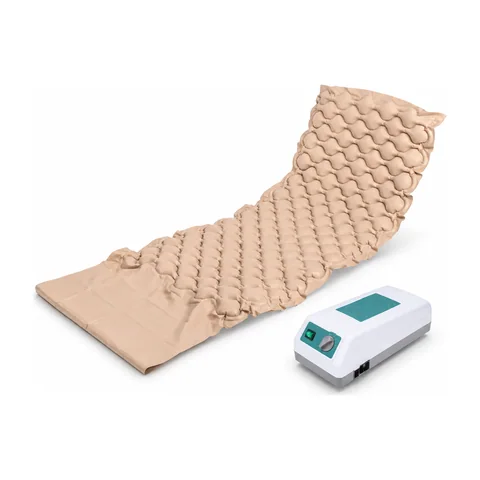
A good foam mattress suits people who can change position themselves. People who are bedbound or at risk of pressure injuries usually need an air mattress or overlay. Keling supplies the KL-P001 Mattress foam mattress and the KL-P003 Air Mattress air mattress with an electric pump. The pressure-relief mattress guide compares the options.
Will it fit? Size and access
A home-care bed is about 1000 mm (40 inches) wide and 2000–2150 mm (79–85 inches) long overall. Residential interior doors are often only 30–32 inches (760–810 mm) wide, which is why most home-care beds are delivered in sections and assembled in the room.
Before ordering:
- Measure each door with the door open, and each turn in the hallway.
- Check lift or stair access in apartments.
- Allow about 900 mm (3 feet) of working space on the caregiver's side, more if a patient lift will be used.
- Make sure a mobile lift can pass under the bed frame if one is planned.
Full dimensions for standard and wider beds are in hospital bed dimensions.
Hospital bed for elderly at home: extra points
Older users often have several needs at once: reduced strength, balance problems, fragile skin and sometimes memory loss. A hospital bed for elderly people at home should be chosen with all of these in mind, not only the main diagnosis.
- Falls risk. A bed that lowers close to the floor, combined with a fall mat, is often safer than raised full-length rails for someone who may try to get up at night.
- Getting up independently. A head-end half rail or assist handle and a bed height that lets the feet rest flat on the floor help a person stand without help.
- Skin. Thin, fragile skin and long hours in bed raise the risk of pressure injuries, so the mattress choice matters as much as the bed.
- Simple controls. A handset with large, clearly separated buttons, or a lockout so the caregiver controls certain functions, prevents accidental movements.
- Night use. Under-bed lighting or a night light along the route to the toilet reduces trips and falls.
Living room hospital bed setup
A living room hospital bed at home is common, because the living room is usually on the ground floor, larger than a bedroom and closer to the kitchen and bathroom. It also keeps the person part of family life.
Good room setup:
- Place the bed so the caregiver can reach the side they use most, ideally both sides.
- Keep a clear, lit route to the toilet or commode.
- Position near a power outlet so the cable does not cross a walkway; avoid extension leads under rugs.
- Put the handset within reach but where it will not be trapped by moving sections.
- Add an overbed table such as the KL-CZ302 Overbed Table, which adjusts from 760 to 1040 mm, for meals and personal items.
A commode chair, shower chair or patient lift may complete the setup; see the guides to bedside commodes and patient lifts.
Luxury hospital beds for home use
A luxury hospital bed for home looks like bedroom furniture: wood-effect or upholstered head and foot boards, concealed rails, quieter actuators and sometimes wider sizes. For many families, a bed that does not look clinical makes it easier to accept.
Look past the finish. A premium bed still needs a stated safe working load, a low minimum height, rails that meet IEC 60601-2-52 gap limits, and parts that a local technician can service. Keling's ABS headboards, such as the KL-HL004 ABS Headboard, show how board design changes the look of a standard frame.
Safety and care at home
A home bed is used without the routine checks a hospital provides, so a few habits matter:
- Lock the brakes before every transfer.
- Keep the bed low when the person is in it unattended, unless advised otherwise.
- Check rails and mattress fit after any mattress change.
- Inspect cables and handsets for damage; keep liquids away from the control box.
- Follow the manufacturer's instructions for cleaning and for weight limits.
- Ask the care team about repositioning and skin checks for bedbound users.
For distributors and home-care suppliers
Home-care demand favors a compact range that covers most needs with fewer SKUs. A practical core range is a 3-function electric bed, a 2-function electric or manual option, foam and air mattresses, half and full rails, an overbed table and a trapeze option.
When sourcing for the home-care market, ask the manufacturer for knock-down packing, voltage and plug options for your market, spare actuators and handsets, the IEC 60601-2-52 test report and the registrations your country requires. Keling Medical supplies distributors with wholesale and OEM orders; ask for the documents that apply to the model and destination country.
Next steps
Start with the person's needs and the caregiver's workload, measure the home, then choose the simplest bed, mattress and rails that fit. Browse Keling's hospital beds and rehabilitation products, or send your requirements through the quote form.
Frequently asked questions
How do I get a hospital bed at home?
Start with the person's doctor, nurse or occupational therapist, who can assess what type of bed, mattress and rails are needed. Then buy through a local medical equipment dealer or pharmacy supplier that delivers, assembles and services beds. Some health systems or insurers supply beds after an assessment; ask the care team what applies locally.
What is the best hospital bed for home use?
For most people, a full electric or semi-electric home-care bed with a low minimum height, half or split rails, and a suitable foam or air mattress is the best choice. It should fit the room and doorways, be quiet, and be simple for the caregiver to operate. Clinical needs should guide the final choice.
What are the benefits of a hospital bed for home care?
A home hospital bed raises the backrest for breathing, eating and reading, raises the knees to reduce sliding, and changes height for safer transfers and easier caregiving. It reduces back strain for carers, can extend the time a person can be cared for at home, and allows the right pressure-relief mattress to be used.
Should a hospital bed for an elderly person have rails?
Not always. Rails help some people reposition and reduce rolling out of bed, but they can be unsafe for people who are confused and may climb over them. A low bed with a fall mat may be safer. The decision should follow a risk assessment by the person's care team.
Can a hospital bed go in a living room?
Yes, and it often does, because the living room is usually on the ground floor, near a bathroom and larger than a bedroom. Leave space on at least one side for transfers, keep a clear route to the toilet, and place the bed near an outlet so cables do not cross walkways.
What is a luxury hospital bed for home?
A luxury or premium home hospital bed looks more like residential furniture, with wood-effect or upholstered boards, concealed motors and rails, and quieter actuators. Some come in wider sizes. Functionally they still need a safe working load, a low height and rails that meet the medical bed standard.
How much space does a home hospital bed need?
The bed itself is roughly 1000 mm (about 40 inches) wide and 2100 mm (about 83 inches) long overall. Allow working space of roughly 900 mm (3 feet) on the side the caregiver uses, more if a patient lift will be used, and check that every door on the route is wide enough or that the bed ships in sections.