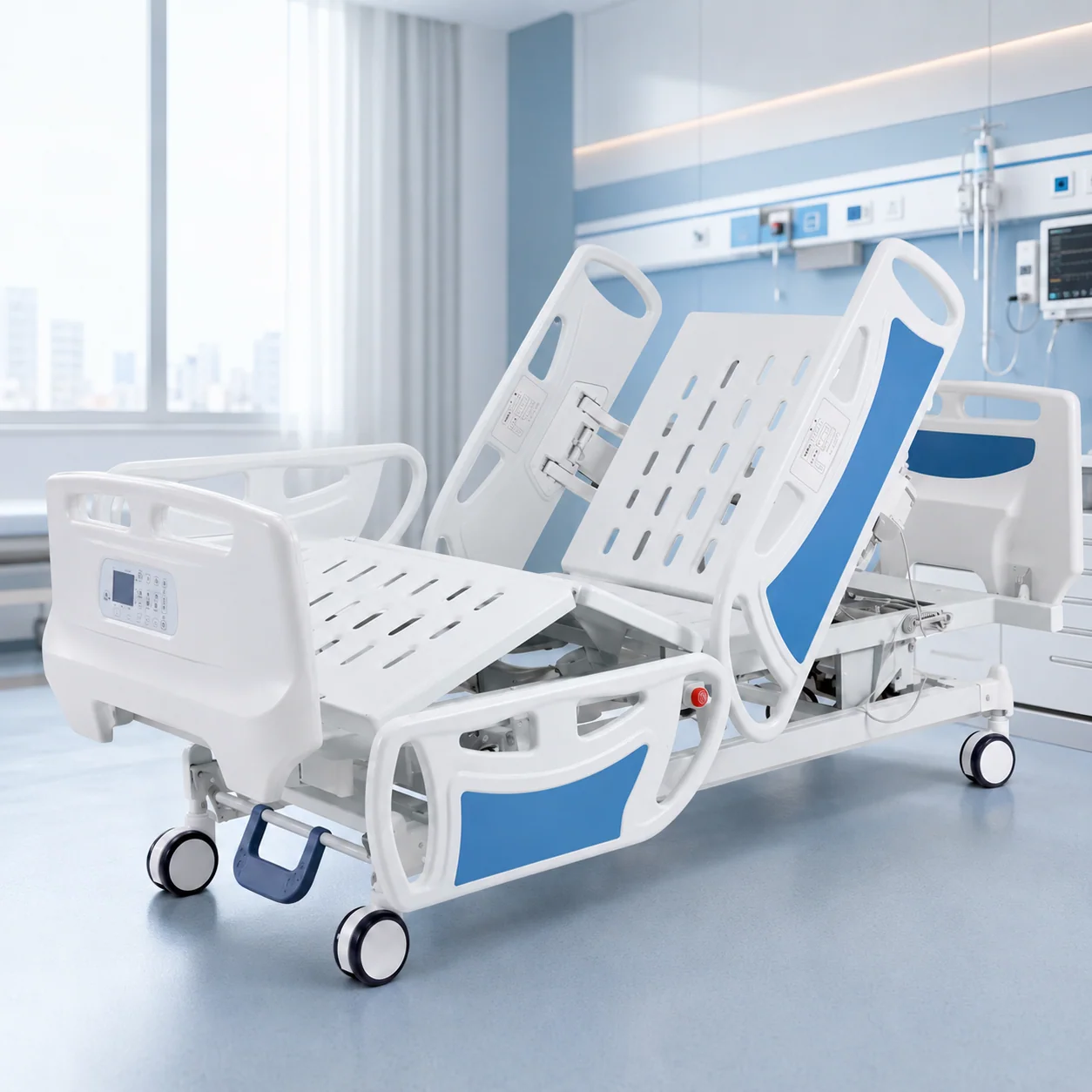
What should buyers look for in an ICU bed?
An icu bed is not selected by the name alone. Hospital procurement teams should first define the intended critical-care use, then compare the bed’s adjustment functions, emergency requirements, safe working capacity, accessories, cleaning approach and compatibility with the unit’s existing equipment. The same hospital may need different configurations for intensive care, emergency resuscitation and general wards.
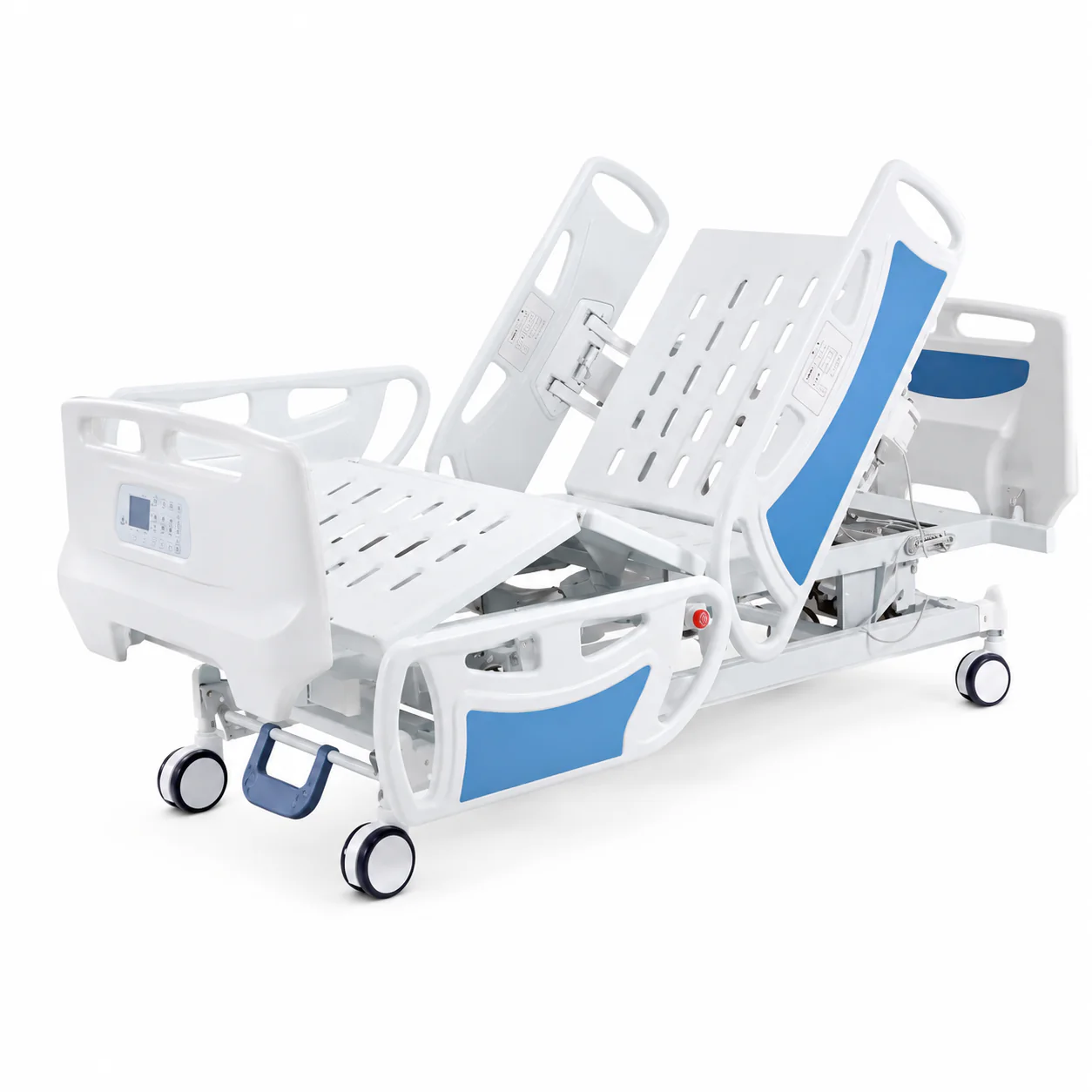
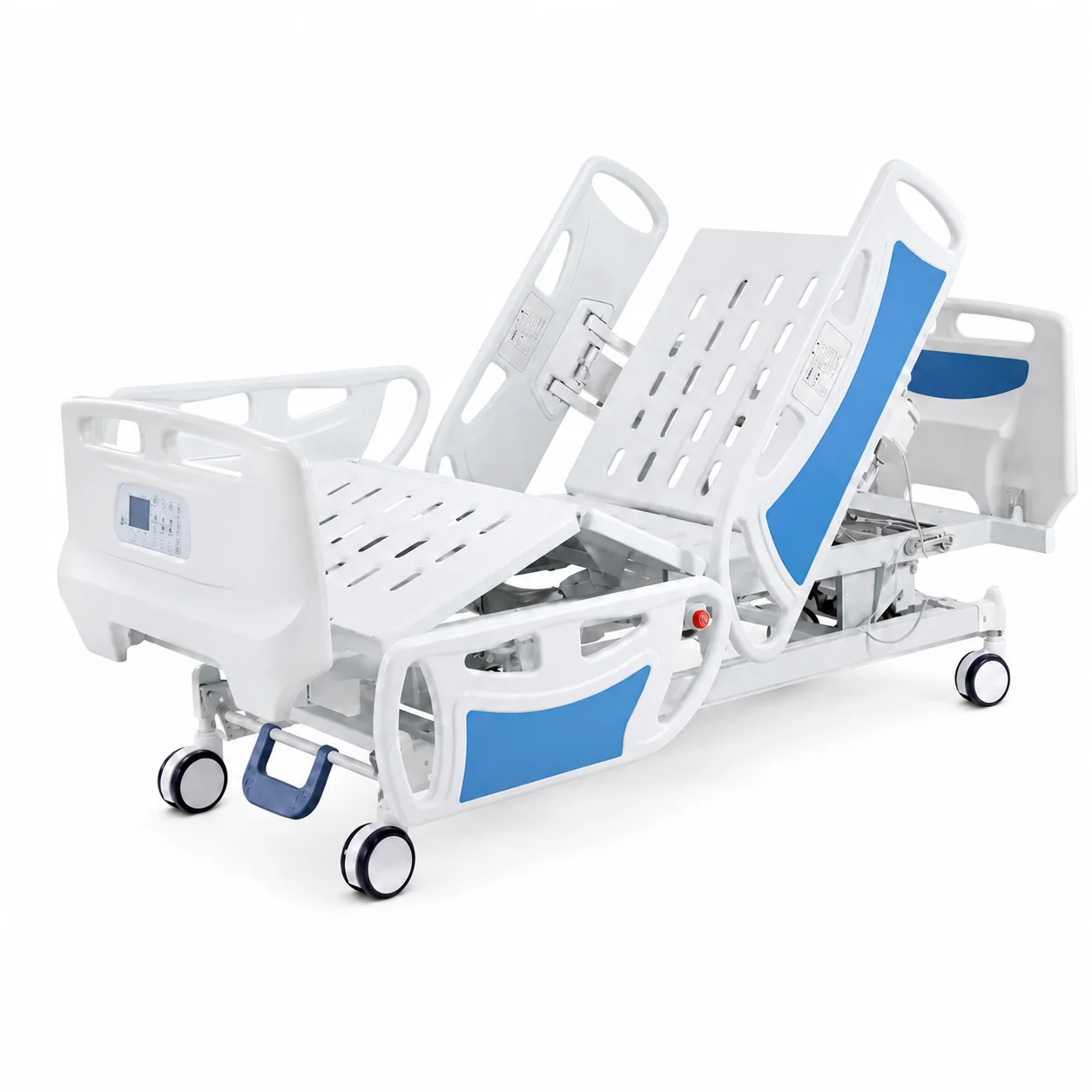
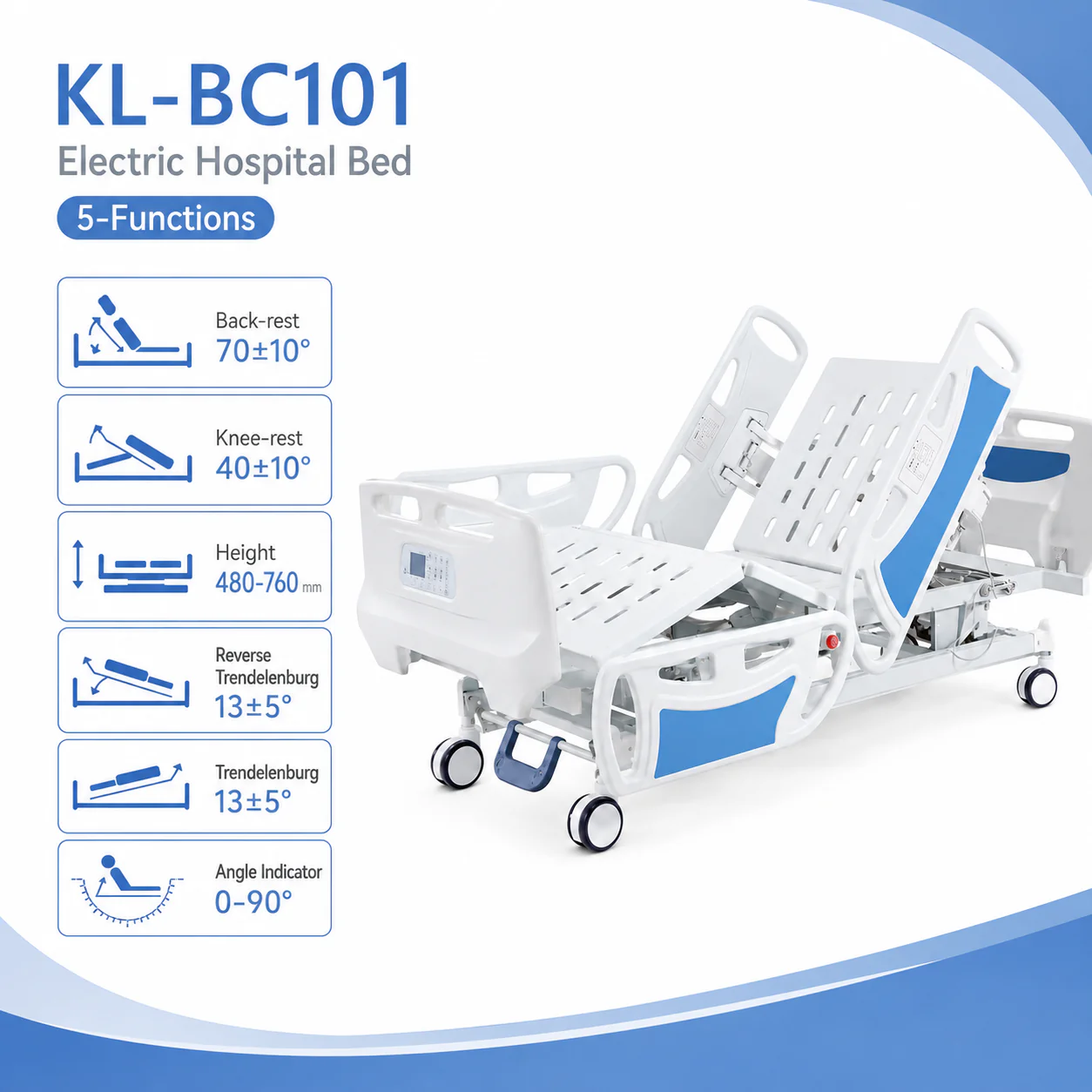
For a hospital icu bed, the most important commercial question is whether the quoted model includes the functions required by the tender. Keling Medical’s catalogue identifies the KL-BC101 Electric Hospital Bed as a “5-Function ICU Bed with CPR,” making it a direct model to review when CPR functionality is included in the specification. The exact function list, control arrangement, dimensions, electrical details and included accessories should still be confirmed in the written quotation.
Buyers should also define whether the procurement is for a new ICU, a replacement programme, an expansion project or a mixed hospital-bed order. A clear application brief helps the supplier distinguish an intensive care bed from a ward model and prevents a lower-function bed from being evaluated against a higher-acuity requirement.
ICU bed functions and model comparison
Function count is a useful starting point, but it is not a complete comparison. A 5-function bed may be appropriate where the tender requires more adjustment capability than a 3-function or 2-function model, while a simpler configuration may suit another department or budget. Procurement documents should state each required function rather than relying only on labels such as “electric” or “ICU.”
Keling’s listed hospital-bed models provide several comparison points:
- KL-BC101 Electric Hospital Bed | 5-Function ICU Bed with CPR is identified as a 5-function ICU bed with CPR.
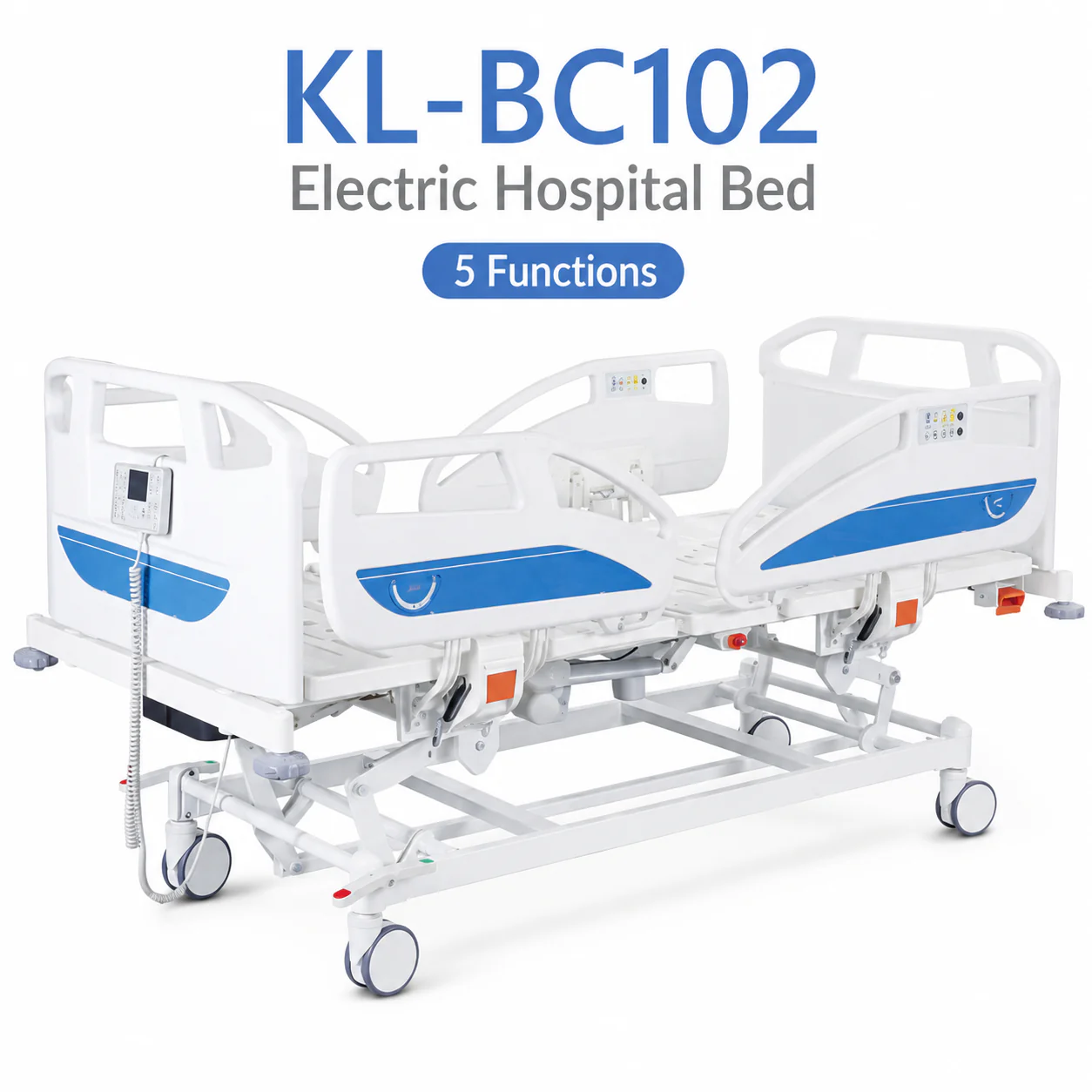
- KL-BC102 Electric Hospital Bed | 5-Function Bed with Dual Return is identified as a 5-function bed with dual return.
- KL-BC103-A Electric Hospital Bed | 5-Function Bed Alternative Style is identified as a 5-function alternative style.
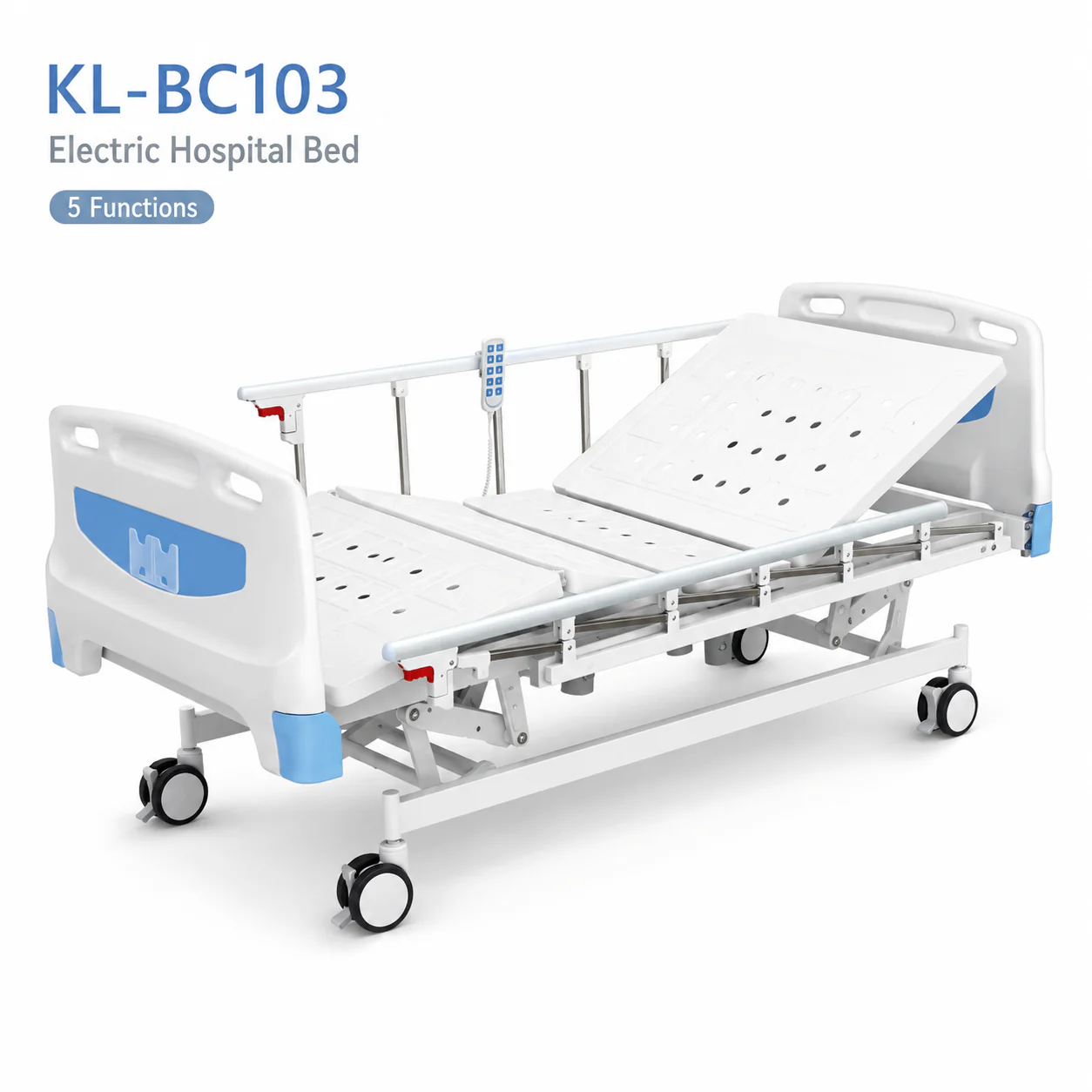
- KL-BC103 Electric Hospital Bed | 5-Function Ward Bed 240 kg is identified as a 5-function ward bed with a 240 kg capacity.
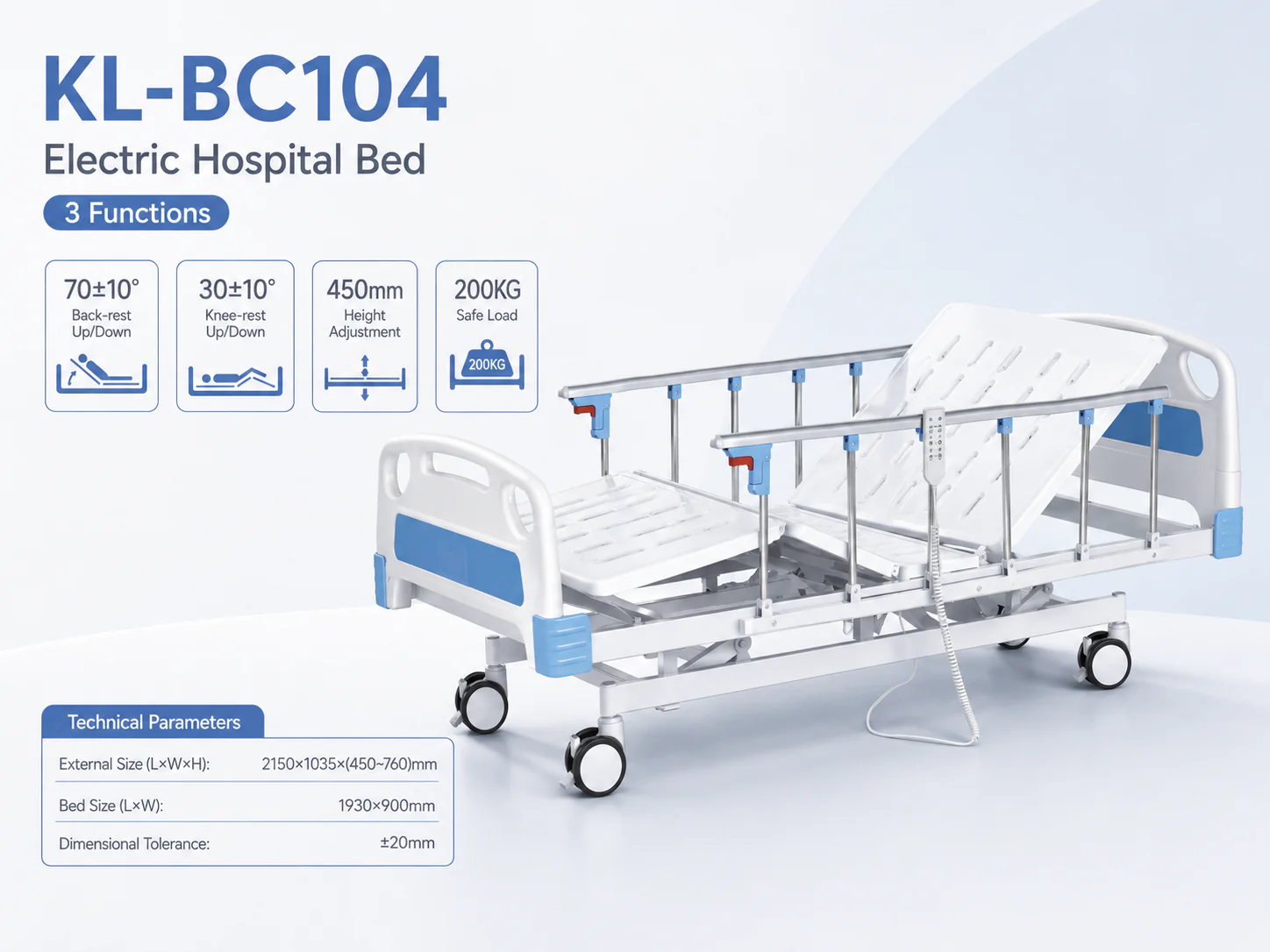
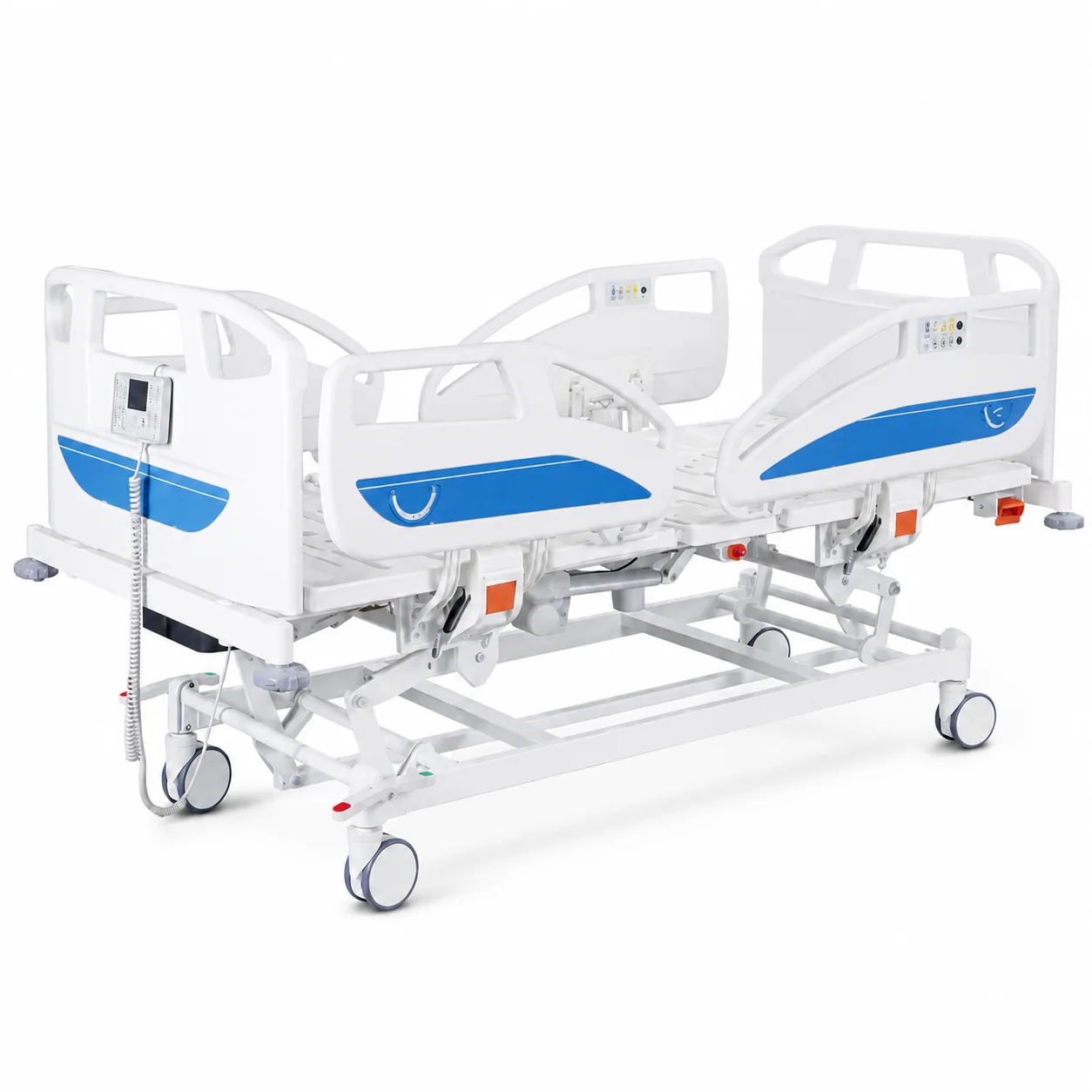
- KL-BC104 Electric Hospital Bed | 3-Function Electric Bed 200 kg is identified as a 3-function electric bed with a 200 kg capacity.
This list shows why product titles should not be treated as interchangeable. The KL-BC101 description specifically references ICU use and CPR, while KL-BC103 is described as a ward bed. KL-BC102 references dual return, and KL-BC104 provides a stated 200 kg capacity. For an icu patient bed tender, ask the supplier to map every required clause to a specific model and quoted configuration.
Intensive care bed capacity and configuration checks
Capacity is a procurement parameter, not a substitute for a complete technical review. The catalogue identifies KL-BC103 with 240 kg and KL-BC104 with 200 kg. These values should be compared with the tender’s required safe working load or other stated capacity terminology, because buyers must ensure that the quoted rating is defined consistently across the offer documents.
For an intensive care bed, confirm at least the following before commercial evaluation:
- Function requirements: Request the full list behind the stated function count and confirm which movements are electrically operated.
- Emergency requirement: If CPR is mandatory, confirm that the quoted model and configuration include the CPR feature named in the offer.
- Capacity: Check whether the stated 240 kg or 200 kg rating matches the tender’s required definition and documentation.
- Dimensions: Confirm overall and usable bed dimensions, clearance requirements and compatibility with the ICU room layout. For a wider measurement framework, see Hospital Bed Dimensions: What Buyers Must Measure.
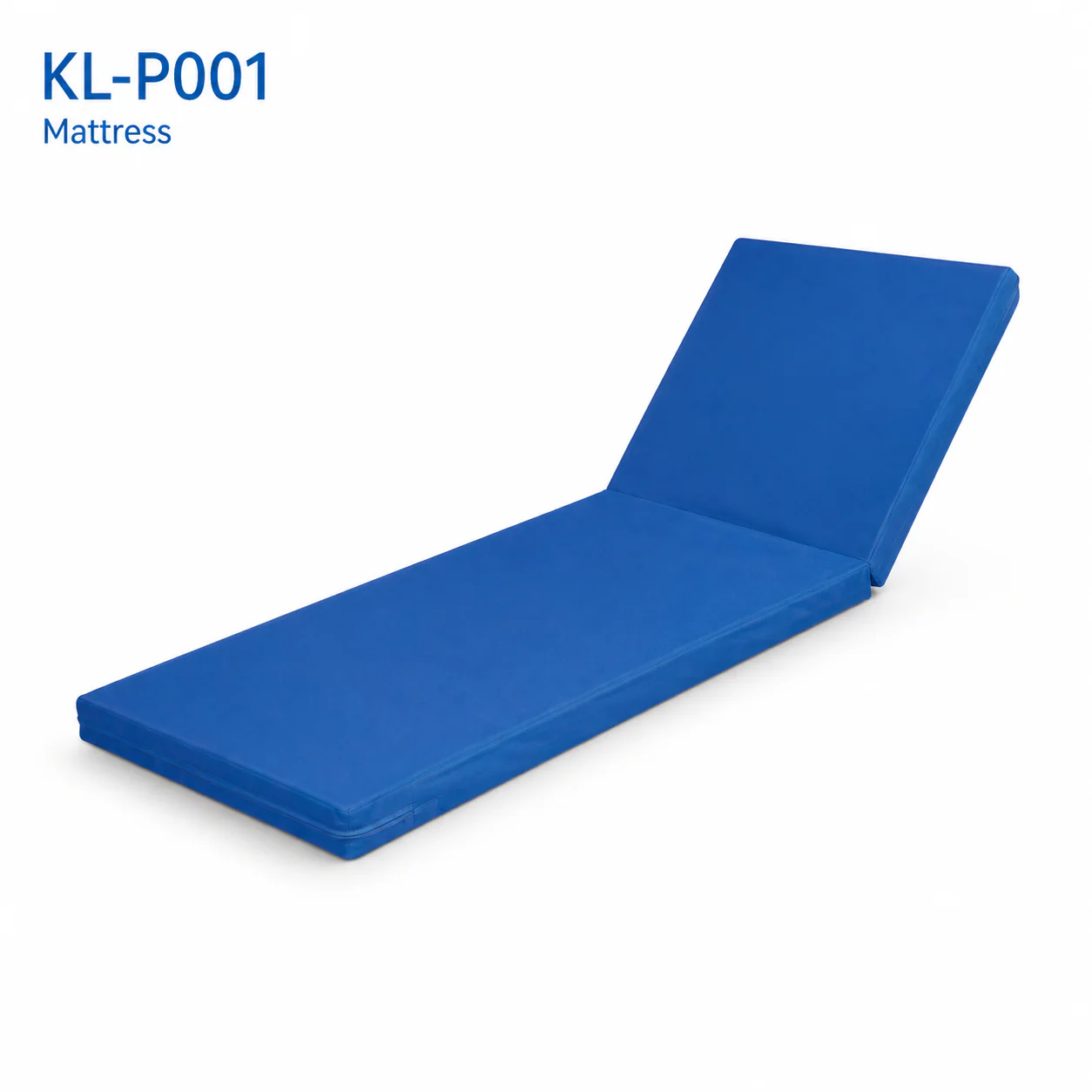
- Mattress: Confirm mattress size, construction and whether it is included. Keling lists KL-P001 Mattress and other hospital-bed mattress options, but the suitable choice must be matched to the ordered bed and project requirement.
- Accessories: Establish whether side rails, IV support, headboards, casters or other components are included, optional or supplied separately.
A buyer should also review the hospital’s cleaning and maintenance process. Ask for the recommended cleaning method, replaceable parts information, operating instructions and warranty terms. These are purchasing and maintenance checks, not assumptions based on the product category.
Intensive care unit bed or general hospital bed?
The phrase intensive care unit bed usually signals a higher level of specification than a basic inpatient bed, but the exact requirement depends on the hospital’s tender. Buyers should avoid selecting a model solely because it appears in an ICU room photograph or because a supplier uses “ICU” in a general description.
A practical comparison separates three questions:
- Clinical-area requirement: Will the bed be installed in intensive care, emergency, resuscitation or a general ward?
- Technical requirement: Which functions, CPR provision, capacity, dimensions and accessories are mandatory?
- Commercial requirement: What quantity, packaging, lead time, spare parts, training and documentation are required?
For broader terminology, Hospital Bed Name: Types and Buyer Terminology explains how procurement language can differ between suppliers and tenders. If the project includes multiple bed types, Adjustable Hospital Bed Buying Guide for Hospitals can help structure the comparison without treating every adjustable model as an ICU product.

How to specify an ICU patient bed in a tender
A strong tender description identifies the required result in measurable terms and leaves no ambiguity about optional items. Instead of writing only “electric ICU bed,” specify the required function count, CPR requirement if applicable, capacity, dimensions, electrical requirements, accessories, mattress policy, documentation and delivery scope.
The tender should also request a model-specific compliance table. The supplier can then state whether each clause is included, available as an option or not applicable. This is particularly important when comparing KL-BC101 with other 5-function models, or when considering a 3-function model such as KL-BC104 for a different department.
Keling Medical is a Shanghai-based manufacturer and exporter founded in 1996. Company materials state that it manufactures 310 models across 12 categories and operates an ISO 13485 quality system; they also state ISO 9001 and CE. For regulatory purchasing, scope and validity should be confirmed per model and destination market in the written quotation. Buyers can review the company’s quality and compliance information.
What to include in an ICU bed quotation request
When requesting an offer, provide the destination country, hospital or project type, required quantity, target delivery location, voltage and frequency requirements if specified by the project, preferred model, mandatory functions, capacity requirement, mattress and accessory needs, packaging expectations and documentation requirements.
Ask the supplier to return a quotation that clearly separates the bed, optional accessories, spare parts, freight, insurance, installation or training and warranty terms. Confirm the Incoterm, production lead time, payment terms and quotation validity. For a project or tender, submit the complete specification through Keling’s request-a-quote page or contact inquiry@shkeling.com and +86 150 0064 9020.
The final selection should be based on the written model-specific offer, not on a generic ICU bed description. This approach gives procurement teams a defensible comparison between function, capacity, configuration, documentation and total purchasing scope.