What is an overbed table?
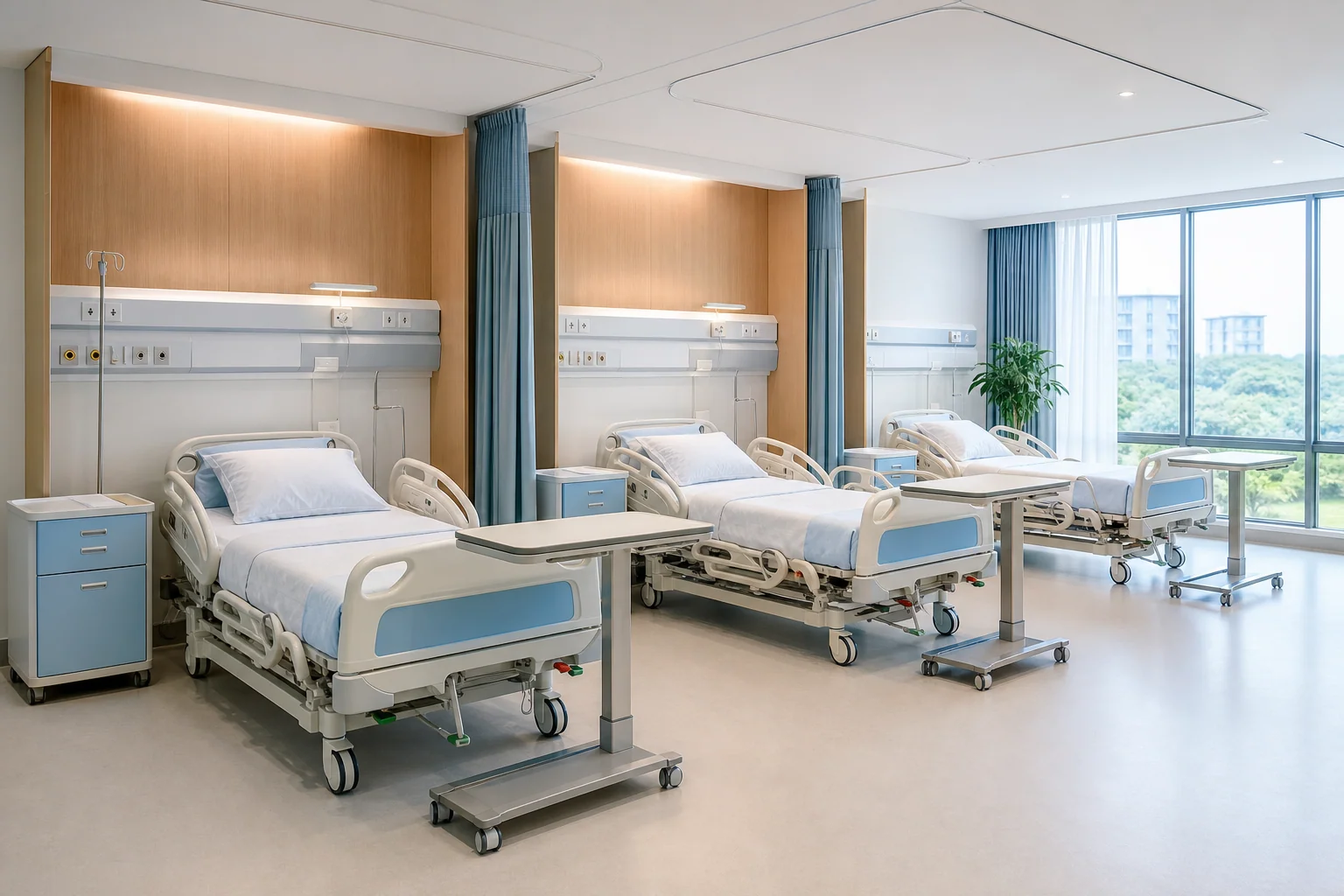
An overbed table is a height-adjustable table designed to move over a hospital bed. Its base typically slides beneath the bed while the tabletop spans the mattress area, giving the patient or care team a stable surface without requiring a separate bedside unit. Hospitals may also describe it as a bedside table over bed, rolling overbed table or hospital overbed table.
The equipment is generally selected for inpatient wards, intensive care environments, rehabilitation areas and examination settings. The exact configuration varies considerably: some tables are intended mainly for meals and personal items, while others provide a larger work surface for documentation or routine bedside activities. Buyers should not assume that every model is suitable for clinical procedures or for supporting medical devices.
For a wider assessment of the bed itself, see Keling Medical’s Hospital Beds category. The table should be evaluated together with the bed’s frame, mattress height, side rails, under-bed clearance and the movement required around the patient.
Key specifications to compare before purchase
Tabletop dimensions and usable surface
Start with the usable tabletop area rather than only the overall product dimensions. A wider surface may accommodate meals, paperwork and personal items, but it can also make the table heavier or more difficult to position in a confined room. A smaller top can improve manoeuvrability but may provide less practical workspace.
Ask the supplier to state tabletop length, width, thickness and edge design in the quotation. Confirm whether raised edges, a lip or a recessed surface are included. These details affect cleaning, spill control and how easily items can be moved across the surface.
Height adjustment and bed clearance
Height adjustment is central to an overbed table’s function. Confirm the minimum and maximum tabletop height, the adjustment method and whether the stated range is measured from the floor or from another reference point. The usable range must match the hospital beds and mattresses already specified for the project.
Under-bed clearance is equally important. Check the width and height of the base, including any crossbar, and compare these dimensions with bed legs, castors, brakes and other components. A table can have a suitable height range yet remain unusable if its base cannot pass beneath the bed.
If the project includes pressure-management equipment, review the bed and mattress combination separately. Keling’s Pressure Relief Mattress: Hospital Buyer’s Guide and Air Mattress for Hospital Bed: Buyer’s Guide provide useful procurement questions for checking mattress height and bed compatibility.
Tilt, fixed and split-surface options
Some buyers need a fixed horizontal surface; others may consider a tilting top or split tabletop. A fixed top is simpler to operate and may be easier to clean. A tilting section can support different working positions, but it introduces hinges, locking mechanisms and additional inspection points.
For any adjustable or tilting design, request the locking method, adjustment range and operating instructions. Confirm whether the top remains stable at each permitted position and whether the mechanism can be operated without reaching across the patient. Do not infer these features from product photographs; they must be documented for the quoted model.
Base, casters and mobility
A mobile overbed table should be assessed for stability and controlled movement. Procurement teams should request the number and size of casters, whether they swivel, whether brakes are provided and how the table behaves on the hospital’s flooring. Small casters may be adequate on smooth floors but may be less convenient over thresholds or uneven surfaces.
The base should leave sufficient room for the bed and avoid unnecessary interference with staff movement. Check whether the table is intended to be pushed from the tabletop, frame or a dedicated handle. Also confirm the packed dimensions and shipping weight when lifts, narrow doorways or regional delivery constraints are relevant.
Materials, edges and cleaning
Common purchasing considerations include tabletop material, frame finish, corrosion resistance, sealed joints and rounded edges. The correct choice depends on the cleaning agents and disinfection procedures used by the facility. A surface that looks smooth may still have exposed seams or fittings that require additional cleaning attention.
Ask for the manufacturer’s cleaning and maintenance instructions before approving the order. Confirm which components are replaceable, how casters and adjustment mechanisms are serviced, and whether spare parts can be supplied. For broader furniture planning, review the Hospital Furniture category rather than treating the table as an isolated item.
Overbed table selection by hospital environment
Inpatient wards
Ward buyers often prioritise easy height adjustment, stable movement, cleanable surfaces and compatibility with several bed configurations. If tables will be shared between rooms, confirm that the design can be disinfected efficiently between uses and that replacement parts are available for routine maintenance.
ICU and critical care areas
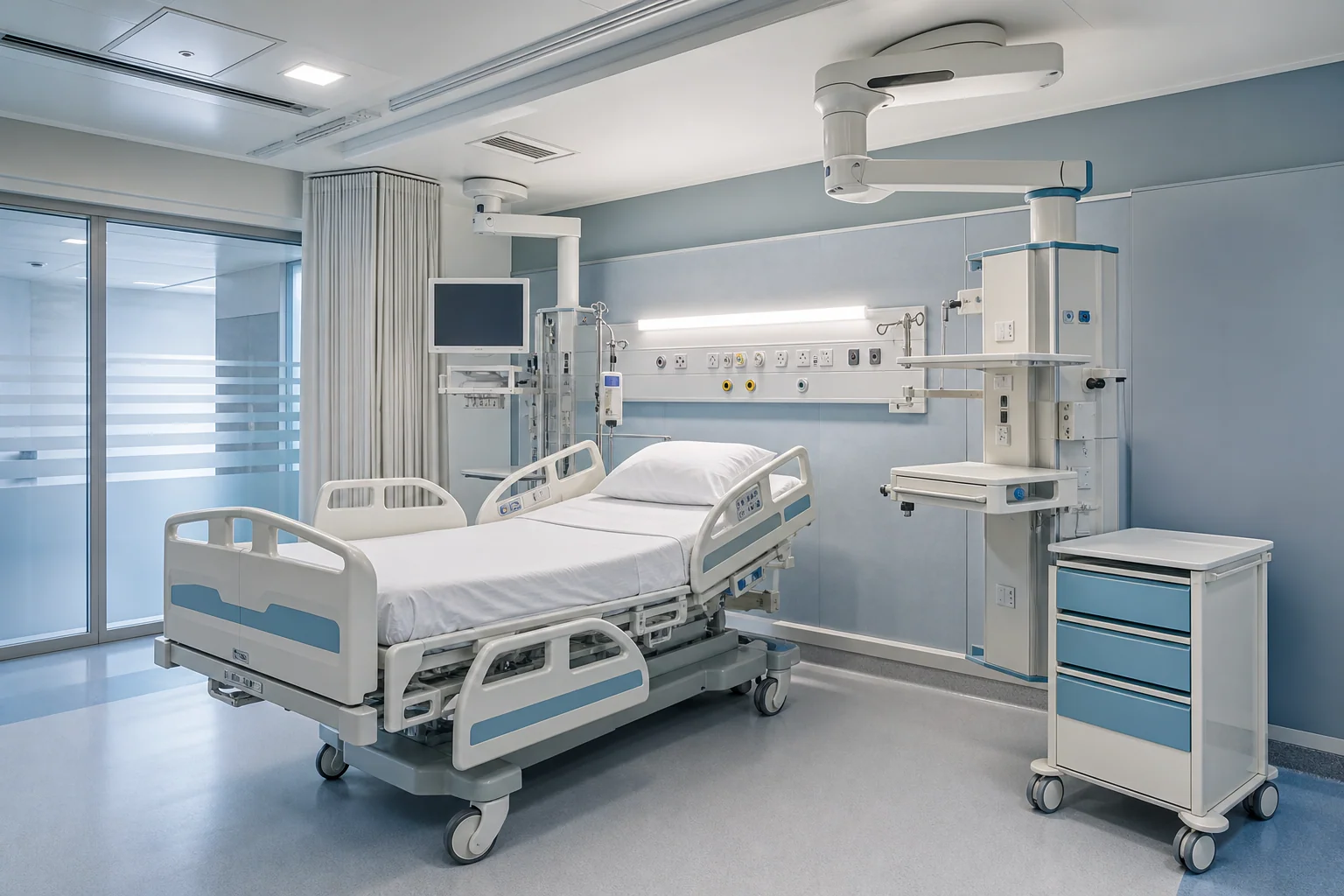
In critical care, the table must not obstruct equipment, lines, staff access or bed movement. Procurement specifications should define the required clearance and operating envelope. Buyers should also clarify whether the table is for general patient use only or whether any additional equipment load is expected. The supplier should state the permitted load and intended use in writing.
Rehabilitation and mobility areas
In rehabilitation settings, manoeuvrability and accessible adjustment may be more important than maximum tabletop size. Consider the room layout, chair or wheelchair access and whether the base can approach the bed or seating area without creating a trip hazard. Confirm these use conditions with the project team before final selection.
For surgical or procedure-focused projects, keep the functions separate: an overbed table is not automatically a replacement for a surgical table or instrument trolley. Keling’s Surgery Bed Buying Guide for Hospital Procurement can help distinguish bed-related procurement requirements from procedure-equipment requirements.
What to include in an overbed table RFQ
A useful request for quotation should include the following information:
- Required quantity and delivery location.
- Bed models or bed dimensions, including mattress height and under-bed clearance.
- Required tabletop dimensions and height range.
- Fixed, tilting or split-surface preference.
- Required load capacity and whether the load is evenly distributed.
- Caster, brake and mobility requirements.
- Preferred materials, colour and cleaning-agent compatibility.
- Packaging, assembly and installation requirements.
- Spare-parts, warranty and after-sales expectations.
- Required documents, labels and destination-market information.
Keling Medical is a Shanghai-based manufacturer and export and sales centre founded in 1996. The company states that it manufactures 310 models across 12 categories and operates an ISO 13485 quality system; company materials also state ISO 9001 and CE. For any overbed table model, confirm the exact specification, regulatory scope and validity for the destination market in the written quotation. You can submit project details through the quotation request page.
Final procurement checklist
Before issuing a purchase order, verify that the quoted model is specifically identified and that all dimensions use consistent reference points. Check the table against the actual hospital bed, mattress, side rails and room layout rather than relying on nominal compatibility. Request drawings or technical sheets where clearance is critical.
Finally, confirm the permitted use, load, cleaning method, adjustment procedure, caster configuration, packing method and available service support. A well-defined specification reduces the risk of receiving a table that fits the room but cannot move correctly around the bed. If the requirement is still being developed, ask Keling Medical to confirm availability and configuration in writing rather than assuming that a catalogue category represents a particular overbed table model.