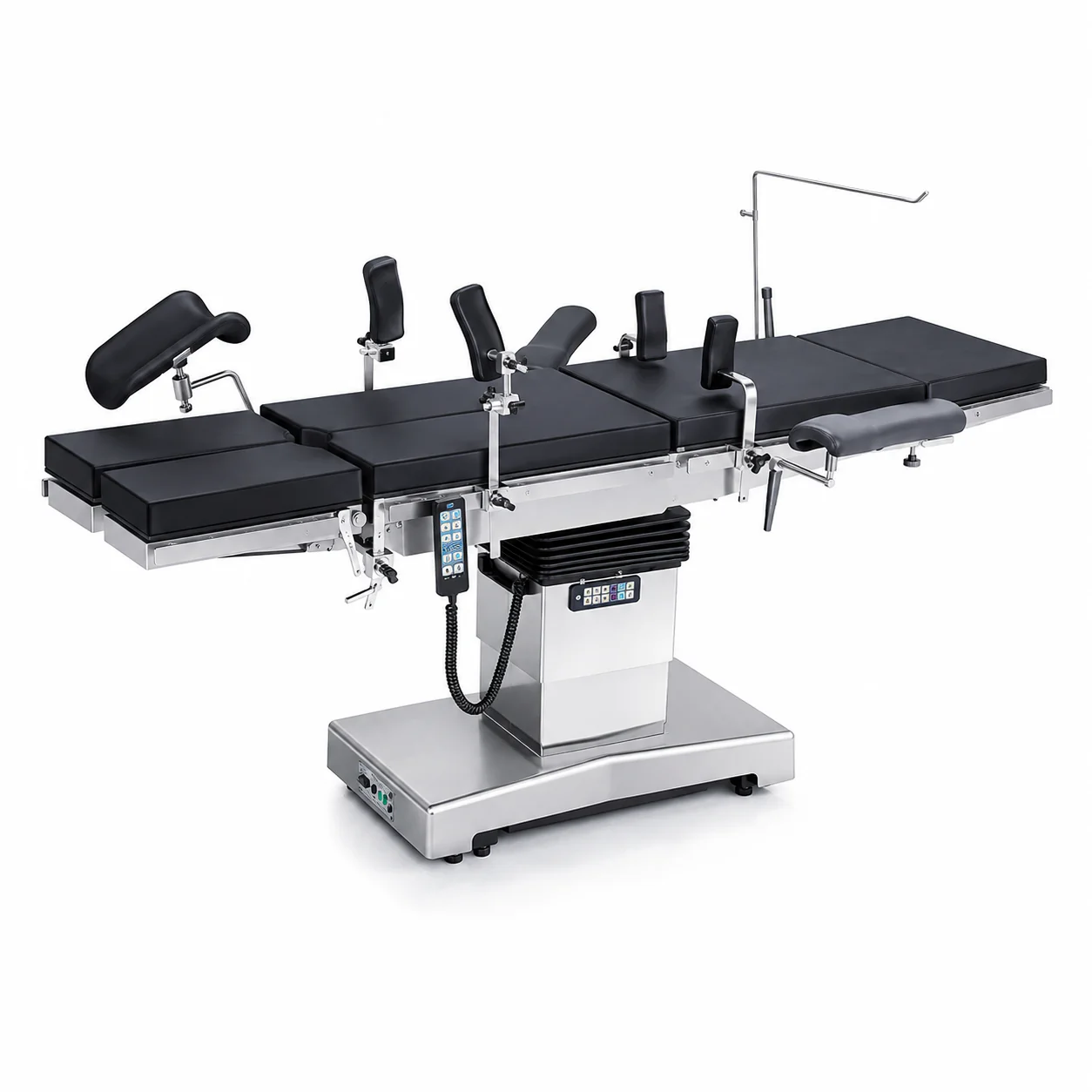
What is a surgery bed?
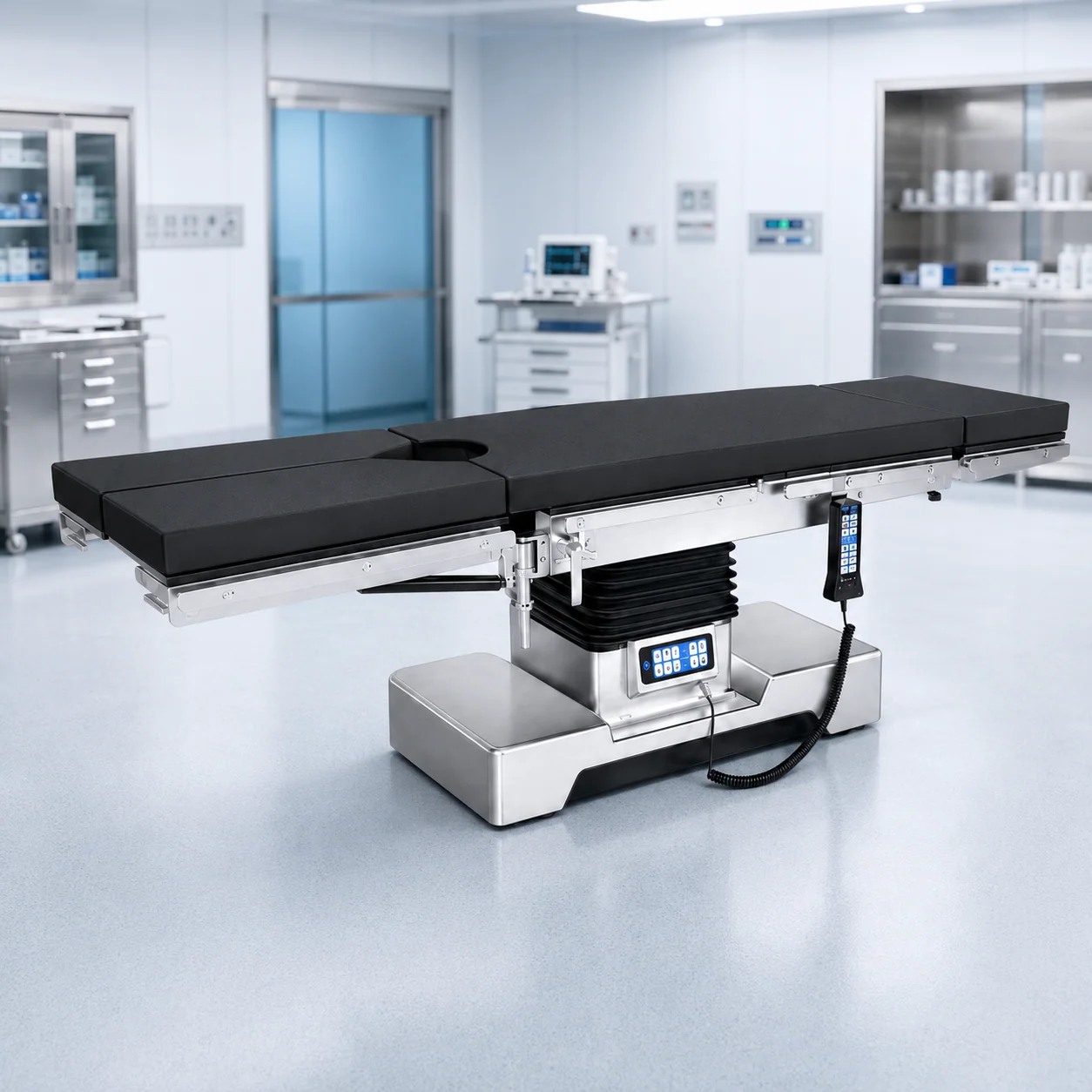
A surgery bed is commonly used as a general search term for a surgical operating table: the adjustable platform positioned in an operating room during surgery. In professional purchasing documents, “operating table” or “surgical table” is usually the clearer product description. The table must suit the procedures, accessories, imaging workflow and room configuration specified by the hospital or tender.
The term surgical bed may also be used by distributors and buyers when searching for operating-room equipment. It should not automatically be treated as a hospital bed for ward use. A surgical table is selected around positioning and operative access; a hospital bed is selected around inpatient accommodation, nursing workflow and longer-duration care.
Keling Medical is a Shanghai-based manufacturer and export and sales centre founded in 1996. Its catalogue covers 310 models across 12 categories, including operating tables, hospital beds, surgical and examination lights, medical towers and emergency trolleys. Buyers can review the wider Operating Tables category and compare it with Hospital Beds when a project requires both operating-room and ward equipment.
Surgery bed versus med surg bed
A med surg bed normally means a medical-surgical hospital bed for general inpatient rooms. It supports ward routines such as patient transfer, nursing access and bedside care. A surgery bed, by contrast, is part of the operating-room setup and must be assessed against surgical specialties, patient positioning, anaesthesia access and the use of equipment around the table.
The distinction matters in tenders. A request for “beds” may cover several departments, but the technical schedules are different. Ask the project team to separate operating tables from inpatient beds, examination tables, obstetric tables and transport trolleys. This prevents an apparently similar product category from being quoted against the wrong clinical or operational requirement.
| Procurement question | Surgery bed / operating table | Med surg bed |
|---|---|---|
| Primary location | Operating room or surgical suite | Inpatient ward or medical-surgical unit |
| Main selection focus | Positioning, access, imaging and controls | Ward care, transfer, nursing and patient accommodation |
| Typical purchasing document | Operating-table technical specification | Hospital-bed technical specification |
| Compatibility review | Surgical accessories, imaging and room layout | Mattresses, rails, lifts and ward infrastructure |
If the buyer needs both product groups, Keling’s hospital project solutions can provide a starting point for discussing the equipment scope. The final quotation should still identify each model, configuration and intended department separately.
Main types of surgical bed to compare
Mechanical hydraulic surgical tables
Mechanical or hydraulic tables can be considered where the project values a straightforward operating mechanism and does not require the same control architecture as a fully electric table. The catalogue includes the 3001 Series Operation Table, described as a “Mechanical Hydraulic Surgical Table,” and the 3009A & 3009C & 3009D Operation Table, described as a “Hydraulic Pneumatic Surgical Table.”
Before selecting this group, confirm how each required movement is controlled, what accessories are included, the operating height range and the available positioning functions in the written quotation. Do not assume that two hydraulic tables have identical movement ranges or accessory interfaces simply because they share a broad product category.
Electric and electro-hydraulic surgical tables
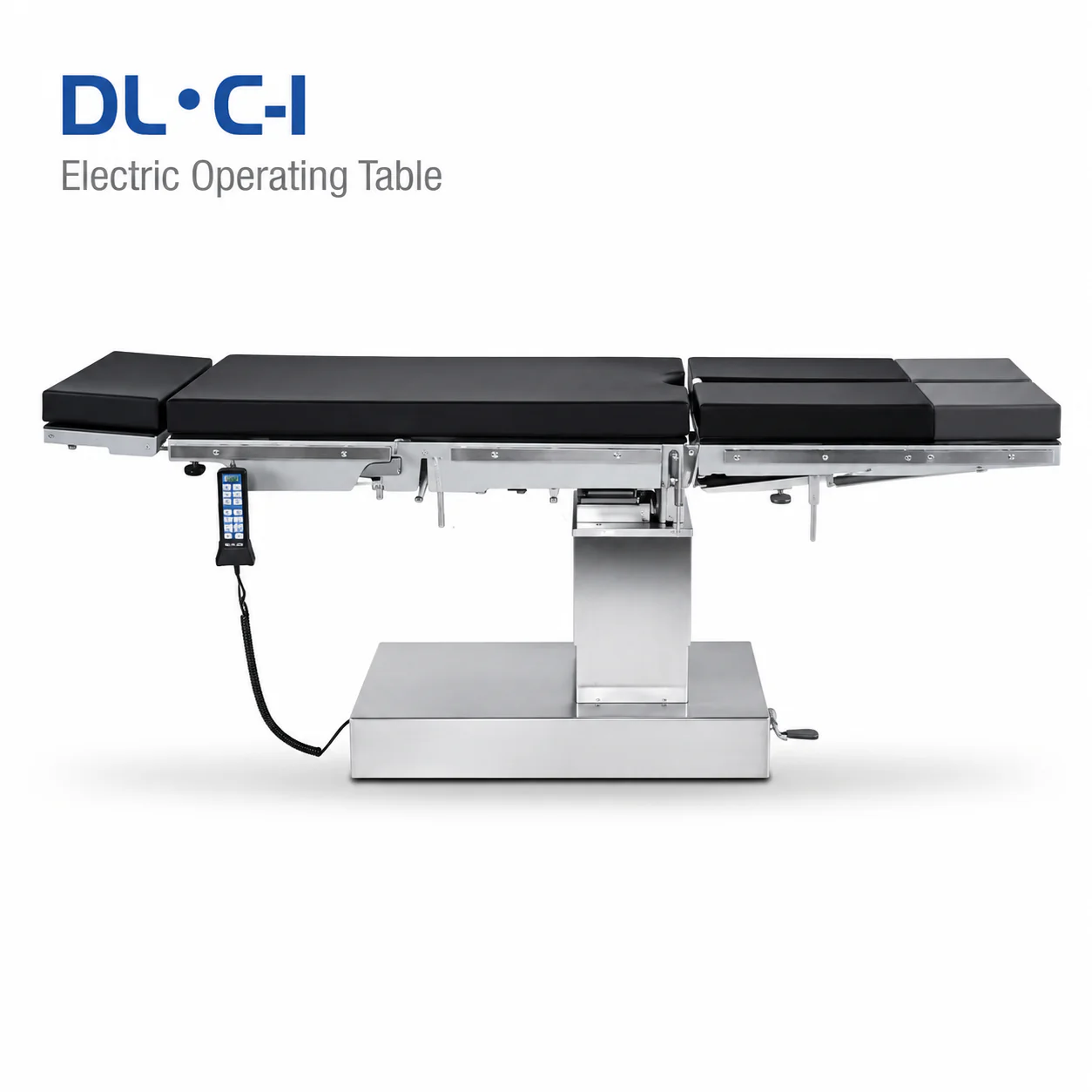
Electric tables may be preferred when the hospital’s workflow requires powered adjustment and a specified control arrangement. Keling’s catalogue includes the DL-A Electric Operating Table, described as a “Full-Electric Surgical Table,” and the DL-C Electric Operating Table, described as an “Electric Hydraulic Surgical Table.”
For higher-specification operating rooms, the catalogue also includes models with more specific descriptions. The KL-D-III Electric Operating Table is described as a “Multi-Position Electro-Hydraulic Surgical Table,” while the KL-D-IA-I Electric Operating Table is described as a “Super Low-Level Electro-Hydraulic Surgical Table.” These descriptions help narrow the shortlist, but the buyer should request the complete technical schedule rather than relying on the model title alone.
Tables for imaging and orthopaedic workflows
Imaging access and orthopaedic positioning should be treated as explicit procurement requirements. The catalogue includes the DL-C-I Electric Operating Table, described as an “Electric Surgical Table with Longitudinal Slide.” It also includes the KL-D-III-I Electric Operating Table, described as a “Carbon Fiber 304 SS Electro-Hydraulic Surgical Table,” and the KL-D-III-III Electric Operating Table, described as a “Carbon Fiber C-Arm Orthopedic Surgical Table.”
A buyer evaluating these models should confirm imaging equipment dimensions, access requirements, radiolucent sections where applicable, accessory compatibility and the exact configuration offered. The procurement team should also check whether the room’s floor plan, anaesthesia position and mobile equipment routes support the selected table.
Specialty tables
Not every “surgical bed” requirement is a general operating-table requirement. Obstetric, gynaecological and orthopaedic departments may need dedicated equipment. Keling lists manual and electric obstetric tables, including the KL-2D Electric Obstetric Table, described as an “Electric Gynecology Delivery Table,” as well as the KL-FS-I Electric Gynecological Table, described as an “Electric Obstetric Surgical Table.”
For orthopaedic procedures, the catalogue includes the KL-6B & KL-6D Orthopaedic Traction Frame, described as a “Fracture & Dislocation Surgery” frame. These products should be evaluated against the department’s procedure list and accessories, not compared directly with a general-purpose operating table on price alone.
How to choose a surgery bed for a hospital project
1. Define procedures and departments
Start with the intended procedures, room type and expected equipment sharing. A general operating room may need a different configuration from an orthopaedic, obstetric or imaging-supported room. Record whether the table is for a new hospital, replacement programme, mobile surgical suite or tender package. This information helps the manufacturer recommend a relevant shortlist without treating every surgery bed as interchangeable.
2. Compare movement and positioning requirements
Create a movement checklist based on the tender specification. Items may include height adjustment, back or leg section movement, Trendelenburg-related requirements, lateral positioning, longitudinal movement, tabletop configuration and control method. The catalogue identifies different operating-table designs, but the exact movement ranges, angles, dimensions and load specifications must be confirmed per model in the quotation.
Also check whether the required position can be achieved with the listed accessories. A table may appear suitable from its general description but fail to meet the project requirement if a head section, traction frame, side support or imaging accessory is not included.
3. Review imaging and access needs
If the operating room uses a C-arm or other imaging equipment, confirm clearance, table construction, imaging access and the usable area required by the department. Models described for longitudinal slide, carbon-fibre construction or C-arm orthopaedic use may be appropriate starting points, but the purchasing team should request drawings and configuration details before approving a substitute.
Room access is equally important. Confirm door dimensions, lift capacity, final installation route, power supply and service access. These are project-planning questions rather than product-label assumptions, and they should be resolved before shipment.
4. Evaluate controls, power and backup requirements
Compare manual hydraulic, pneumatic, electric and electro-hydraulic arrangements according to the hospital’s operating model. For electric products, request the control method, power requirements, backup arrangement and included controls in writing. For manual or hydraulic products, confirm the operating mechanism and the movements available without powered adjustment.
The procurement file should state whether the quoted configuration includes the mattress, clamps, supports, straps, remote control, hand control or other accessories. If the tender specifies a particular accessory set, list each item individually so that the technical and commercial offers can be checked consistently.
5. Check cleaning, maintenance and service
Ask for the construction and surface information needed by the infection-control and biomedical-engineering teams. Confirm how the tabletop, mattress and accessories are cleaned, what replacement parts are available, and which components require scheduled inspection. Request product documentation, operating instructions, packing information and warranty terms as part of the tender response.
For export projects, clarify installation responsibility, training scope, spare-parts availability and the process for technical support. Keling operates an ISO 13485 quality system; company materials also state ISO 9001 and CE. Regulatory scope and validity should be confirmed per model and destination market in the written quotation.
Surgery bed procurement checklist
Before issuing a purchase order, the buyer should confirm:
- Intended department, procedures and operating-room layout.
- Exact model name and configuration, including any model variants.
- Manual, hydraulic, pneumatic, electric or electro-hydraulic operation.
- Required height, positioning, tabletop dimensions and patient-load specification.
- Imaging, C-arm, carbon-fibre or longitudinal-slide requirements where applicable.
- Included accessories and compatibility with existing hospital equipment.
- Electrical supply, controls, backup operation and installation requirements.
- Materials, cleaning instructions, mattress specification and replacement parts.
- Packing, shipping, delivery point, installation and training responsibilities.
- Warranty, after-sales process and documentation supplied for the destination market.
- Regulatory scope and validity confirmed for the exact model and destination market.
This checklist is useful for comparing a surgical bed quotation with competing offers because it separates headline product descriptions from the details that affect installation and daily operation.
How to request a quotation
When contacting a manufacturer or distributor, provide the destination country, hospital or project type, quantity, department, required delivery date and tender deadline. Add the preferred table type, procedure requirements, imaging needs, electrical standard, accessory list and whether installation or training is required. If the project includes a med surg bed package, identify ward-bed requirements separately from operating-table requirements.
Keling supplies B2B customers including distributors, hospital projects and tender buyers. Buyers can use the quotation request page or contact inquiry@shkeling.com and +86 150 0064 9020. Ask for a model-specific technical offer, commercial quotation, lead time, packing details and written confirmation of regulatory scope for the destination market.
A practical shortlist may include a mechanical hydraulic option, a full-electric option and a model selected for imaging or specialty surgery. Compare them against the same checklist, then confirm the final configuration before purchase. For additional equipment planning, the complete product range covers 12 catalogue categories beyond operating tables.