What is a low bed?
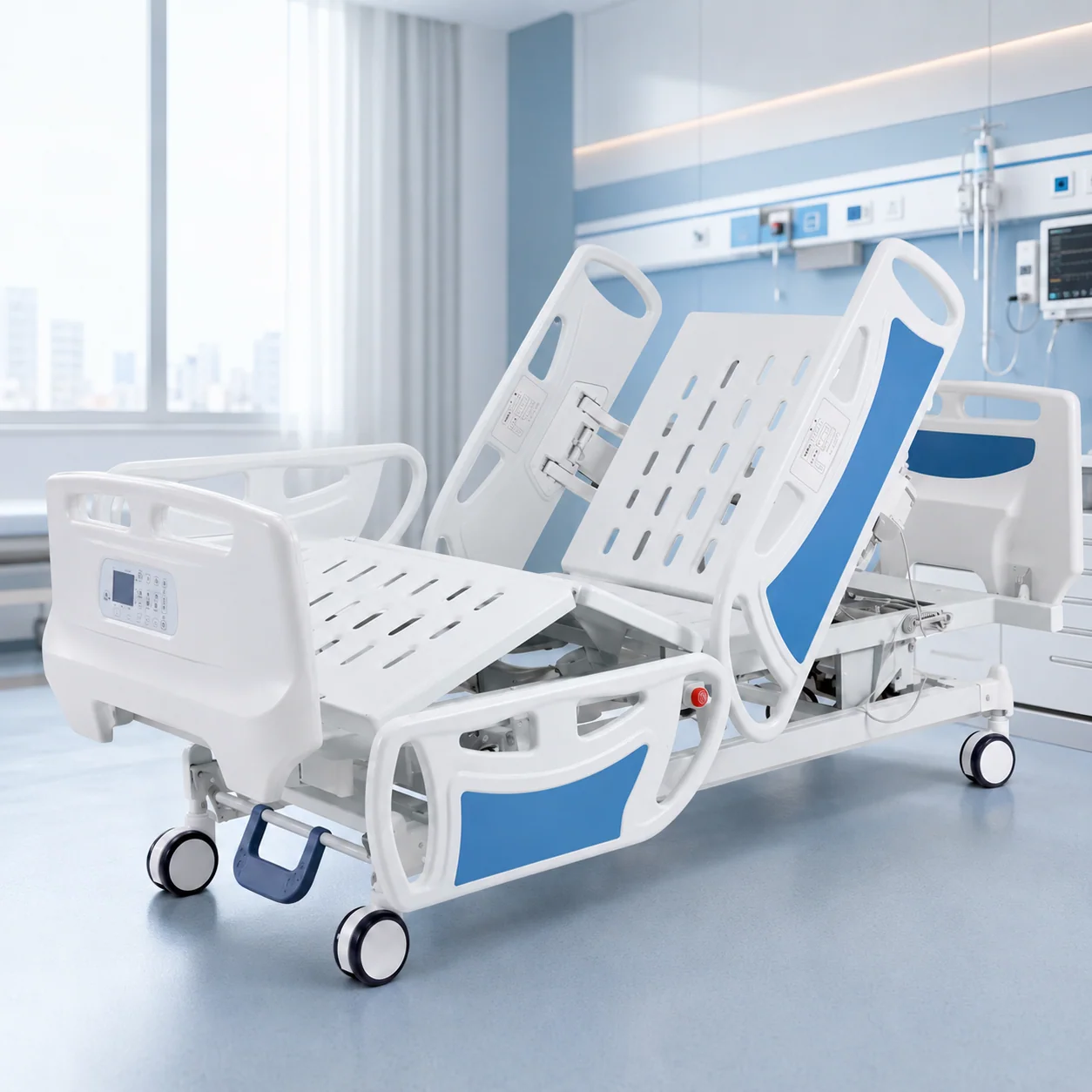
A low bed is a hospital bed engineered to place the mattress platform closer to the floor than a conventional hospital bed. The procurement objective is usually to make bed access, transfer workflows and room-side care easier to manage. The exact meaning of “low” is not universal: hospitals should specify the required minimum platform height in the tender or purchase specification rather than relying on the product name alone.
For a buyer, the key distinction is between a genuinely height-adjustable bed and a fixed-height bed that only appears low because of its frame design. A height-adjustable model can offer more flexibility for nursing, examination, transfer and cleaning tasks, while a fixed-height design may have fewer mechanisms and a simpler operating requirement.
The supplied Keling catalogue identifies several electric and manual hospital-bed configurations, but the product summaries do not state minimum low-bed dimensions. Therefore, low-height status, adjustment range and any destination-market configuration must be confirmed for the exact model in the written quotation.
Low to the ground beds: what should buyers compare?
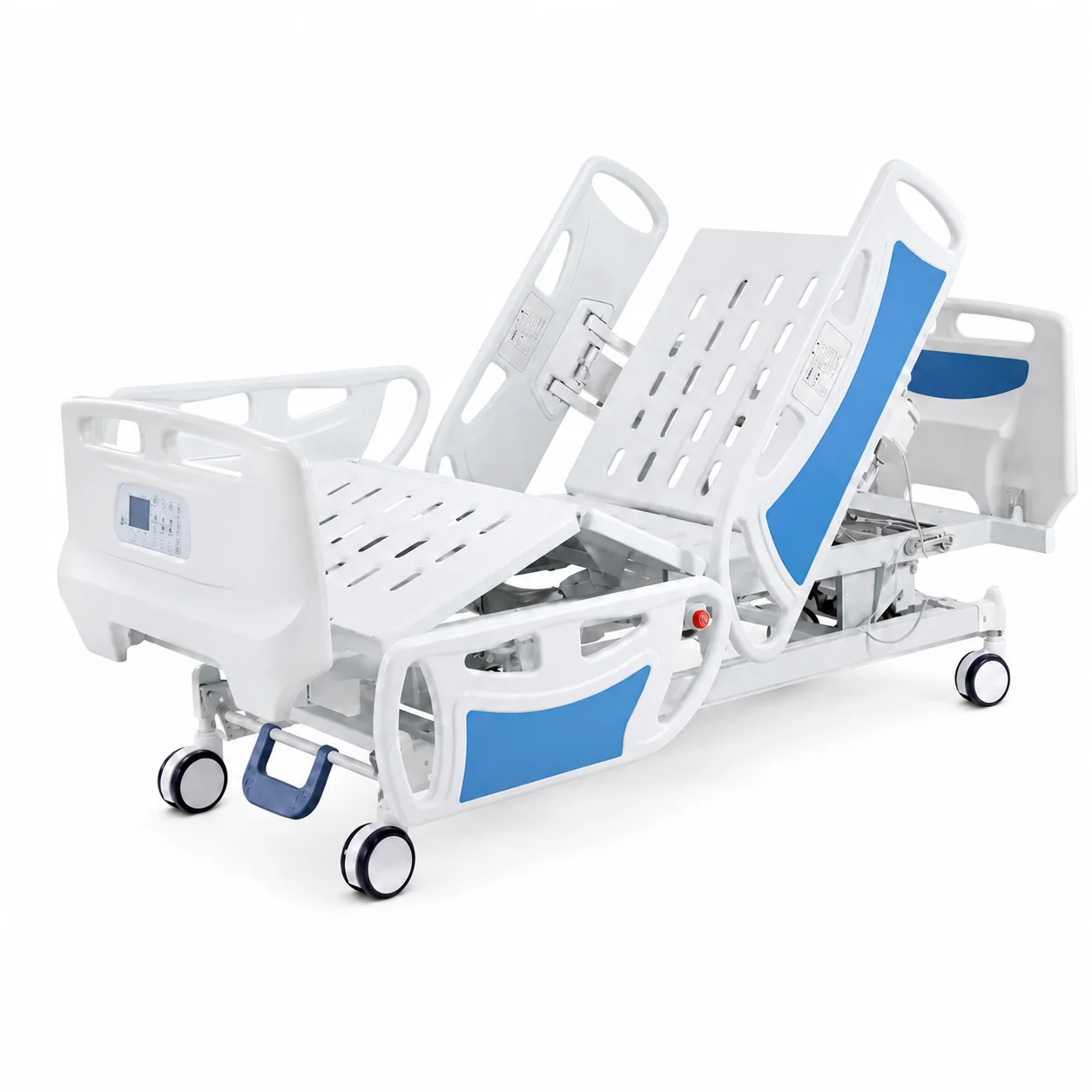
The phrase low to the ground beds can describe different products across suppliers. Before comparing prices, procurement teams should request a dimensional drawing showing the mattress platform’s minimum height, maximum height, overall bed height and clearance beneath the frame. These measurements are more useful than a general “low bed” label.
A practical comparison should include:
- Minimum platform height: Confirm the height from the floor to the mattress support surface, not only to the bed frame.
- Height-adjustment method: Determine whether adjustment is electric, manual or unavailable. Electric adjustment may support centralized operation, while manual adjustment can reduce electrical dependencies.
- Backrest and knee-rest functions: Check whether the bed supports only backrest positioning or includes additional articulated sections.
- Trendelenburg function: If required for the project, confirm that it is included in the quoted configuration rather than assumed from the category.
- Load information: Ask for the applicable safe working load or maximum load and confirm how it is defined.
- Castors and braking: Verify castor size, locking arrangement and compatibility with the hospital’s floor conditions.
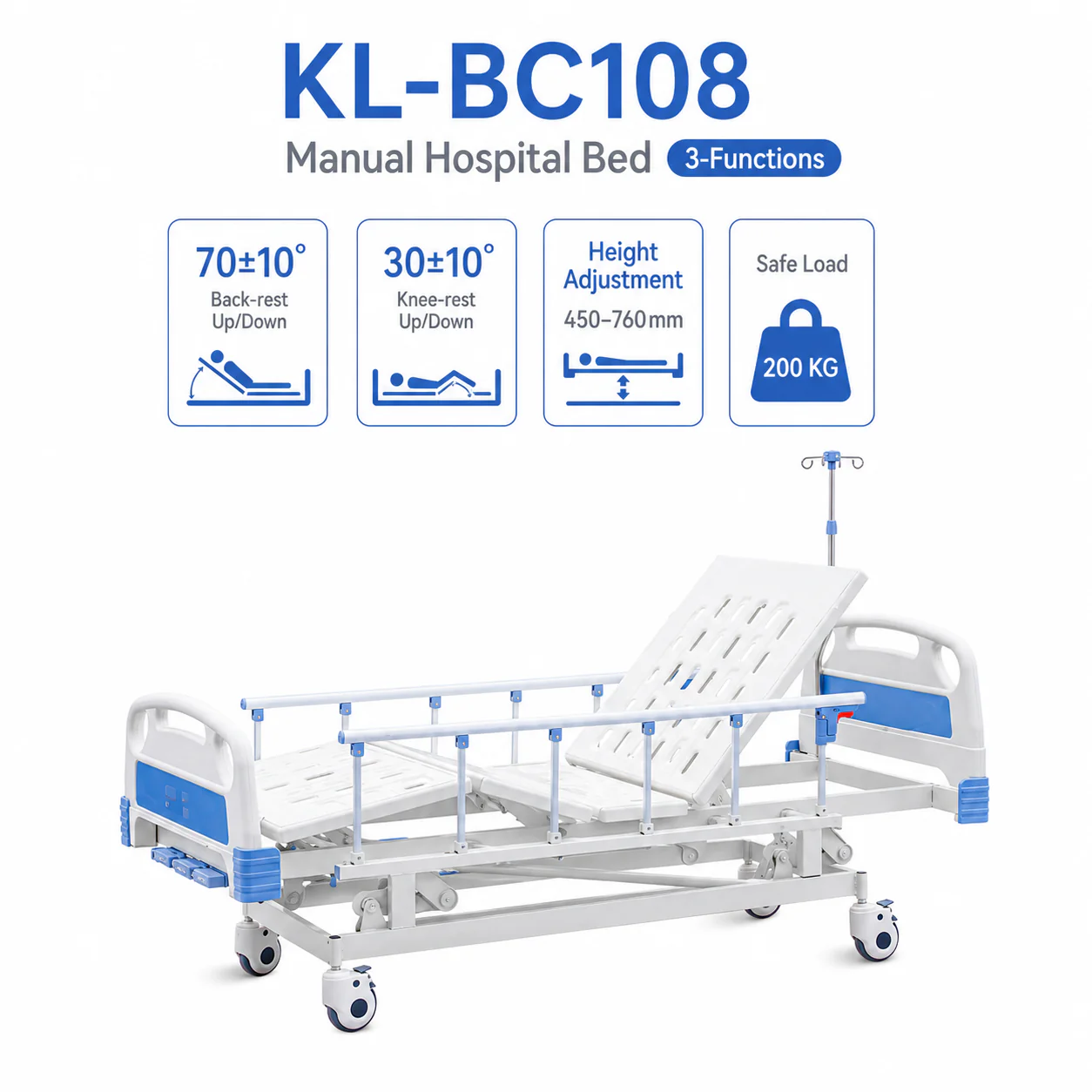
The catalogue includes KL-BC108 Manual Hospital Bed, described as a 3-Function Manual Bed with Height Adjustment. It may be relevant when a project requires manual height adjustment, but its low-bed suitability and dimensional range still need confirmation in the quotation.
Low height beds and bed-side safety features
Low height beds should be evaluated as a complete system, not only by their lowest measurement. Side rails, headboards, footboards, castors, mattress thickness and accessories can all change the effective height and the usable space around the bed.
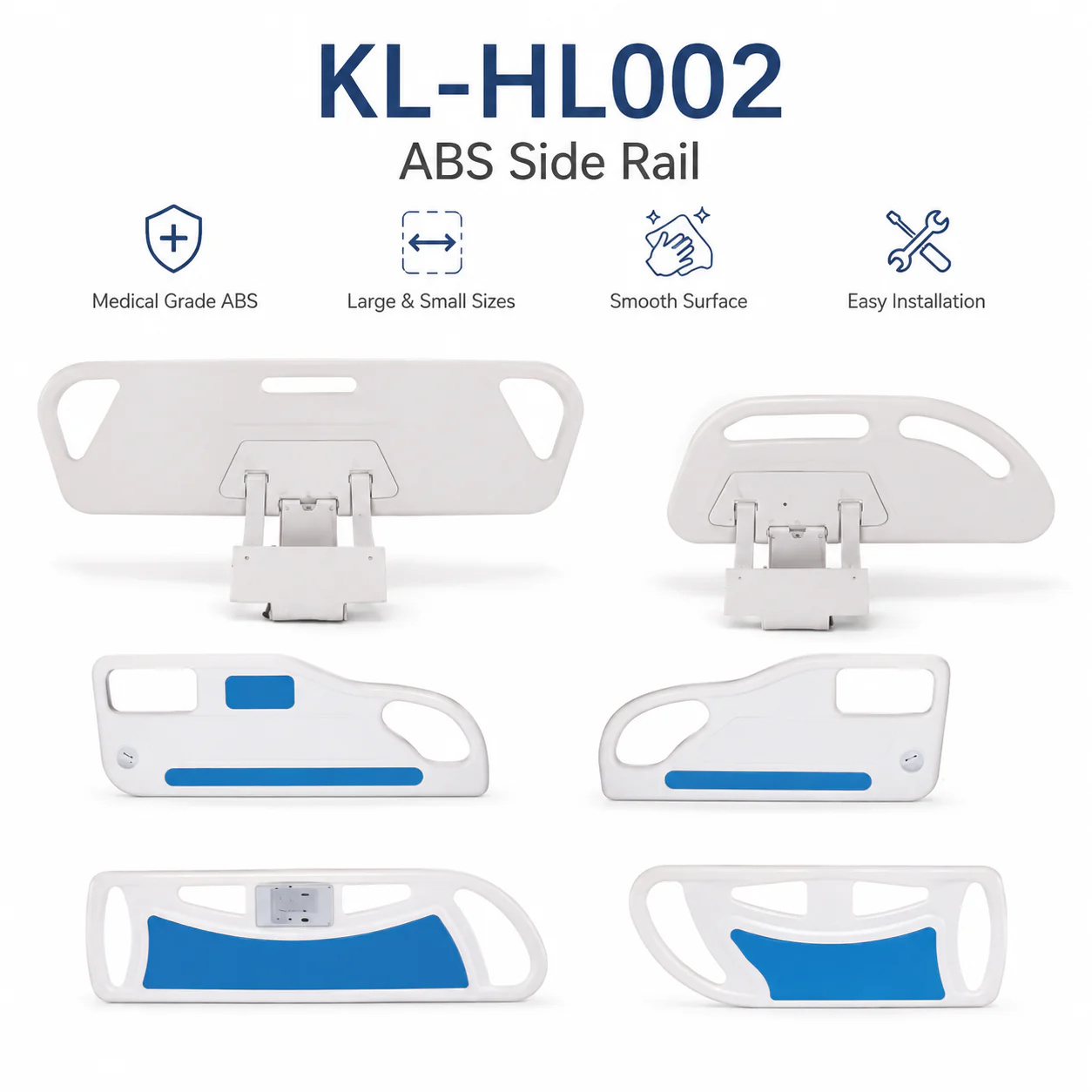
Side rails require particular attention. Procurement officers should confirm whether rails are included, their operating method, their material, and whether they are compatible with the selected mattress and bed deck. Keling’s catalogue lists KL-HL001 Bed Rail and KL-HL002 ABS Side Rail as separate hospital-bed components. If a bed and rail are ordered separately, the quotation should state compatibility and installation responsibility.
The mattress is also part of the height calculation. A mattress with a greater thickness can reduce the practical benefit of a low platform, while an unsuitable mattress may affect deck articulation or side-rail positioning. For related specifications, see the Pressure Relief Mattress: Hospital Buyer’s Guide and Air Mattress for Hospital Bed: Buyer’s Guide.
Electric or manual low bed: which configuration fits the project?
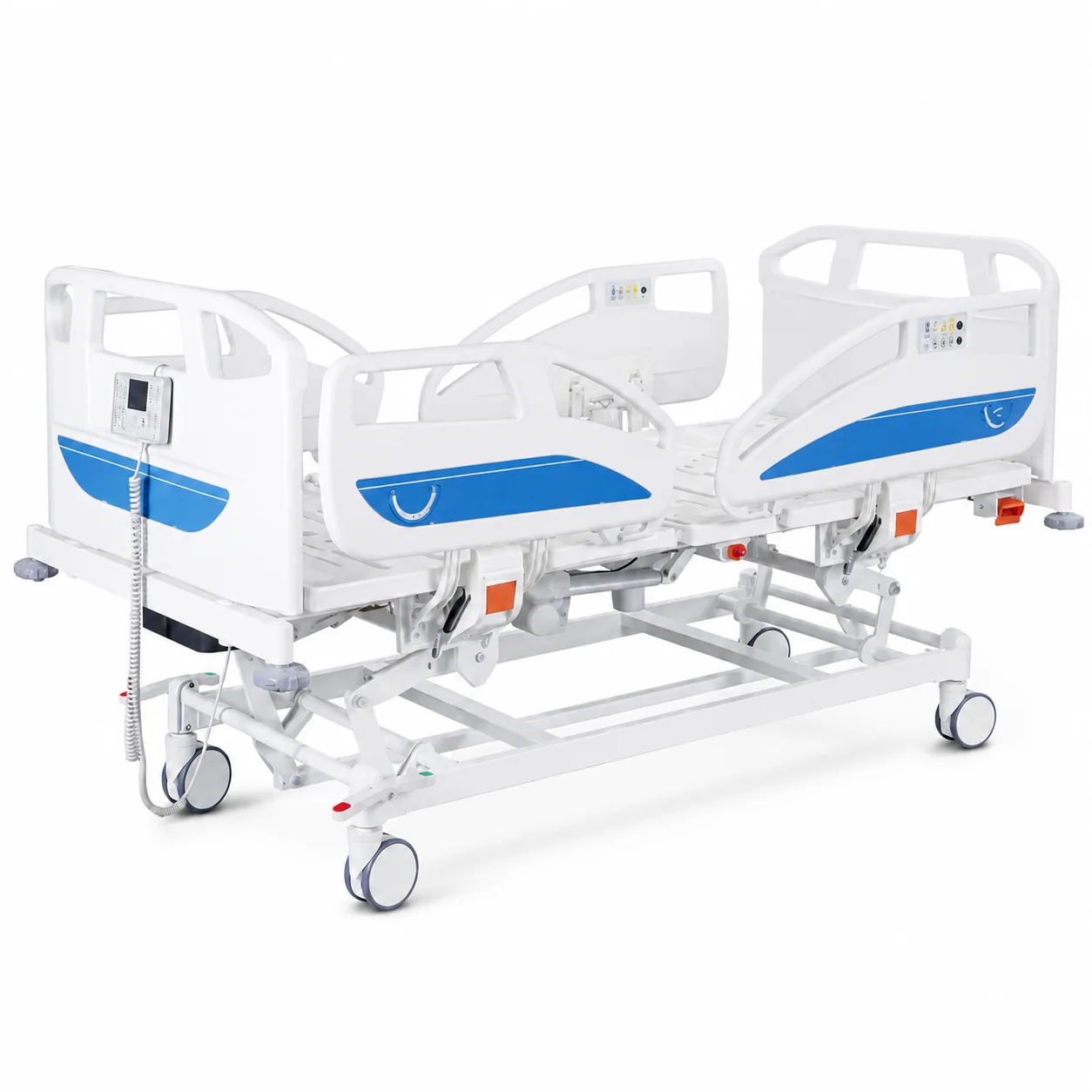
The choice between electric and manual operation depends on the facility’s workflow, infrastructure, staffing model and budget—not simply on the lowest purchase price.
Electric hospital beds
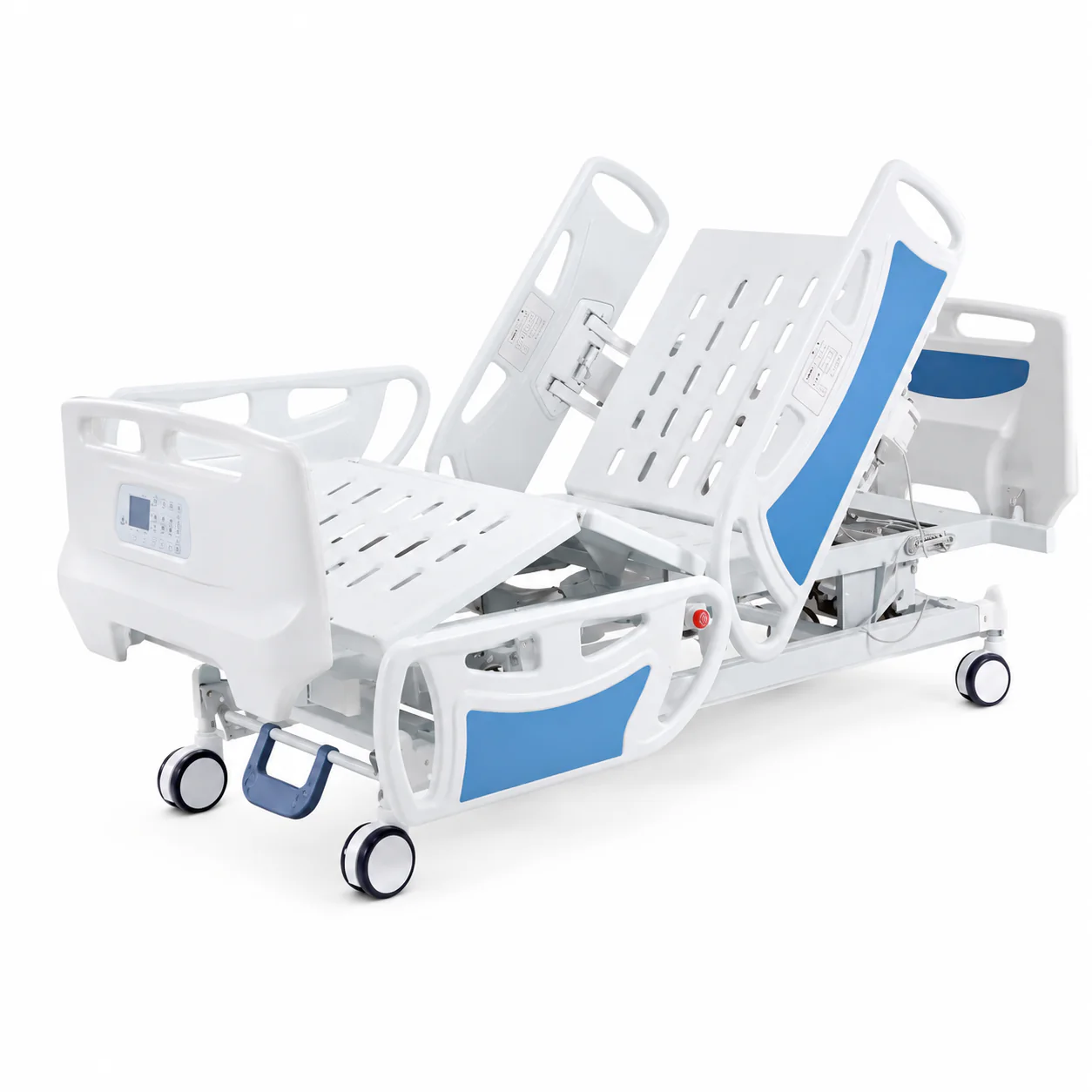
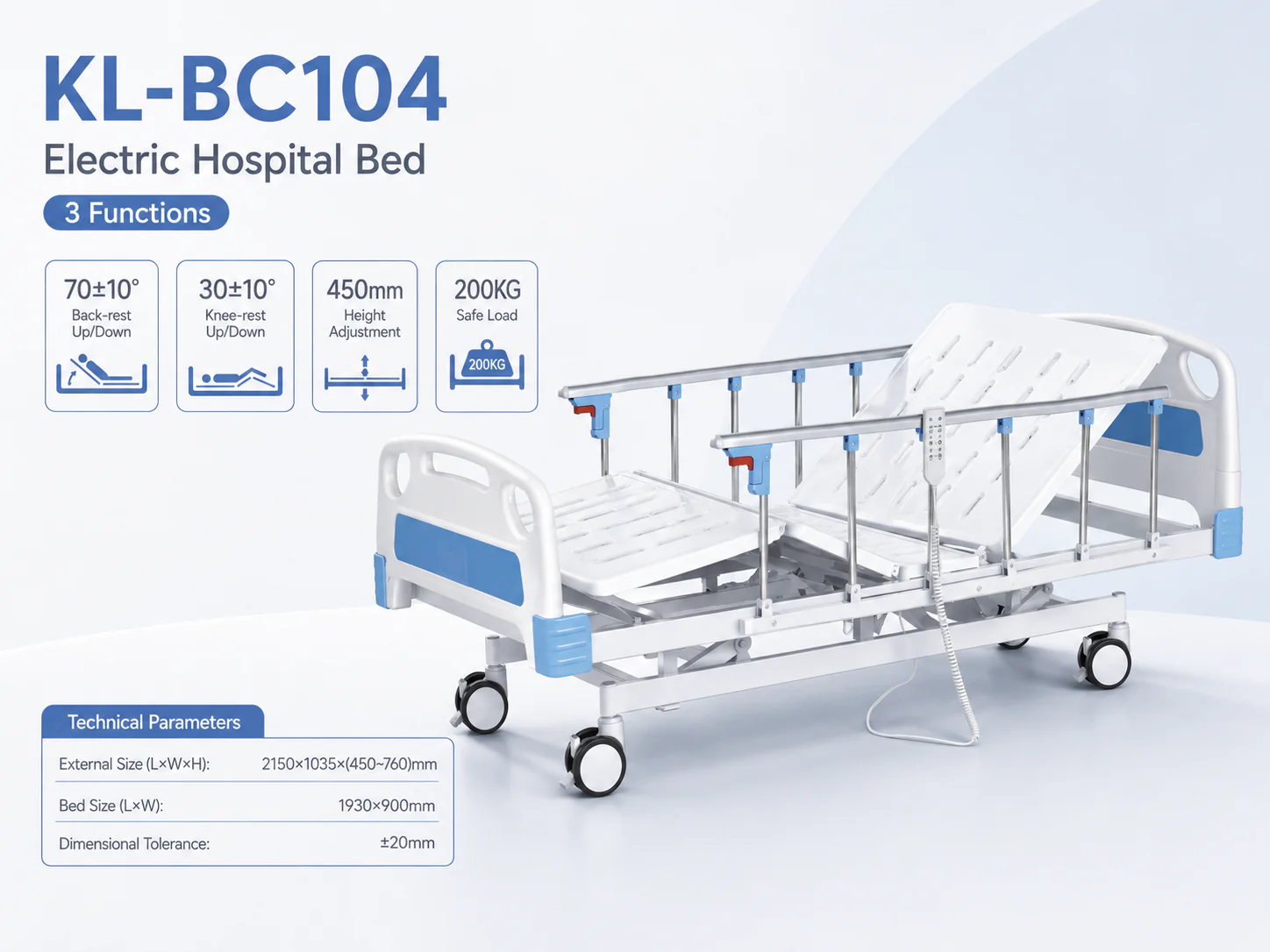
Electric adjustment can be useful where staff need to change bed height or positioning frequently. Buyers should confirm the number of functions, hand-control arrangement, emergency or CPR-related features where required, power input, plug standard, backup arrangements and cleaning requirements. The catalogue includes KL-BC101 Electric Hospital Bed, described as a 5-Function ICU Bed with CPR, and KL-BC104 Electric Hospital Bed, described as a 3-Function Electric Bed 200 kg.
These descriptions identify the listed functions and load information, but they do not by themselves prove that either model meets a buyer’s specified low-height range. Request the technical drawing and configuration confirmation before including a model in a tender response.
Manual hospital beds
Manual beds may be appropriate where electrical access, maintenance capacity or operating simplicity is a priority. The trade-off is that height and positioning adjustments may require more staff effort and may be less convenient in high-throughput environments. Confirm the crank locations, adjustment range, number of functions and clearance for operation beside the bed.
For projects requiring more complex positioning, buyers may also review the Surgery Bed Buying Guide for Hospital Procurement. A surgery bed and a ward low bed have different application requirements, so the product category should match the intended department.
Mattress, rails and accessories: complete the specification
A low bed is rarely purchased as an isolated frame. The tender or purchase order should identify the complete configuration, including mattress, side rails, headboard, footboard, castors, IV stand and any other accessories. This prevents compatibility questions from being left until installation.
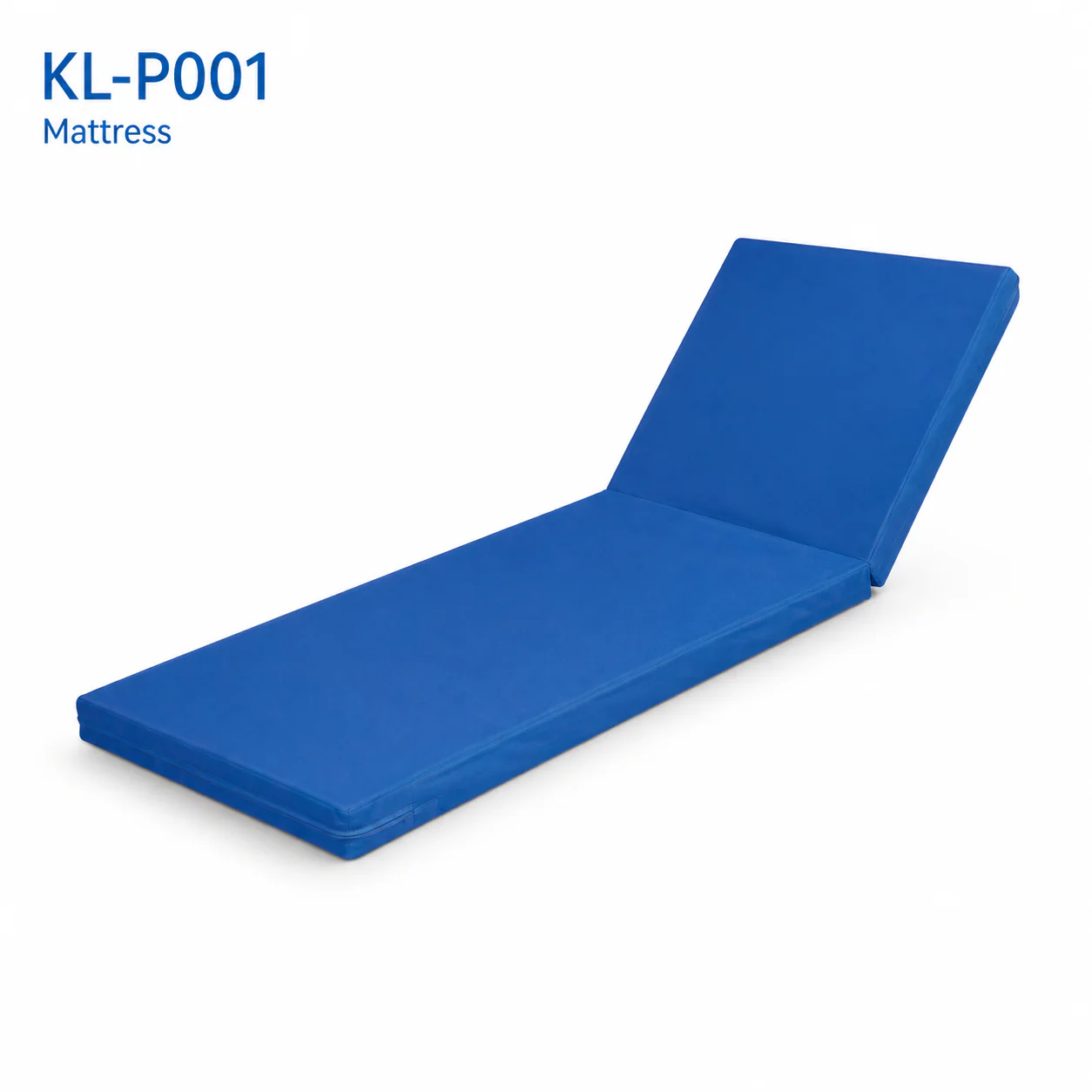
Keling lists KL-P001 Mattress, described as a hospital bed mattress with PU or sponge fill, together with KL-P002 Mattress, described as a segmented hospital bed mattress with palm-fibre fill. The buyer should request dimensions, thickness, fire or hygiene documentation where applicable, and compatibility with the selected bed platform.
For ward workflow, an overbed table may also need to fit beneath or beside the chosen bed at its lowest and highest positions. The Overbed Table Buying Guide for Hospital Procurement can help structure that accessory review.
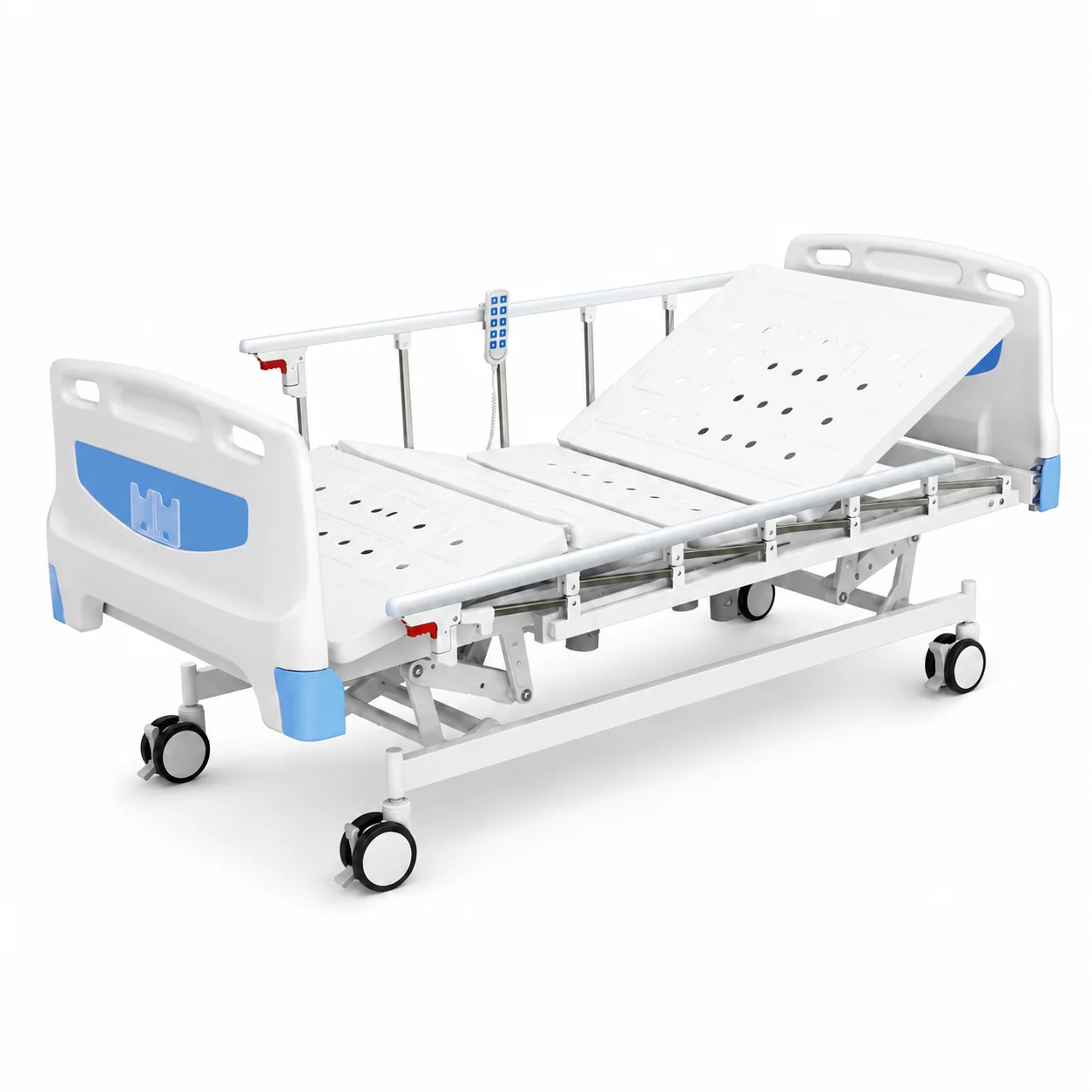
Low bed procurement checklist
Before comparing supplier quotations, provide a written requirement covering:
- Application and department: ward, ICU, rehabilitation, long-term care or another defined area.
- Required platform range: minimum and maximum mattress-support height, with the measurement method stated.
- Bed functions: backrest, knee-rest, height adjustment, Trendelenburg and CPR-related requirements where applicable.
- Load requirement: the required load value and the supplier’s definition of that value.
- Side-rail specification: type, material, folding or lowering method and compatibility with the mattress.
- Mattress specification: dimensions, thickness, material and whether a pressure-relief or air-mattress system is required.
- Electrical requirements: voltage, frequency, plug type, protection details and documentation for the destination market.
- Mobility: castor configuration, central or individual locking, and floor compatibility.
- Delivery scope: assembly, installation, user documentation, spare parts and after-sales support.
- Regulatory documentation: confirm the applicable scope and validity for the exact model and destination market in the written quotation.
Keling Medical is a Shanghai-based manufacturer and export and sales centre founded in 1996. Company materials state that it manufactures 310 models across 12 categories and operates an ISO 13485 quality system; they also state ISO 9001 and CE. The buyer should request model-specific documentation rather than treating company-level information as approval for every product.
How to request a low bed quotation
A useful request for quotation should include the target platform height, bed functions, quantity, destination country, voltage and plug requirements, preferred accessories, delivery term and installation expectations. If the project is a tender, attach the dimensional and documentation schedule so every supplier responds against the same criteria.
Keling’s hospital-bed range is available through the Hospital Beds product category. For a project-specific response, submit the requirement through the request for quotation page or contact inquiry@shkeling.com or +86 150 0064 9020. Ask the quotation to identify the exact model, low-height dimensions, configuration, included accessories, packaging, lead time and destination-market regulatory scope.