What is a patient table in a hospital setting?
A patient table is hospital furniture positioned beside or over a bed to provide a practical work or dining surface. Depending on the design, it may be used for meals, reading, paperwork, small personal belongings or routine bedside tasks. In procurement documents, the term can overlap with overbed table, bedside table or hospital table, so the intended configuration should be defined before quotation.
The key distinction is not only appearance. A table used beside a fixed-height bed has different requirements from one intended to move across a bed or wheelchair. A table for general ward use may be specified differently from equipment for intensive care, rehabilitation or long-stay areas. Buyers should therefore describe the use location, bed type and expected workflow rather than relying on the product name alone.
For a wider review of related equipment, see the hospital furniture and bed accessories buyer’s guide. It can help procurement teams separate a patient table from bed rails, mattresses, IV stands and other accessories included in a room package.
Patient table requirements to define before purchase
A clear technical schedule reduces quotation revisions and makes tender comparison easier. The following points are useful for a patient table specification.
Dimensions and usable surface
State the required table length, width and overall height range, including any clearance needed for the mattress, bed rails or patient transfer. The usable surface matters more than the external frame size. If the table must fit over a bed, confirm the minimum and maximum clearance, the location of the base and whether it can be positioned from either side.
Also define whether the top should be flat, divided, tilting or fixed. A tilting surface may be useful for reading or writing, but it can reduce the stable area for meals or equipment. A fixed top is simpler to operate, while an adjustable design may serve more bed types. These are procurement trade-offs, not clinical performance claims, and should be matched to the hospital’s workflow.
Height adjustment and movement
Confirm how the height is adjusted and whether the mechanism can be operated from both sides. The specification should identify the adjustment range in the quotation rather than using general wording such as “adjustable.” Buyers should also request the table’s locked and unlocked operating conditions, because movement during use can create handling and safety concerns.
For mobile designs, check castor diameter, number of castors, braking arrangement and the required floor conditions. A table intended for smooth ward floors may not perform the same way on thresholds, uneven surfaces or carpet. If the item will be moved frequently between rooms, ask for packaging dimensions and assembled or unassembled delivery status.
Load requirement and frame construction
Define the expected static load and whether the requirement applies to the tabletop, drawer, shelf or complete unit. This is particularly important when comparing heavy duty hospital bed tables with lighter bedside furniture. “Heavy duty” should not be accepted as a sufficient technical description; the supplier should state the applicable load value and test or inspection basis in the quotation.
Specify the frame material, tabletop material, edge treatment and resistance requirements for the cleaning products used by the hospital. Smooth, accessible surfaces can simplify routine cleaning, but joints, handles, castors and adjustment points also require review. Ask for maintenance instructions and spare-parts availability before placing a large order.
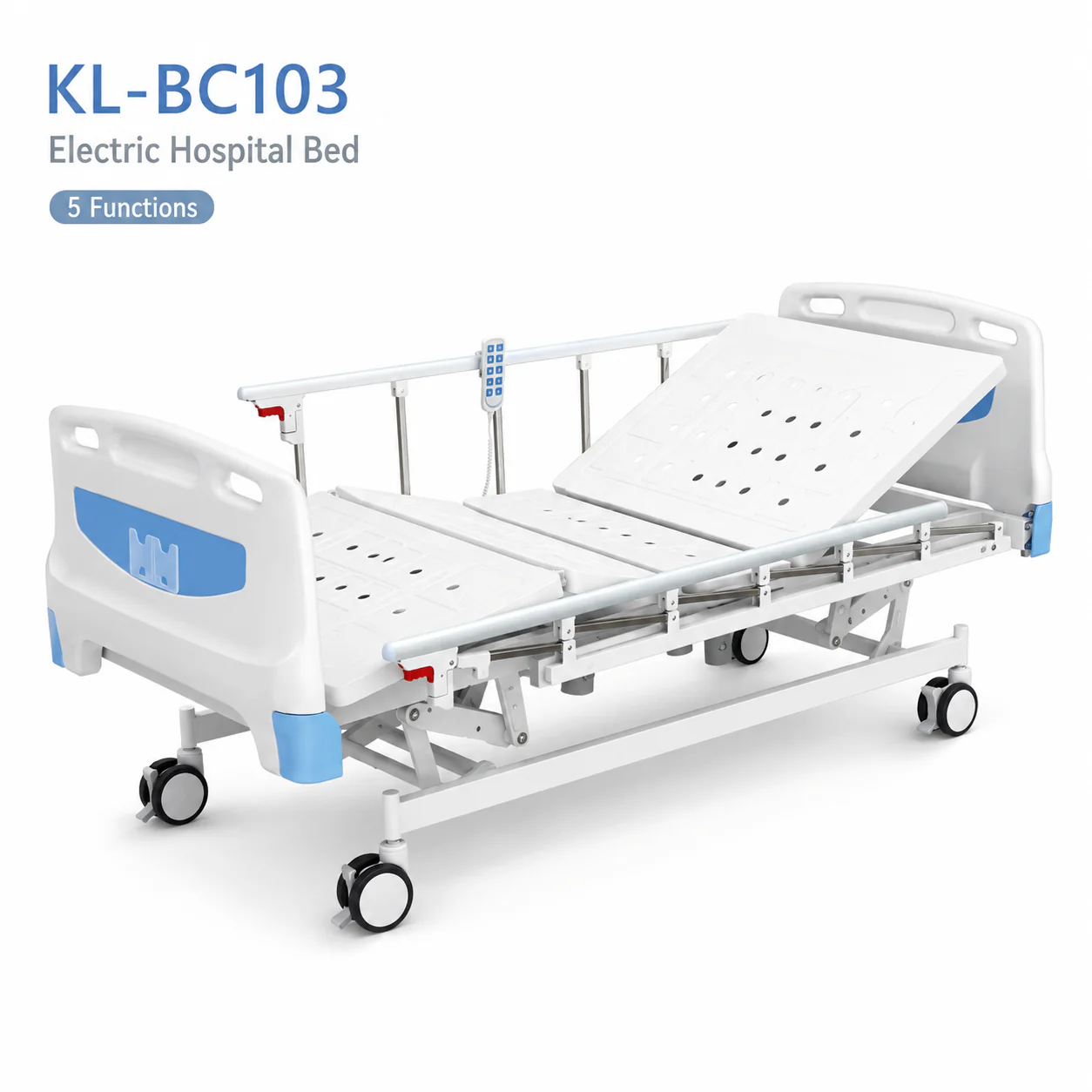
![[KL-BC103 is a 5-function ward bed with a stated capacity of 240 kg, useful for checking bedside compatibility.]](/assets/products/kl-bc103-electric-hospital-bed/kl-bc103-card-clean.webp)
How to compare a hospital table for sale
When searching for a hospital table for sale, procurement teams often receive products with similar photographs but different specifications. A structured comparison should include at least five areas: intended use, dimensions, adjustment, mobility and after-sales support.
First, identify whether the quotation covers a bedside table, overbed table or another configuration. An overbed model may need clearance over the mattress and sufficient base access for the bed’s castors. A bedside model may instead need a compact footprint, storage or a fixed position. For buyers comparing wheeled products, the overbed table with wheels buyer’s guide explains the main questions around mobility and top design.
Second, compare the complete delivered configuration. Check whether castors, brakes, handles, drawers, shelves, protective bumpers and height-adjustment components are included or priced separately. Confirm whether the listed dimensions refer to the product in its lowest, highest, folded or assembled state.
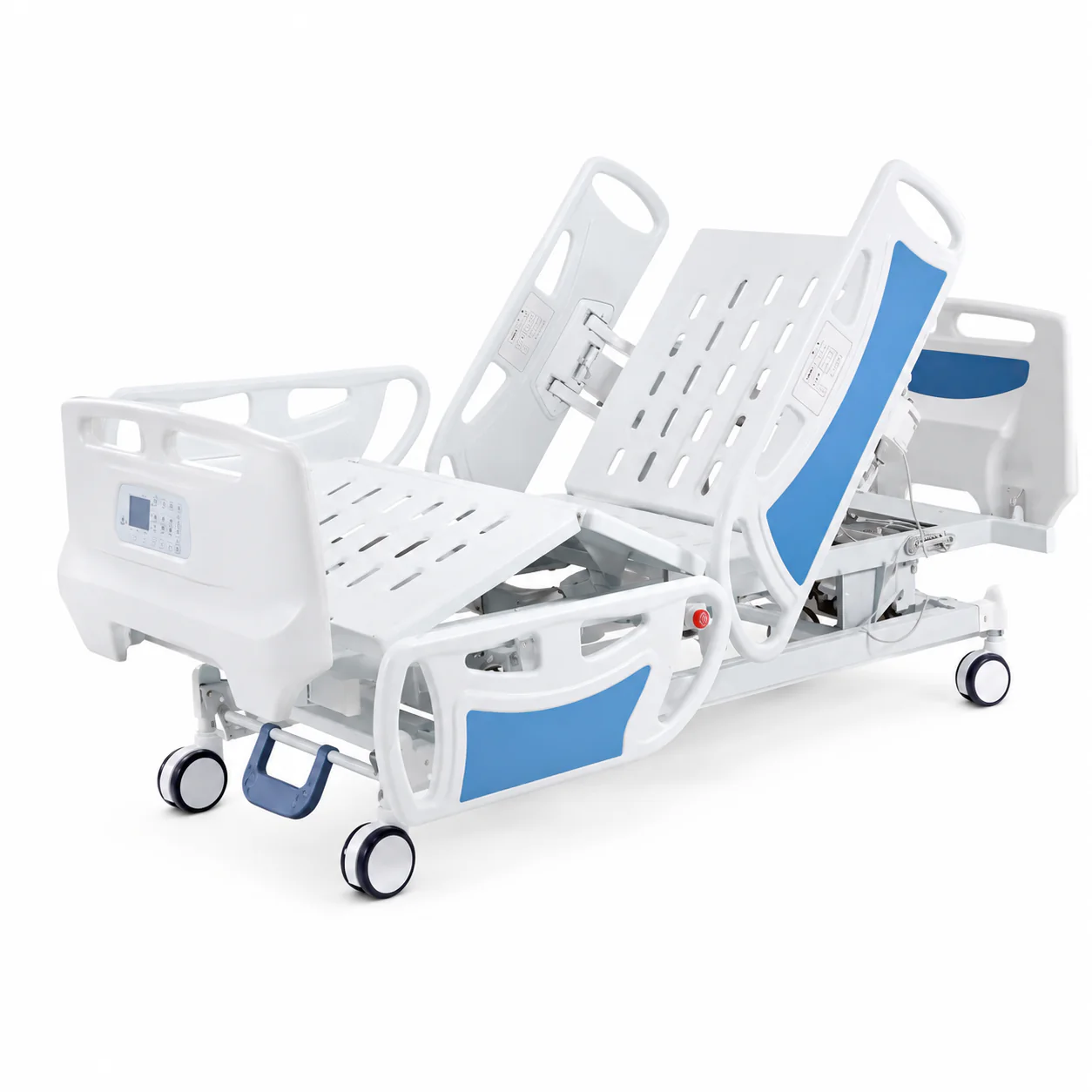
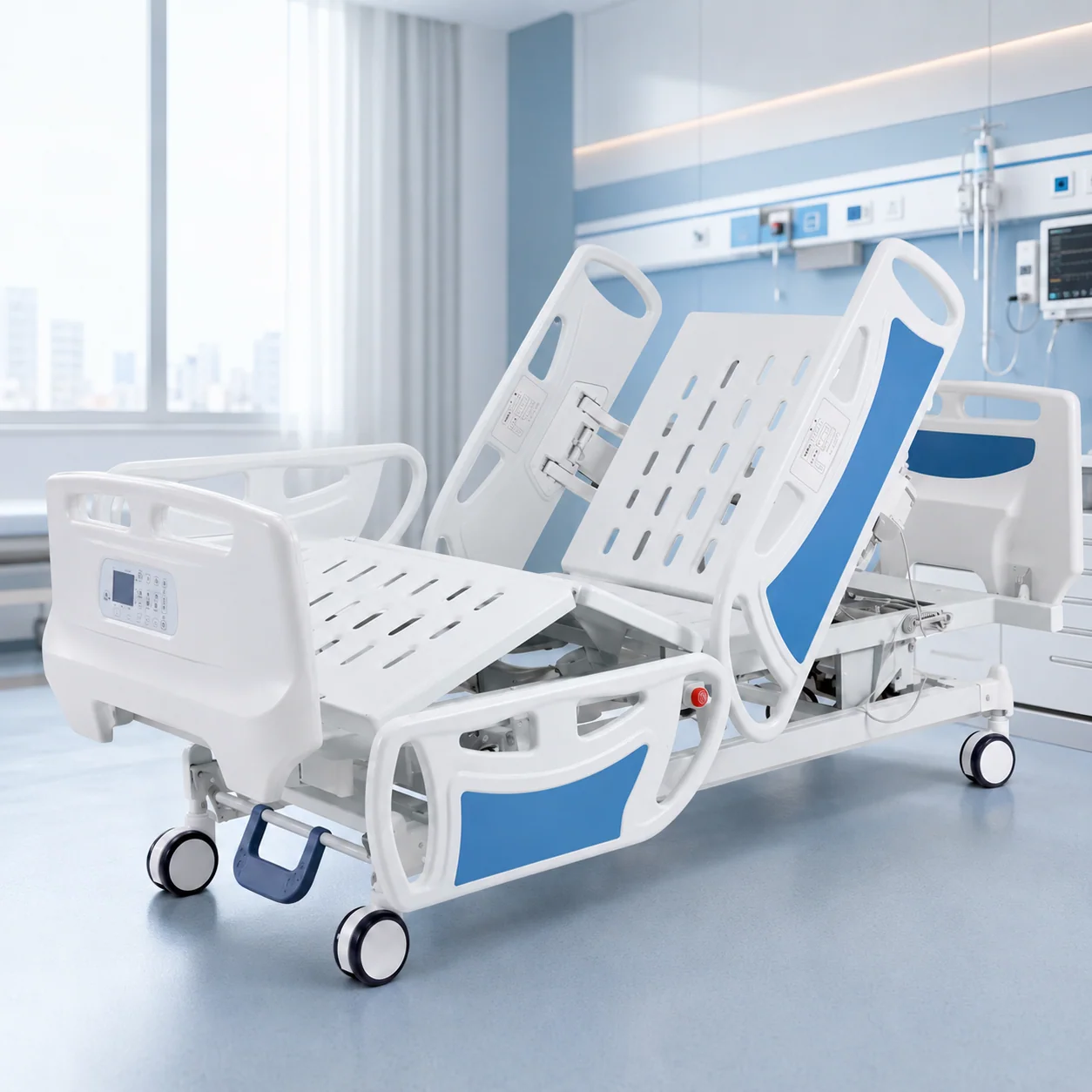
Third, assess compatibility with the hospital bed fleet. Keling’s catalogue includes different bed configurations, including the KL-BC103 Electric Hospital Bed, described as a 5-Function Ward Bed 240 kg, and the KL-BC101 Electric Hospital Bed, described as a 5-Function ICU Bed with CPR. These catalogue descriptions do not establish compatibility with a patient table; the table dimensions and interface should be confirmed against the specific bed models in writing.
Finally, compare service scope. Ask about assembly instructions, user documentation, replacement castors or adjustment parts, packing method, lead time, warranty terms and inspection documents. For a multi-ward project, request one consolidated quotation showing model, quantity, accessories, packing and shipping terms.
Patient table compatibility with hospital bed accessories
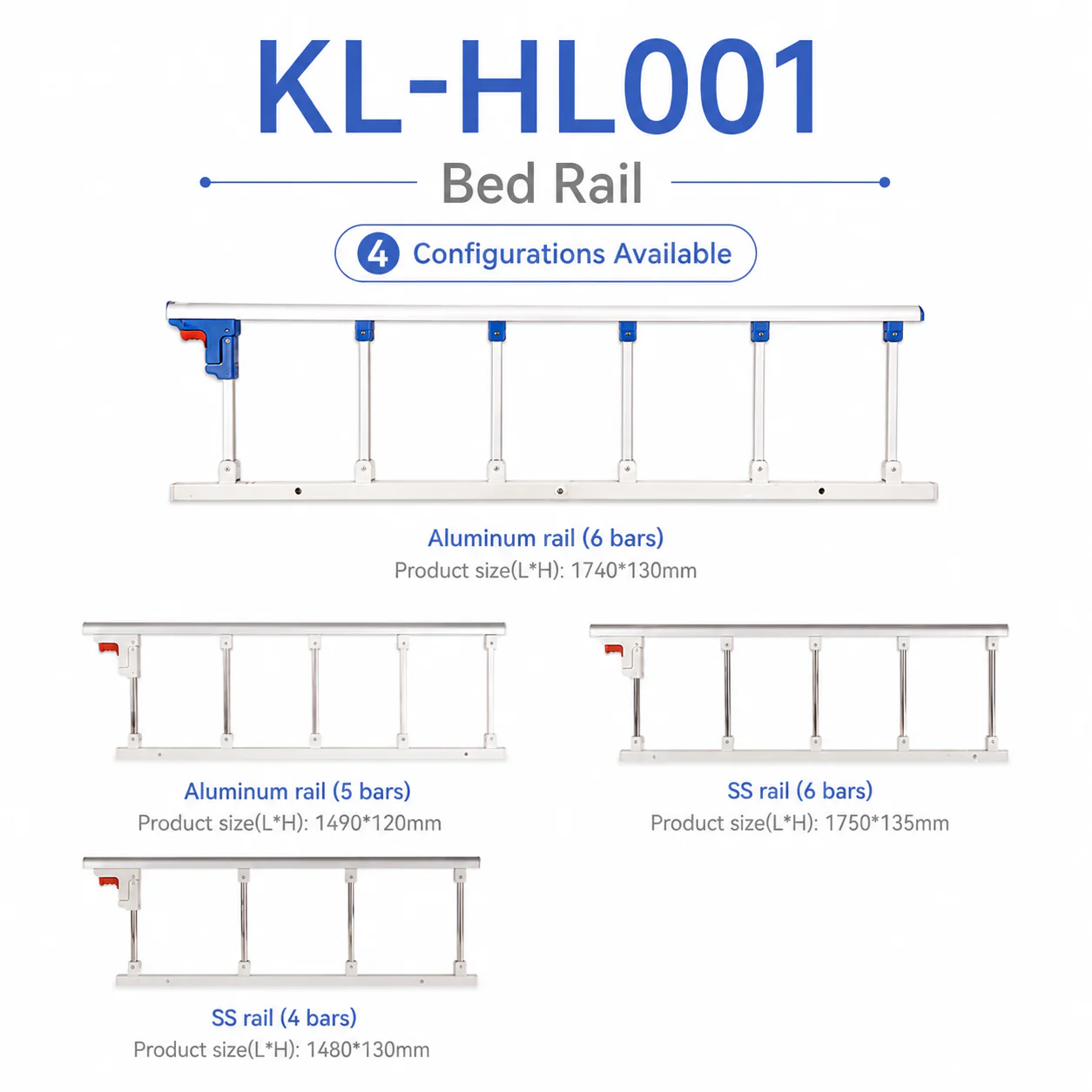
A patient table is usually purchased as part of a wider bed-accessory package. The table should not obstruct bed rails, headboards, IV poles, traction frames or the bed’s movement functions. For example, the KL-HL001 Bed Rail is listed as an aluminum and stainless steel hospital bed side rail. The rail’s position and operation should be considered when checking table clearance, even though the two products perform different functions.
Other package items may include mattresses, bedhead panels, casters and IV stands. Buyers should define whether the patient table must work with one bed model or several models across the project. If the table is expected to move between beds, confirm the widest, highest and lowest relevant configuration rather than checking only one sample bed.
A separate over bed table buying guide for hospitals may be useful when the intended product is specifically designed to pass over the mattress. For projects that need a complete room package, Keling’s hospital bed category provides the relevant bed and accessory catalogue area for cross-checking product families.
What to include in an RFQ for a patient table
A useful request for quotation should include:
- Product type: bedside, overbed, fixed or mobile patient table.
- Intended department: ward, ICU, rehabilitation, examination or another area.
- Required dimensions, height range, tabletop design and minimum clearance.
- Static load requirement and any separate drawer or shelf load requirement.
- Materials, finish, edge protection and cleaning-agent requirements.
- Castor, brake and movement requirements, if applicable.
- Compatible hospital bed models and bed-side operating constraints.
- Quantity, packing preference, delivery destination and target schedule.
- Required documents, inspection arrangements and destination-market compliance scope.
Keling Medical is a Shanghai-based export and sales centre founded in 1996. The company states that it manufactures 310 models across 12 categories and operates an ISO 13485 quality system; company materials also state ISO 9001 and CE. Regulatory scope and validity should be confirmed per model and destination market in the written quotation.
For a project quotation, send the application, dimensions, bed models, quantities and destination to inquiry@shkeling.com or use the request-a-quote page. The sales team can confirm whether the requested patient table configuration is available and identify any required compatibility review.
Final procurement checklist
Before approving a patient table, confirm that the quoted product matches the intended bedside or overbed use, not only the product photograph. Verify the usable tabletop dimensions, height range, load value, movement and braking design, materials, cleaning requirements and compatibility with the hospital bed fleet.
The final purchase file should also include the exact model description, accessories, quantity, packaging, delivery terms, documentation and agreed inspection requirements. This approach helps distributors and tender buyers compare a hospital table for sale on technical and commercial terms while avoiding assumptions based on generic labels such as “adjustable” or “heavy duty.”