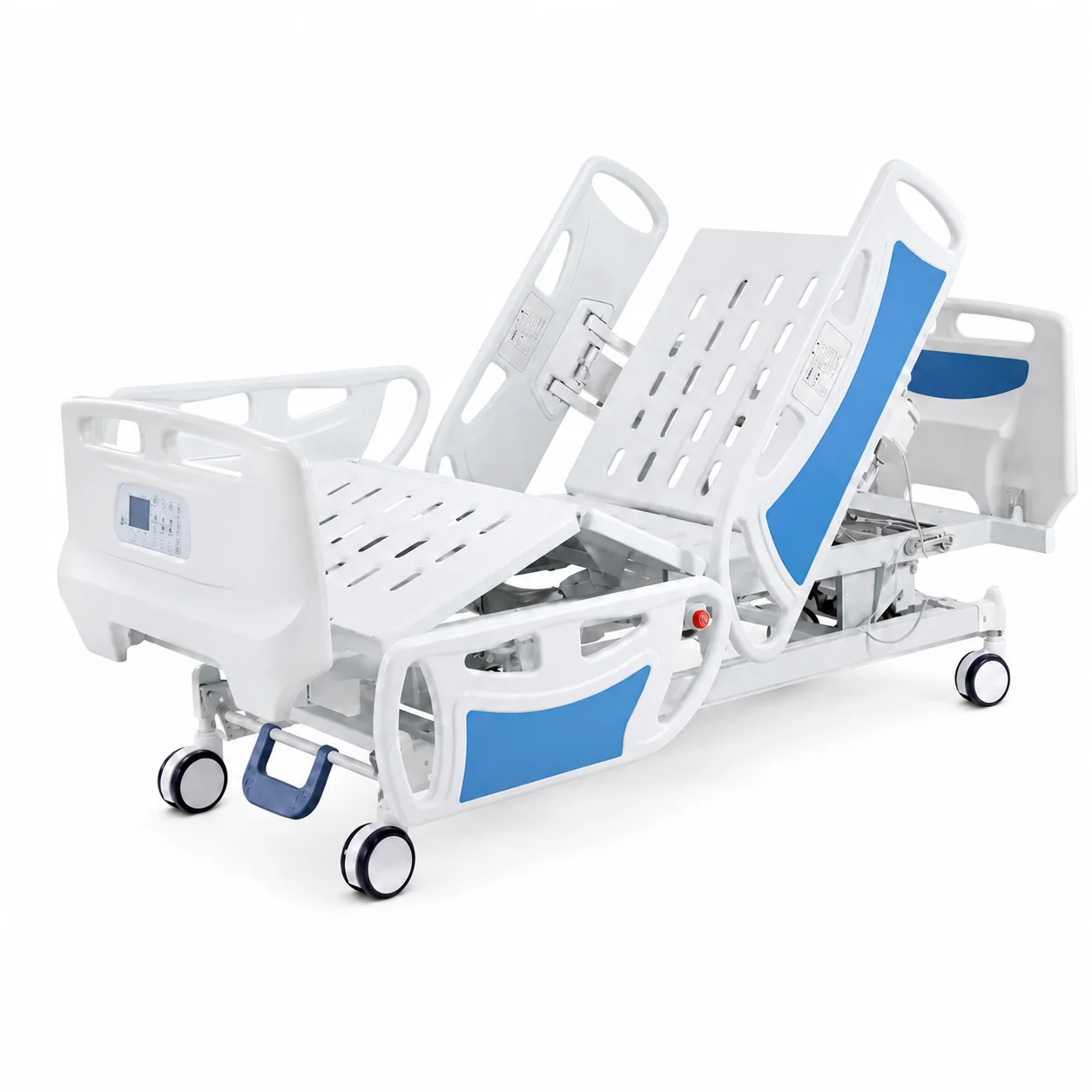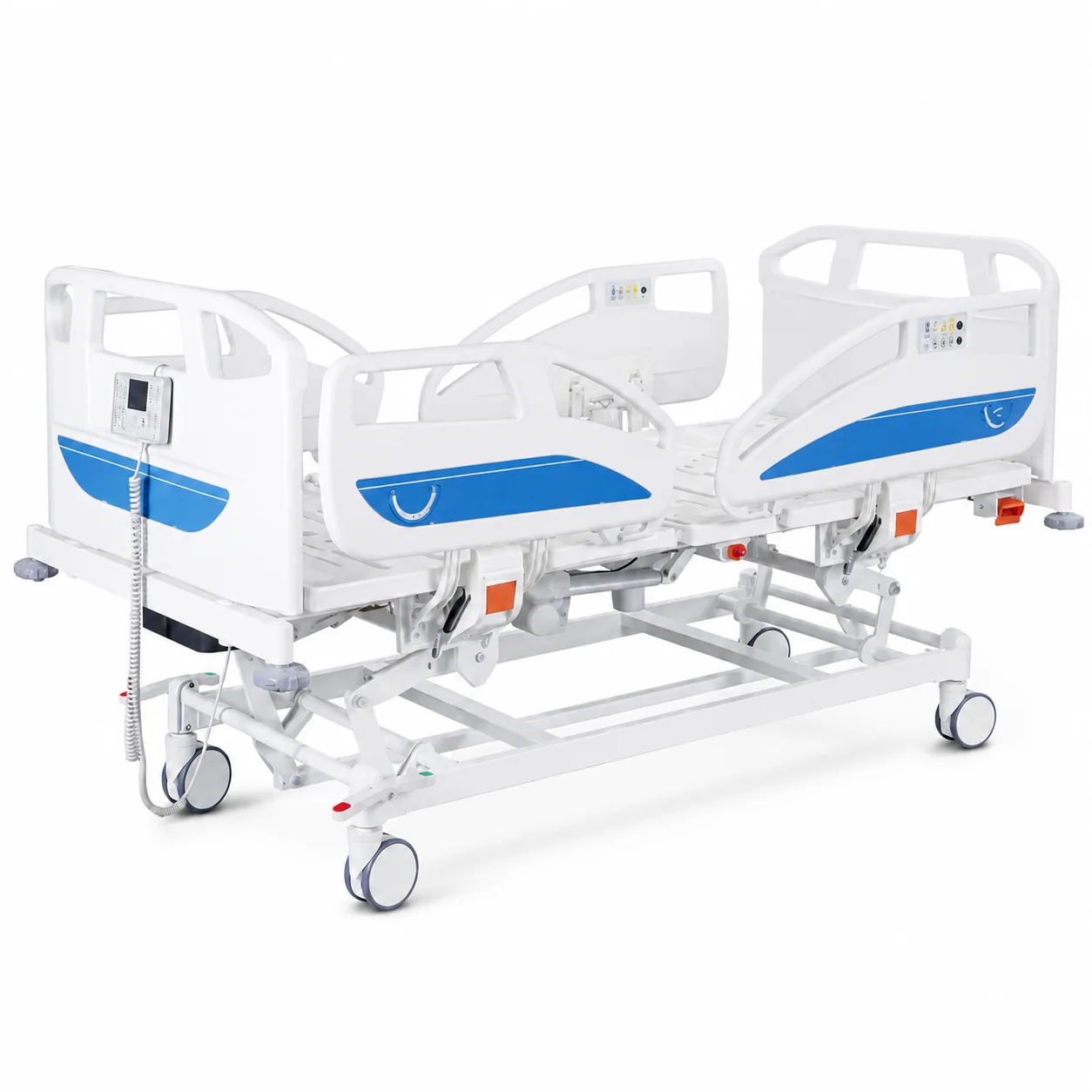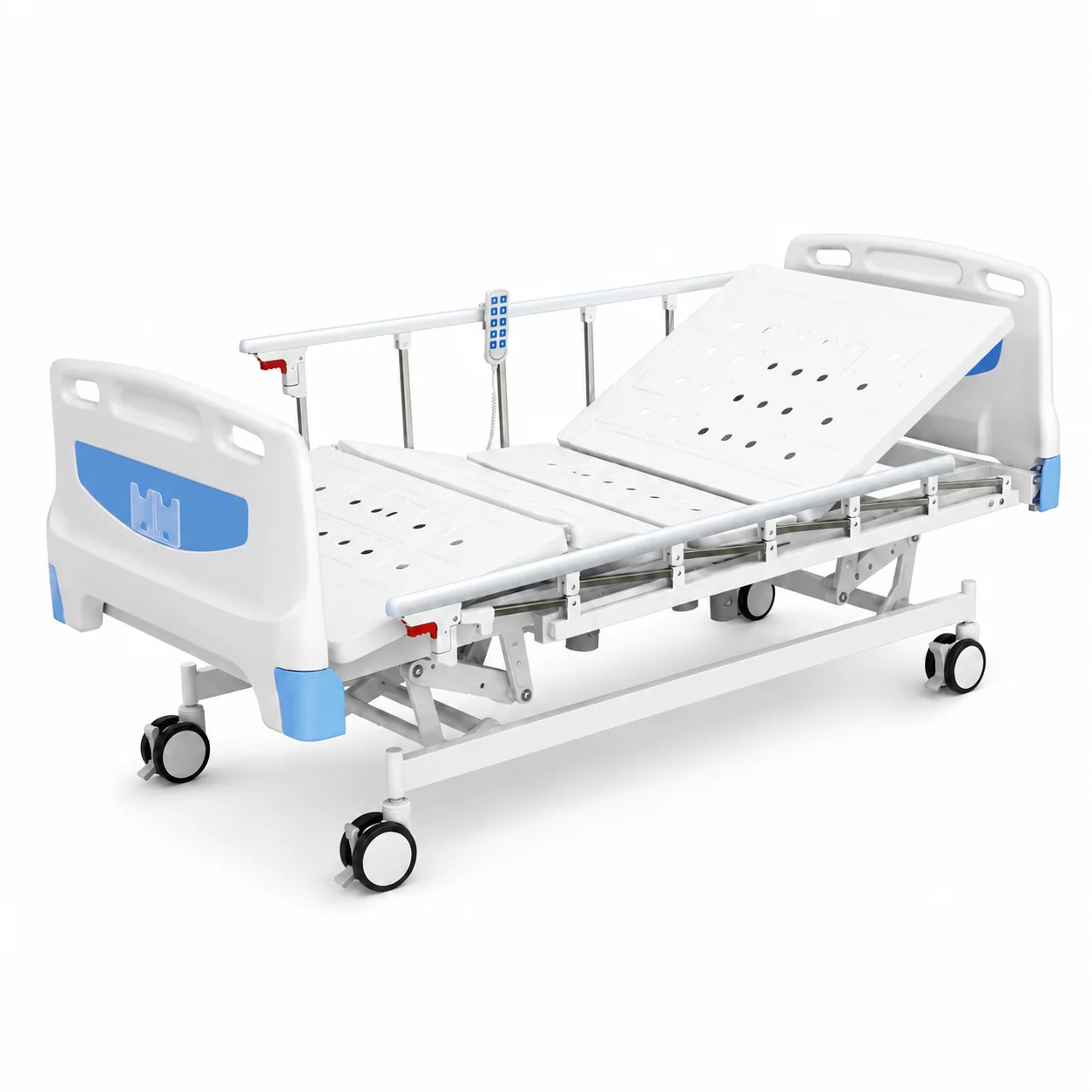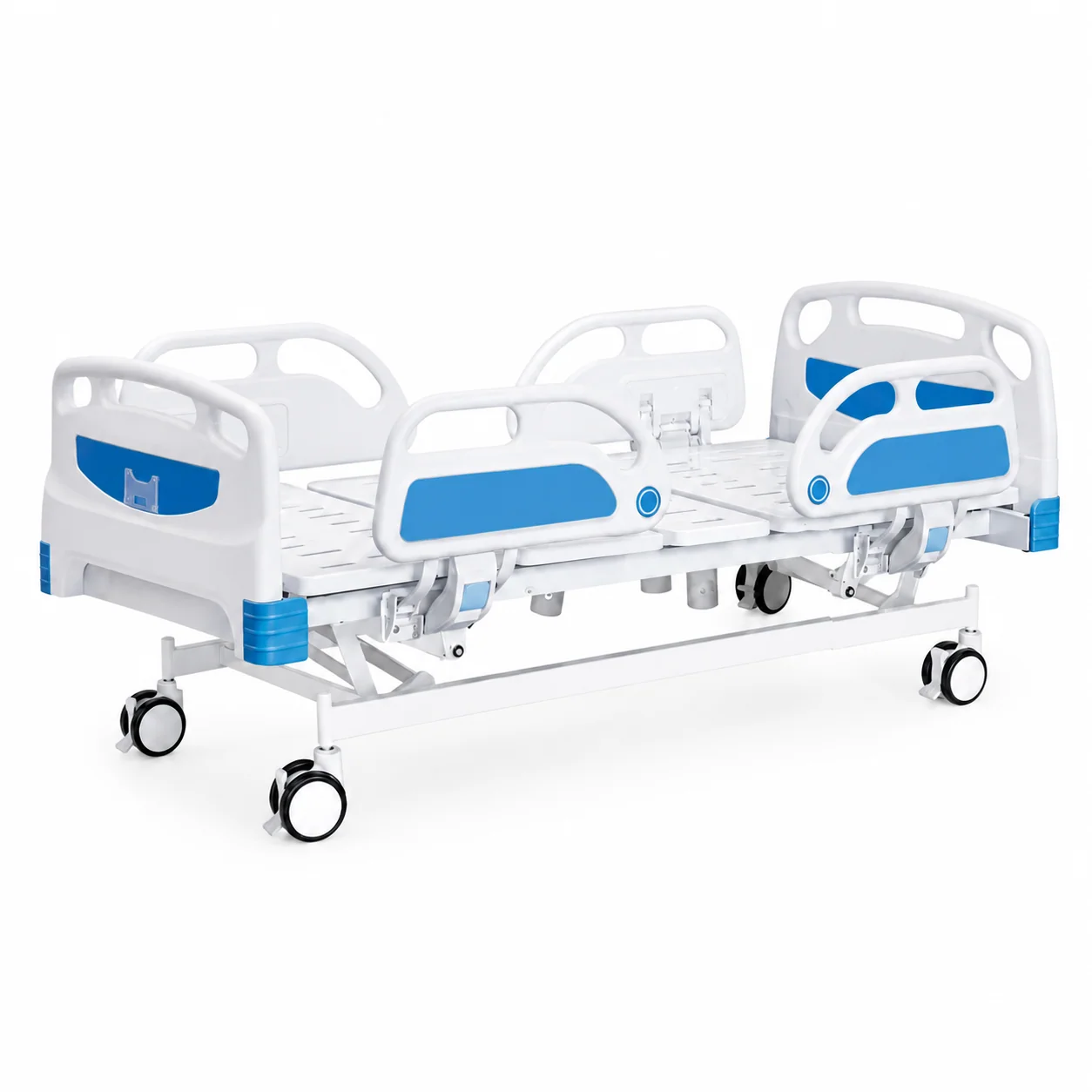
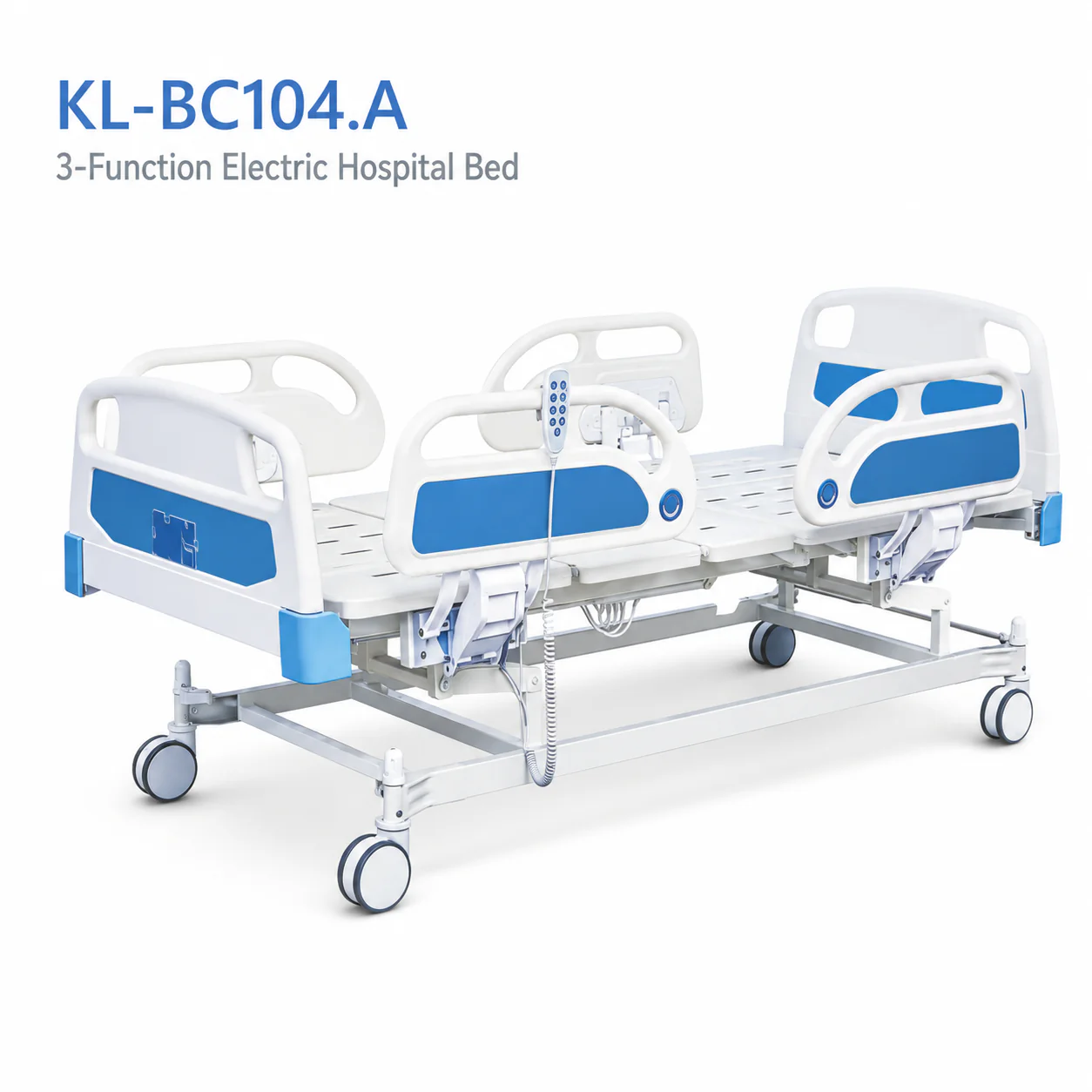
# KL-BC104-A Electric Hospital Bed — 3-Function Bed in Alternative Visual Design
Quick answer: The Keling KL-BC104-A is a 3-function electric hospital bed with motorized backrest (70±10°), knee-rest (30±10°) and height adjustment (450–760 mm), 200 kg safe working load, and external dimensions of 2150 × 1035 × (450–760) mm. It offers an alternative visual design style to the KL-BC104. Manufactured by Keling Medical (Keling Medical) for hospitals and medical distributors worldwide.
Quick Facts
- The Keling KL-BC104-A is a 3-function electric hospital bed in an alternative design style to the KL-BC104.
- Backrest adjusts electrically to 70±10° and knee-rest independently to 30±10° via handheld controller.
- Height adjustment covers 450–760 mm for ergonomic nursing access and low-entry patient transfers.
- Safe working load is 200 kg; external size is 2150 × 1035 × (450–760) mm; bed surface is 1930 × 900 mm.
- The three-function specification covers the core daily nursing adjustments in general ward environments.
- Produced by Keling Medical, a Chinese medical equipment manufacturer with more than 20 years of industry experience.
Overview
The KL-BC104-A electric hospital bed matches the KL-BC104 in every technical parameter while presenting a visually distinct design — allowing hospitals and project procurers to differentiate ward types, zones or care levels by bed appearance while maintaining consistent functional and structural specifications across their fleet. Three-function electric operation covering backrest, knee-rest and height adjustment satisfies the positioning requirements of the vast majority of inpatient nursing tasks without introducing unnecessary complexity.
The 70±10° backrest adjustment provides a functional range from flat to a near-upright seated position, covering requirements for dyspnoea management, enteral feeding, cardiac monitoring positions and comfortable supervised rest. The 30±10° knee-rest elevation is particularly valuable when combined with backrest elevation, as it prevents the patient from sliding toward the foot of the bed and reduces sacral shear — a key factor in pressure injury prevention for bedridden patients.
Electric height adjustment from 450 to 760 mm gives nursing staff control over working height during care tasks, bed-making and patient transfer, reducing musculoskeletal strain while allowing patients a low egress height that lessens fall injury risk. The 200 kg rated load and 1930 × 900 mm usable surface make the KL-BC104-A a practical choice for standard adult inpatient accommodation across a broad range of facility types and patient demographics.
Key Features
- Alternative visual design — same 3-function specification as KL-BC104 in a distinct design style for ward differentiation.
- 3-Function electric actuation — motorized backrest, knee-rest and height adjustment via handheld controller.
- Backrest to 70±10° — full-range adjustment from flat to near-upright, covering all standard clinical positions.
- Knee-rest to 30±10° — independent elevation prevents sliding and reduces sacral and lumbar pressure.
- Height range 450–760 mm — electric height control for transfer safety and nursing task ergonomics.
- 200 kg safe working load — structural rating for standard adult patients.
- 1930 × 900 mm bed surface — standard adult patient surface dimensions.
Technical Specifications
| Parameter | Value |
|---|---|
| Model | KL-BC104-A |
| Product type | Electric hospital bed (3-function) |
| Backrest adjustment | 70±10° |
| Knee-rest adjustment | 30±10° |
| Height adjustment | 450–760 mm |
| Safe working load | 200 kg |
| External size (L × W × H) | 2150 × 1035 × (450–760) mm |
| Bed surface size (L × W) | 1930 × 900 mm |
| Dimensional tolerance | ±20 mm |
Specifications are subject to change; dimensional tolerances may apply. Contact Keling Medical for the latest datasheet.
Applications
The KL-BC104-A is appropriate for general medical and surgical wards, outpatient observation bays, step-down units and long-term care facilities. Its alternative design style compared to the KL-BC104 allows procurement of functionally identical beds with visual differentiation to distinguish ward areas or care pathways within a facility.