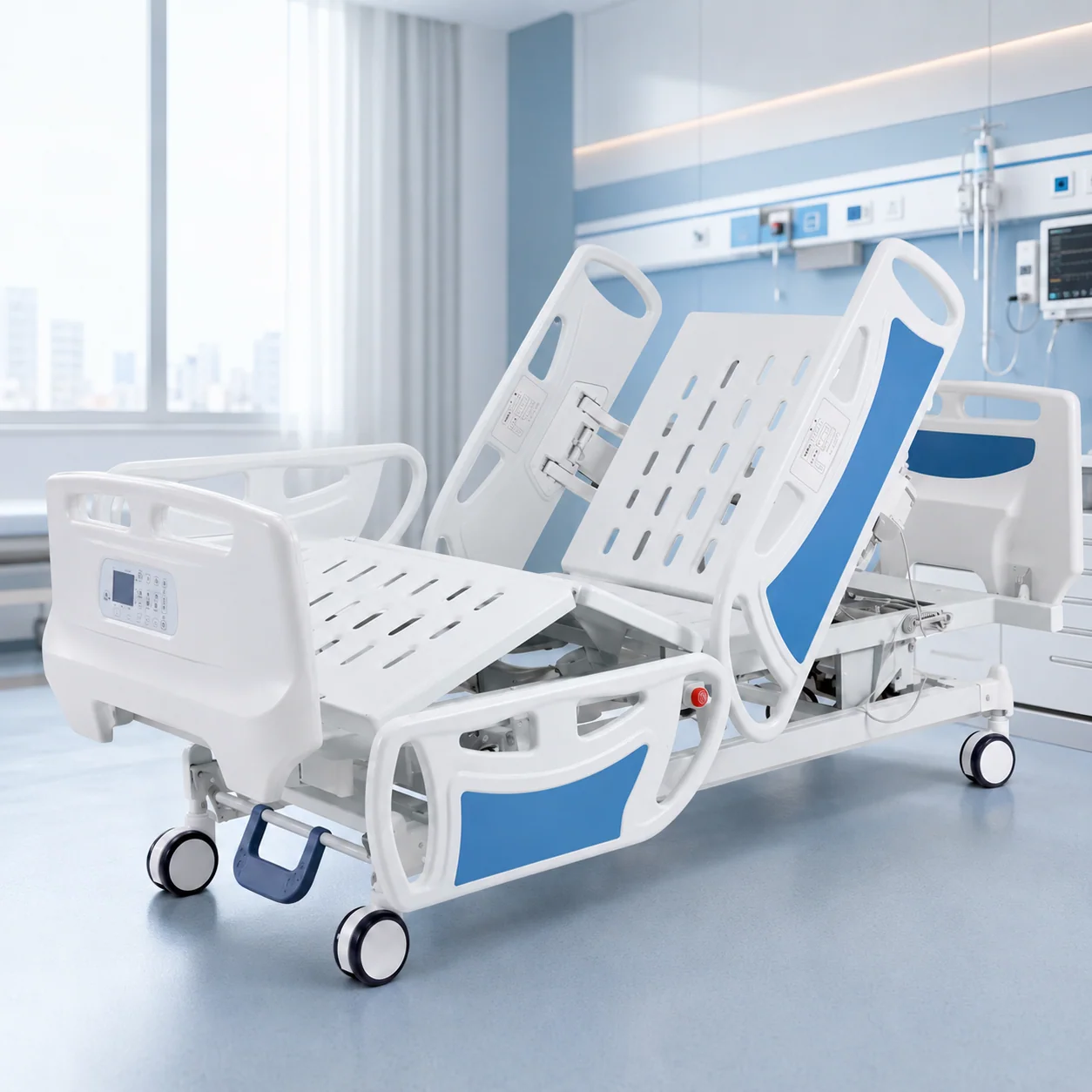
What is a bed safety rail?
A bed safety rail is a side component mounted along the edge of a hospital bed. In a procurement context, it should be evaluated as part of the complete bed configuration rather than as an isolated accessory. The correct choice depends on the bed frame, mattress platform, adjustment functions, rail construction and the operating environment.
The term bed safety rail can describe different designs, including metal side rails and polymer side rails. It should not automatically be treated as interchangeable with every hospital bed. A rail that fits one frame may not fit another, particularly where the bed has different dimensions, moving sections or headboard and footboard arrangements.
For buyers, the central question is not simply whether a rail is present. It is whether the selected rail can be supplied, installed, cleaned and maintained as part of the specified hospital bed configuration. The written quotation should identify the rail model, compatible bed model, materials and any installation requirements.
How bed safety rails support procurement decisions
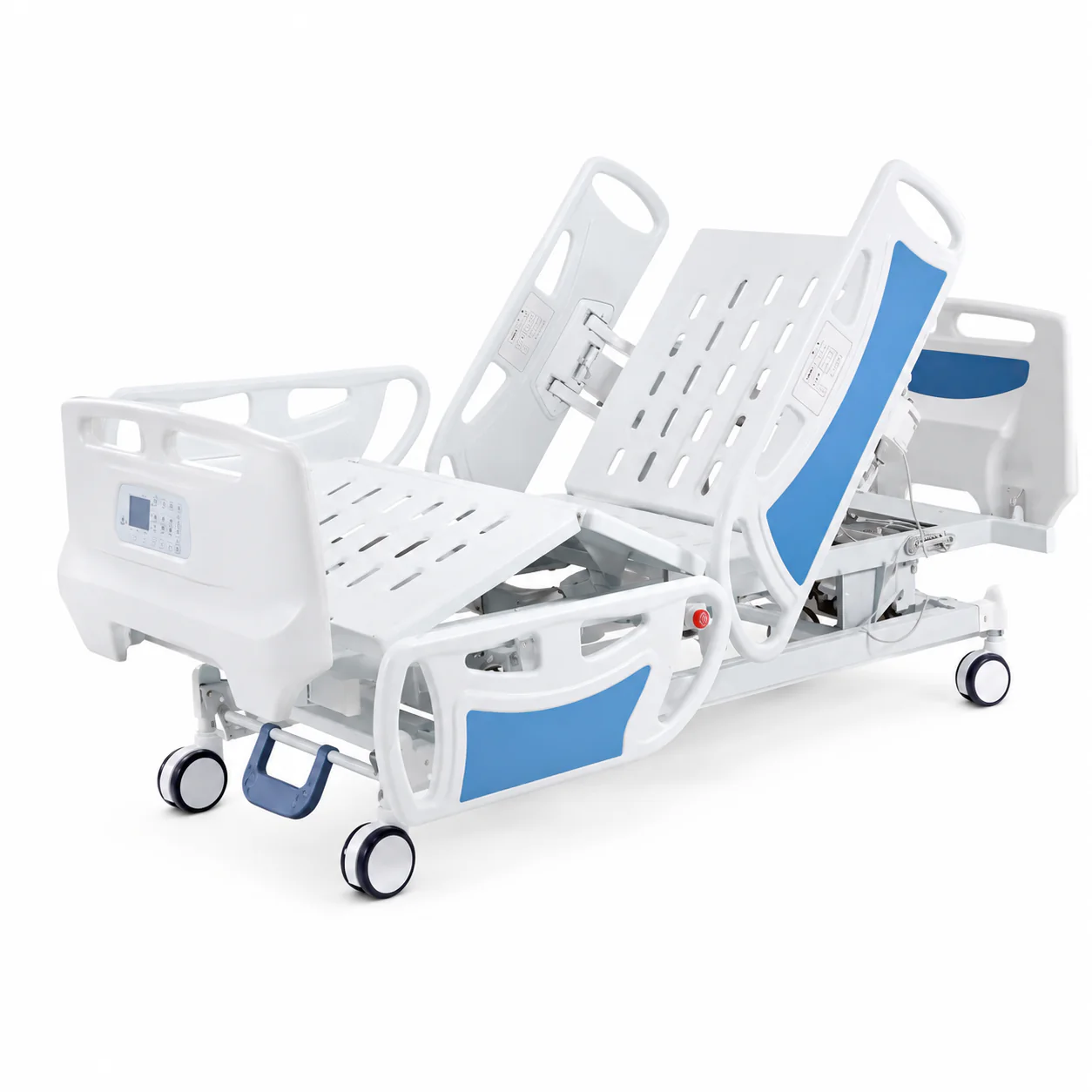
Bed safety involves more than the visible side barrier. Buyers should assess the bed as a system that includes the frame, mattress, castors, headboard, footboard, controls and rail. The rail must remain compatible with the bed’s movement and with the mattress specified for the project.
Before comparing suppliers, define the operating context:
- Clinical area: ICU, inpatient ward, emergency area, rehabilitation unit or another department.
- Bed functions: manual or electric adjustment, number of functions and any specified positioning requirements.
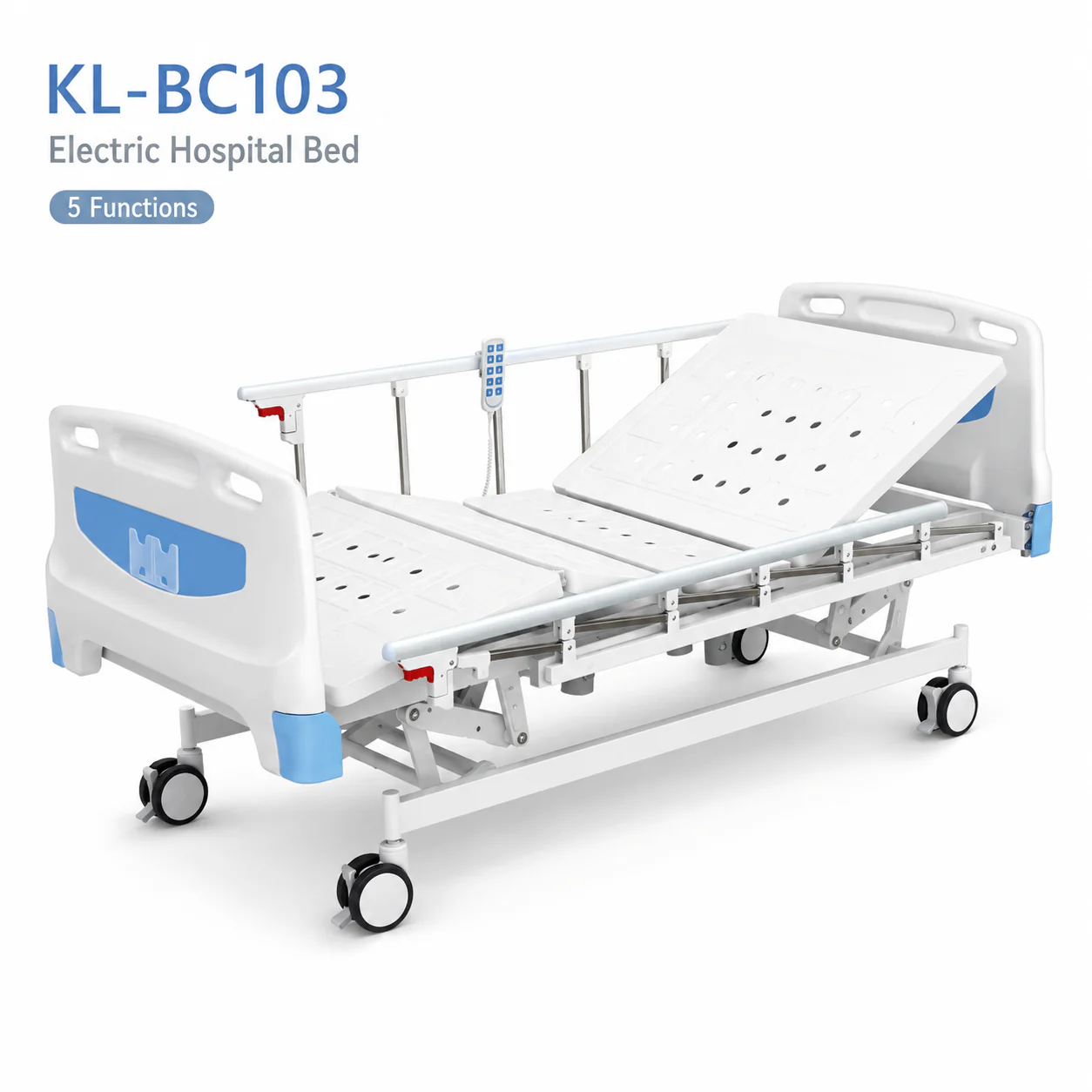
- Patient load requirement: for example, the catalogue identifies KL-BC103 as a 5-Function Ward Bed 240 kg, while KL-BC104 is a 3-Function Electric Bed 200 kg.
- Cleaning and maintenance: confirm the rail materials, accessible surfaces, replacement process and cleaning-agent compatibility with the supplier.
- Project configuration: specify whether the rail is included with the bed or ordered as a separate component.
The Hospital Beds category provides the wider product range for comparing complete bed configurations. Buyers selecting positions for nursing workflows can also refer to Bed Positions Nursing: A Procurement Guide, while remote-control requirements are covered in Hospital Bed Remote: Functions, Selection and Replacement.
Metal or ABS: comparing hospital bed side rail options
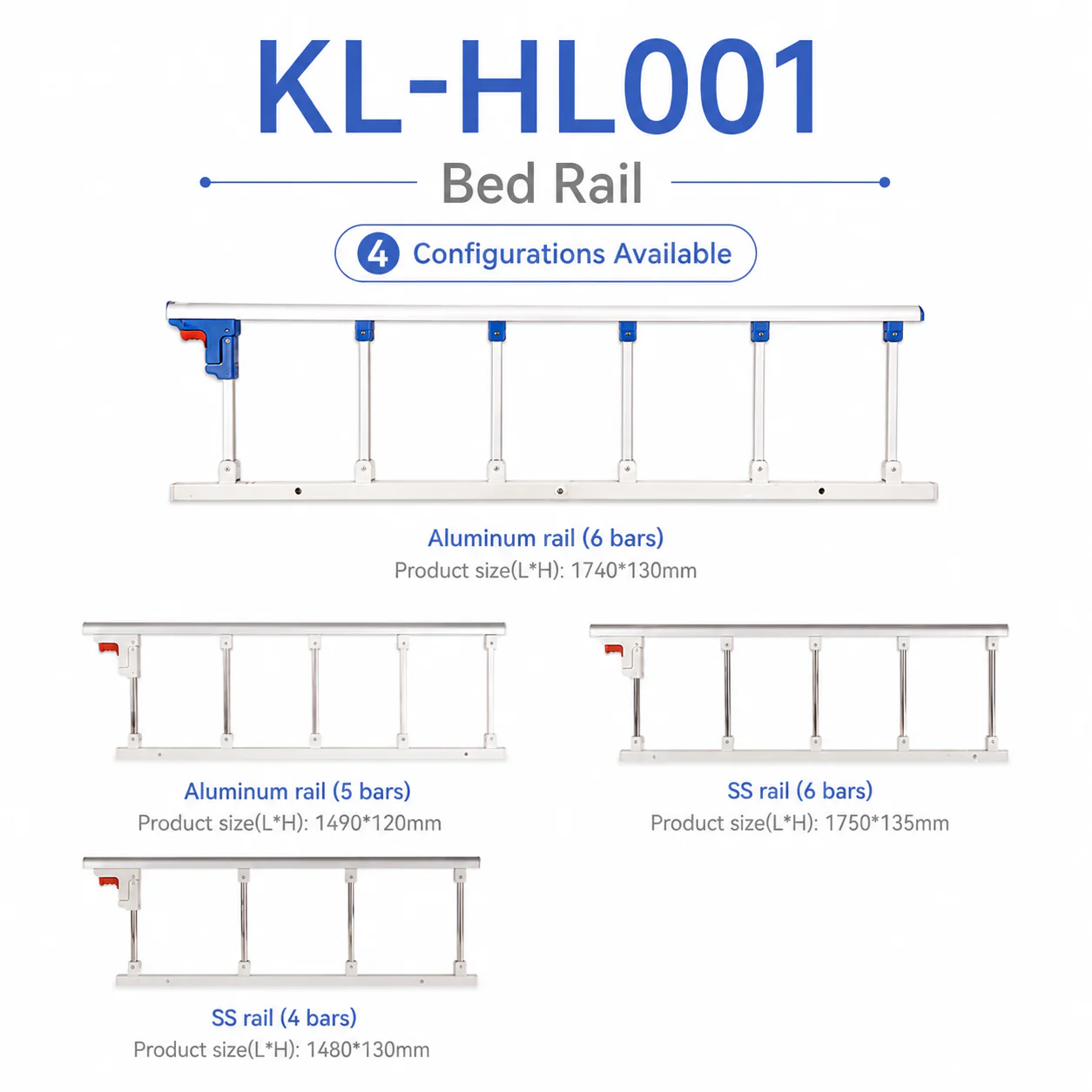
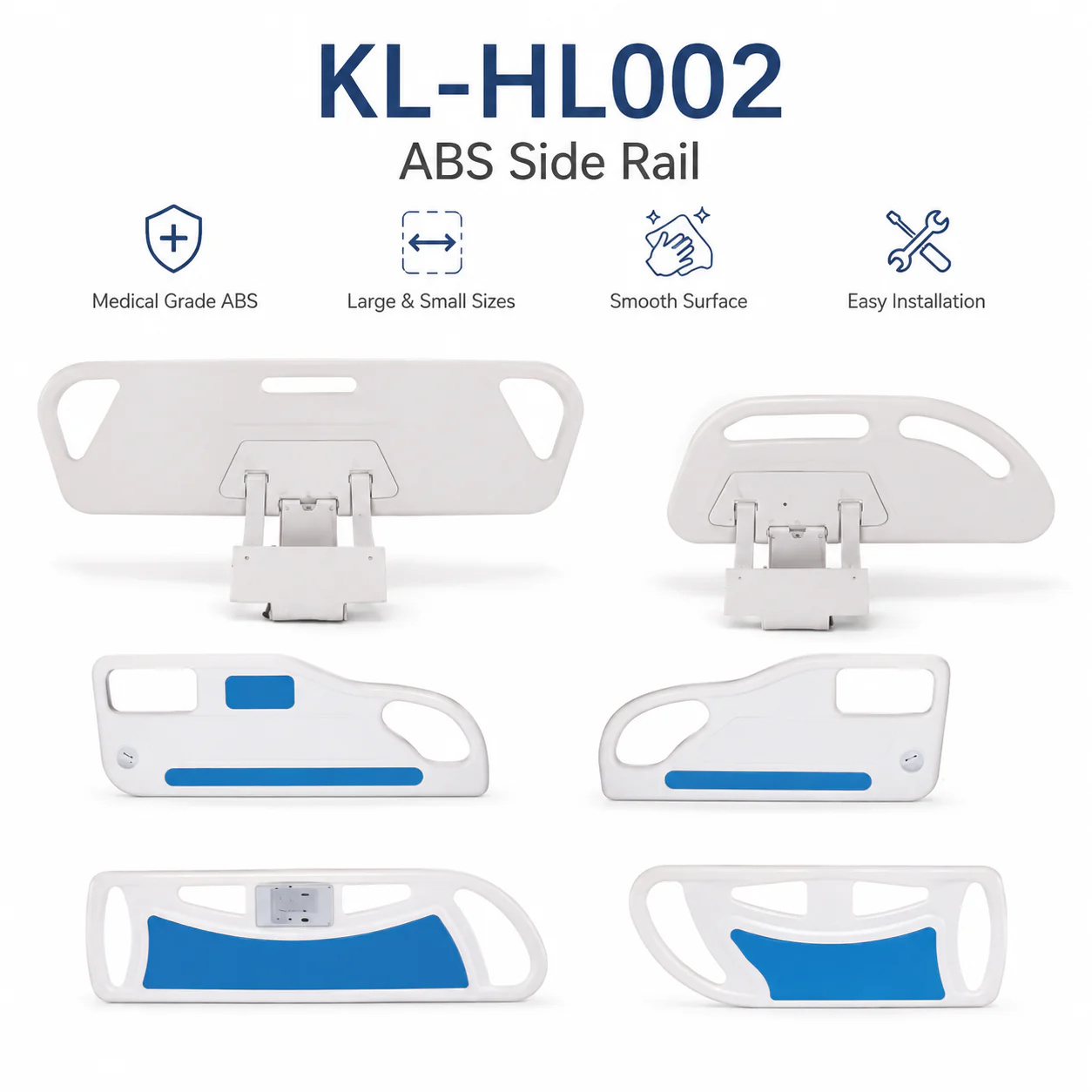
Material is one of the clearest differences between the catalogue’s bed rail products, but it is not the only selection factor. Keling lists the KL-HL001 Bed Rail as aluminum and stainless steel hospital bed side rails. The KL-HL002 ABS Side Rail is listed as an ABS hospital bed side rail in big and small sizes.
Aluminum and stainless steel rail
A metal rail may suit buyers who specify aluminum and stainless steel construction for the bed-side component. During evaluation, confirm which parts use each material, the rail dimensions, the attachment points and the compatible bed frames. These details are important when the project includes more than one hospital bed model.
Metal construction can also affect the project’s cleaning, handling and replacement procedures. However, procurement teams should not infer a performance or regulatory outcome from material alone. Ask the supplier to state the complete construction and applicable documentation in the quotation.
ABS side rail
ABS may be relevant when the project specification calls for a polymer side rail. KL-HL002 is listed in big and small sizes, so the buyer should confirm which size is required and how each size corresponds to the selected bed. Do not assume that “big” or “small” is a universal dimension; request the supplier’s written dimensions and compatibility information.
If the hospital is standardizing equipment across wards, compare the rail material with the existing bed fleet, cleaning process, spare-parts plan and staff handling requirements. A lower purchase price is not necessarily the lowest total procurement burden if the rail is difficult to match or replace.
What to check when buying an attachable bed rail
An attachable bed rail must be assessed for attachment method and bed compatibility before price comparison. The phrase may describe a rail supplied separately from the bed, but it does not establish that every side rail is universal or suitable for retrofit. Request confirmation that the rail can be attached to the exact bed frame and used with the specified mattress platform.
Use this checklist when requesting a quotation:
- Exact model pairing: state the hospital bed model and the proposed rail model, such as KL-HL001 or KL-HL002.
- Attachment points: request drawings or written information showing where and how the rail connects to the bed.
- Dimensions: confirm overall rail dimensions, available sizes and the usable bed-side position.
- Moving sections: ask whether the rail configuration remains compatible when the bed’s adjustable sections are operated.
- Mattress interface: provide the mattress model or required mattress dimensions and ask the supplier to confirm compatibility.
- Materials and finish: request the construction details and cleaning guidance for the destination facility.
- Installation: clarify whether installation is completed by the supplier, distributor or hospital engineering team.
- Replacement parts: confirm whether individual rail components or complete replacement rails can be quoted later.
For a complete electric configuration, buyers may compare KL-BC101 Electric Hospital Bed, listed as a 5-Function ICU Bed with CPR, with KL-BC103 Electric Hospital Bed, listed as a 5-Function Ward Bed 240 kg. The correct rail selection still requires written compatibility confirmation for the chosen model.
Bed safety rail selection by hospital environment
The same rail specification may not be appropriate for every department. In an ICU or critical-care procurement, the rail should be reviewed alongside the bed’s functions, CPR-related configuration, accessories and access requirements. In an inpatient ward, standardization, cleaning workflow, staff familiarity and replacement availability may carry greater weight.
For emergency or resuscitation areas, ask how the rail configuration affects access to the patient and whether the proposed bed configuration meets the project’s operational requirements. For rehabilitation or mobility areas, clarify how the rail is intended to be used within the facility’s equipment plan. These are procurement questions, not assumptions that a particular rail is clinically suitable.
Bed positioning requirements can also influence selection. If a project requires specific nursing positions, review Sims Position Definition: Nursing and Bed Selection, Lateral Recumbent Position: Bed Selection Guide and Prone Jackknife Surgical Position: A Buyer’s Guide. The articles can help define the bed functions to include in the tender; rail compatibility must then be confirmed for the final model.
Tender and quotation requirements
A tender specification should separate mandatory requirements from items requiring supplier confirmation. At minimum, include the intended hospital bed model, rail model or required rail material, dimensions, quantity, installation scope, spare-parts expectations and destination market.
Ask suppliers to return a model-specific quotation rather than a generic statement that the rail is “universal.” The quotation should identify the exact product, materials, compatible bed models, included accessories, packing and delivery terms. If the rail is supplied with a bed, request a complete bill of configuration so the purchasing team can compare like with like.
Regulatory scope and validity should be confirmed per model and destination market in the written quotation. Keling Medical is a Shanghai-based manufacturer and export and sales centre, founded in 1996, with 310 models across 12 categories. The company operates an ISO 13485 quality system; company materials also state ISO 9001 and CE. Buyers should request the documentation applicable to their project and market.
How to request a bed safety rail quotation
Send the supplier the bed model, required rail quantity, rail material preference, hospital department, mattress information, destination country and delivery deadline. Include whether the request is for a new bed package, replacement rails or a retrofit project. For an attachable bed rail, add photographs or drawings of the existing bed frame if compatibility must be assessed.
Keling Medical handles B2B enquiries for distributors, hospital projects and tenders. Buyers can use the request a quote page or contact inquiry@shkeling.com and +86 150 0064 9020. Before issuing a purchase order, obtain written confirmation of model pairing, dimensions, materials, installation scope and destination-market documentation.