Bed Positions Nursing: What Buyers Need to Specify
Bed positions nursing is not simply a choice between a flat bed and an upright bed. It describes how a hospital bed supports different patient postures and care activities, including repositioning, examination, transfers, procedures and routine ward care. The exact position required depends on the department, patient-care protocol and staff workflow.
For a procurement team, the useful question is: which adjustable sections and movement ranges must the bed provide, and how will staff control them? Catalogue descriptions such as “2-Function,” “3-Function” and “5-Function” indicate different levels of adjustment, but the written quotation should confirm the exact functions included for the selected model.
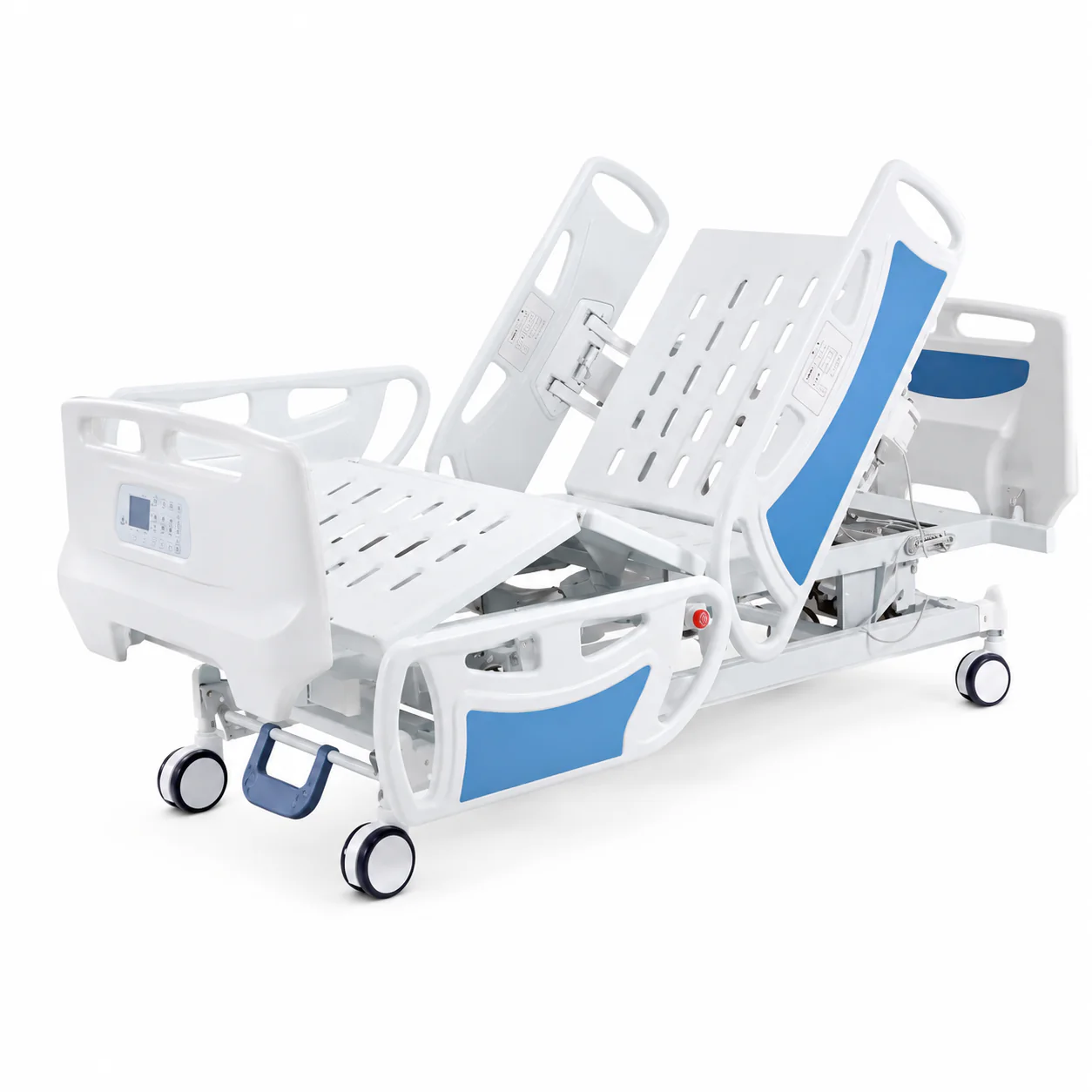
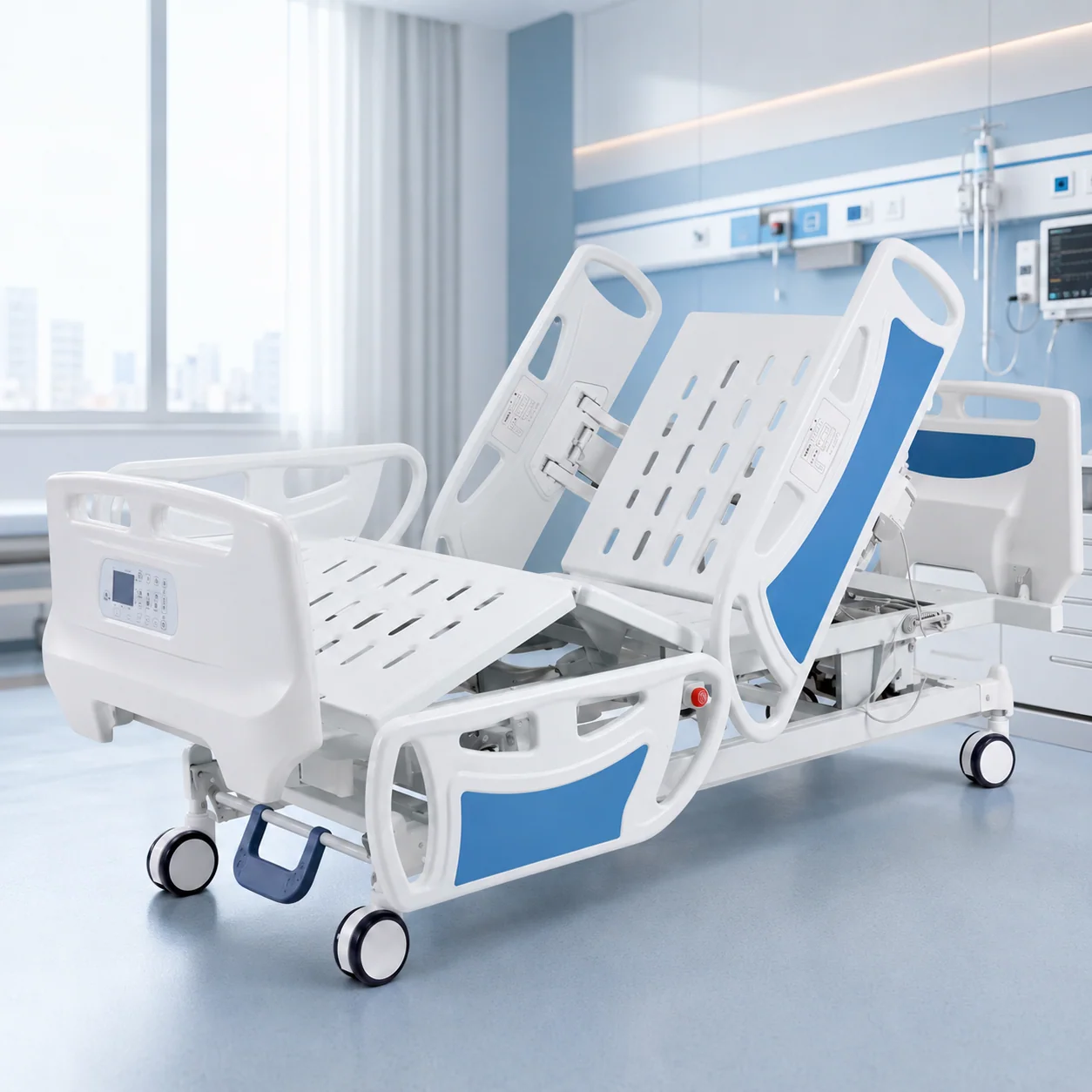
Common functions to compare include backrest adjustment, knee-rest adjustment, overall height adjustment, Trendelenburg or reverse Trendelenburg movement, and CPR-related functionality where specified. Do not assume that two beds with the same function count offer identical movement ranges, control locations or accessories. Ask the supplier to state these details model by model.
For a broader comparison of controls and handset requirements, see the guide to the hospital bed remote and replacement considerations.
Proper Bed Positioning for Patients With Diagrams: A Practical Framework
The following text diagram is a procurement framework rather than a clinical instruction. It helps buyers map common positioning requirements to the bed sections that create them:
```text Flat / supine [head] ───────── [trunk] ───────── [thigh] ───── [lower leg] All sections level; confirm platform dimensions and mattress compatibility.
Backrest raised [head] /─────── [trunk] ───────── [thigh] ───── [lower leg] Used when the specification requires an upper-body elevation function.
Backrest + knee-rest raised [head] /─────── [trunk] ────────╲ [thigh] ───── / [lower leg] Confirm whether backrest and knee-rest are independent or linked.
Height-adjusted position Same platform profile, raised or lowered from the floor. Confirm minimum and maximum height in the quotation.
Trendelenburg / reverse Trendelenburg Platform tilted head-down or foot-down. Confirm whether this movement is included and how it is controlled. ```
This is why “proper bed positioning for patients with diagrams” should be treated as a specification question, not only an educational search term. A diagram can show the intended posture, but it does not confirm whether a particular bed can create it safely or repeatedly. Buyers should request a function chart, movement range, operating instructions and a drawing of the mattress platform.
The phrase positioning patients in bed pictures may also refer to side-lying, lateral recumbent or procedure-specific arrangements. These may require staff assistance, suitable rails, a compatible mattress and sufficient clearance around the bed. A bed’s electric articulation does not automatically replace a facility’s approved handling procedure.
For procurement teams reviewing lateral arrangements, the lateral recumbent position bed selection guide provides a more focused comparison framework.
Hospital Bed Positions and Medical Bed Positions to Compare
“Hospital bed positions” and “medical bed positions” are often used interchangeably, but tenders should define each requirement precisely. The following categories are useful when preparing a technical schedule:
Flat and backrest positions
A flat position is a basic reference for transfer, rest and maintenance. A raised backrest position changes the upper-body angle while the lower sections remain level or follow the bed’s specified articulation. If this is a mandatory requirement, confirm whether the bed is manual or electric, the adjustment control, the backrest range and the permitted mattress type.
Keling Medical’s KL-BC106 Manual Hospital Bed is catalogued as a 1-Function Backrest Bed with 200 kg capacity. That description may suit a basic backrest requirement, but buyers should still confirm dimensions, adjustment method and included accessories in the quotation.
Backrest and knee-rest positions
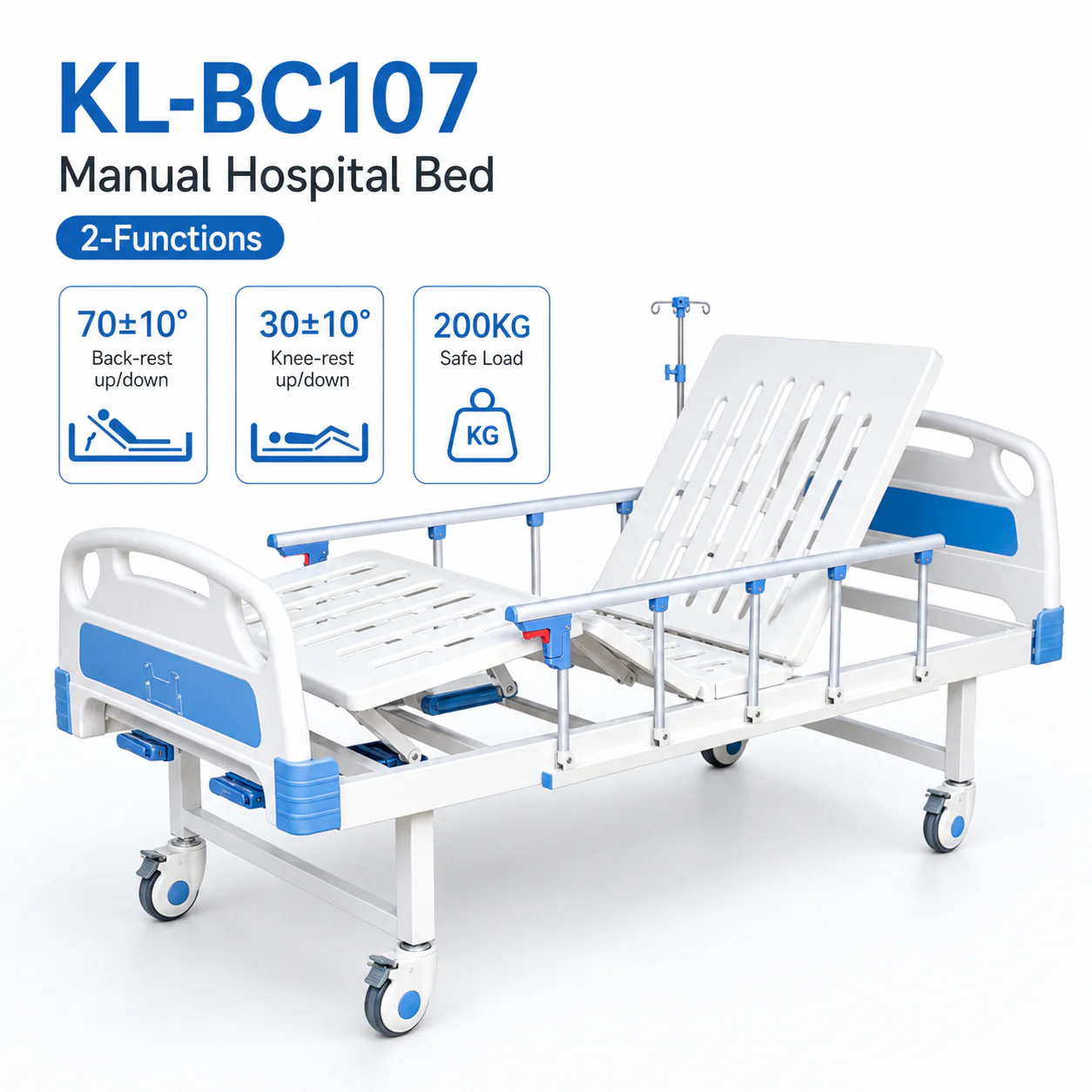
Some wards require both upper-body and knee-rest adjustment. The key trade-off is control complexity versus positioning flexibility. Independent adjustment can offer more configuration choices, while linked movement may simplify operation. The catalogue identifies KL-BC107 as a 2-Function Backrest & Knee-Rest manual bed; the supplier should confirm whether the two sections operate independently.
Height-adjusted positions
Height adjustment affects transfer height, staff access and compatibility with surrounding equipment. It should be evaluated together with castors, brakes, side rails, mattress thickness and the available clearance under the frame. Ask for minimum and maximum bed height, not only the phrase “height adjustable.”
Trendelenburg-related positions
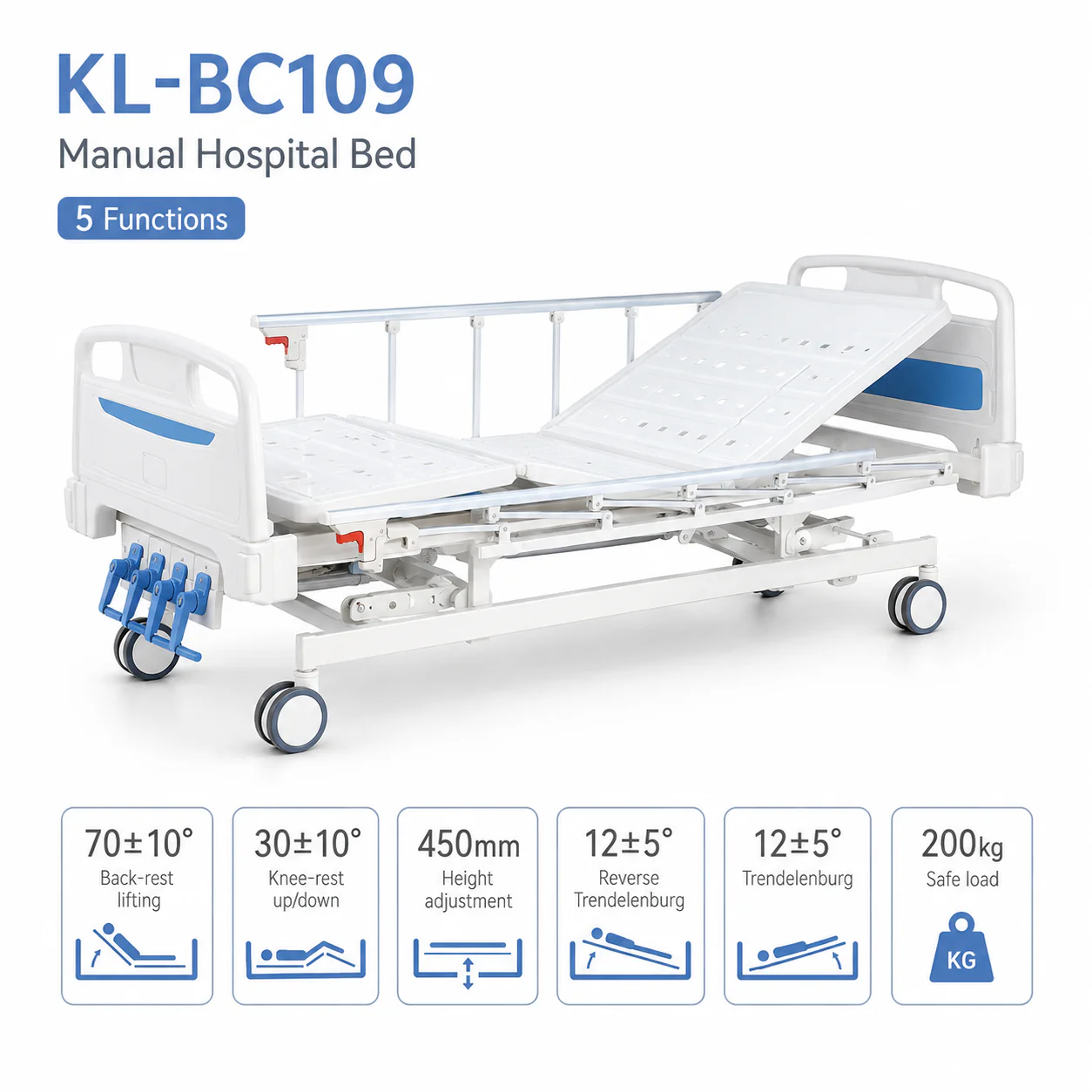
Trendelenburg is a defined platform tilt, not the same as raising the backrest. If a tender specifies Trendelenburg, confirm whether reverse Trendelenburg is also required, the angle range, the control method and any department-specific use limitations. KL-BC109 is listed as a 5-Function Manual Bed with Trendelenburg, so the quotation should identify the exact included movements and adjustment details.
For procedure-specific terminology, the Sims position definition and nursing bed selection article and the prone jackknife surgical position buyer’s guide can help separate patient-position terminology from bed-function requirements.
Positioning in Bed for Patients: Equipment Factors Buyers Often Miss
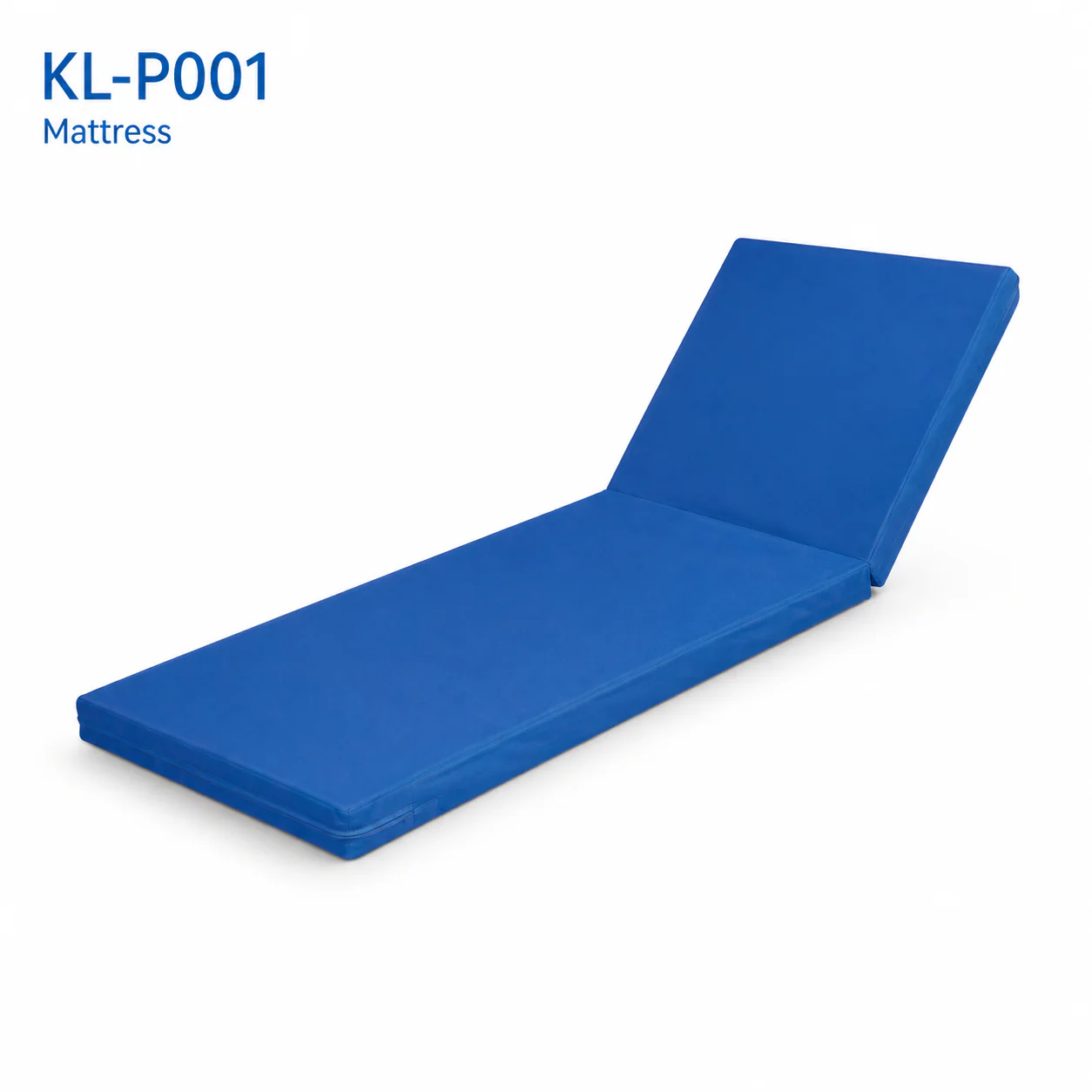
Positioning in bed for patients depends on more than the frame. The mattress must articulate with the platform without creating incompatible folds or movement restrictions. Confirm mattress dimensions, fill type, cover material, maximum supported load and whether the mattress is supplied with the bed or quoted separately.
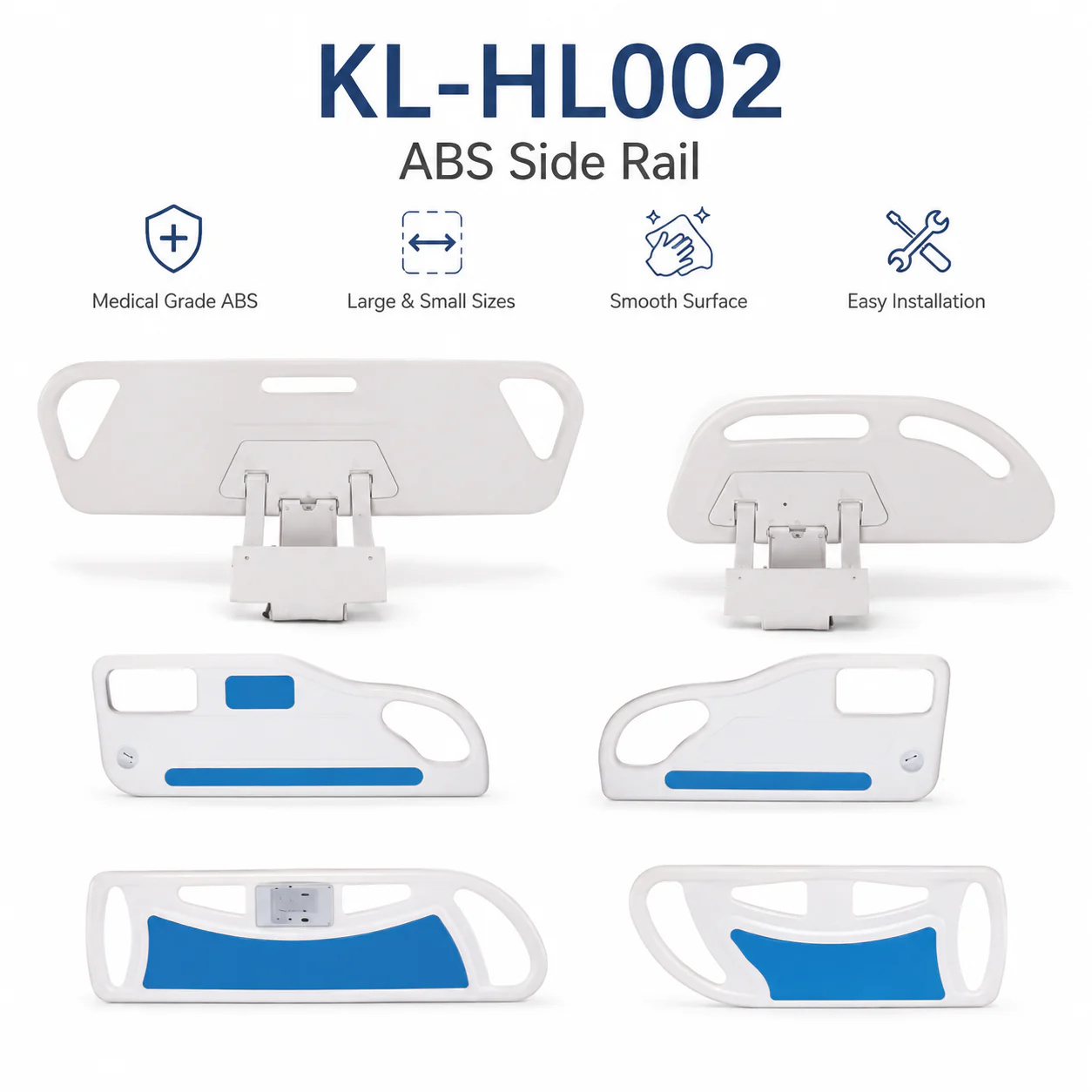
Side rails should be assessed for their operating method, position relative to the mattress and compatibility with the selected frame. They should not be treated as proof of fall prevention or as a substitute for facility procedures. Keling Medical lists KL-HL001 Bed Rail and KL-HL002 ABS Side Rail as separate catalogue products; confirm whether the required rail is included, optional or compatible with a specific model only.
Controls are another practical issue. A handset, integrated panel or nurse control may be needed depending on the tender. Confirm cable routing, emergency functions, ingress protection if specified by the project, cleaning requirements and replacement availability. These details affect maintenance even when the headline function count is acceptable.
How to Use Patient Positioning in Bed PDF Material During Tender Review
A patient positioning in bed PDF can be useful as a shared reference for a hospital project, but it should not be used as the sole technical document. Procurement officers should compare the diagram or training document with the model’s official specification, user manual, product drawing and quotation.
Create a position matrix with five columns:
| Required position | Bed movement or accessory | Evidence requested | Model confirmed | Notes |
|---|---|---|---|---|
| Flat | Platform sections level | Product drawing or manual | Yes / No | Mattress compatibility |
| Backrest raised | Backrest articulation | Function chart and range | Yes / No | Manual or electric |
| Knee-rest raised | Knee-rest articulation | Function chart and range | Yes / No | Independent or linked |
| Height adjusted | Overall frame elevation | Height range | Yes / No | Clearance and transfer workflow |
| Tilted platform | Trendelenburg function | Angle and control details | Yes / No | Confirm tender wording |
This format turns positioning patients in bed pictures into an auditable purchasing requirement. It also reduces disputes caused by vague terms such as “multi-position,” “ICU style” or “five-function” without a supporting breakdown.
Procurement Checklist for Proper Bed Positioning for Patients
Before requesting a commercial offer, provide the supplier with the intended department, required positions, patient-load requirement, preferred manual or electric operation, mattress specification, side-rail requirement, control arrangement, power standard and destination market.
Then request confirmation of:
- Exact model and function list;
- Adjustment ranges and operating method;
- Safe working load or stated capacity, written exactly in the quotation;
- Mattress, rail, headboard, castor and IV-stand compatibility;
- Assembly, packaging and spare-parts scope;
- Warranty, inspection documents and delivery terms;
- Regulatory scope and validity for the model and destination market.
Keling Medical manufactures hospital equipment in Shanghai, operates an ISO 13485 quality system, and company materials also state ISO 9001 and CE. Regulatory scope and validity should be confirmed per model and destination market in the written quotation. For hospital projects, distributors and tenders, submit the technical schedule through the hospital bed category page or request a quotation.