Sims Position Definition: What It Means
The sims position definition describes a semi-prone lateral position between the side-lying and prone positions. The patient is generally turned partly onto one side, with the lower shoulder and arm placed behind the torso, while the upper hip and knee are flexed. The head is supported so that the neck remains in a neutral, comfortable alignment.
In nursing terminology, this is commonly called the Sims position, lateral Sims position or left Sims position when the patient is resting on the left side. A right Sims position is the corresponding arrangement on the right side. The exact angle and limb placement can vary according to the procedure, patient condition, local protocol and clinician instruction.
For buyers researching the Sims position medical definition, it is important to distinguish the position from a simple lateral recumbent position. A lateral recumbent patient lies more directly on the side, whereas the Sims body position rotates the trunk partially toward the mattress. Procurement documents should therefore evaluate not just whether a bed says “electric,” but whether its available adjustments allow staff to create and maintain the required posture safely.
Sims Position Meaning in Nursing Practice
The Sims position meaning is best understood as a positioning description rather than a particular piece of equipment. It tells staff how the patient’s trunk, arms, hips and legs are oriented. It does not, by itself, specify a universal bed angle, duration or clinical indication. Those details must come from the responsible clinical team and the hospital’s procedure.
This distinction matters when comparing the types of position in nursing. Common categories include supine, prone, lateral or side-lying, Fowler’s and semi-Fowler’s, lithotomy, Trendelenburg and Sims. Jackknife position in nursing and Kraske position definition are related search terms but describe different arrangements, usually associated with specific procedural or surgical requirements. A general ward bed intended for routine repositioning should not automatically be treated as an operating table or specialty surgical platform.
For a broader comparison, procurement teams can review Prone Jackknife Surgical Position: A Buyer’s Guide and Lateral Recumbent Position: Bed Selection Guide. These resources help separate anatomical terminology from the equipment features needed to support it.
Lateral Position Nursing: What Buyers Should Check
When assessing lateral position nursing requirements, buyers should confirm four practical points:
- Backrest and leg-section movement: Ask which sections adjust, through what operating method, and whether the movement range is documented in the quotation.
- Bed width and usable surface: The mattress platform should provide enough working space for the patient and trained staff without creating unnecessary gaps at the sides.
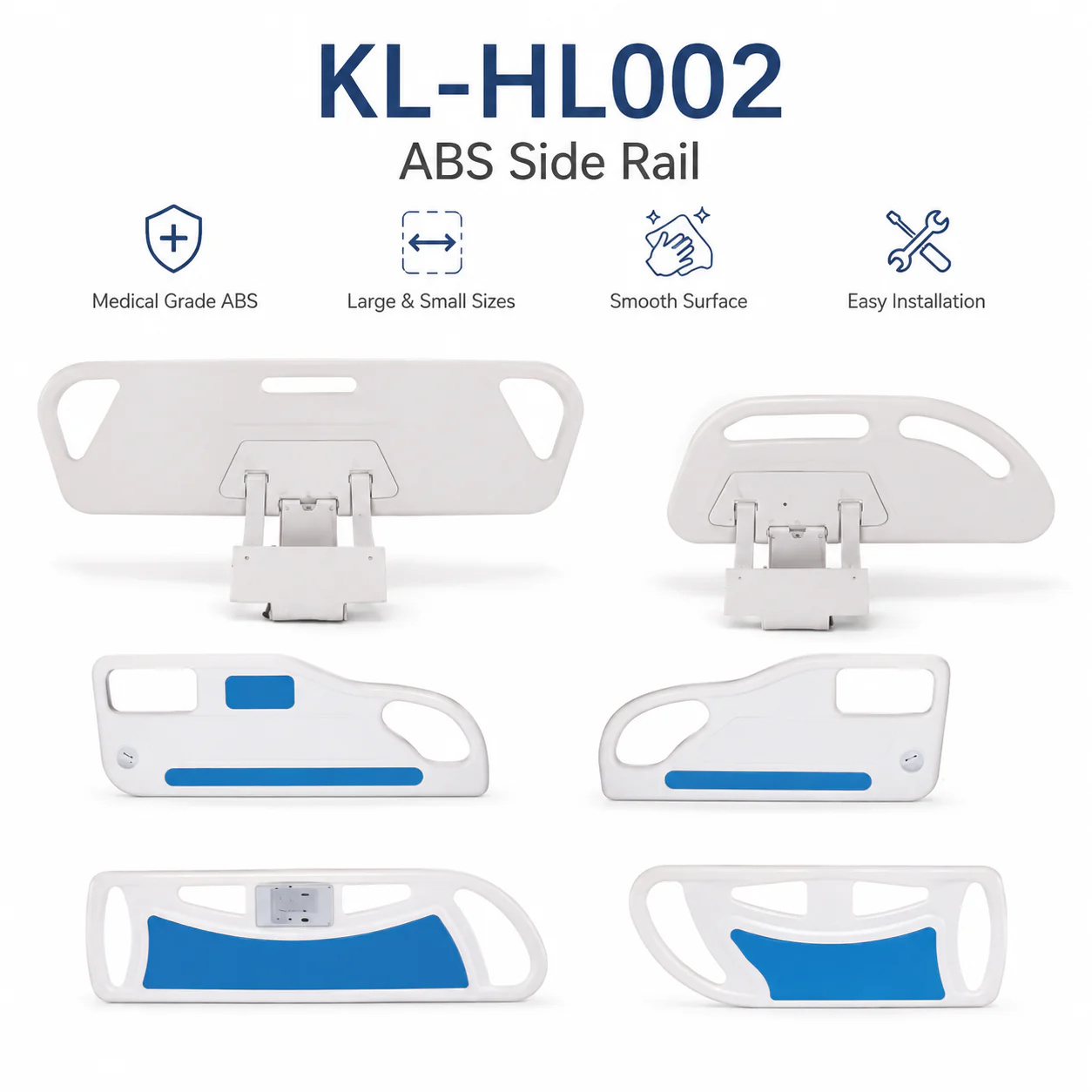
- Side-rail arrangement: Confirm whether rails can be operated without obstructing staff access and whether their dimensions and operating method are suitable for the intended ward or ICU environment.
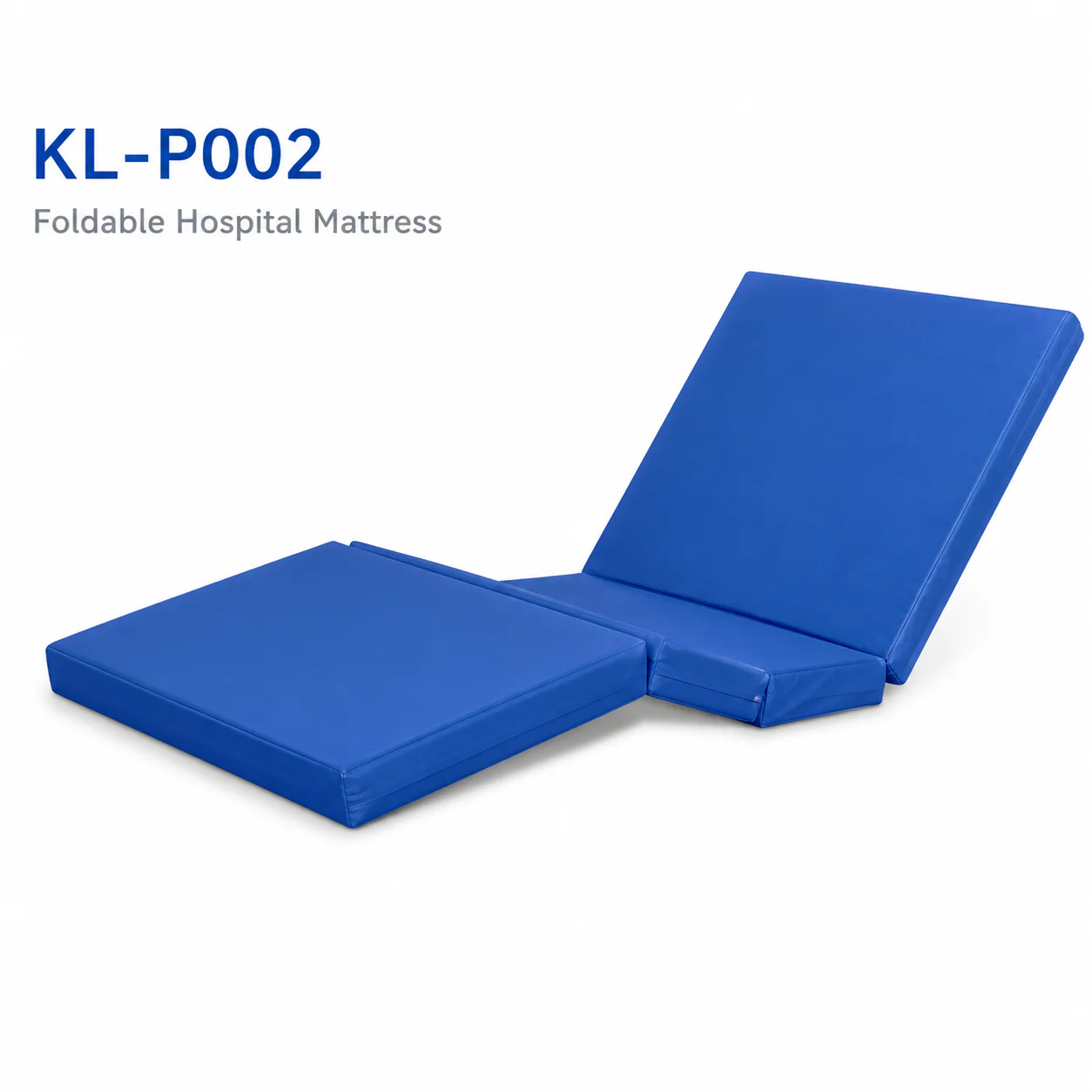
- Mattress compatibility: Check that the mattress is compatible with the bed’s articulated sections and does not restrict the intended adjustments.
These points are procurement checks, not a substitute for a hospital’s positioning protocol. A supplier should provide the model-specific configuration rather than assuming that every five-function bed has the same movement, control layout or accessory package.
How Would You Place a Patient in Sims Position?
The question “how would you place a patient in Sims position” is clinical and should be answered by trained healthcare professionals according to facility policy. In general educational terms, staff align the patient, turn the body partly onto one side, position the lower arm behind the torso, flex the upper hip and knee, and support the head and limbs as required. Staff should also check comfort, alignment, pressure areas, tubing and lines.
For equipment planning, the relevant workflow is different. The bed should first be placed in a stable position with the casters secured according to the manufacturer’s instructions. Staff then use the available controls and adjustments in a coordinated way, maintain communication with the patient, and verify that side rails, mattress sections and medical lines are not interfering with the turn. The hospital’s responsible clinicians determine the actual technique and monitoring requirements.
A buyer evaluating hospital bed position nursing patient positioning should request the operating instructions, control diagram, mattress recommendations and side-rail information for each shortlisted model. Ask whether the bed includes a handset, attendant control or other control arrangement, and confirm how replacement controls are handled. The guide Hospital Bed Remote: Functions, Selection and Replacement is useful when standardising controls across a ward or project.
Choosing a Hospital Bed for Sims Positioning
The Sims position itself does not require one universal bed model. Selection depends on the care setting, the required adjustment functions, patient load, mattress system, side rails, cleaning requirements and procurement specification. A bed with more functions may offer greater flexibility, but it can also add cost, training requirements and maintenance points. A simpler bed may be adequate where staff perform repositioning manually and only limited platform adjustment is required.
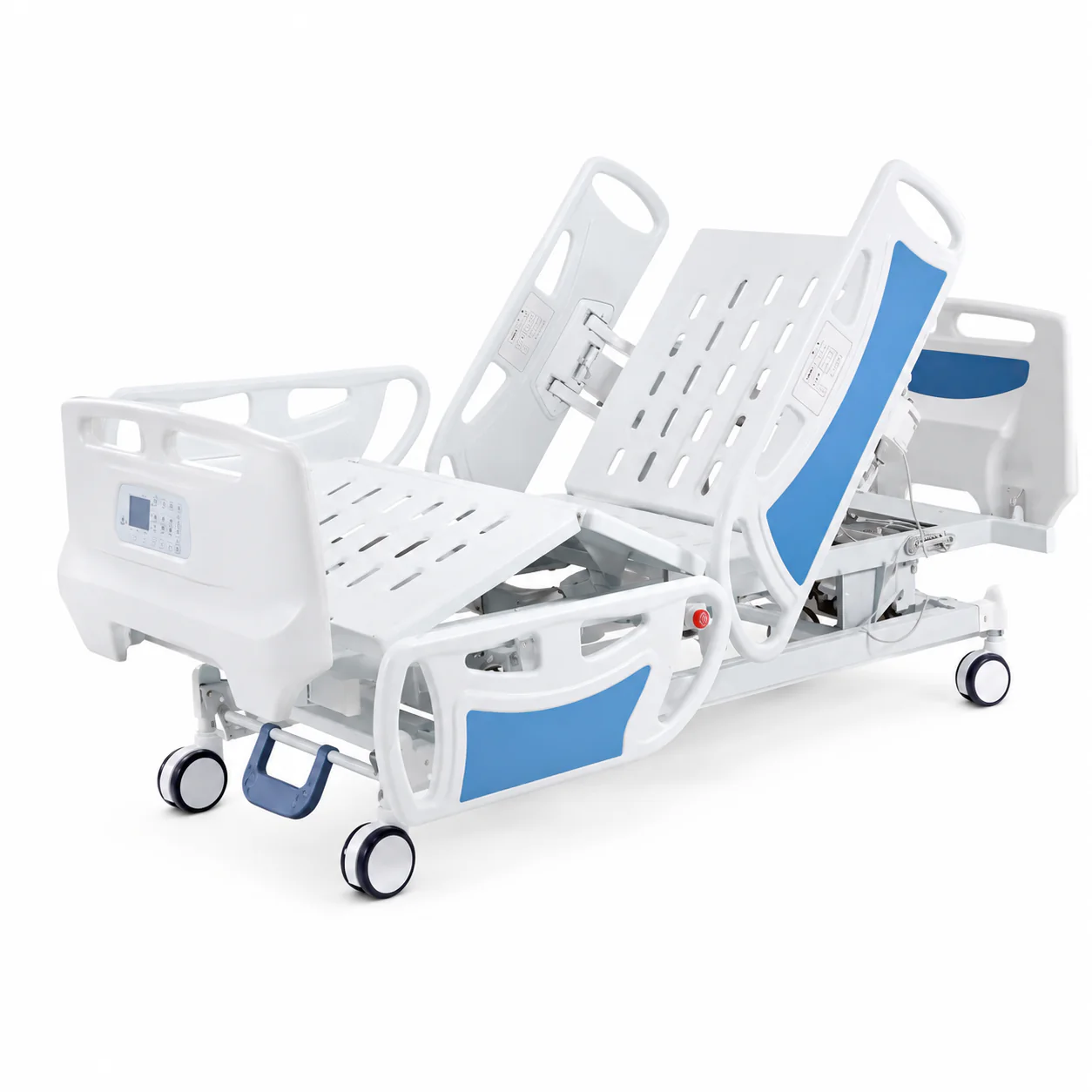
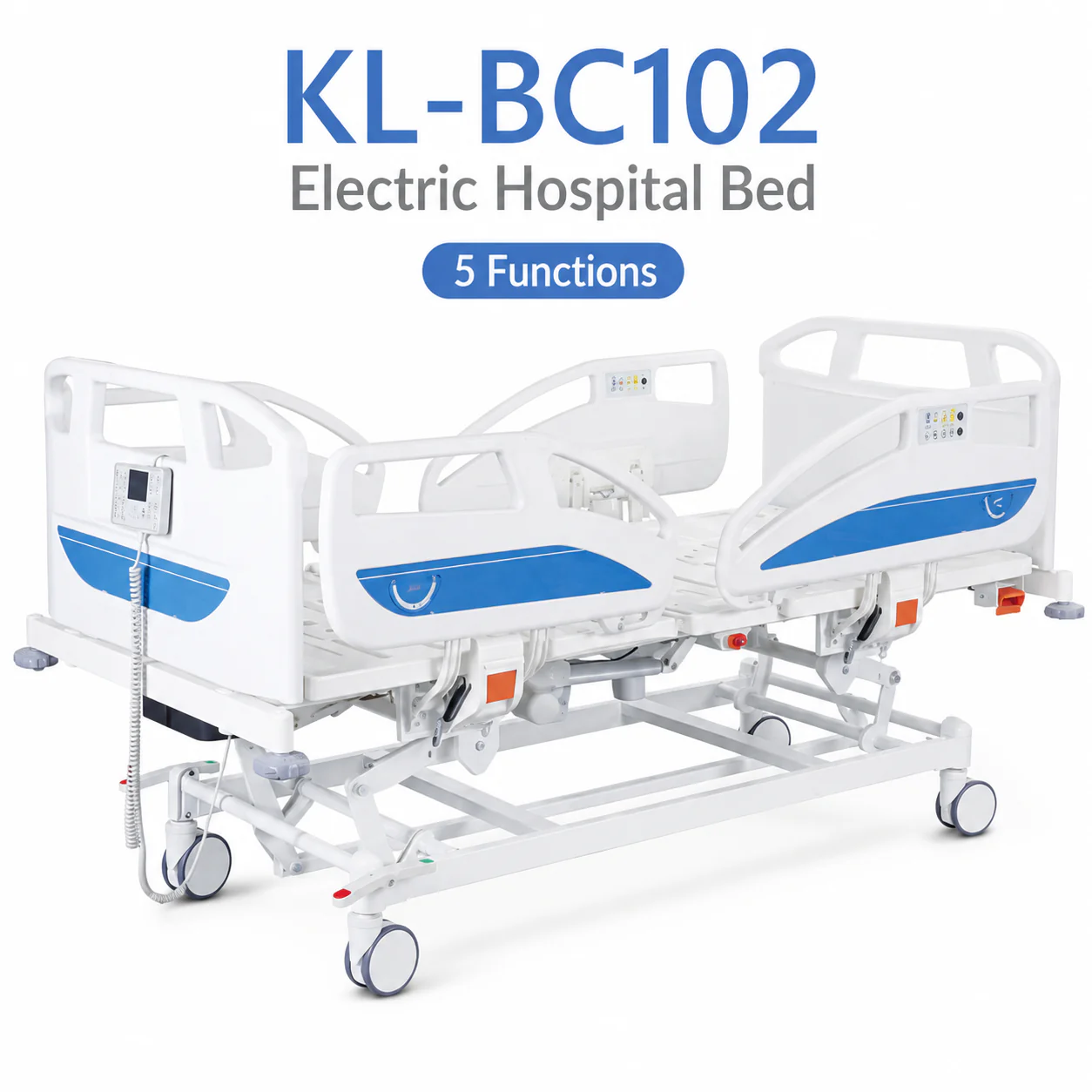
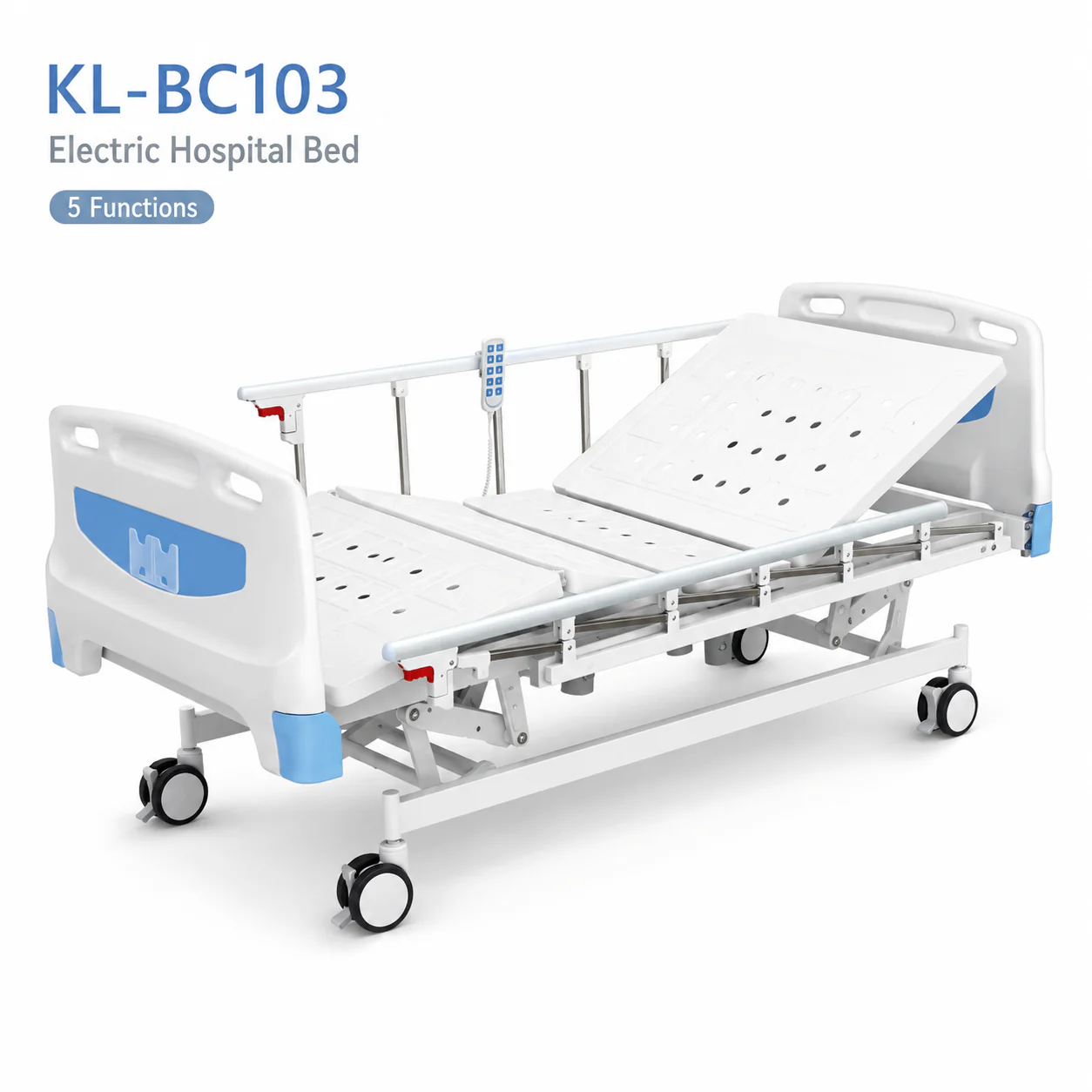
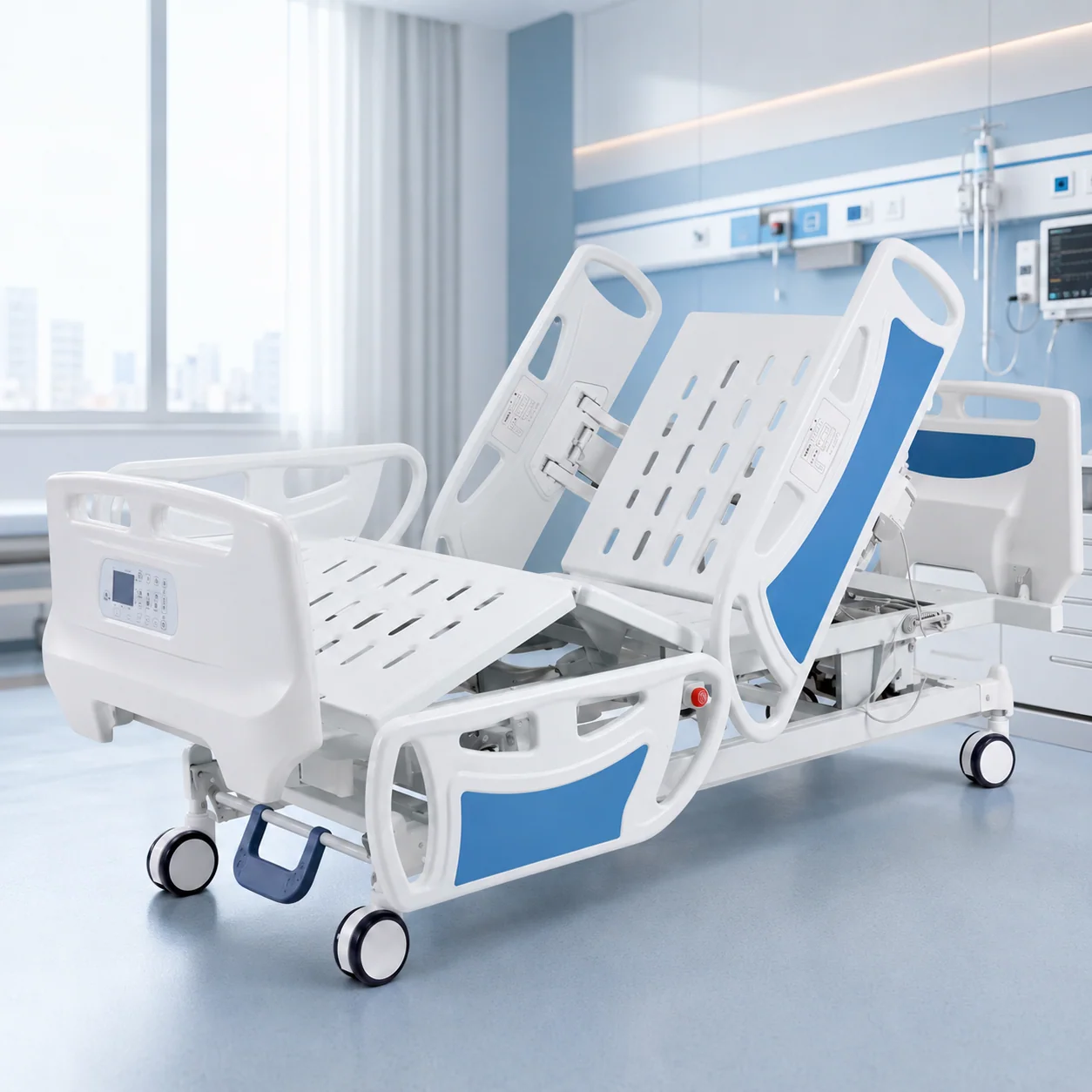
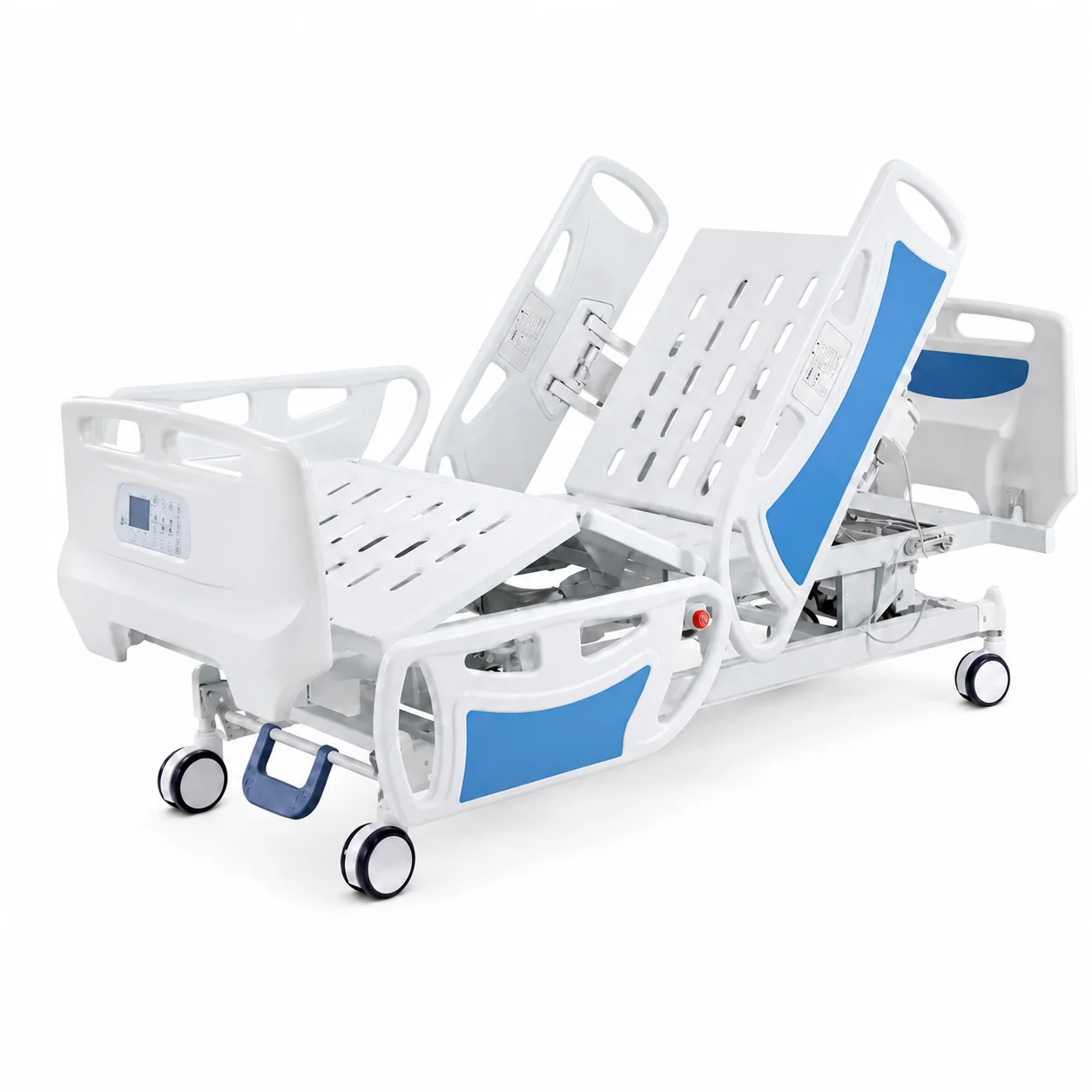
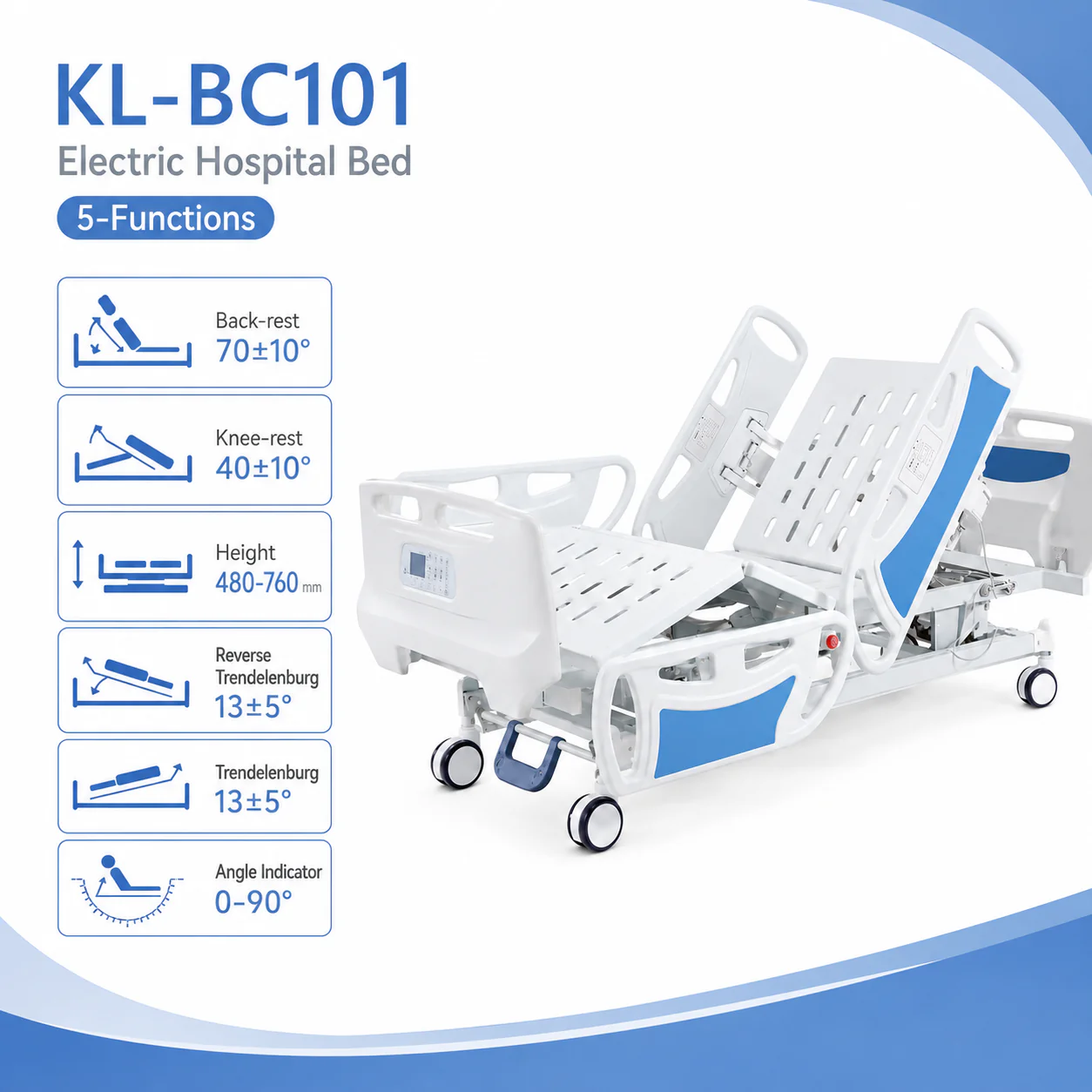
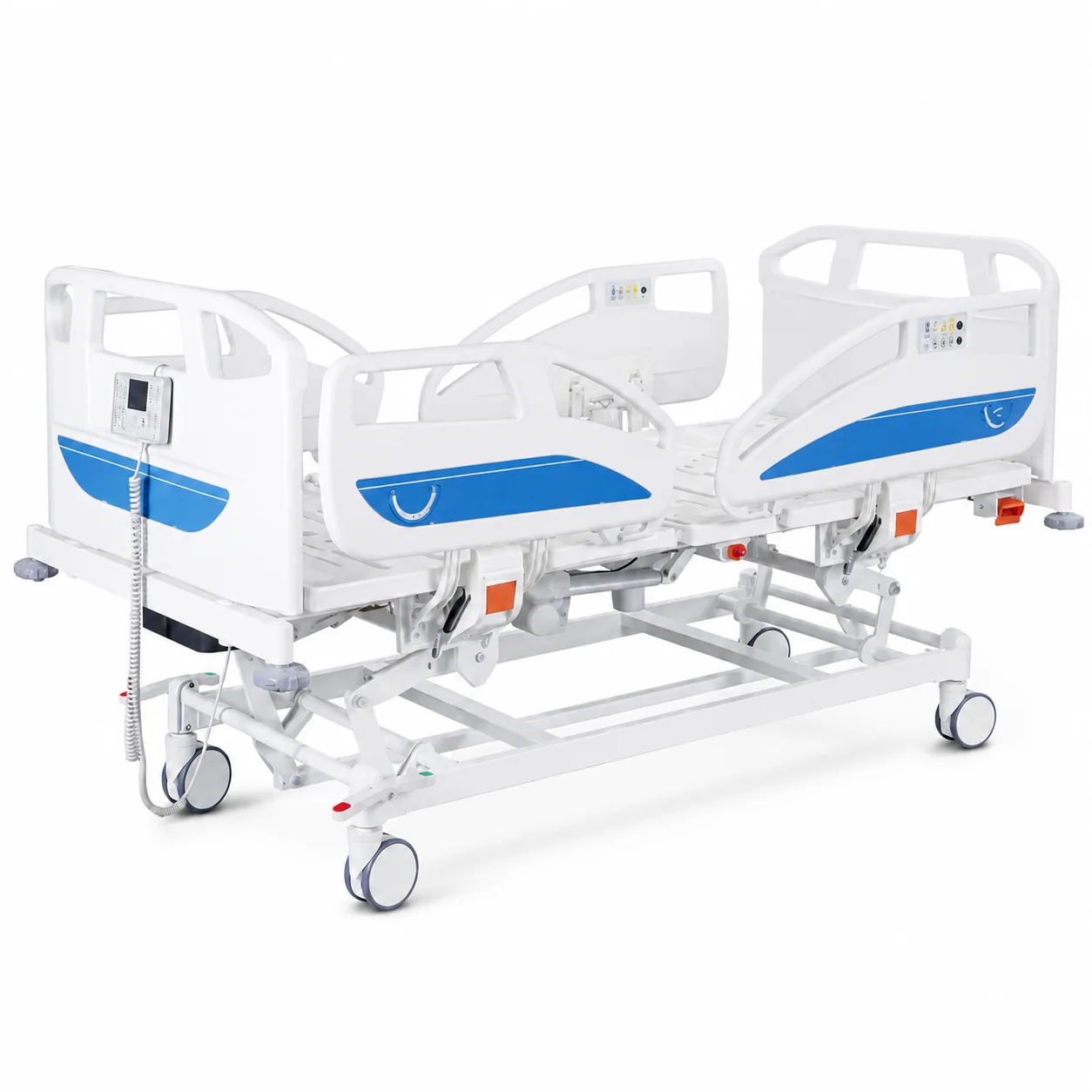
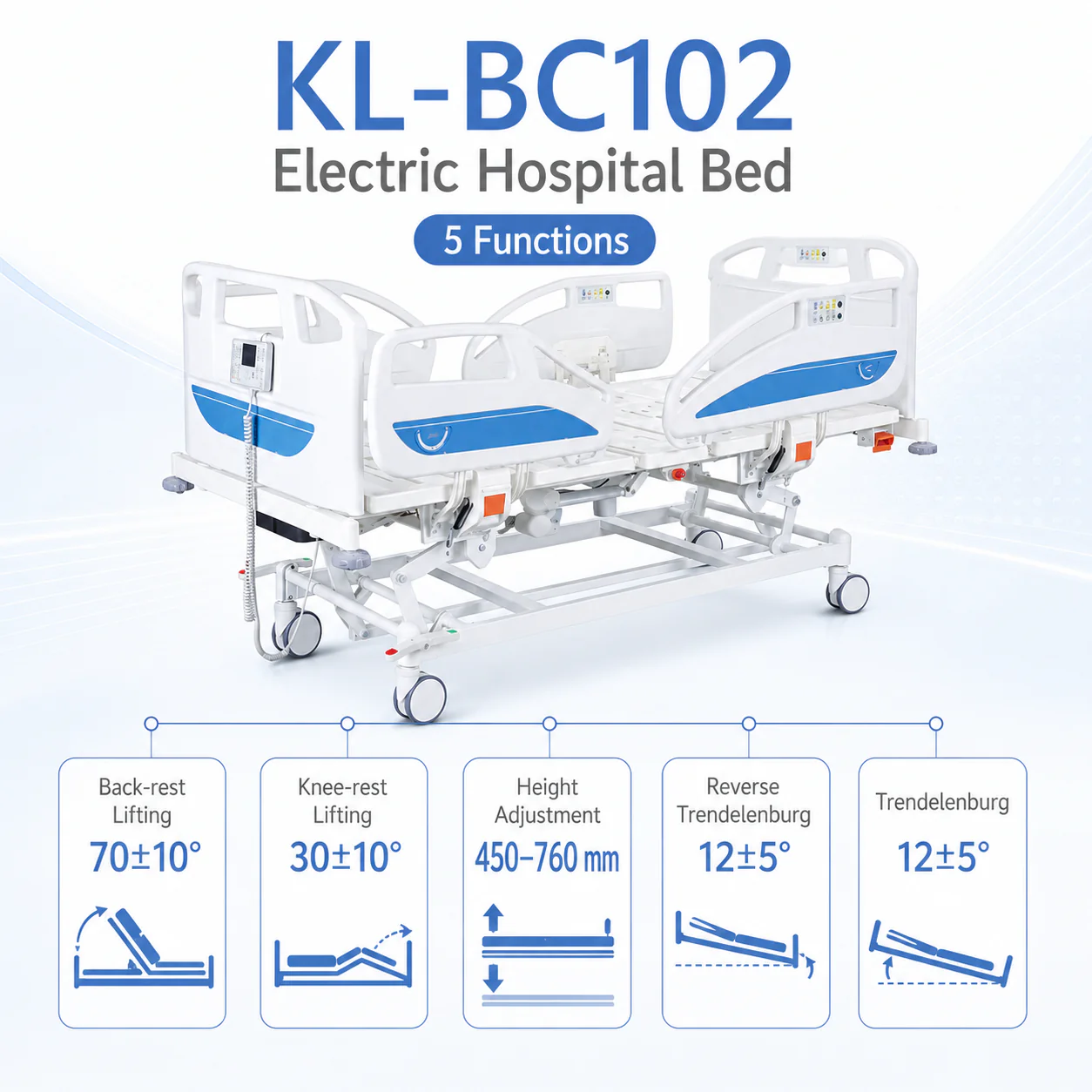
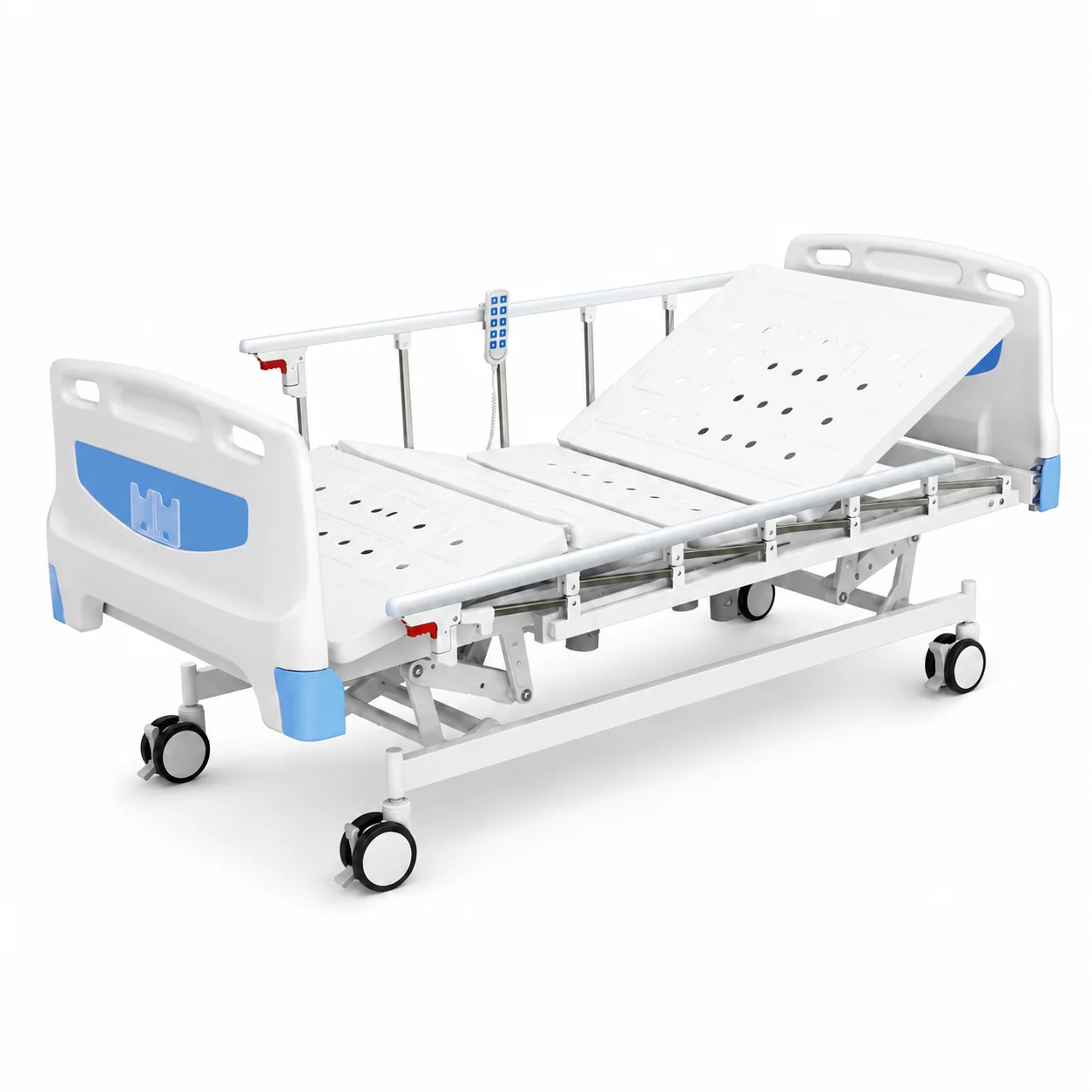
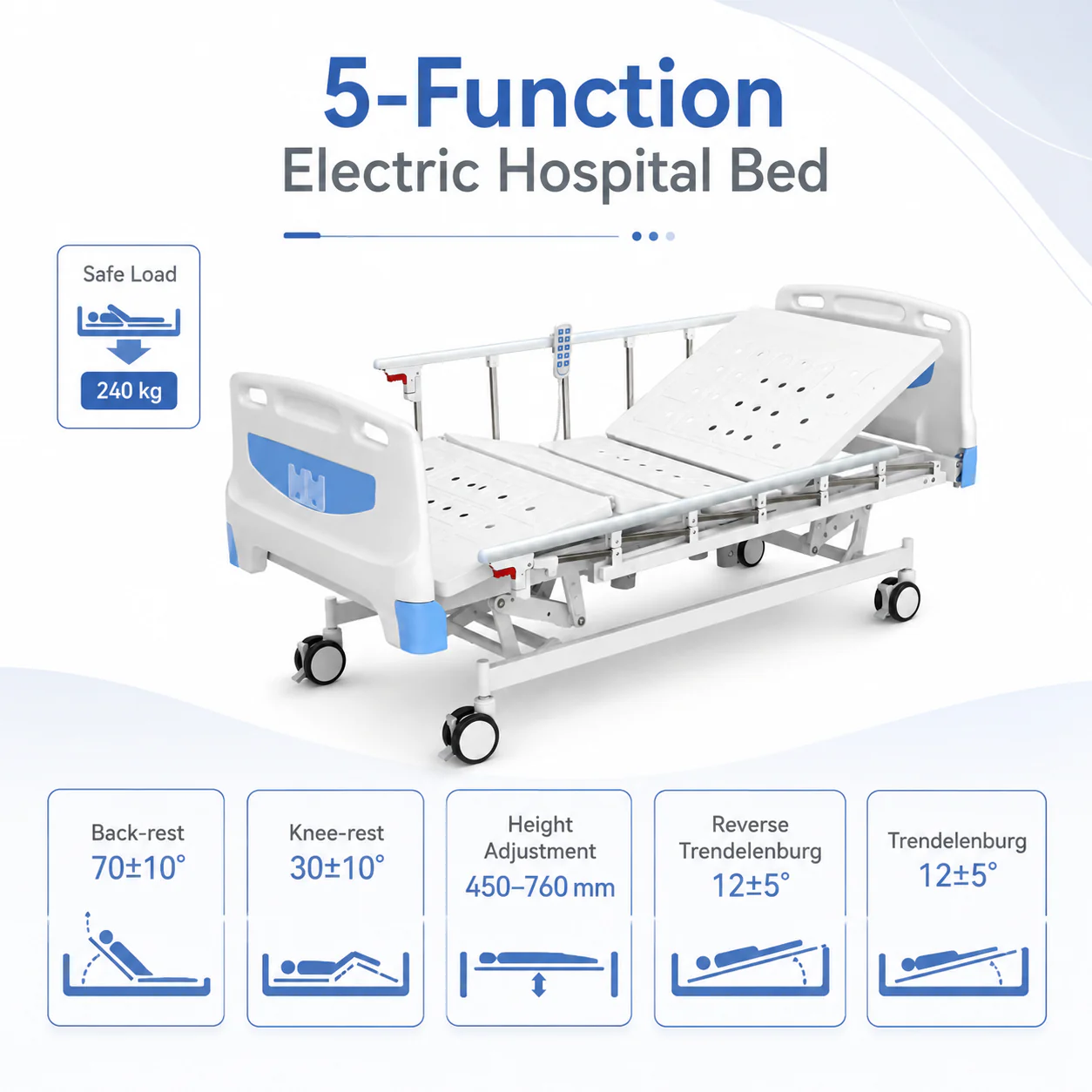
Keling Medical’s catalogue includes several hospital-bed configurations that buyers may compare. The KL-BC101 Electric Hospital Bed is listed as a 5-Function ICU Bed with CPR. The KL-BC102 Electric Hospital Bed is listed as a 5-Function Bed with Dual Return. The KL-BC103 Electric Hospital Bed is listed as a 5-Function Ward Bed 240 kg.
Those catalogue descriptions identify the model configuration, but they should not be interpreted as a complete positioning specification. Before ordering, request the current written quotation and confirm the exact adjustment functions, dimensions, safe working load, rail type, mattress compatibility, power requirements, included accessories and warranty terms. Regulatory scope and validity should also be confirmed per model and destination market in the written quotation.
A Practical Comparison Framework
Use the following framework when comparing beds for a ward, treatment area or ICU project:
- Care environment: ICU, inpatient ward, emergency area or examination room may require different control access, rail arrangements and cleaning workflows.
- Positioning frequency: Frequent repositioning may justify powered adjustment; occasional repositioning may make a manual configuration more appropriate.
- Staff workflow: Confirm whether controls are accessible to authorised staff and whether the bed can be operated without compromising patient observation.
- Patient and mattress compatibility: Verify the required load rating, mattress dimensions and any segmented or air-mattress requirements.
- Service and replacement parts: Ask about remote controls, casters, side rails, actuators and other replaceable components before placing a project order.
- Documentation: Require an operating manual, packing list, technical specification and model-specific quotation for tender evaluation.
Sims Position Medical Term: Common Confusions
The Sims position medical term is sometimes used loosely online, which creates confusion with “recumbent position patient” terminology. Recumbent is a broad term for a lying or reclining posture; it does not automatically mean Sims. Similarly, “lateral” describes a side-oriented position, while lateral Sims specifies a particular semi-prone arrangement.
Searches for Sims position medical, Sims medical term and Sims position diagram often refer to the same general concept, but diagrams can simplify limb placement. A diagram should be treated as an educational reference, not a replacement for the hospital’s approved procedure. For tenders, use clear equipment language: specify the required bed functions and accessories instead of requesting “a Sims-position bed,” unless the tender documents define that phrase.
What to Include in an Equipment Inquiry
For a transactional inquiry, send the supplier the destination country, care setting, quantity, preferred model or function range, mattress requirements, side-rail preferences, electrical requirements, delivery location and tender deadline. Include whether the request is for a new ward, ICU, emergency area or replacement programme.
Keling Medical is a Shanghai-based manufacturer and exporter founded in 1996, with 310 models across 12 categories. Its company materials state operation under an ISO 13485 quality system and also state ISO 9001 and CE. For a project quotation, request model-specific documents and confirm regulatory scope and validity for the destination market. Buyers can submit requirements through the hospital equipment inquiry page or contact inquiry@shkeling.com and +86 150 0064 9020.