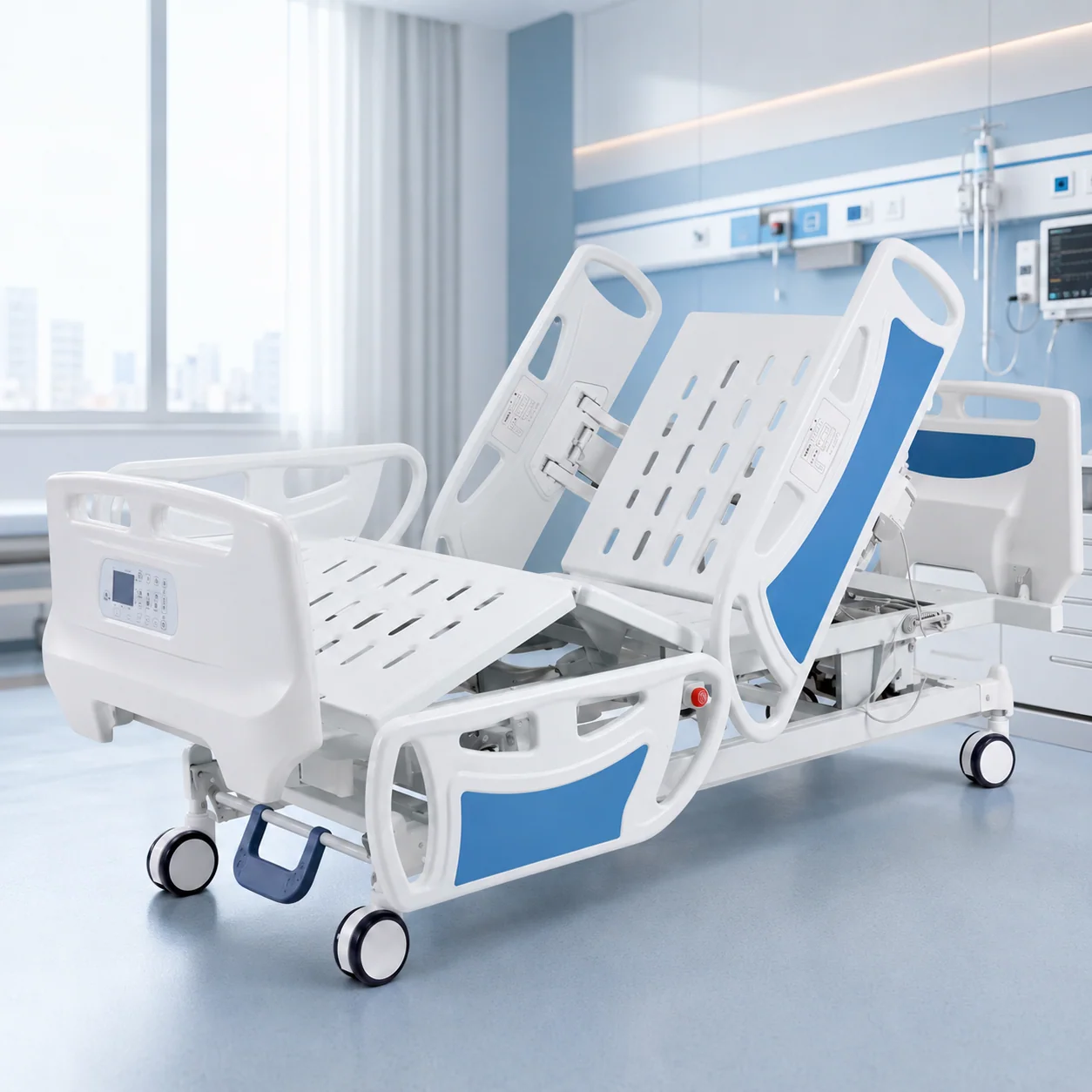
What is a geriatric bed?
A geriatric bed is a medical bed intended for older-patient care in hospitals, nursing facilities, rehabilitation units and long-term-care environments. In procurement terms, it is usually selected from a hospital-bed range rather than treated as a completely separate equipment category. The important question is whether the bed’s functions, construction and accessories match the needs of the intended ward.
For a bed for old age, buyers commonly assess how easily staff can position the patient, assist with transfers, perform routine care and maintain a safe bed area. However, the phrase “geriatric bed” does not by itself define a particular configuration. A specification should identify the required functions, adjustment method, load capacity and accessories before suppliers are compared.
Keling Medical manufactures hospital equipment in Shanghai and has operated since 1996. Its catalogue includes electric and manual hospital beds, bed rails, headboards, casters and mattresses. For distributors and hospital projects, the model, configuration and destination-market requirements should be confirmed in the written quotation.
How to select a geriatric bed for a hospital or care facility
Start with the care pathway rather than the product name. A general inpatient ward may need a practical electric bed for repeated positioning and routine nursing. A lower-acuity facility may prefer a simpler manual model if staff availability, budget and maintenance arrangements support it. A rehabilitation environment may place greater emphasis on transfers and compatibility with mobility equipment.
Electric or manual adjustment
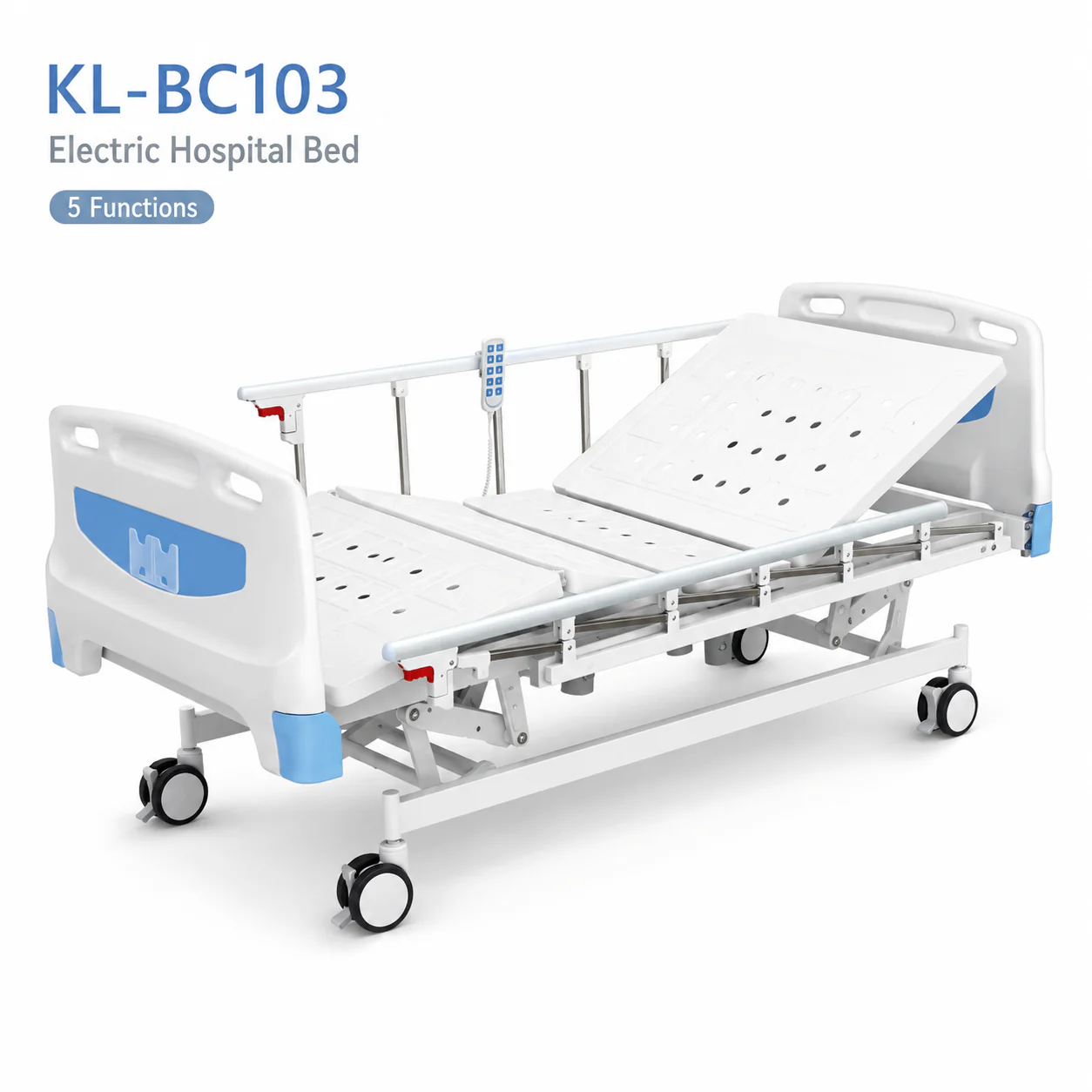
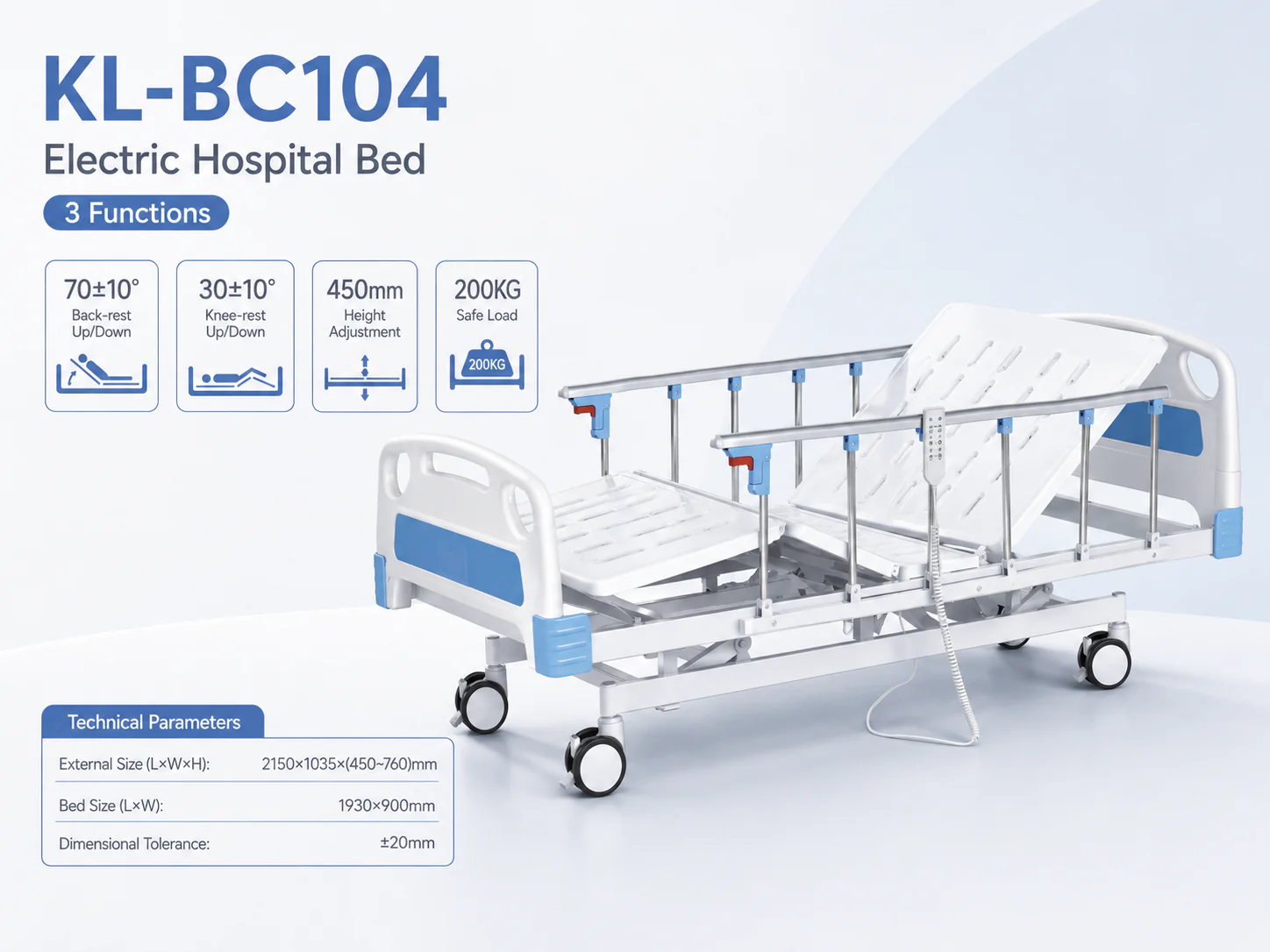
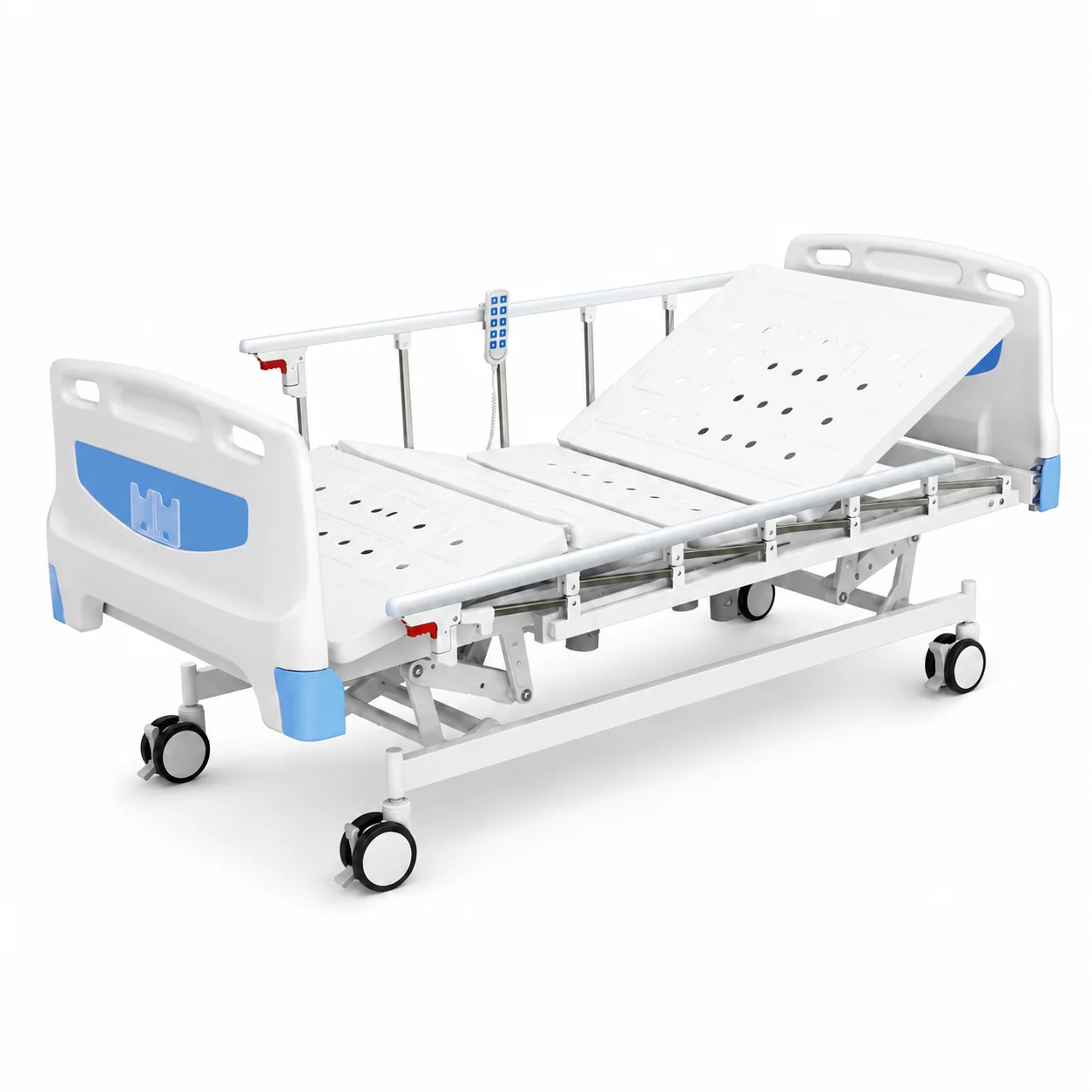
Electric beds can reduce the need for staff to make every adjustment manually, but the project must account for power availability, electrical maintenance and user training. The catalogue includes several electric configurations, including 2-function, 3-function and 5-function beds. Models such as the KL-BC104 3-Function Electric Bed 200 kg and KL-BC103 5-Function Ward Bed 240 kg give buyers different starting points for a ward-bed comparison.
Manual beds can be appropriate where the facility wants a simpler operating arrangement or where electrical infrastructure is limited. The catalogue includes 1-function, 2-function, 3-function and 5-function manual beds. Buyers should compare the number of adjustment functions with the care tasks expected on each ward, rather than selecting only by initial purchase price.
Number of functions
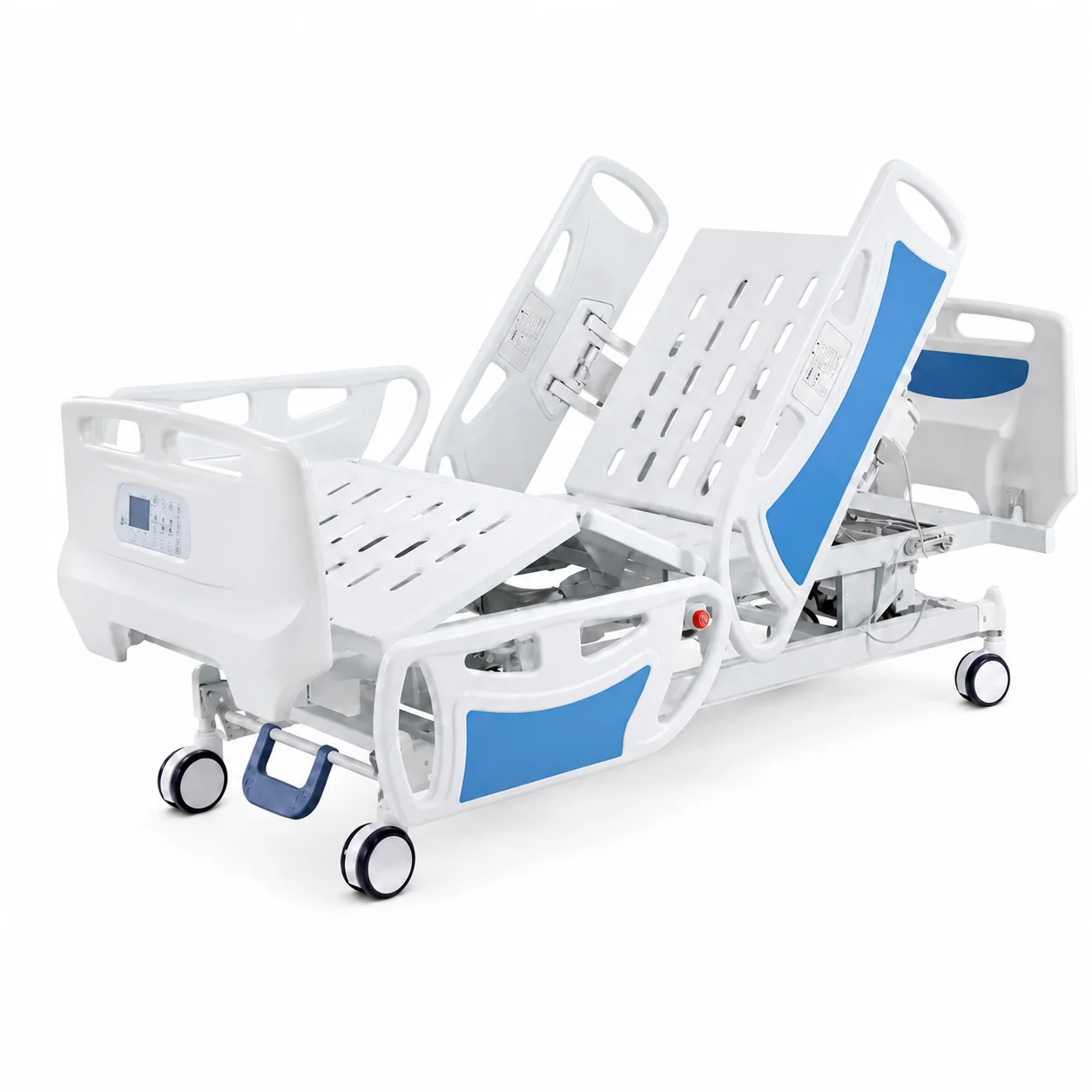
The number of functions is a useful screening parameter, but it should not be considered a complete safety or usability assessment. The catalogue describes the KL-BC103 as a 5-function bed and states a 240 kg load capacity. It describes the KL-BC104 as a 3-function electric bed with a 200 kg load capacity, while the KL-BC105 is a 2-function electric bed with a 200 kg load capacity.
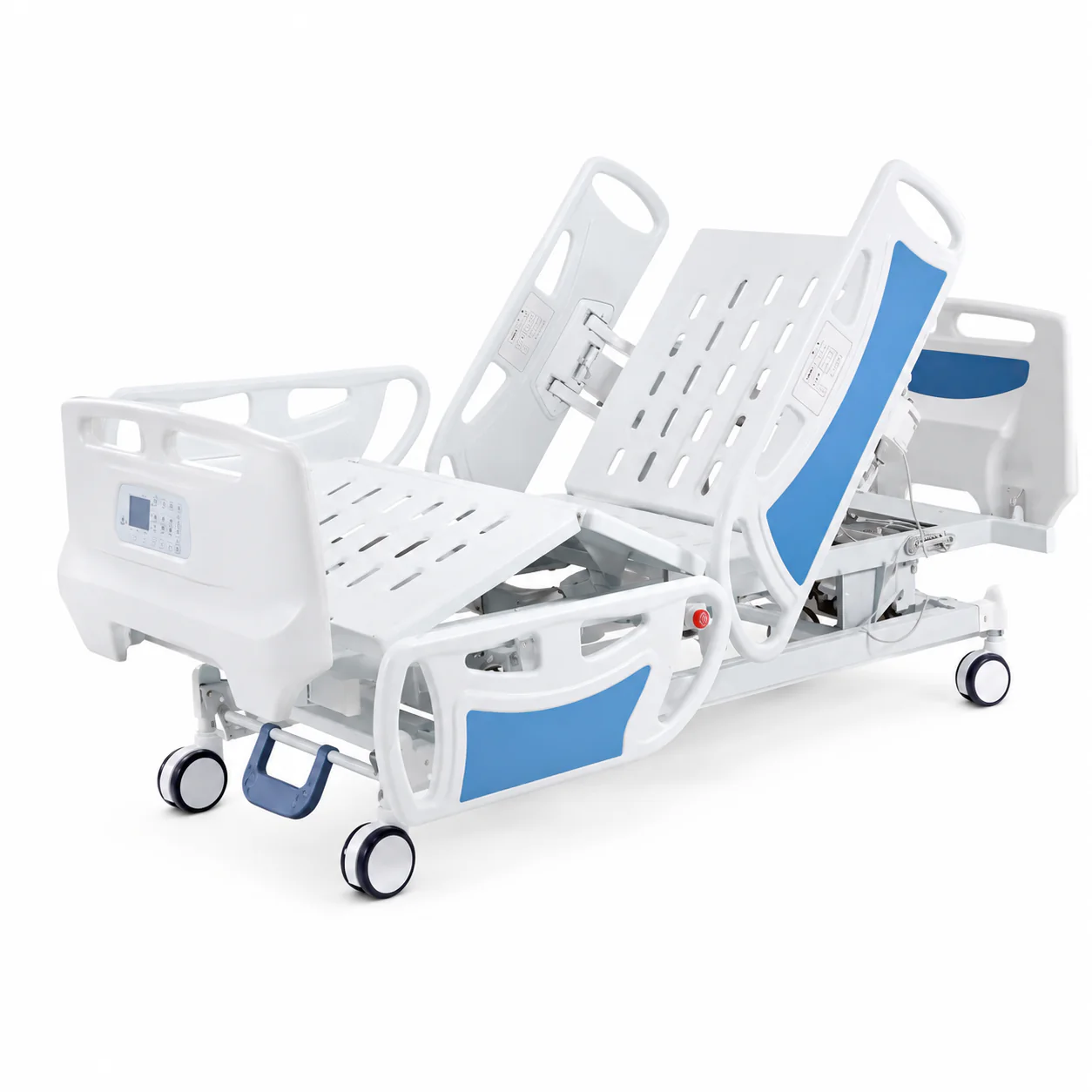
The KL-BC101 Electric Hospital Bed is described as a 5-function ICU bed with CPR. Its intended use should be checked against the project’s ward specification, because a geriatric-care requirement may be different from an ICU requirement. Similarly, the KL-BC102 is described as a 5-function bed with dual return. Confirm exactly what each function includes in the quotation and technical submittal.
Load capacity and frame selection
Hospital bed load capacity is a key comparison point when a facility serves patients with different body sizes or uses additional equipment on the bed. The catalogue explicitly states 240 kg for the KL-BC103 and 200 kg for the KL-BC104, KL-BC105 and KL-BC106. These figures should be read exactly as stated in the applicable product documentation and should not be generalized to other models.
Ask the supplier to clarify the meaning of the stated capacity, including whether it covers the patient alone or the total working load. Also confirm whether the mattress, side rails and other accessories are included in the same configuration. A quotation should identify the model and any permitted options so that the tender evaluation compares equivalent packages.
Frame and component selection also affects long-term procurement planning. Confirm the bed’s cleaning requirements, replacement-part availability, caster arrangement, headboard and side-rail options, and whether local technicians can support installation or servicing. Keling’s catalogue includes the KL-CA011 Hospital Bed Castor, but compatibility with a selected bed must be confirmed before ordering.
Side rails, headboards and daily-care accessories
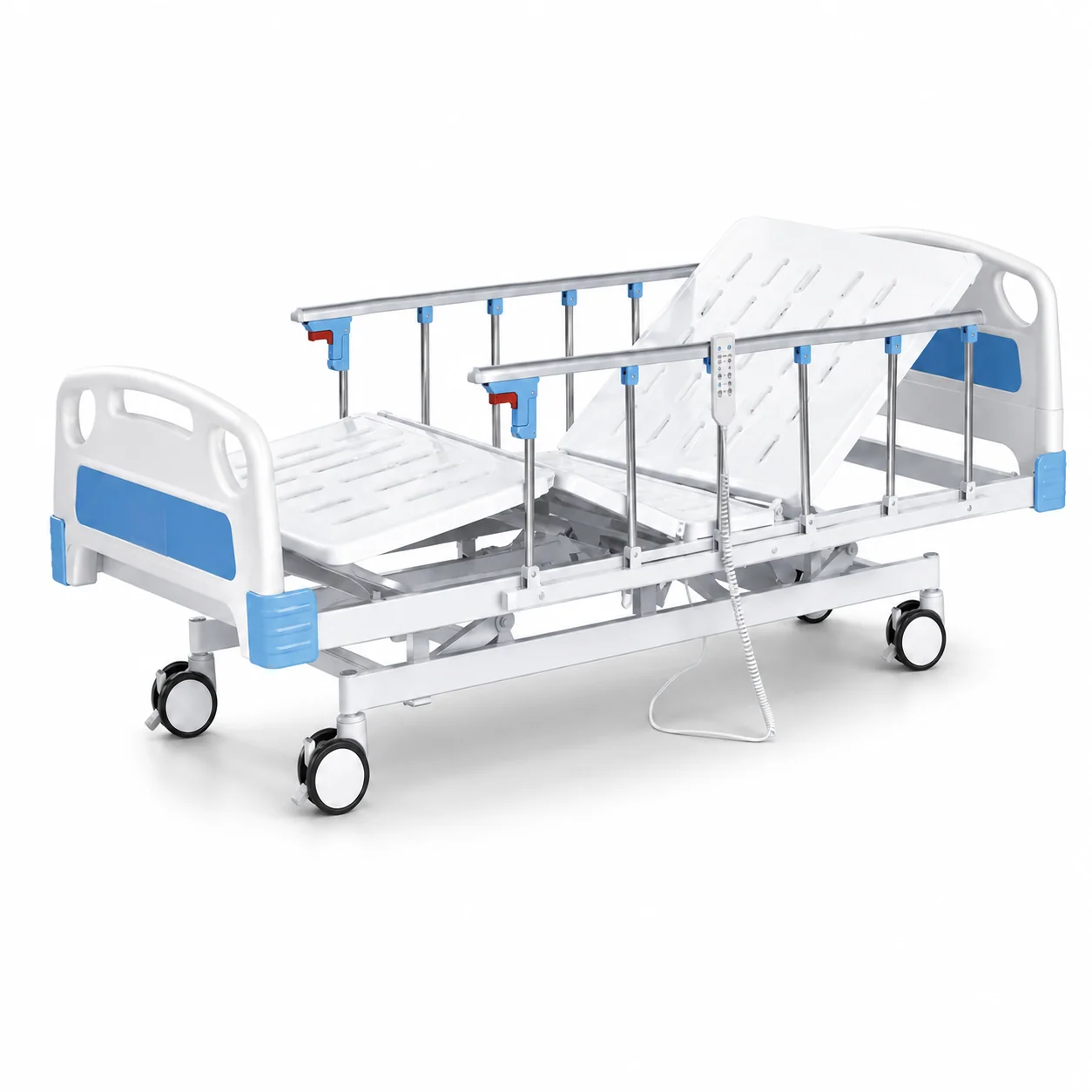
Side rails are commonly reviewed for patient positioning, transfer workflows and staff access. They should be evaluated as part of the complete bed configuration, not as an isolated accessory. The catalogue lists the KL-HL001 Bed Rail and KL-HL002 ABS Side Rail, with the latter described as available in big and small size. Confirm which rail is supplied with the selected bed, how it operates and whether it is compatible with the mattress platform.
Headboards can affect cleaning, replacement and collision protection. Keling lists the KL-HL003 ABS Headboard as a universal hospital bed headboard with anti-collision wheels and the KL-HL004 ABS Headboard as a panoramic panel hospital bed headboard. “Universal” should not be assumed to mean compatible with every model; request written compatibility confirmation for the proposed bed.
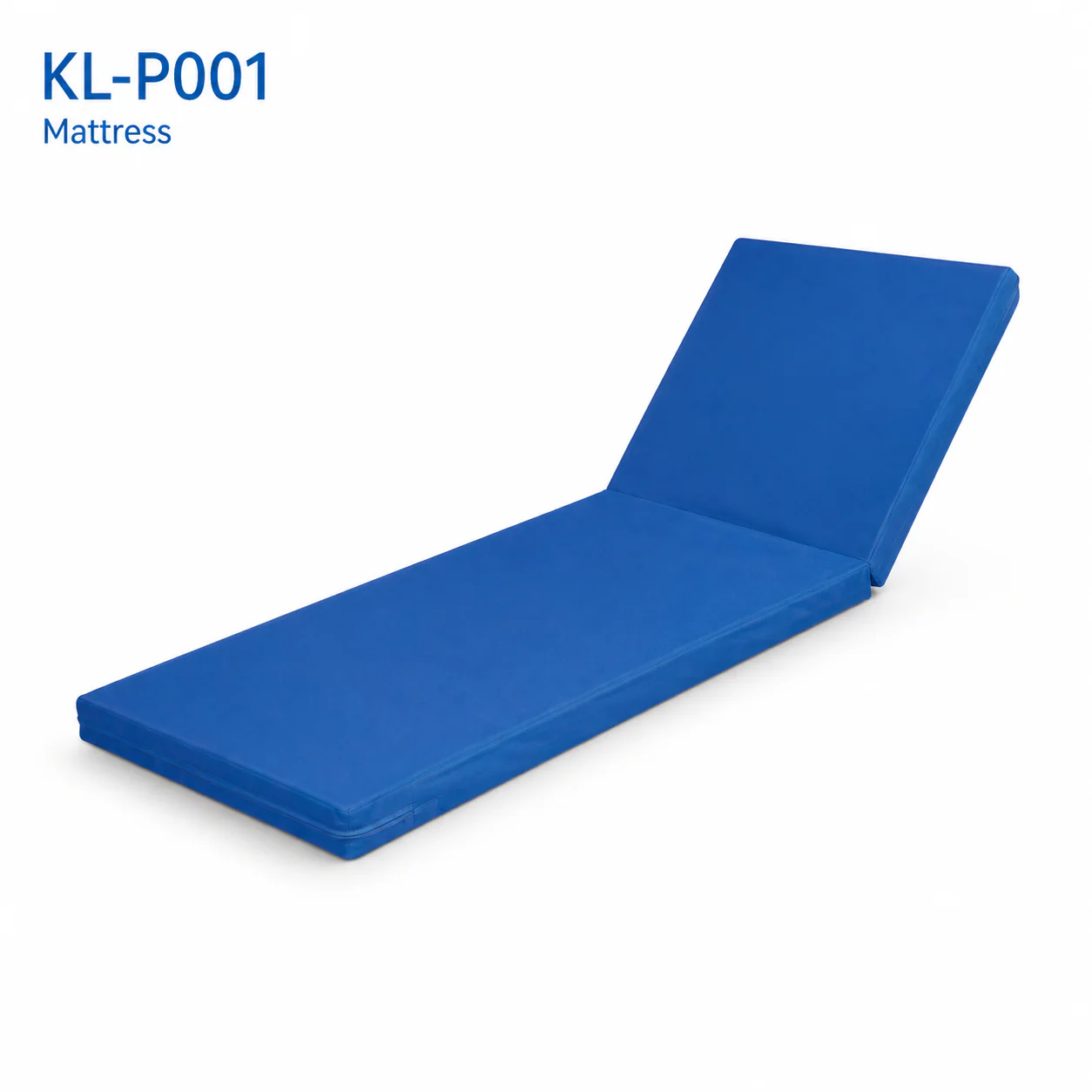
Other accessories may include an IV stand or a mattress. The KL-LJ045-1 is listed as a stainless steel IV pole for hospital bed. Mattress choices in the catalogue include the KL-P001 Hospital Bed Mattress with PU or sponge fill, the KL-P002 segmented hospital bed mattress with palm-fibre fill, the KL-P003 Bubble Air Mattress and the KL-P004 Tubular Air Mattress. Review the Pressure Relief Mattress: Hospital Buyer’s Guide and Air Mattress for Hospital Bed: Buyer’s Guide when the mattress is part of the tender.
Geriatric bed versus low bed, shower bed or specialist bed
A geriatric bed should not automatically be replaced by a low bed or a specialist bed. A low-bed project has different priorities and should be assessed using a dedicated Low Bed Buying Guide for Hospital Procurement. A shower bed is designed around hygiene and washing workflows, so care-facility buyers should compare it separately through the Shower Beds: A Procurement Guide for Care Facilities.
Likewise, rotating beds, traction beds and delivery beds serve specific applications. The KL-BC111 is listed as a manual orthopedics traction bed, while the KL-BC110 is an electric gynecological birth bed. Neither should be treated as a general geriatric-bed substitute without a documented clinical and operational requirement.
For a broader price comparison, see Med Bed Price: What Hospital Buyers Should Compare. Price should be evaluated together with functions, stated capacity, accessories, warranty terms, spare parts, packaging, shipping and the cost of local installation or service.
What to include in an RFQ for a geriatric bed
A clear request for quotation helps suppliers return comparable offers. Include the following information:
- Required quantity and destination country or market.
- Care setting, such as inpatient ward, rehabilitation unit, nursing facility or long-term-care project.
- Preferred electric or manual adjustment and the required number of functions.
- Required load capacity, stated in the tender’s chosen unit and confirmed per model.
- Side rails, headboards, casters, IV stand and mattress requirements.
- Power-supply information for electric models and any local installation expectations.
- Packaging, delivery terms, spare-parts needs, warranty and after-sales-service requirements.
- Required technical files, quality documents and destination-market regulatory scope.
Keling operates an ISO 13485 quality system, and company materials also state ISO 9001 and CE. Regulatory scope and validity should be confirmed per model and destination market in the written quotation. For a project inquiry, buyers can use the Keling Medical request-for-quote page or contact inquiry@shkeling.com and +86 150 0064 9020.
Procurement checklist
Before placing an order, verify the exact model number, adjustment functions, load-capacity statement, included accessories and mattress specification. Request product drawings, packing information, power details where applicable, spare-parts recommendations and service terms. Check that the bed fits the ward layout, doorway, lift and cleaning process.
Finally, compare offers on an equivalent basis. A lower-priced bed may exclude rails, mattress, IV stand, delivery, installation or replacement parts. A suitable geriatric bed is the configuration that meets the written project requirement and can be supported throughout its expected procurement and service cycle.